Loading summary
Transcript32 lines
- [00:00]
Wix Advertisement
You set the gold standard for your business. Your website should do the same. Wix puts you at the helm so you can enjoy the creative freedom of designing your site just the way you want. Want someone to bounce your ideas off? Talk with AI to create a beautiful site together. Whatever your business, manage it from one place and tie it all together with a personalized domain name. Gear up for success with a brand that says you best you can do it you yourself on wix.
- [00:28]
Yubico Advertisement
This Marketplace podcast is supported by Yubico, makers of the Yubikey. Protecting the personal and business applications and accounts that people and companies rely on every day. The Yubikey stops AI powered cyber attacks, online identity scams, fraud and account takeovers. It provides powerful protection and it's easy to use. Simply tap your Yubikey to log in securely to everything from email to finance to productivity applications across all of your devices. Yubikey still undefeated. The original Passkey more@yubico.com.
- [01:07]
Sabri Beneshore
What'S in the latest trade deal from Marketplace? I'm Sabri Benishore in for David Brancaccio. The U.S. and the EU have reached a trade deal. The U.S. will impose a 15% tariff on EU goods. That's down from the 30% that was threatened. There are exceptions for aircraft and generic drugs which would not be tariffed. We've got Julia Coronado with Macro Policy Perspectives here to talk about that and more. Julia, markets reacted positively to the trade deal. What is your take?
- [01:35]
Julia Coronado
Well, it is not as bad as was threatened, but it is also a deal that does mean that Americans will be paying higher tariffs. The tariff is 15% on European imports. That's up from the current 10% that has been in place since April. So it's kind of a bad news, good news situation. It's not the peak that was threatened, but it's also rising prices and rising tariffs.
- [02:01]
Sabri Beneshore
This week we are getting a ton of economic data. Inflation, gdp, employment. How revealing are these going to be given all of the economic policy uncertainty we've had for the past few months?
- [02:13]
Julia Coronado
Well, the data are expected to show some strain from the impact of these policies. The economy is running at a slower pace than it was last year. Hiring is expected to continue slowing and inflation is expected to tick up based on the higher prices that consumers have to pay.
- [02:33]
Sabri Beneshore
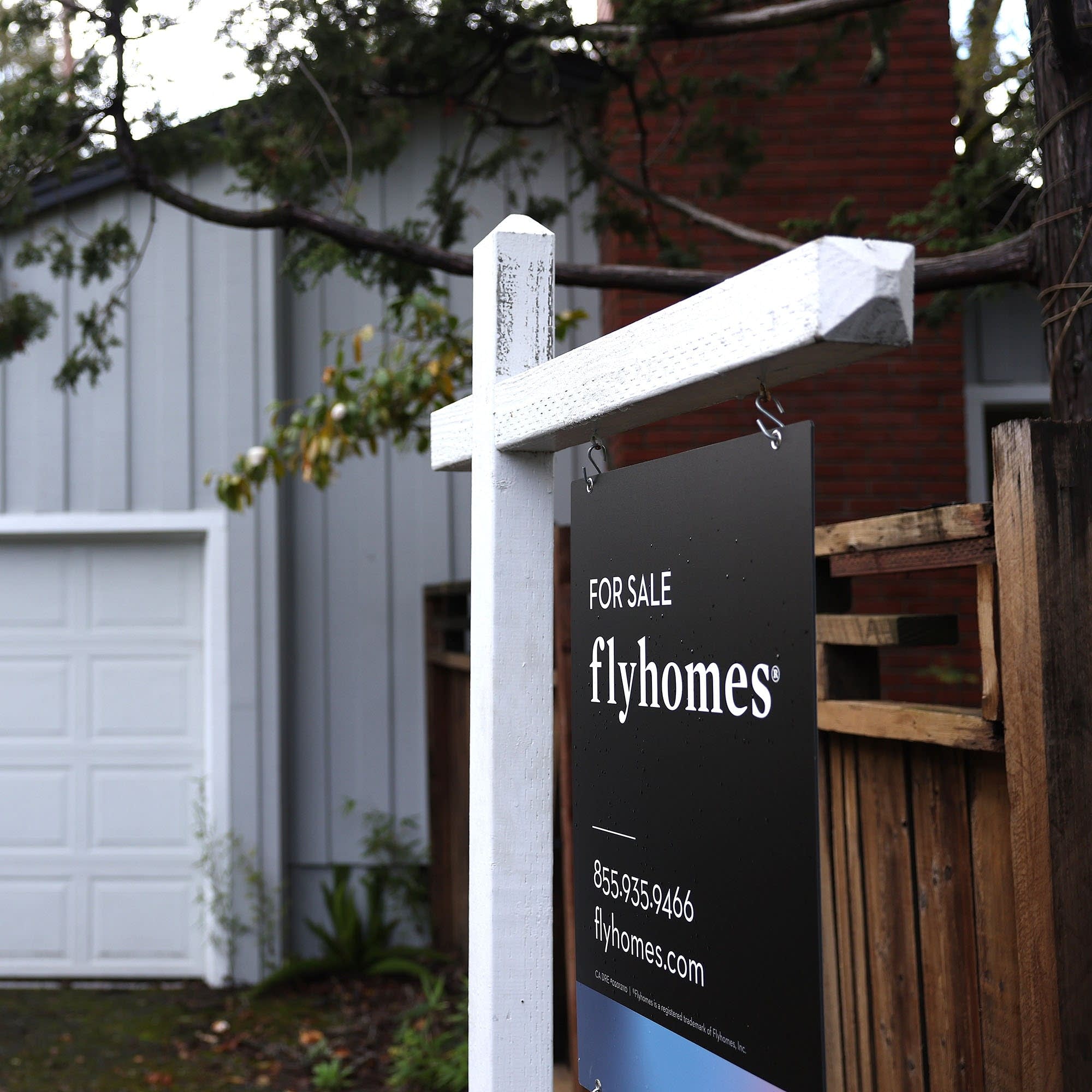
Macro Policy Perspectives Julia Coronado, thank you so much. Tomorrow we get the latest snapshot of home prices in the US from the Case Shiller Home Price Index. A lot of people who would like to buy homes have felt stuck, stuck, held back by high prices and high mortgage rates. To that list of reasons, you can now add economic uncertainty. That is according to a new report from bright MLS marketplaces. Samantha Fields has more in the last.
- [02:59]
Lisa Sturtevant
Month, 3/4 of real estate agents have had a buyer they were working with pause their home search. Lisa Sturtevant at Bright MLS says that's up significantly from a year ago.
- [03:09]
Samantha Fields
And the reasons buyers had stopped looking was primarily due to affordability, high home prices, high mortgage rates. And while those are still a factor, growing general economic uncertainty and other financial issues have become more important reasons.
- [03:25]
Lisa Sturtevant
Nearly 60% of would be buyers who paused their search last year said it was because prices and or rates were too high. Now less than 50% site prices and less than 40% mortgage rates.
- [03:37]
Jake Krimmel
@ this point, high rates are a feature of the market, not a bug. And sort of the same thing with prices, right?
- [03:42]
Lisa Sturtevant
Jake Krimmel@realtor.com says it seems like buyers and sellers are getting used to it. But sellers don't seem to be getting used to the fact that price growth has slowed way down. There's been a nearly 50% increase in people listing their home and then delisting it.
- [03:57]
Jake Krimmel
So although there are more sellers on the market this year, it also appears that more are growing discouraged by the.
- [04:03]
Lisa Sturtevant
Market itself and more buyers are growing anxious about the uncertainty in the market, says Lisa Sturtevant at Bright mls.
- [04:10]
Samantha Fields
We've seen consumer sentiment survey data show people a little bit more anxious. When people are uncertain, they do tend to hold off on big decisions like.
- [04:18]
Lisa Sturtevant
Buying or selling a home. I'm Samantha Fields for Marketplace.
- [04:40]
Dell Advertisement
This Marketplace podcast is supported by Dell. Upgrade your learning experience during Dell Technologies Back to school event with AI PCs like the Dell 14 plus, featuring an Intel Core Ultra processor starting at $749.99. Supercharge your studies with features like real time notes, transcription, AI accelerated hardware to run multiple apps without slowing down, extended battery life, and more. That's the power of new AI PCs with Intel inside. What's more, upgrade your school year setup with limited time deals on select monitors and more. Must have electronics and accessories. Don't wait. Discover a smarter way to learn@dell.com deals that's Dell.com deals.
- [05:29]
Jake Krimmel
This Marketplace podcast is supported by Palo Alto Networks. Enterprises are deploying and experimenting with AI apps and agents, often without the right security in place. Leverage the power of a comprehensive AI platform to secure AI at every step from apps, agents, models and data. Deploy AI bravely with Prisma Airs. More@paloaltonetworks.com Chile has the world's largest reserves.
- [05:59]
Sabri Beneshore
Of lithium, a critical component of batteries for electric vehicles. Chile's government wants to ramp up processing of that lithium, but that comes with costs to local ecosystems and indigenous groups. The BBC's Ione Wells filed this report.
- [06:15]
Ione Wells
Walking through Chile's Atacama Desert feels a bit like walking on a moon. Miles and miles of flat white land, big crags of crunchy white salt underfoot and surrounded by big red mountains. This is home to the world's biggest reserves of lithium, the key ingredient for batteries in things like electric cars. A lot of it is still untapped, though, but the government wants to change that. It says this is crucial for the global fight against climate change. But local indigenous communities not so sure. Sergio Corbilios is the president of the Paine indigenous Community. He recognizes why lithium's needed for the green revolution, but is worried about the impact on his community here.
- [07:07]
Jake Krimmel
There is, of course, the issue of climate change, that it doesn't rain anymore. But the main impact here has been caused by mining. They use millions and millions of cubic meters of brine. We understand that the world needs to transform conventional energy into renewable energy, and for that, lithium is very important. But we also don't want to be the bargaining chip for that development.
- [07:34]
Ione Wells
The Chilean government says production is being increased in dialogue with indigenous communities and incorporating new technologies to minimise the social and environmental impact. It says it will bring economic opportunities and that 30% of the salt flats and lagoons will be protected. Faviola is a biologist from the indigenous community here. She doesn't think it's fair that these lithium companies are using millions of litres of water in the name of tackling climate change to the detriment of the ecosystems here.
- [08:05]
Faviola
Lithium mining has changed the lagoons here. Now they are smaller. We've seen a decrease in the reproduction of flamingos. If they reinject water and return it to the Salar de Atacama, it will not be the same. We don't know if the rock will resist it. Unfortunately, we think the Salar de Atacama will be like an experiment, a laboratory.
- [08:28]
Ione Wells
Companies and the government are obviously keen to sell the benefits of this new technology and hope it could provide some green solutions. But for people like Faviola, she's unclear why their lives should change in order to help other people keep living their lifestyles.
- [08:46]
Faviola
Electrifying is not the solution. We all have to reduce our emissions. In developed countries like the US and Europe, the energy expenditure is much greater than here among US indigenous people.
- [09:00]
Sabri Beneshore
That's reporting from the BBC's. Ione Wells in Chile. In New York, I'm Sabri Benishore with the Marketplace Morning Report from APM American Public Media.
- [09:14]
Yubico Advertisement
This Old House Radio Hour is your new home improvement podcast. In each episode, we answer your questions. Whether you're fixing a leak, refinishing a floor, or restoring a century old house, our roster of experts have the answers to help you get the job done right. I never thought I'd be saying this.
- [09:30]
Faviola
To a bunch of people I'm just.
- [09:32]
Yubico Advertisement
Meeting, but I have a stinky house.
- [09:34]
Sabri Beneshore
Tell us more.
- [09:35]
Jake Krimmel
I want the details.
- [09:37]
Yubico Advertisement
Find this Old House Radio Hour in your favorite podcast. Apparently.