Loading summary
Transcript16 lines
- [00:01]
Marketplace Host
You can turn to Marketplace to hear from powerful leaders and everyday people about the economy and their role in it. Now we hope we can turn to you. Marketplace is facing real threats and challenges as we plan for the future. As a public media program, donations from you are an important part of our budget. Here's one action you can take right now that will have a long lasting impact. Start a monthly donation to support our work. Five bucks a month is a great place to start. Head to marketplace.org donate and thank you. Hello listeners. Marketplace's Webby Winning Kids podcast Million Bazillion is back for an all new season. Hosts Bridget and Ryan are answering a whole new set of kid questions about everything from royalties and franchises to why the heck we have a $2 bill. You even grownups might learn a thing or 2 million bazillion is presented in partnership with Greenlight, the debit card and money app for kids and teens. Give your family the tools to manage money wisely with Greenlight. Learn more@greenlight.com million and tune in to Million Bazillion wherever you find your favorite podcasts.
- [01:14]
William Lee Adams
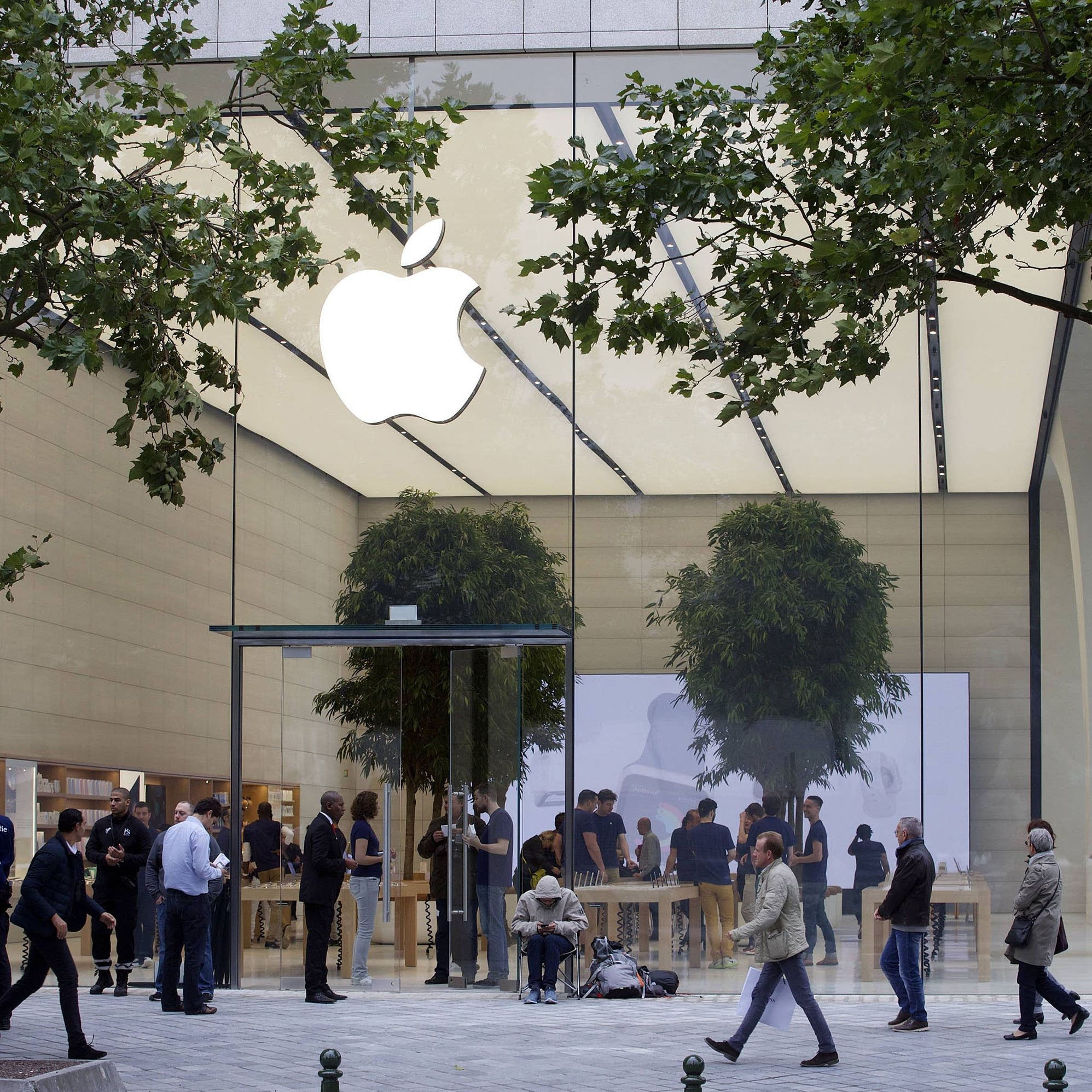
Apple Steps up It's a war of words with European Regulators Live from the UK this is the Marketplace Morning Report from the BBC World Service. I'm William Lee Adams B Good morning. Apple has called for the European Union's antitrust watchdogs to scrap tech regulations, which it says lead to a worse experience for its users in the eu. In a blog post, the iPhone maker said the Digital Markets act disrupts the way their products work together and exposes users to more risks when downloading apps and making payments. The BBC's Sarah Rogers has more.
- [01:46]
Sarah Rogers
It's not the first time Apple has voiced its opposition to Europe's Digital Markets act, which lays out consumer protection rules for the likes of Google, Meta and Amazon. But in a blog post late Wednesday, the iPhone maker said it wants regulators to look more closely at the impact of the rules on people and companies across the European Union. The tech giant is already appealing a fine of $588 million levied under the EU legislation back in April. President Trump has previously weighed in on tech regulation, too. He's threatened to impose tariffs on any country that imposes taxes or legal restrictions on how tech companies operate. I'm the BBC Sarah Rogers for Marketplace.
- [02:33]
William Lee Adams
Let's do the numbers now. Consumer confidence in France held steady at 87 in September, unchanged from August, but still below the long term average. The government is still struggling to balance its books. China has for the first time set a target for reducing its carbon emissions. Speaking in a video addressed to the UN in New York, President Xi Jinping said that China would reduce its greenhouse gas emissions by 7 to 10% in the next decade. But critics, including Greenpeace Asia, say the world's biggest source of planet warming gases needs to do more. The BBC's China correspondent, Laura Bicker, has the key details of Beijing's plan.
- [03:11]
Laura Bicker
First, they'll expand solar and wind power to more than six times its 2020 levels. They're also going to increase the number of forests, so they're going to plant more trees. Now, remember, this is a country that went through mass urbanization. They have huge, towering concrete skyscrapers in many of their cities. That is something they're going to try and reduce. And they're going to make new energy vehicles the mainstream and new vehicle sales. And having traveled to nearly every province in this country, there are vast swathes of solar panels. You see them planted in deserts, on mountains, and there's even now a solar panel island. But I think when it comes to this speech at the un, President Xi is doing more than just signaling China's supremacy in green renewables. He's also signalling, and perhaps even having a thinly veiled swipe at Donald Trump. Because when it comes to these pledges, there is one country, China, that is making these pledges where America is not.
- [04:10]
William Lee Adams
Laura Bicker. There, the Dutch country village of Zaansys Hons is famous for its windmills. They're easy to get to from Amsterdam. Last year, 2.6 million people came to see them. Far too many, says the local council, which says from next spring it will charge every visitor who's not local the equivalent of $19 to get in. John Laurenson went to join the crowds.
- [04:35]
John Laurenson
Chinese and Spanish, English and Arabic, queuing to get over one of the little bridges that lead over the canals to the windmills. It's as if the whole world has come to Zaansesons. Sometimes when the wind picks up, their sails go round. It's a fine sight that any normal person will want to get a picture of themselves standing in front of. But the number of visitors has become enormous, affecting the lives of the inhabitants a lot. As Marika Vervey, director of the local museum, explains, overcrowded.
- [05:06]
Local Resident / Shop Owner (Steire Sharp or Marika Vervey)
Too many people wandering around, too many people wanting to make use of the bathrooms, to make use of the cafes. People who visit the Sanchez Grands don't know that people live here, so they walk into their gardens, they walk into their house, they pee into their gardens. No privacy at all.
- [05:25]
John Laurenson
The plan is to get people to book online, which makes it easy to manage numbers as well as take the money. The revenue will pay for the maintenance of the windmills and new infrastructure, new toilets, for example. But the shop and restaurant owners are very unhappy. In what is actually the oldest of Zaansegrande's lovely wooden houses, an antique and gift shop called Trash and Treasures is doing brisk business. Steire Sharp runs the shop with her mother.
- [05:55]
Local Resident / Shop Owner (Steire Sharp or Marika Vervey)
It will mean that people who don't have a big wallet won't be able to come here. It will mean that we will lose a lot of our shoppers. Even for the local people, it will be too difficult to come here because probably they'll have to stay, stand in a queue. If you're with a family of four and you have parking, it will be around €100.
- [06:16]
John Laurenson
So what did the tourists think of the charge idea? Would they pay 19 bucks? That's 17 and a half euros to come here?
- [06:24]
Tourist 1
It's a bit steep. It's a bit steep, yeah. Just to see a couple of windmills.
- [06:27]
Tourist 2
These villages, they are not so big and they lose their charm if there are so many tourists. So I think a charge maybe could limit the numbers of people and of course, I would definitely pay that amount.
- [06:40]
John Laurenson
The new charge will include free entry to the museum, where there's a painting the French impressionist Claude Monet painted here, and to go inside the windmills to see how the Dutch, at the dawn of the Industrial Revolution, used them to saw wood or grind pigments to make paint. As a way for my bus to leave Zaanseshons, a busload of people arrive, swiping their credit cards to pay for their ride next spring, if all goes to plan, they'll have to beep their prepaid entrance tickets, too. In Zaanseshons Holland, I'm John Laurenson for Marketplace.
- [07:18]
William Lee Adams
And finally, the financial regulator in Singapore has warned social media influencers to stop giving out financial advice without a permit in the uk, I'm William Lee Adams. Thanks for listening to the Marketplace morning report from the BBC World Surface.
- [07:38]
Million Bazillion Host
This week on Million Bazillion, we're giving you an extra special history lesson on bubbles. Economic bubbles, that is. We'll learn all about the housing boom and bust of the 2000s. Plus we'll explore other famous bubbles like tulips and dot coms, to uncover why they happen and why it's so hard to know you're in one until it pops up. Don't miss this week's episode of Million Bazillion. Listen on your favorite podcast, apparently.