Loading summary
Transcript38 lines
- [00:03]
Morgan Stanley Sponsor
This episode is sponsored by Morgan Stanley's Thoughts on the Market it can be difficult to stay up to date on the financial market in today's ever changing environment. With so much commentary at any given moment, it's hard to cut through the noise to gain quality, actionable insights. Morgan Stanley is here to help with their podcast Thoughts on the Market. Thoughts on the Market is your daily market snapshot covering trends across the global investment landscape and offering perspectives from Morgan Stanley's leading economists and strategists. It's one of the only daily podcasts providing real time commentary from a financial institution on the day's biggest questions and topics. And with Most episodes under 5 minutes long, market clarity can fit seamlessly into your daily routine. Staying informed has never been easier. Listen and subscribe to thoughts on the Market on Spotify, Apple Podcasts, YouTube or wherever you get your podcasts.
- [01:00]
Dell Sponsor
Introducing your new Dell PC with the Intel Core Ultra processor. It helps you handle a lot, even when your holiday to do list gets to be a lot like organizing your holiday shopping and searching for great holiday deals and customer questions and customers requesting custom things. Plus planning the perfect holiday dinner for vegans, vegetarians, pescatarians and Uncle Mike's carnivore diet. Luckily, you can get a PC with all day battery life to help you get it all done. That's the power of a Dell PC with Intel inside and backed by Dell's price match guarantee. Get yours today@dell.com holiday terms and conditions apply. See Dell.com for details.
- [01:32]
David Brancaccio
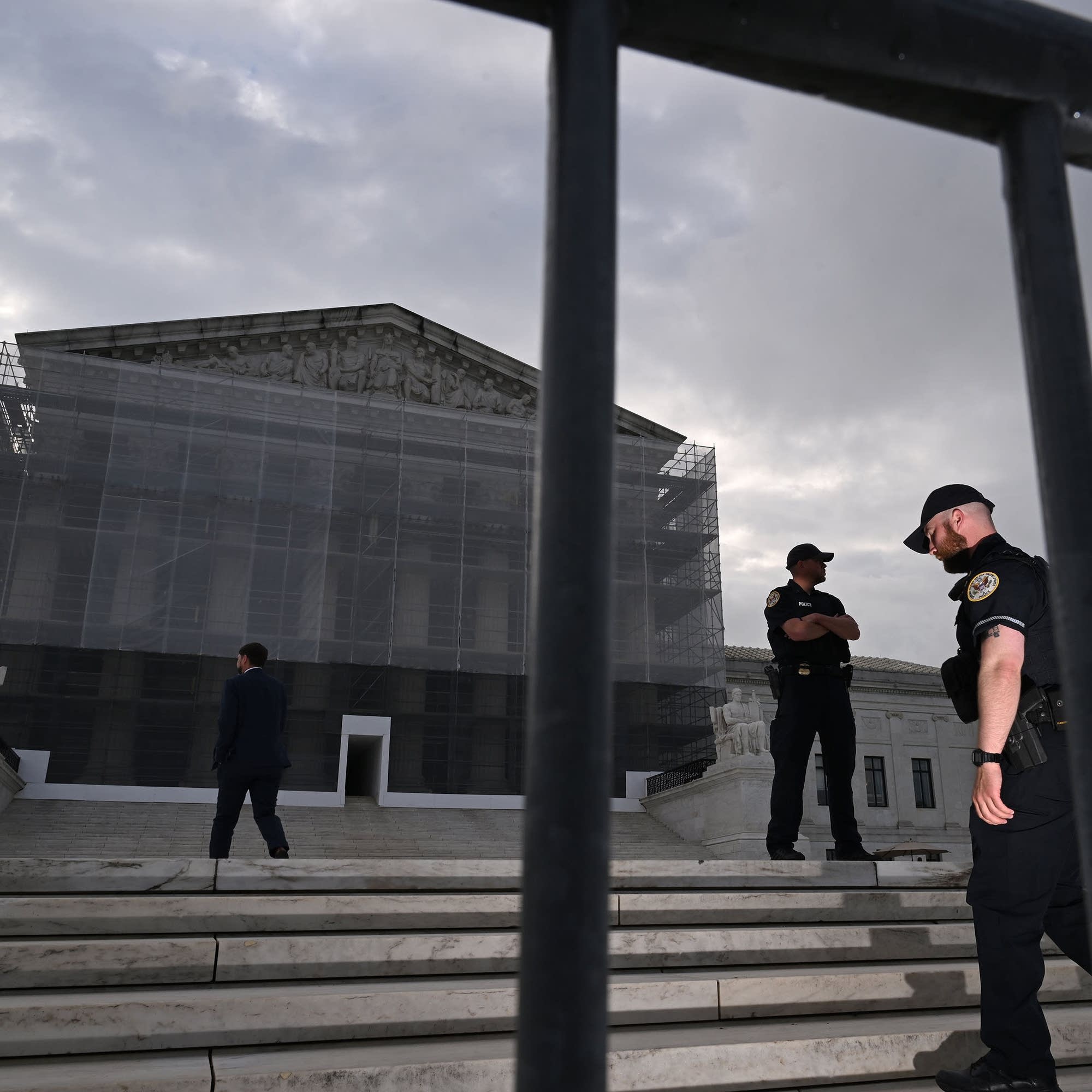
The Trump team's big tariff toolbox I'm David Brancaccio in Los Angeles. This is the week the Supreme Court hears oral arguments about whether President Trump's preferred method of imposing what he calls reciprocal tariffs is legal or not. It's the strategy of declaring an emergency and then using emergency authority. Treasury Secretary Scott Besant is among those who've said they expect to prevail in the high court. But if they do not get used to it, there are many other ways to apply taxes on stuff from other countries. To start the week, let's consult economist Julia Coronado, founder of Macro Policy Perspectives out of Austin.
- [02:08]
Julia Coronado
There are other legal paths to imposing tariffs. If the current legal path, which is based on the US Economy being in a state of emergency, you know, if that is struck down, there are other legal paths to reimpose tariffs through other channels.
- [02:23]
David Brancaccio
Yeah, just looking at the list, Section 122 Trade act of 1974. You don't like that they got Section 338 of the Tariff act of 1930. There's also Congress, the way it's supposed to work, right?
- [02:35]
Julia Coronado
There's supposed to be a congressional authorization of a tariff, and that's precisely what's before the Supreme Court this week. And Congress certainly has been missing in action on this.
- [02:47]
David Brancaccio
But you make an important point, which is often the administration casts tariffs as a way to right trade wrongs and bring Job back to America. But it's an import tax and it raises a lot of money to pay for what they want to spend on.
- [03:01]
Julia Coronado
That's right. The revenue has been growing steadily as they impose more tariffs, not less. And so it's become quite temptation for the administration to lean on this as a source of revenues. Even as they say cut corporate taxes, they're raising taxes through another channel.
- [03:18]
David Brancaccio
Economist Julia Coronado is also a professor at the University of Texas, Austin. Thank you.
- [03:23]
Julia Coronado
My pleasure.
- [03:25]
David Brancaccio
London based BP says it is selling off its US shale gas assets in a $1.5bn deal. The BBC's William Lee Adams has more.
- [03:34]
William Lee Adams
British energy giant BP is selling stakes in its U.S. onshore pipeline assets to investment firm Sixth street for $1.5 billion. The sale of assets in the Permian and Eagle Ford basins is part of a $20 billion divestment program running until the end of 2027. It's aimed at bringing debt levels down and reviews its oil and gas portfolio. BP has been under pressure from investors. It became the target of activist investors after an ill fated foray into renewables hit profitability. Once the sale is completed, BP's US onshore oil and gas business, BPX Energy, will hold a 51% stake in the Permian assets and 25% in the Eagle Ford assets. The announcement comes ahead of BP's third quarter results announcement on November 4th. I'm William Lee Adams for Marketplace.
- [04:26]
David Brancaccio
Meanwhile, Exxon Mobil is threatening to pull out of Europe entirely if the EU doesn't loosen up a law that requires firms in the EU to inventory and report human rights and environmental risks throughout their supply chains.
- [04:51]
Shoshana Walter
Foreign.
- [05:01]
Morgan Stanley Sponsor
This episode is sponsored by Morgan Stanley's Thoughts on the Market. Today's financial markets move fast. Morgan Stanley moves faster with their daily podcast Thoughts on the Market. Thoughts on the Market covers daily trends across the global investment landscape with actionable insights from Morgan Stanley's leading economists and strategists. And with most episodes under five minutes long, staying informed has never been easier. Listen and subscribe to Thoughts on the Market wherever you get your podcasts.
- [05:31]
Superhuman Sponsor
This Marketplace podcast is supported by Superhuman. The world is buzzing with AI tools. But instead of making things easier, they've made your workflow overwhelming. You're stuck copying and pasting, context switching and juggling too many apps. There's now a better way that outsmarts the work chaos. Meet Superhuman, the AI productivity suite that gives you superpowers everywhere you work with Grammarly, mail and coda working together, you get proactive help across your workflow, from writing to preparing for meetings, presentations, and so much more. Think of Superhuman as your AI dream team, proactively helping you go from to do to done faster. Superhuman knows what you might need and offers suggestions. Whether you're drafting emails, creating documents, or more. It guides you in the moment so you can sound like your best self and stay focused on what matters. There are even specialized agents designed to collaborate seamlessly and amplify your impact. Unleash your Superhuman potential today. Learn more@superhuman.com podcast that's superhuman.com podcast the.
- [06:31]
David Brancaccio
Liability of drug companies that pushed highly addicted opioid painkillers has been a major story for us here. But today, a new book about the dark side of the drug rehab industry. It's called An American Scandal by investigative reporter Shoshana Walter, who joins us now.
- [06:46]
Shoshana Walter
Welcome to thanks so much for having me.
- [06:48]
David Brancaccio
David, give us a sense at least of the lay of the land in the world of rehab, generally for profit, a mixture of big players and small outfits. How does it work?
- [07:00]
Shoshana Walter
The rehab industry as a whole is a $53 billion industry. You have insurance funded programs, you have totally unregulated recovery homes, and then you have the world of medication assisted treatment.
- [07:17]
David Brancaccio
Now, I know you have scandal in the title of this, but what do the data tell you about the success or failure of the overall system?
- [07:26]
Shoshana Walter
On average, people go to rehab multiple times before they enter recovery. Someone who attends a 30 day program and finishes that program is actually much more likely to overdose and die in the year following that treatment program than someone who failed to complete that program at all.
- [07:47]
David Brancaccio
You follow a number of people on their journeys through rehab, and there's a particularly stark contrast. You have a person who's black, a person who's white, and their experiences are quite different.
- [07:58]
Shoshana Walter
That's right. One of those people, April Lee, is the mother of three from Philadelphia, who herself grew up with a mother who was addicted to crack cocaine. You know, when April was struggling with her own addiction, she could not find treatment, despite how much her treatment system has grown. Her children were taken from her, she grew worse in her addiction, and the only way that she could find to get out of it was to get herself arrested. And then on the other hand, you have Chris, a young white middle class guy from Louisiana. He was court ordered into a treatment program. When he got there, he realized that he would have to work up to 80 hours per week manual labor jobs without pay. And he rarely received counseling or anything that might be considered treatment. And he was badly injured in the program. And ultimately he left the program and assumed that he would get sentenced to prison and ended up getting a break from the judge who gave him probation.
- [09:04]
David Brancaccio
You know, let's say there were some policy solutions that could fix bad and dangerous management and abusive programs. There's still the problem of cost, right? Rehab can be very expensive and insurance companies often don't pay the bills at all or don't pay all the bills.
- [09:23]
Shoshana Walter
The system that we have now is actually fueling these high costs because people are going into rehab, they're completing the program, they're leaving, they're relapsing, and then they're just going back in again. You know, I spoke with a number of treatment company owners who actually referred to this as a, as a cycler, like a washing machine cycle. You go in, you go out, you repeat, and some treatment. A lot of the treatment industry now views this as part of the business model.
- [09:53]
David Brancaccio
Shoshana Walter is a reporter with the nonprofit newsroom the Marshall Project. She's author of the new book An American Scandal. Thank you very much.
- [10:01]
Shoshana Walter
Thanks so much for having me.
- [10:04]
David Brancaccio
We're from APM, American Public Media. This week on Million Bazillion, we cover the spooky, haunting, and downright confusing topic of national debt. Together, you and kids can learn what exactly the national debt is, why some.
- [10:21]
William Lee Adams
People are worried about it, and who.
- [10:23]
David Brancaccio
Exactly has to pay for it.
- [10:25]
Shoshana Walter
Wow, look at those numbers ticking up.
- [10:27]
David Brancaccio
On the debt scoreboard.
- [10:29]
Shoshana Walter
Is it at all possible?
- [10:31]
Julia Coronado
Possible?
- [10:32]
William Lee Adams
This town is in too much debt. Don't miss this week's episode of Million Bazillion.
- [10:37]
David Brancaccio
Listen on your favorite podcast.
- [10:39]
Shoshana Walter
Applause.