← Marketplace Morning Report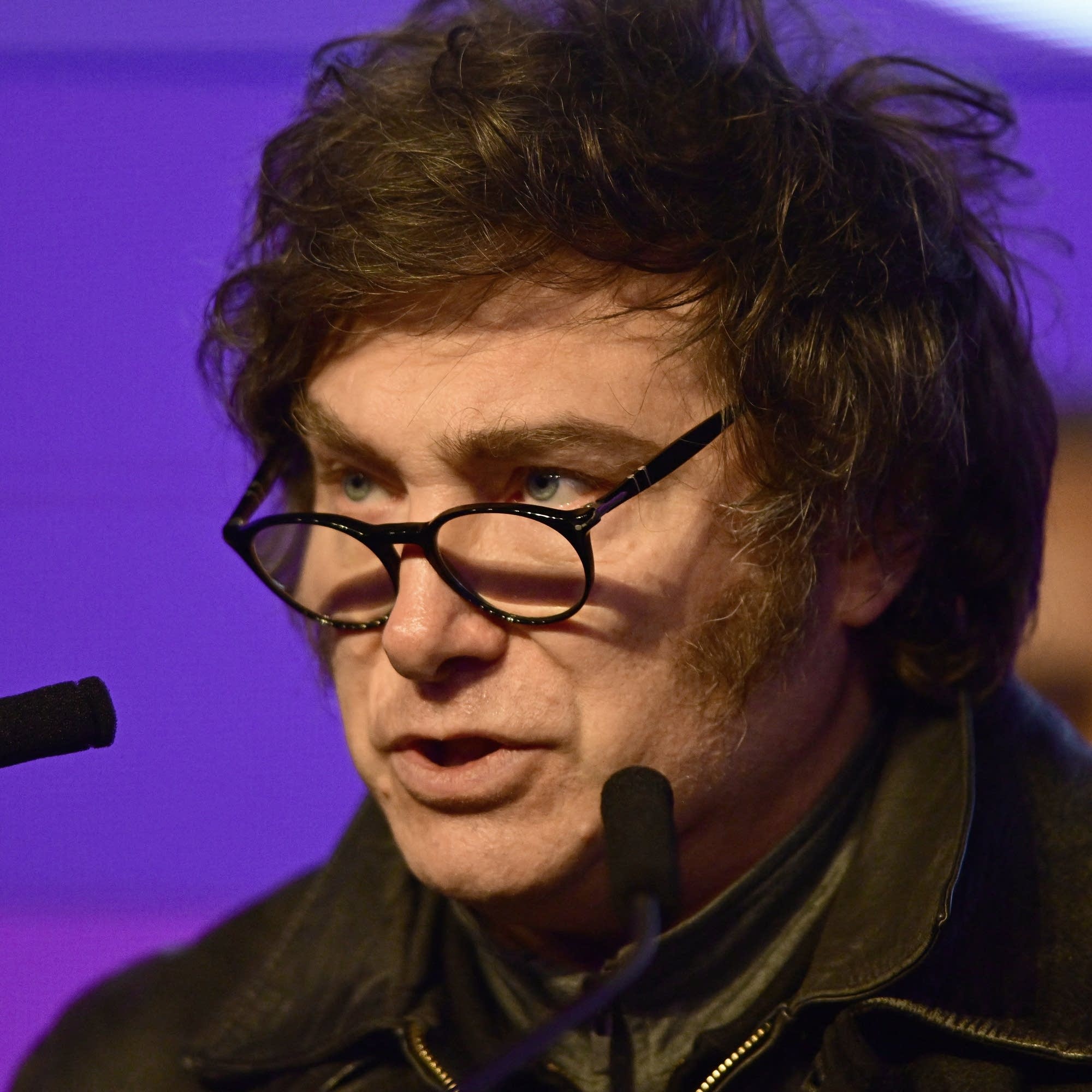
Loading summary
Transcript20 lines
- [00:00]
A
Our state has changed a lot in the last 140 years. We know because Multicare has been here guided by a single making our communities healthier. That comes from making courageous decisions, partnering with local communities to grow programs and services, and expanding healthcare access to those who need it most. Together, we're building a healthier future. Learn more at multicare.org@capella university.
- [00:33]
B
Learning the right skills could make a difference. That's why our business programs teach you relevant skills you can take from the courseroom to the workplace. A different future is closer than you think with Capella University. Learn more at capella. Edu.
- [00:49]
C
Argentina pivots from huge cuts to a public sector spending spree Live from the UK this is the MARKETPLACE MORNING REPORT from the BBC World Service. I'm Stuart Clarkson. Good morning. Well, we'll start in Argentina, where the country's president has announced plans to increase spending on pensions, health and education. It comes after months and months of austerity. In a TV address, Javier Milei told his people the worst is over. Katie Silver's with us now on Marketplace. Good morning, Katie.
- [01:16]
D
Hi there.
- [01:17]
C
So just under two years now since he became president, it's been a tough time, hasn't it?
- [01:21]
D
It has. There have been widespread cuts and indeed, protests across the country at some of his austerity measures. I mean, some are very positive when it comes to Malay. They say that he's been very beneficial for the economy. He's seen inflation go down, it was triple digits. Now they're forecasting or hoping for just over 10% next year. So in some ways there are some people who are very supportive, but many are not. So there have been widespread protests, particularly for example, from the health care sector. I have contacts and colleagues in Buenos Aires who have talked about, for example, the sheer numbers of doctors that are taking to the streets, the huge cuts that that sectors have faced along with as well, for example, public sector workers. And of course, he came to office with that chainsaw, promising to drastically cut government spending. And that is something that we have seen well and truly.
- [02:12]
C
So he's saying the worst is over. What's actually going to change? How might it affect people's lives daily?
- [02:17]
D
The Libertarian Party says now that it's still going to be pursuing a solid fiscal program. So basically saying that by all accounts they are going to guarantee a fiscal balance. They call it a rule of fiscal stability and say that if there's any chance that they are going into fiscal deficit, they will cut spending again. But for now, they say that they're going to guarantee a fiscal balance and hike funds, particularly when it comes to things like health care, education and pensions, three of the sectors that have been really cut during this time. The government said that they're going to allocate about 85% of the government budget to that in the coming year.
- [02:52]
C
Okay, we'll keep an eye on it. Thanks for joining us on Marketplace, Katie.
- [02:55]
D
Thanks for having me.
- [02:56]
C
Let's do the numbers now. And markets around the world have a close eye on tomorrow's Fed decision on interest rates. South Korea's Kospi hit a record high up more than 1%. Gold prices have been buoyed by talk of a rate cut too. And Google owner Alphabet is spending $7 billion on a infrastructure and research in the UK. The deal was announced just ahead of President Trump's state visit to Britain. Further multibillion dollar US Investments in the UK are expected. And the automaker Jaguar Land Rover has confirmed that its Factories in the UK will stay shut for another week until the 24th of September at the earliest. The company was hit by a serious cyber attack more than two weeks ago, which stopped production. That's estimated to have cost more than $70 million so far. Next AI powered websites and apps are becoming part of our daily lives with language models vital to making them work. And there's now a drive in some African countries, including Nigeria, Kenya and South Africa, to create more AI products in different languages to open up the new tech to more people across the continent. The BBC's Pumza Fulani reports.
- [04:00]
E
Hola Pill in the blistering sun in Rustenburg, the heart of South Africa's platinum region, we arrive on a 21 hectare farm and find a small team hard at work tending to rows and rows of vegetables. That's she's a 45 year old mother turned produce farmer, interchanging between two local languages, Setswana and Isitrosa. She gives instructions to each of her workers or on what needs to be done. It's a small glimpse of language diversity at play, yet local experts say the opportunity for AI to help solve everyday challenges in Africa is immense if designed with local languages in mind. Our farmer Labu agrees. She uses a homegrown app, AI Pharma, for help when problems arise on her farm and can act quickly, saving time and money, prompting it in her home language, Setswana. The the app understands and responds with suggestions.
- [05:06]
F
You can see my cabbages, they're like opening. So you know I can go into AI and ask that my cabbages are opening. What that is, I think for Somebody in the rural areas like me, who is not exposed to technology or anything, you can ask in a simple language.
- [05:22]
E
But such language savvy tools are extremely rare and AI needs massive data to work well. A new project called Africa Next Voices may help with this. Its researchers have created the largest known data set of African languages across South Africa, Kenya and Nigeria. They asked everyday people to talk about everyday things, from farming, schooling to healthcare in 18 different local languages. The digital trove will be free for developers worldwide. And one developer who may benefit from this is South Africa's Lilaba AI, a business that's already creating communication systems for banks and telecoms companies. We're in Rosebank at the offices of Lilapa AI. It's a homegrown tech company who say they're building artificial intelligence that understands Africa's own languages.
- [06:22]
F
You want people to have agency over their lives.
- [06:25]
E
Here's their CEO, Bilonomi Moila.
- [06:28]
F
It can be the difference between accessing healthcare. It can be the difference between being able to engage with your bank and managing your banking needs or your taxes or even speaking to your government.
- [06:39]
E
And so, for those pushing for inclusive AI, this isn't just about Africa claiming a seat at the digital table. It's about using the technology to serve its people in their own voice.
- [06:53]
C
That's Pumza Filani reporting for Marketplace. Our producer today was Neil Morrow and our editor is Naomi Rainey. Here in the uk, I'm Stuart Clarkson with the Marketplace morning report from the BBC World Service. Have a great day.
- [07:18]
A
Poetry has the power to connect our inner universe and the outer world. I'm Maggie Smith, poet and host of the Slowdown, a podcast from American Public Media. Each weekday, find time to take a breather from your to do list, or doom scrolling for that matter, and take in a moment of reflection with a hand picked poem. Listen to the Slowdown wherever you get Podcasts.