← Marketplace Morning Report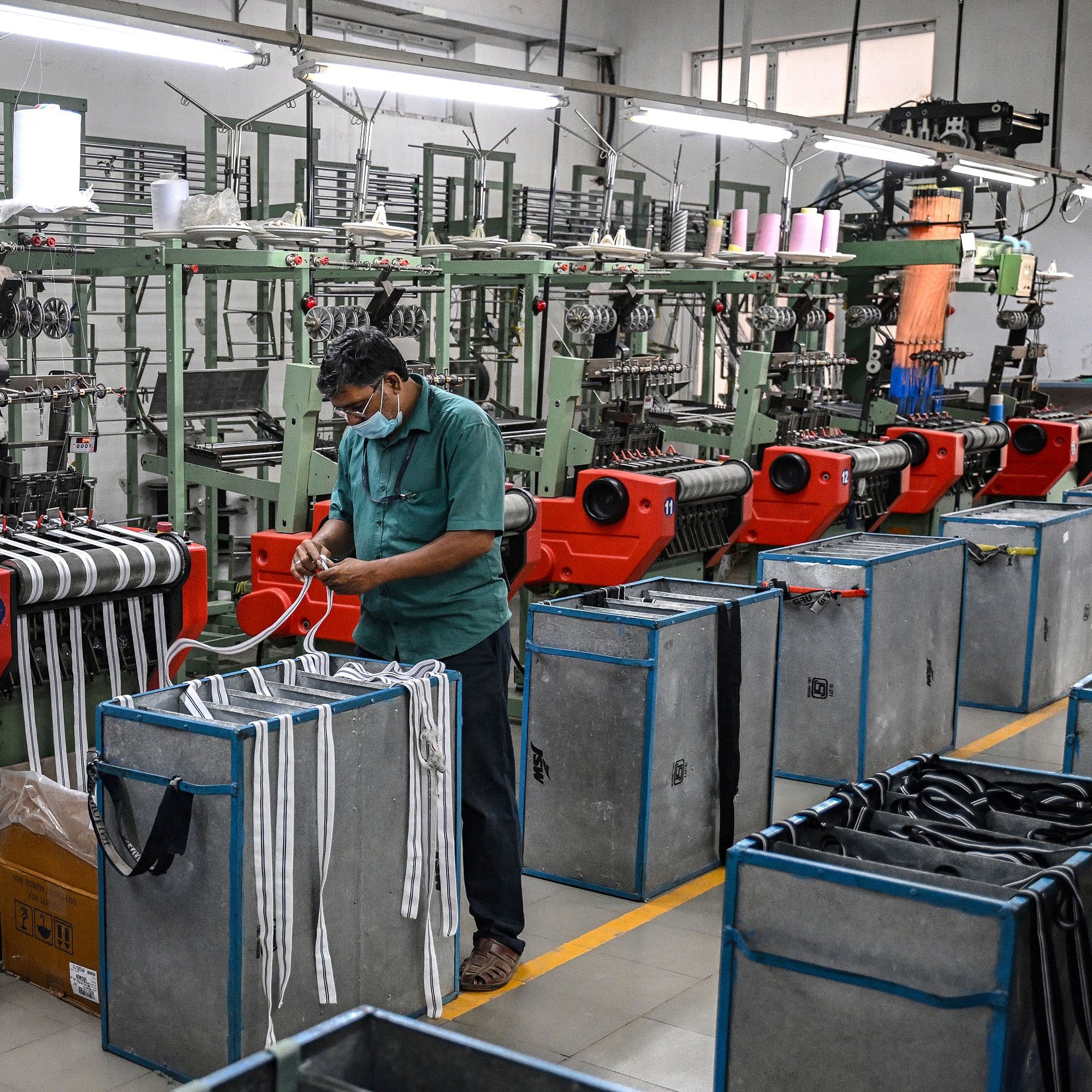
Loading summary
Transcript24 lines
- [00:00]
Wix Advertiser
When you've got too many ideas and too little time, that's when you need wix for your website. Wix helps business owners like you and me get more done without burning out. It's packed with AI tools that actually make running your business online easier. Build a full site just by talking with AI, get an AI agent to manage your sales and marketing, or work like a 10 person team even if it's just you. Try it for yourself@wix.com your new home.
- [00:26]
Dr. Horton Advertiser
Is now ready Dr. Horton, America's Builder has new homes that are ready today with new construction communities in Ellensburg and throughout the Greater Seattle area. Dr. Horton has the right home for you at Dr. Horton. We're still building with flexible living spaces, smart home technology and two and three car garages. More communities and more homes available every day. Find your new home in Ellensburg now ready@drhorton.com Dr. Horton, America's builder and equal housing opportunity builder as US tariffs bite.
- [00:59]
William Lee Adams
India unveils a huge credit lifeline for exporters Live from the UK this is the Marketplace Morning report from the BBC World Service. I'm William Lee Adams. Good morning. India's government has approved a $5 billion credit line to support its struggling exporters. The package is designed to help industries hit by steep US Tariffs on Indian goods. It comes as Indian workers across sectors like textiles, jewelry and seafood face big potential job losses. The US Is India's biggest export market, but there is still no sign of a much anticipated trade deal between the two countries. The BBC's Arunadeh Mukherjee is in Del hi. Where's the money going to flow?
- [01:39]
Arunadeh Mukherjee
Well, basically the Indian government has approved this credit scheme largely to target medium and small businesses, especially in the context of the US Tariffs, which continue to have a cascading impact on Indian exporters and the Indian economy. And this is important because India's merchandise Exports to the US fell by over 10% to over $5 billion in September because of these tariffs. The plan is that this credit scheme will run till March next year, giving collateral free bank loans to exporters to bo competitiveness to help them explore new and emerging markets. The government feels that this will help India progress towards achieving its overall $1 trillion export target.
- [02:17]
William Lee Adams
Which sectors will benefit the most from the credit?
- [02:20]
Arunadeh Mukherjee
These are the labor intensive sectors. So you're looking at sectors like garments, like jewelry, leather goods, chemicals. There are also been job losses that have been reported in a lot of these sectors, especially in states where we have manufacturing and exporting hubs, including Prime Minister Narendra Modi's home state of Gujarat as well. So I there is an increasing realization that there needs to be some sort of additional support which can help India tide over the current challenging environment, even as officials try to navigate that very elusive trade deal which both sides have just failed to make any progress on.
- [02:56]
William Lee Adams
And the government's move comes at a time the economy is doing quite well. Inflation in India is at a record low.
- [03:02]
Arunadeh Mukherjee
The fact that the inflation figures are coming down is certainly good news. It gives the Indian central bank a little more maneuvering room to see if they can lower interest rates, which might help in the longer run. You know, the whole idea of Trump's tariffs on India, these additional tariffs, which have taken tariffs to 50%, is because India continues to purchase Russian oil. India's purchasing Russian oil only to keep its inflation in check. That has been India's considered line. So I think it's a very complex web where it's very hard for India, where to pull back, how to satisfy the US and also how to keep India one of the world's fastest growing economies.
- [03:41]
William Lee Adams
Aruna Day, thanks for joining us on Marketplace.
- [03:43]
Arunadeh Mukherjee
Thanks for having me.
- [03:44]
William Lee Adams
All right, let's do the numbers. Tech giant Tencent, China's most valuable company, has posted a 15% jump in revenue, propelled by a surge in international gaming. And sales at the luxury fashion company Burberry climbed 2% in the latest quarter, helping push operating profits to $25 million. New research presented at this year's COP30 climate summit in Brazil has warned that global carbon emissions from coal, oil and gas are set to reach a record high in 2025. From Brazil, here's the BBC's Ma McGrath.
- [04:16]
Matt McGrath
The global carbon budget gives a complicated picture of a world that is going through a massive change in how it generates energy. More coal, oil and gas have been burned this year, so emissions from fossil fuels are up just over 1%. But the rate of growth of carbon output has slowed remarkably over the past decade. And in some areas, such as deforestation, the emissions from cutting down trees have fallen. However, new green energy is not yet slowing the rise in global temperatures. Researchers of COP 30 here in Belem say the level of expected planetary warming has barely changed over the last four years.
- [04:55]
William Lee Adams
Matt McGrath One sector under particular scrutiny at the COP30 talks is shipping. It's a big emitter that has struggled to agree on a global carbon reduction. Earlier this year, a UN Backed deal was provisionally struck that would have imposed a levy on emissions for large ships. But the US Effectively derailed that agree last month when Donald Trump said it would not stick to the levy. Arsenio Dominguez, Secretary General of the International Maritime Organization, who's in belem for cop 30, is still pushing for that deal. Arsenio hi.
- [05:25]
Arsenio Dominguez
Hello. Good morning.
- [05:26]
William Lee Adams
It's about a month since the UN backed proposal to introduce a levy on shipping carbon emissions was blocked by the US where is that deal now? Is it finished?
- [05:37]
Arsenio Dominguez
No, it's not finished. The fact is that the agreement to introduce the pricing mechanism was postponed at the adoption phase for one year in order to continue to engage in negotiations. And we actually did that the week after where through a working group, all the parties that attended the meeting continued to engage in the development of the guidelines addressing the comments that were expressed during the session. And of course, we're working towards a plan of meetings for next year ahead of the resumption of the extraordinari session.
- [06:09]
William Lee Adams
Can you understand the stance of the US from a business perspective that the Trump administration wants to sell more oil and gas?
- [06:16]
Arsenio Dominguez
I wouldn't go directly into what are the objectives or the actions of one specific government from the United nations, but what I can tell you is that we're actually working with all the governments with all the industries in order to highlight the benefits in moving towards this decarbonization. There are challenges ahead and of course there is a price to pay when it comes to decarbonizing a sector like shipping and I'm sure other sectors. And this is why it is important, important from us as we progress in the negotiations at IMO in understanding the concerns and highlighting the benefits in how we're going to unlock all those potentials.
- [06:52]
William Lee Adams
Some said it would make it much more difficult to achieve anything at cop. Have you received any encouragement from what you have heard so far?
- [06:59]
Arsenio Dominguez
I've been participating on two days in the conference and the message continues forward in relation to the countries looking for ways to find the necessary agreements and make progress in relation to protection and conservation of the planet. There's still many actions that are taken out there in relation to research and development, investment, infrastructure in order to develop when it comes to shipping, the new technologies, alternative fuels that will actually move us towards a decarbonization.
- [07:29]
William Lee Adams
Secretary General Dominguez, thanks for joining us on Marketplace.
- [07:32]
Arsenio Dominguez
It's been my pleasure.
- [07:34]
William Lee Adams
That's all for today in the uk I'm William Lee Adams with the Marketplace Morning Report from the BBC World Circle.
- [07:45]
Million Bazillion Narrator
Sometimes kids ask questions that reveal just how much adults still need to learn, like can you explain what causes an economic bubble and why are things so expensive at the airport or how much national debt might be too much. Fear not. Million Bazillion is back with a new season to help you and your kids become pros at understanding how money shapes the answers to all all those questions and more. Listen to the latest season of Million Bazillion on your favorite podcast. Apparently.