Loading summary
Transcript40 lines
- [00:00]
Dell Commercial Announcer
Introducing your new Dell PC with the Intel Core Ultra processor. It helps you handle a lot, even when your holiday to do list gets to be a lot like organizing your holiday shopping and searching for great holiday deals and customer questions and customers requesting custom things. Plus planning the perfect holiday dinner for vegans, vegetarians, pescatarians and Uncle Mike's carnivore diet. Luckily you can get a PC with all day battery life to help you get it all done. That's the power of a Dell PC with Intel inside backed by Dell's price match guarantee. Get yours today@dell.com holiday terms and conditions apply. See dell.com for details.
- [00:30]
Odoo Sponsor Announcer
This podcast is supported by Odoo. Some say Odoo business management software is like fertilizer for businesses because the simple, efficient software promotes growth. Others say Odoo is like a magic beanstalk because it scales with you and is magically affordable. And some describe Odoo's programs for manufacturing, accounting and more as building blocks for creating a custom software suite. So Odoo is fertilizer Magic Beanstalk building blocks for business Odoo exactly what businesses need. Sign up@odoo.com that's o d o o.com.
- [01:02]
David Brancaccio
The law of supply and demand is not about a president demanding lower beef prices. I'm David Brancaccio in Los Angeles. First, the US Is sanctioning Russia's two biggest oil companies. Given the country's war on Ukraine, the New York price of crude is up 5.4% to the highest in two weeks. Now the BBC's Peter Bose has more.
- [01:23]
Scott Besant
This is a significant shift in policy by the Trump administration, a move designed to inflict enough damage on the Russ Russian economy to encourage President Putin to end the war in Ukraine. Announcing the new sanctions, the US Treasury Secretary Scott Besant said they were needed to address Russia's lack of serious commitment to a peace process. He called for an immediate ceasefire and urged America's allies to support the US and adhere to the sanctions. The two oil companies are responsible for more than half of all Russian production.
- [01:56]
David Brancaccio
$38 trillion. That's the new size of the gross national debt of the US it's up a trillion since August, the fastest addition of a trillion outside of the pandemic. More debt, among other things, pushes interest rates higher and shifts tax burdens onto kids and grandkids. President Trump posted yesterday that cattle ranchers, quote, have to get their prices down, and he claimed the tariffs he put on Brazil are the reason ranchers are doing well. But the reality is there is no quick fix for high beef Prices Marketplace's.
- [02:27]
Henry Epp
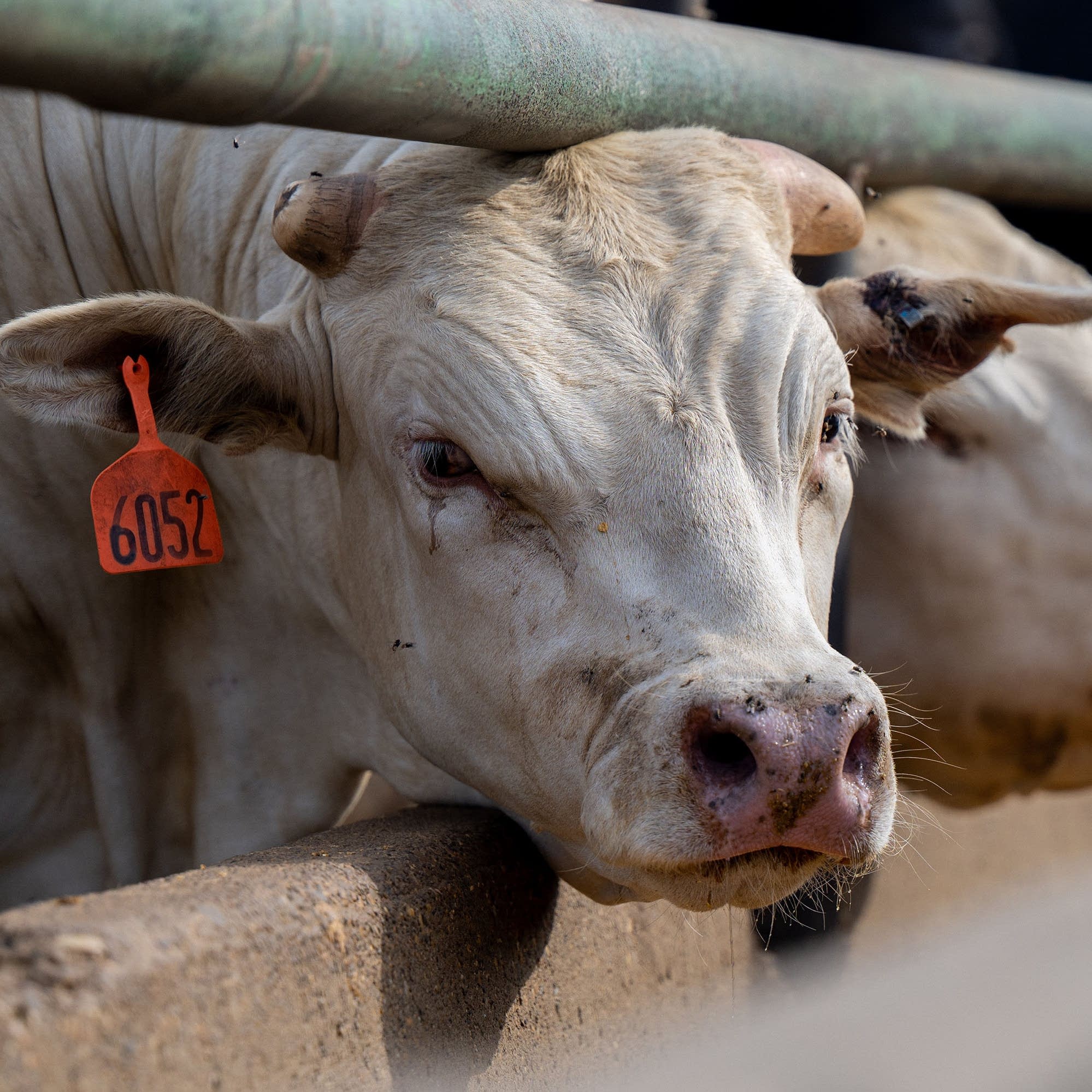
He Mariep reports beef prices have risen sharply because the supply of cattle in the US Is down ever since a drought and a spike in grain prices a few years ago led many ranchers to send their cattle to market because they couldn't feed them.
- [02:41]
Amy Scott
After that, we did not have then a replenishing supply of beef.
- [02:46]
Henry Epp
Naomi Bloom is with Total Farm Marketing. She says there are about 6 million fewer cattle in the US now than in 2020, and yet demand for beef hasn't let up because people are really into protein right now.
- [02:59]
Amy Scott
People aren't going to give up hamburgers, they're not going to give up tacos, they're not going to give up spaghetti.
- [03:03]
Henry Epp
And ranchers aren't going to give up a really good market for their product, says Daniel Sumner at UC Davis. That's driving how they manage their herds.
- [03:11]
Odoo Sponsor Announcer
The young heifers can either become a cow and have her own calves or she can become a steak.
- [03:19]
Henry Epp
With beef prices so high, ranchers have.
- [03:22]
David Brancaccio
Been saying, I can't keep that heifer.
- [03:26]
Odoo Sponsor Announcer
To be a cow. She's just too valuable. Well then how do you build the herd?
- [03:31]
Henry Epp
Sumner says the federal government could bring down beef prices by lowering tariffs to encourage more imports. I'm Henry Epp for Marketplace.
- [03:58]
Kimberly Adams
Say what you want about AI, but.
- [04:00]
Amy Scott
It'S here and it's helping businesses get.
- [04:02]
Kimberly Adams
More done in a day. Wix's website builder is infused with AI so you can stay ahead.
- [04:08]
Amy Scott
Create a beautiful, functional website just by describing your idea. Track how your site appears in AI.
- [04:14]
Kimberly Adams
Search results, create custom images on demand, or launch an entire campaign in a matter of minutes.
- [04:21]
Amy Scott
WIX gives you AI wherever you need it.
- [04:24]
Dell Commercial Announcer (Alternate)
Try it now for free@wix.com introducing your new Dell PC. Powered by the Intel Core Ultra processor, it helps you handle a lot, even when your holiday to do list gets to be a lot because it's built with an all day battery plus powerful AI features that help you do it all with ease, from editing images to drafting emails to summarizing large documents to multitasking so you can organize your holiday shopping and make custom holiday decor and search for great holiday deals and respond to holiday requests and customer questions and customers requesting custom things. And plan the perfect holiday dinner for vegans, vegetarians, pescatarians and Uncle Mike's carnivore diet. Luckily, you can get a PC that helps you do it all faster so that you can get it all done. That's the power of a Dell PC with Intel inside, backed by Dell's price match guaranteed. Get yours today@dell.com deals terms and conditions apply. See dell.com for details.
- [05:28]
David Brancaccio
Let's go from the beef of today to the food of tomorrow, given what climate change is doing to the world's food supply. Picture cattle grazing across acres, crops with no pesticide. More carbon stored in the ground. It's called regenerative agriculture. Amy Scott, host of the Marketplace podcast How We Survive, visited a regenerative ranch in Sear of Climate Solutions in Tomales.
- [05:51]
Amy Scott
California, about an hour and a half north of San Francisco. I met Stemple Creek Ranch. I have to say I didn't expect a rancher to be wearing flip flops.
- [06:00]
Lauren Poncha
Yeah, I'm the hippie rancher.
- [06:01]
Amy Scott
That's Lauren Poncha, the owner and a fourth generation rancher. Stemple Creek is a regenerative ranch that sells grass raised beef and lamb and pasture raised pork and chicken. And I'm visiting today to see what those practices look like firsthand. Pancha takes me to a special part of the ranch. Oh my God, that is like so bucolic.
- [06:25]
Lauren Poncha
It's one of my favorite places.
- [06:27]
Amy Scott
Trees and tall grass surround a big pond which is completely still. But it wasn't always like this. Part of adopting regenerative practices included revitalizing this area.
- [06:40]
Lauren Poncha
None of these trees were here 10 years ago. I've planted them all, so they're all sequestering this carbon.
- [06:46]
Amy Scott
Pontia says his ranch has always prioritized conservation and protecting wildlife. Then about 15 years ago he teamed up with a local group trying to promote climate smart agriculture. At first he says it was just a way to get free compost.
- [07:04]
Lauren Poncha
And then what it really did was open my mind about soil health and connectivity amongst living plants. Carbon is just another piece of that link. And I'd be naive to say what we're doing is actually going to have a huge significant impact just on my ranch. But if everybody around the world did this, it would have a huge, significant.
- [07:24]
Amy Scott
Impact as a climate solution. Though there's a debate brewing.
- [07:29]
Michael Grunewald
Well, this is where I start getting in trouble.
- [07:31]
Amy Scott
That's journalist Michael Grunewald. He wrote the book We Are Eating the Earth all about the ways our agriculture systems are hurting the planet.
- [07:40]
Michael Grunewald
The organic grass fed beef that, you know, people love so much because there's this sense that the cows are treated better and that maybe it's better for the planet. It's certainly worse for the climate.
- [07:53]
Amy Scott
Worse, he says, because it takes longer for the animals to get to slaughter weight, which means they have longer to emit methane into the atmosphere, while regenerative grazing requires more land that might otherwise be left alone as forest or wetlands storing carbon. One study of a ranch in Georgia found its regenerative grazing system required two and a half times more land than conventional practices to produce the same amount of meat. In his book, Grunwald turns to a surprising factory farms and look, you know.
- [08:30]
Michael Grunewald
They treat people badly, they treat animals badly, they use too many antibiotics, they're lobbying against environmental regulation and climate action. But one thing about them is that they do make a lot of food, and we are going to need more food with less land.
- [08:48]
Amy Scott
Tomorrow I visit a factory operation to find out could it really be better for the climate? I'm Amy Scott for Marketplace.
- [08:57]
David Brancaccio
The first episodes of this new season of How We Survive are ready for you on your favorite podcast app. And small investors chatting online have turned non meat company Beyond Meat into the latest stock trading craze. From an all time low. October Beyond Stock went up 600%, but it dropped 17% overnight here in Los Angeles. This is the Marketplace Morning Report from APM American Public Media.
- [09:24]
Kimberly Adams
I'm Kimberly Adams, host of Make Me Smart, a podcast from Marketplace that makes today make sense. Join me throughout the week as I dig into the biggest stories in tech culture and the economy. Whether it's a vibe check on the job market or the latest on China US Relations, make Me Smart helps you understand how the headlines actually impact your daily life. Listen to Make Me Smart on your favorite podcast. Applause.