Loading summary
Transcript22 lines
- [00:00]
Wealth Enhancement Sponsor
This Marketplace podcast is supported by Wealth Enhancement, who understand that dreams don't happen by chance. It takes a plan. They're ready to build your wealth. Blueprint for retirement, investing taxes and everything else your financial life brings. It reveals gaps and highlights opportunities you may have missed at no cost to you. Find out more@wealthenhancement.com Blueprint.
- [00:28]
USAA Sponsor
If you your parent or spouse served in the military, you could join our family. Our members saved an average of $70 a month on auto insurance when they switched. Tap the banner or visit usaa.com join today to check your eligibility restrictions apply.
- [00:44]
Stuart Clarkson
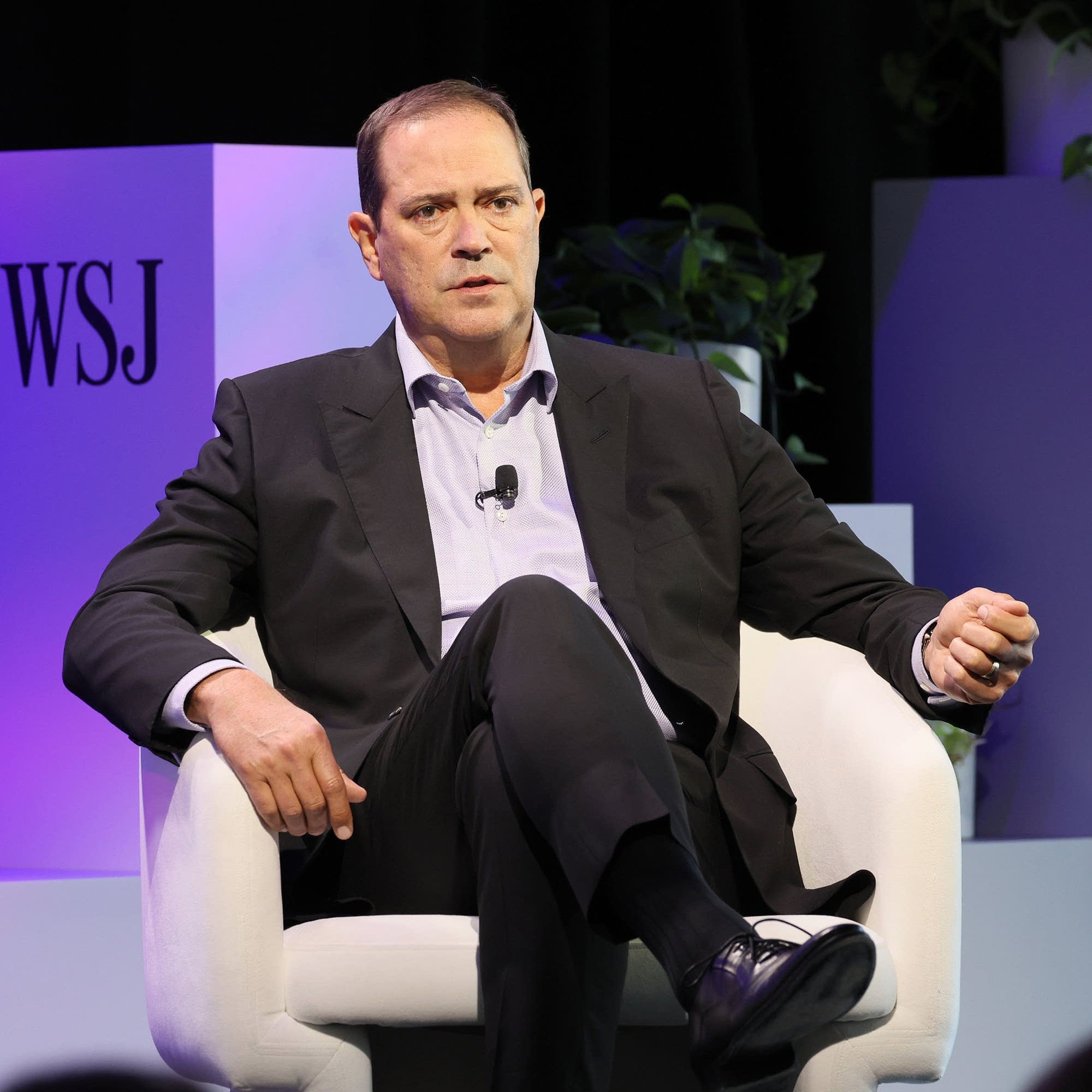
AI is having a gold rush, but an industry leader says not everyone will strike it rich. Live from the UK this is the Marketplace Morning Report from the BBC World Service. I'm Stuart Clarkson. Good morning. One of the world's leading technology bosses has warned that share prices are probably a bubble and there'll be carnage if it bursts. The chief executive of Cisco, Chuck Robbins, has told the BBC that while some companies won't survive, artificial intelligence will be bigger than the Internet. He's been speaking to the BBC's Faisal Islam.
- [01:14]
Chuck Robbins
Cisco is one of the world's leading technology companies behind some of the critical IT infrastructure enabling the day to day use of AI. It was hit when the original dot com bubble burst in 2000, but survived and thrived after losing 80% of its. Now its boss, Chuck Robbins, confidant of President Trump, says while AI technology is unstoppable, there may be some financial turbulence ahead.
- [01:39]
Every major technology revolution that we see feels like hype to begin with and there's been a lot of discussion about is this a bubble? And the answer is probably yes. There's carnage along the way, but it is going to be bigger than the Internet.
- [01:51]
Mr. Robbins said some jobs were already being eliminated by AI, particularly in areas like customer services where where he said companies would need fewer people.
- [02:00]
There's some jobs that we already know are going to probably be changed and some that will be eliminated by using AI.
- [02:07]
Interviewer
Give us an example.
- [02:08]
Chuck Robbins
I think you're going to see a lot of contact center customer service jobs are going to change, but we're using a ton of AI and we're able to do more with fewer people and that's just the way it is.
- [02:17]
But he urged people not to be afraid of the technology and embrace it in their lives.
- [02:22]
Stuart Clarkson
Faisal Islam reporting. Let's do the numbers now. Shares were up 7% in early trading in Europe for ASML, the world's largest supplier of chips. It's reported higher than expected Q4 bookings totaling $15.8 billion. And the South Korean chip maker SK Hynix has announced a doubling of its operating profit in 2025, up to a record high of $33 billion. Meanwhile, the Swiss franc has set a fresh record against the euro this morning, and one US dollar is now worth just 0.76 francs. Analysts say the franc surge is down to the currency' as a safe asset to hold.
- [03:00]
Sebastian Usher
Now.
- [03:00]
Stuart Clarkson
The UK Prime Minister Keir Starmer has arrived in China ahead of talks with President Xi Jinping on Thursday. It's the first visit to Beijing by British prime minister in eight years. The BBC's Laura Bicker is there.
- [03:12]
Laura Bicker
China believes the UK is too close to the United States and simply follows Washington when it comes to foreign policy. So this visit for them is partly about the optics, about the prestige of showing images of a British Prime Minister, a key US ally, touring the Forbidden City and meeting Xi Jinping. The UK is not one of China's top trading partners, but officials still see London as an important financial heartland and will be keen to do a deal. China is using its status as the factory of the world to draw Western countries a little closer.
- [03:48]
Stuart Clarkson
That's Laura Bicker reporting. Now, Mexico's President Claudia Sheinbaum says the country will continue showing solidarity with Cuba, despite reports that Mexico's state oil producer Pemex had halted oil shipments to the island under pressure from President Trump after the US military arrested Venezuela's President, Nicola Maduro earlier this month. Supplies of Venezuelan oil to Cuba have been severely restricted, but the Mexican president says any decision to continue to supply oil to Cuba is for Mexico to take.
- [04:19]
Claudia Sheinbaum
Mexico has always shown solidarity and will continue to do so. So the decision of when to send it oil and how to send it is a sovereign decision for Mexico.
- [04:29]
Stuart Clarkson
That's the Mexican president, Claudia Sheinbaum. Let's take you to Saudi Arabia next, where the construction of a huge skyscraper in the capital Riyadh has been suspended. It would have been 20 times the size of the Empire State Building, but now the future of the structure is unclear, with the building's financing and feasibility being reassess. The project was part of the Saudi Arabian government's strategy to diversify the country's economy away from oil. But several projects have now been postponed, including the hosting of the 2029 Asian Winter Games. So what's going on? Here's the BBC's Sebastian Usher.
- [05:02]
Sebastian Usher
This was a massive building, 400 meters by 400 meters, and it was going to have the biggest with A dome, the biggest AI kind of projection facility ever. So you would enter it and you'd enter these new worlds, essentially. And I think it's a retrenching of a number of these extraordinary projects, partly because economic reality is hitting home a little bit. These are essentially being financed by the pif. This is a private investment fund which is essentially under the personal control of Mohammed bin Salman. But spread across all of these extraordinary projects, it's becoming difficult, it seems, to actually be able to pursue some of them. Oil prices are not what they were. So I think that is also a cold shower of reality.
- [05:49]
Stuart Clarkson
But there is still a lot of modernization going on. In Saudi Arabia's capital city, Riyadh, compared.
- [05:55]
Sebastian Usher
To how it was 20 years ago, is just a completely different city bursting with entertainment. Whereas once it was a wasteland, there was nothing. There'd be restaurants you could go to, but it'd be segregated. There would be no public entertainment spaces. Essentially, now it's full of them. So that has been delivered on. Major sporting events have attracted people to come on visa specifically for those events. But it's these mega projects. This ski resort that was going to be built was meant to be ready in 2029 for the Asia Winter Games, now is being delayed. The line. This was a city which was essentially going to be half a kilometer skyscrapers facing each other for 170km through the desert. It never looked like it was going to happen and it isn't now. It's been very much curbed and curtailed. And all this news has come up really just in the past week or two. The ambition of it was so extreme, but it could never match that. And, you know, remember that Saudi Arabia is going to host the World cup in 2034. So I think some of this is looking at what money they have now and where they can get the best bang for their buck and also certain things that they cannot back away from. I mean, the World cup, they can't. They have to come up with extraordinary stadiums and so on for that.
- [07:11]
Stuart Clarkson
That's Sebastian Usher reporting. Thanks for listening. Today in the uk, I'm Stuart Clarkson with the Marketplace Morning Report from the BBC World Service.
- [07:23]
Rima Reis
I'm Rima Reis. And this week on this Is Uncomfortable, fellow podcaster and host of Scamfluencers, Sarah Haggie joins me to sort out your work drama. We answer your questions about scammy bosses, managing workplace friendships and coworkers who push the boundaries a little too far. I'm going to stay at your place for a bit while I'm breaking up. And obviously I'll need a key. And that is how you get a squatter. Listen to this is Uncomfortable on your favorite podcast, apparently.