← Marketplace Morning Report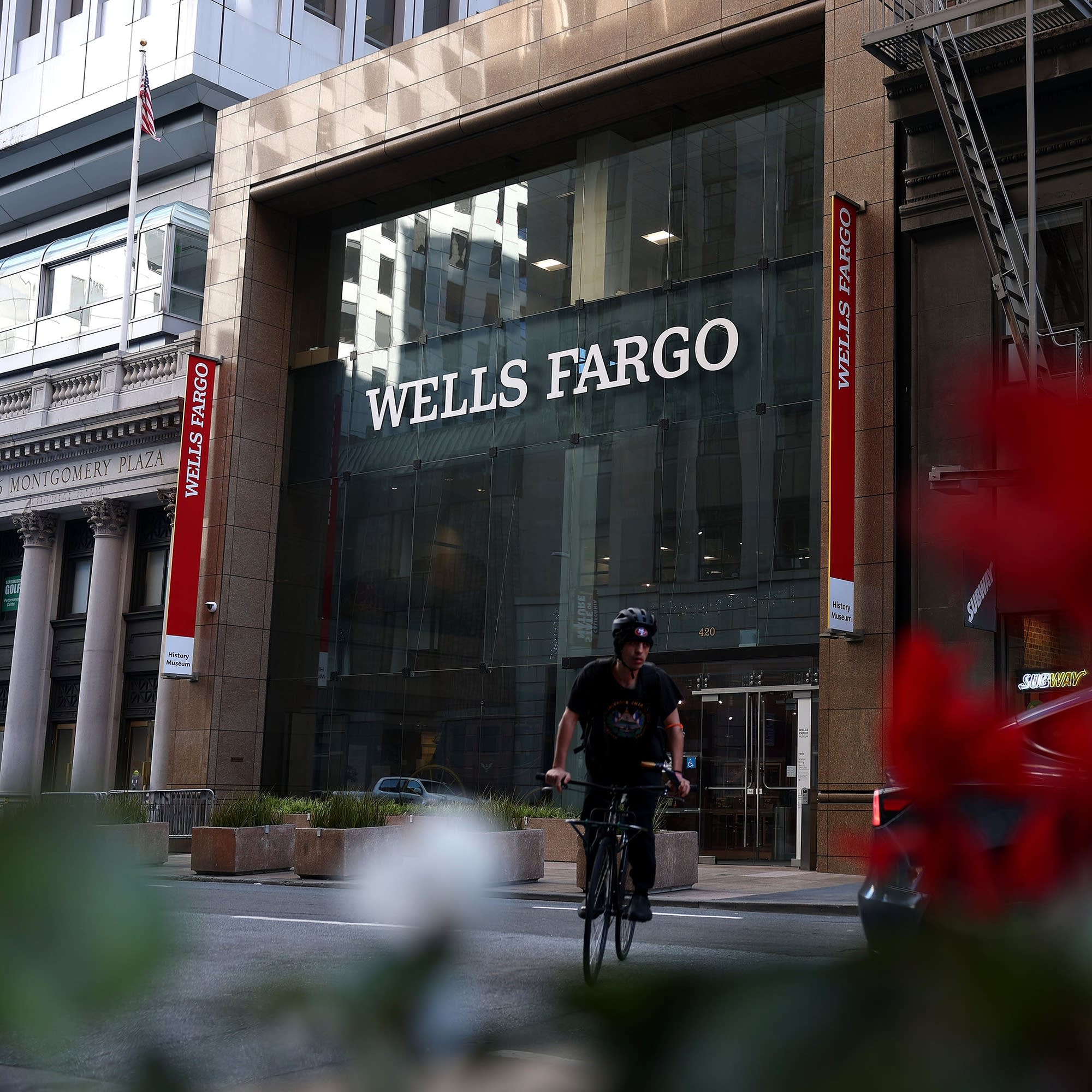
Loading summary
Transcript39 lines
- [00:00]
Bridget
Hello listeners. Marketplace's Webby winning kids podcast Million Bazillion is back for an all new season. Hosts Bridget and Ryan are answering a whole new set of kid questions about everything from royalties and franchises to why the heck we have a two dollar bill. Even grown ups might learn a thing or Two Million Bazillion is presented in partnership with Greenlight, the debit card and money app for kids and teens. Give your family the tools to manage money wisely with Greenlight. Learn more@greenlight.com million and tune into Million Bazillion wherever you find your favorite podcasts.
- [00:38]
Ryan
This podcast is supported by Odoo. Some say Odoo business management software is like fertilizer for businesses because the simple, efficient software promotes growth. Others say Odoo is like a magic beanstalk because it scales with you and is magically affordable. And some describe Odoo's programs for manufacturing, accounting and more as building blocks for creating a custom software suite. So Odoo is Fertilizer Magic beanstalk building blocks for business Odoo exactly what businesses need. Sign up@odoo.com that's o d o o.com.
- [01:09]
David Brancaccio
Laughing all the way to the big banks I'm David Brancaccio in Los Angeles. This is the week banks reveal how much they made this summer. Yesterday, JPMorgan Chase announced profits up 18% revenue revenue at Citi went up across everything it does. Bank of America and Morgan Stanley this morning reported higher than expected profits and revenue from jet set stuff like investment banking and trading securities. But the more down to earth business of lending out money? Not as strong. Marketplace's Justin Ho reports lending in general.
- [01:41]
Ryan
Was fairly muted in the most recent quarter. Tom Collins with the consulting company West Monroe, says that's partly because there are a lot of businesses that are reluctant to take on more debt. Right now.
- [01:52]
Michael Pierce
It's companies that are especially rate sensitive or potentially tariff sensitive.
- [01:58]
Ryan
On the consumer side, Collins says there's still a lot of hesitation around mortgages, thanks again to high interest rates. Same story with home equity lines of.
- [02:06]
David Brancaccio
Credit rates have stayed high enough that.
- [02:08]
Michael Pierce
It has not made economic sense for.
- [02:11]
David Brancaccio
People to tap into that equity.
- [02:13]
Ryan
But one type of consumer credit that has been growing is credit cards. JPMorgan Chase says loan volumes on its cards are up over the last year. Michael Pierce, deputy chief US Economist at Oxford Economics, says that's likely because consumer spending has been picking up recently, particularly.
- [02:29]
Michael Pierce
In consumer discretionary spending. So things like travel, trips away, hotels, that's where we've seen a big rebound in spending growth.
- [02:38]
Ryan
Pierce says a lot of that spending is being driven by higher income households. Think older consumers who might own their own homes or their own stock market portfolios.
- [02:47]
Michael Pierce
You know, really the value of their portfolios is a huge determinant of how confident they're feeling, of how much they feel they're able to spend. And so, yeah, we see when the stock market's high and going higher, you know, consumers opening their wallets.
- [02:59]
Ryan
But Piers says there are plenty of people who are not feeling that confident.
- [03:03]
Michael Pierce
The consumers where I think we're seeing struggles and continuing signs of struggles of those, you know, tend to be younger, more likely to be renters, those on lower and moderate incomes.
- [03:13]
Ryan
As a result, some banks have been setting aside more money to cover loans that could go bad. Stephen Bigger is a bank analyst at Argus Research. He says that's partly because lenders are concerned about the slowing labor market.
- [03:25]
Michael Pierce
So if consumers don't have a job or have difficulty replacing one, if they lose it, they tend to get late on their payments.
- [03:33]
Ryan
But while we have seen signs of stress among lower income consumers, Bigger says delinquencies and loan losses have been modest. In in other words, he says banks are not waving any red flags.
- [03:43]
Michael Pierce
You know, maybe call them yellow flags at this point instead of red flags. We're just not, we're not seeing any big deterioration when you're talking about the industry at large just yet.
- [03:51]
Ryan
JPMorgan Chase CEO Jamie Dimon said even though there's still uncertainty around geopolitics, trade and inflation, the economy is resilient. I'm Justin Ho for Marketplace.
- [04:03]
David Brancaccio
The Justice Department says it has seized $14 billion in Bitcoin and accused the founder of a Cambodian business empire, Prince, with masterminding a massive cryptocurrency scam. These are the calls, texts and social media solicitations that slowly drew in victims worldwide to invest money that was then stolen. Here's the BBC's Maura Fogarty.
- [04:25]
Maura Fogarty
The Department of Justice has labeled Prince Group as a criminal enterprise. It accuses it of money laundering, wire fraud, essentially running a massive cryptocurrency scam based out of Cambodia. According to the doj. They allege that Prince Group lured people online and tricked them into sending them their bitcoin, thinking they'd be invested and we'd get profits on the back of it, but instead essentially just stole their money. The U.S. department of justice says that it is the largest seizure of Bitcoin that they've ever made as part of a UK US joint sting operation where in the UK authorities there have seized about 19 properties in and around London, an office building worth more than $130 million, a mansion that they say were illegally bought from the business proceeds of this criminal enterprise.
- [05:15]
David Brancaccio
Part of this, authorities say, involved human trafficking in Southeast Asia to force people to work in call centers to perpetrate the scams. I caught up with one of this week's winners of the Nobel Economics Prize. Northwestern University's Joel Mokier says he's not worried artificial intelligence will run amok, but he is worried that social and political institutions can't keep up with advances in technology. Marketplace Morning podcast feed or streaming from our homepage now. And in an interview on cnbc, Treasury Secretary Scott Besant said the government shutdown is starting to hurt the economy, maybe up to $15 billion a day. He said the central fight is over cuts to Affordable Care act programs and Medicaid coverage. A Sapphire Reserve story from the Foster.
- [06:15]
Heather Shields
Sisters We went to Rome, me, Aaron and her boyfriend.
- [06:18]
Ryan
The entire time.
- [06:18]
Heather Shields
I think that my boyfriend is going to propose to me. I knew he wasn't. Anyway, we booked this beautiful hotel with the edit through Chase Travel. Then later at a romantic dinner, no proposal. And his card was not accepted. I pay with my sapphire reserve. The three time points on dining made up for the whole, you know, no proposal thing.
- [06:32]
Odoo/Chase Sponsor Voice
Yeah, for you get 500 credit for the edit. A collection of luxury hotels with Chase Sapphire Reserve now even more rewarding.
- [06:38]
David Brancaccio
See more rewards@chase.com Reserve IT cards issued.
- [06:40]
Odoo/Chase Sponsor Voice
By JP Morgan, Chase Bank North America member FDIC subject to credit approval terms apply.
- [06:45]
David Brancaccio
Broadway musicians have voted overwhelmingly to authorize a strike as unions representing musicians, stage managers and actors try to negotiate contracts with Broadway producers. Marketplace's Carla Javier reports, Broadway shows brought.
- [06:59]
Heather Shields
In more money than they ever had in the season that ended this spring. But at the same time, says producer Heather Shields, the frank assessment of it is that everything costs more money these days, she says. The cost of lumber is rising. So is the cost of trucking around, materials and equipment shows need. But the vast majority of the money that is spent to get a show open and to run a show is going into the pockets of people, of humans, of workers. We can't deny that that's a reality. We also can't deny that it's a reality that the cost of living is much higher and the cost of healthcare is much higher. And not every show can raise ticket prices to cover high costs due to inflation, says Matthew Roseau, dean of the school of business at Susquehanna University and a big Broadway fan.
- [07:45]
Ryan
Bottom line, there's just simply less money.
- [07:48]
Michael Pierce
To split between the groups.
- [07:50]
Ryan
And that is probably why we're seeing the threat of a strike. When there's less to split, it's much tougher to come to an agreement.
- [07:58]
Heather Shields
The actors and stage managers union and the producers trade group are expected to continue talks on Friday. CARLA I'm Carla Javier from Marketplace and.
- [08:06]
David Brancaccio
In Los Angeles, I'm David Brancaccio. This is the Marketplace Morning Report.
- [08:12]
Ryan
From.
- [08:13]
David Brancaccio
Apm, American Public Media.
- [08:16]
Odoo/Chase Sponsor Voice
Sometimes kids ask questions that reveal just how much adults still need to learn, like can you explain what causes an economic bubble and why are things so expensive at the airport? Or how much national debt might be paid? Too much? Fear not. Million Bazillion is back with a new season to help you and your kids become pros at understanding how money shapes the answers to all those questions and more. Listen to the latest season of Million Bazillion on your favorite podcast. Applause.