Loading summary
Transcript24 lines
- [00:00]
Freedom From Religion Foundation Announcer
This Marketplace podcast is supported by the Freedom From Religion Foundation. America is an idea, but progress isn't guaranteed. Today, those founding principles are being challenged by efforts to mix religion and government. The Freedom From Religion foundation is working to protect the Constitution and keep power where it belongs, with we the people. Visit FFRF US America or text America to 511-511, text America to 511-511 and keep state and church separate. Text fees may apply.
- [00:30]
Odoo Advertiser
Running a business is hard enough, so why make it harder with a dozen different apps that don't talk to each other? Introducing Odoo, the only business software you'll ever need. It's an all in one, fully integrated platform that makes your work easier from CRM, accounting, inventory, e commerce, and more. And the best part, Odoo replaces multiple expensive platforms for a fraction of the cost. This is why over thousands of businesses have made the switch. So why not you try Odoo for free@odoo.com that's o d o o.com
- [01:01]
Sabri Benishore
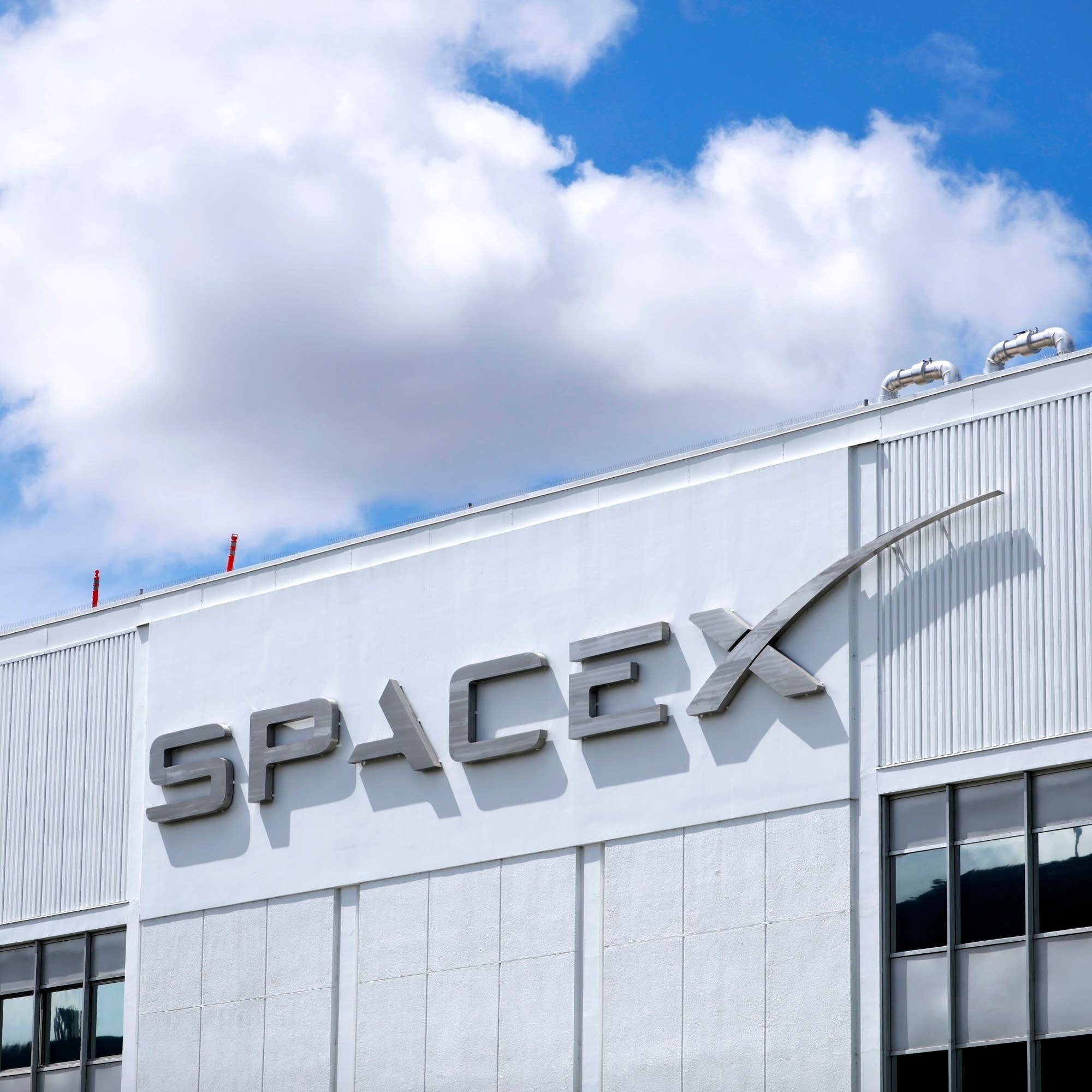
Some of the biggest names in tech are getting ready to go public. From Marketplace, I'm Sabri Benishore in New York. Elon Musk's SpaceX, which is somehow a rocket company and a social media company, but also an AI company, filed for an initial public offering yesterday. And the Wall Street Journal is reporting that OpenAI, the maker of ChatGPT created, could file for an IPO as soon as tomorrow. Marketplace's Henry Epp is here with more. Hey Henry.
- [01:28]
Henry Epp
Hey Sabri.
- [01:29]
Sabri Benishore
So these companies have raised a lot of private capital over the years. Why are they trying to go public now?
- [01:36]
Henry Epp
Well, because they need even more money. The businesses they're in, artificial intelligence and space exploration require tons of capital. And right now there's still a lot of demand from investors for pretty much any company involved in artificial intelligence. And so far, retail investors haven't had a chance to directly get a slice of these companies, which are some of the biggest names in AI. So going public allows OpenAI and SpaceX and also Anthropic, which is considering an IPO as well, to tap into that investor demand and take in billions of dollars.
- [02:08]
Sabri Benishore
Part of going public means these companies will have to disclose more financial information, tell investors more about how they are doing. SpaceX is the only one that has filed this kind of information so far. What did we learn about the company yesterday?
- [02:23]
Henry Epp
Well, for one, we learned just how much money it's losing. To be clear, most of these companies that are aiming for IPOs are losing money right now since they're spending so much to build out their systems. But we got an exact number for SpaceX. It lost close to $5 billion last year and it lost over $4 billion just in the first quarter of this year. The one part of the business that is profitable is Starlink, the company's satellite Internet service. We also learned just how much control Musk has over his company. He controls 85% of the voting power in SpaceX. And all of the shares he owns could make him the world's first trillionaire when SpaceX goes public.
- [03:01]
Sabri Benishore
All right, Marketplace. Henry up. Thank you so much.
- [03:03]
Henry Epp
Thanks, Sabri.
- [03:21]
Dell Advertiser
Dell PCs with Intel inside are built for the moments that matter. For the moments you plan and the ones you don't. Built for the busy days that turn into all night study sessions. The moment you're working from a cafe and realize every outlet's taken. The times you're deep in your flow and the absolute last thing you need is an auto update throwing off your momentum. That's why Dell builds tech that adapts to the way you actually work. Built with long lasting battery so you're not scrambling for the closest outlet. And built in intelligence that makes updates around your schedule, not in the middle of it. They don't build tech for tech's sake. They build it for you. Find technology built for the way you work@dell.com DellPCS built for you.
- [04:14]
Freedom From Religion Foundation Announcer
This Marketplace podcast is supported by the Freedom From Religion Foundation. America is an idea, but progress isn't guaranteed. Today those founding principles are being challenged by efforts to mix religion and government. The Freedom From Religion foundation is working to protect the Constitution and keep power where it belongs, with we the people. Visit FFRF US America or text America to 511-511. Text America to 511-511 and keep state and church separate. Text fees May apply.
- [04:45]
Sabri Benishore
Actinium 225, lead 212. Astatine 211. These are exotic radioactive isotopes being explored in a still developing form of cancer treatment. It is called targeted alpha therapy. The idea is to carry these isotopes directly to cancer cells using other molecules. Kind of like heat seeking missiles. So just the cancer gets the radiation. These isotopes are exceedingly rare and pharmaceutical industry is investing billions into finding or making them. Mark Peplo wrote about this for New Scientist. Hi Mark.
- [05:22]
Mark Peplo
Hi.
- [05:23]
Sabri Benishore
You wrote that the global Production of Actinium 225 is just a tenth of a milligram per year. Where do you get these isotopes from?
- [05:36]
Mark Peplo
Yeah, that was even less than I expected. I knew that this was an Extremely rare material. And I knew it was in very short supply. So much so, in fact, that some clinical trials have been held up because of a short supply of Actinium 225. There are probably three main ways to, to produce it. The first is from radium. It was used for many years in cancer treatment where you literally got some radium and put it on the tip of a needle, needle and inserted that into people. That treatment really been superseded by more effective methods. But it meant that all over the world there are lots of these leftover sources of medical radium brachytherapy needles. The International Atomic Energy Agency is in the process of gathering these abandoned sources together so that they can actually take that radium and then use various methods to convert it into, into isotopes such as Actinium 225.
- [06:37]
Sabri Benishore
There are others. I mean, they can get it from nuclear waste too.
- [06:40]
Mark Peplo
Yeah, and there's a huge amount of interest in extracting this from nuclear waste. One of the biggest efforts in the United States basically exploits a store of a couple of tons of uranium 233. All of this material is stored at Oak Ridge National Laboratory. And this radioactive material is busily decaying into a variety of things, including something called thorium 229. This thorium naturally decays into actinium 225. So they sort of skim off every week or two, whatever has accumulated, isolate that and they can use that to create these actinium based drugs.
- [07:21]
Sabri Benishore
Is there enough supply or will there be enough supply anytime soon for this to be a treatment that is widely available?
- [07:30]
Mark Peplo
Well, really, we have two sort of timelines that are hopefully going to converge. We've got the clinical trials which should, by the year maybe 2030, start to show that these things are effective and they could get regulatory approval and therefore could start being used in tens of thousands, perhaps even hundreds of thousands of patients per year. And at the same time, companies are ramping up their production capacity so that they can potentially meet that. So for example, just this month, just a few weeks ago, TerraPower broke ground on a $450 million facility in Philadelphia that's going to massively increase their Actinium 225 production capacity. Everybody's working towards this time where we're expecting one or two of these new targeted alpha therapies to come through. And then all of these facilities are really going to ramp up further and further from.
- [08:26]
Sabri Benishore
Mark Peplo is a science journalist and former chief news editor at Nature. Thank you, Mark, so much.
- [08:31]
Mark Peplo
Thank you.
- [08:33]
Sabri Benishore
You can hear a lot more about these isotopes on the podcast in New York, I'm Sabree Benishore with the Marketplace Morning Report from apm, American Public Media.
- [08:44]
Comcast Business Advertiser
Modern Enterprise has a lot of moving parts. Comcast Business helps you orchestrate it all with SD WAN working at scale to keep 150 hospital locations connected and working as one, plus SASE and Zero Trust Security protecting financial data across a bank's 2,000 branches, and AI powered networking that optimizes traffic across five continents. No one does business like Comcast Business.