← Marketplace Morning Report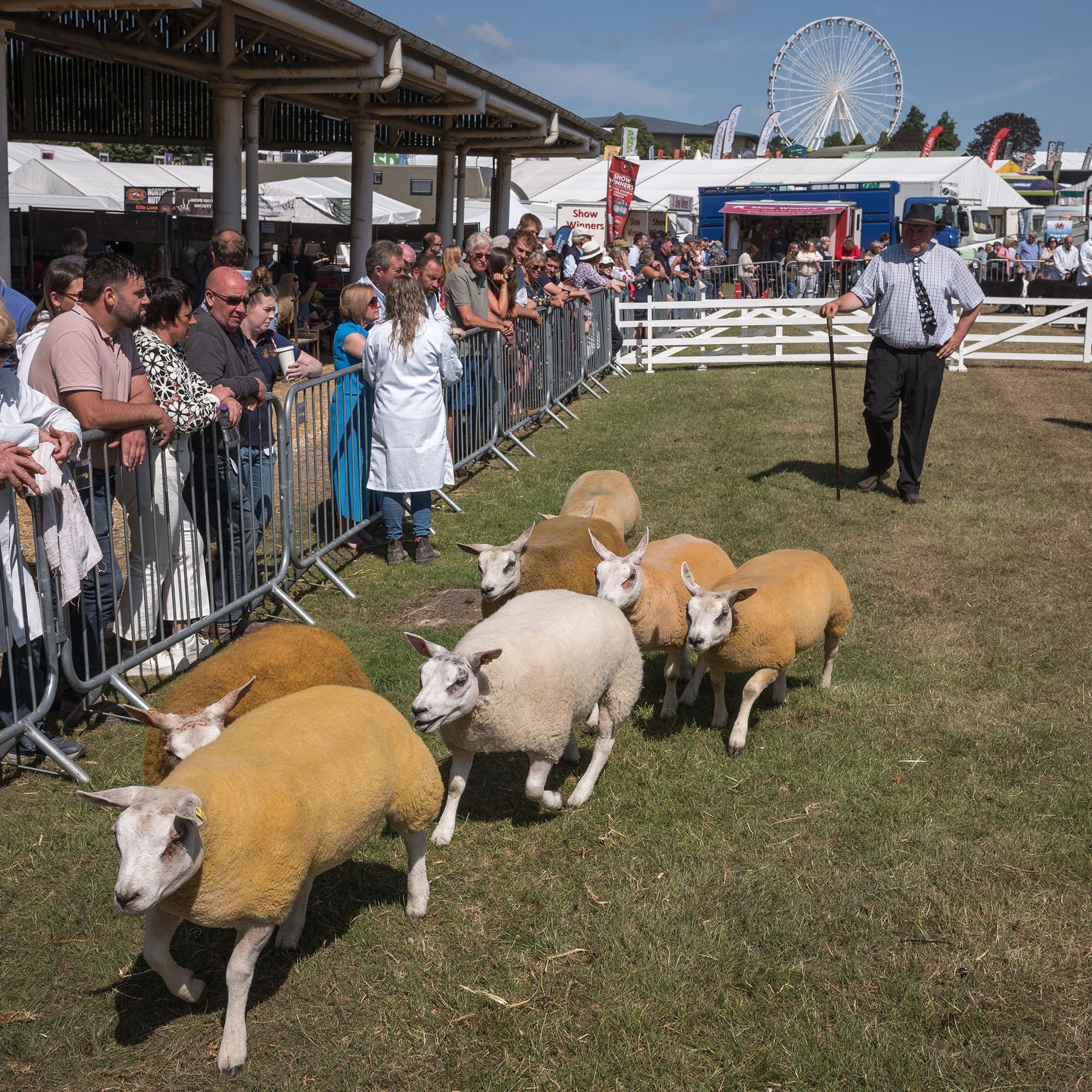
Loading summary
Transcript28 lines
- [00:00]
Dell Advertisement
This Marketplace podcast is supported by Dell. Introducing the new Dell AI PC Powered by Intel Core Ultra processor. It helps do your busy work for you so you can fast forward through editing images, designing presentations, generating code, debugging code, summarizing meeting notes, finding files, managing your schedule, responding to long emails, leaving all the time in the world for the things you actually want to do. Get a new Dell AI PC starting at $699.99 at Dell.com AI PC how those ahead? Stay ahead.
- [00:31]
Palo Alto Networks Advertisement
This Marketplace podcast is supported by Palo Alto Networks. Enterprises are deploying and experimenting with AI apps and agents, often without the right security in place. Leverage the power of a comprehensive AI platform to secure AI at every step from apps, agents, models and data. Deploy AI bravely with Prisma airs more at Palo Alto networks.com.
- [01:01]
Lianna Byrne
British farmers tell us that trade deals could threaten their livelihoods. Live from the Great Yorkshire show in the north of England. This is the Marketplace Morning report from the BBC World Service. I'm Lianna Byrne. So this morning we are bringing you to Harrogate in North Yorkshire, to England's biggest agricultural show. It attracts about 140,000 people over four days. A little away from us, there's a sheep shearing competition. We're waiting for some Jersey cows to be brought out for competition now. And earlier I spoke to dairy farmer Jo Burrows who's prepping her Jersey cow to be judged.
- [01:34]
Jo Burrows
There's a lot of behind the scenes pre prep at home before you even arrive at the show. And then when you get to the show, especially the dairy cows, because we're showing them in milk, you know, we have to be making sure that they're eating the right sort of food.
- [01:46]
Lianna Byrne
They're quite beautiful. They have little doe eyes. They're brown.
- [01:49]
Jo Burrows
Yeah, that's it. And they're one of the smaller dairy breeds. They're a small brownish cow, but the can come in lots of different types. They're very pretty.
- [01:57]
Lianna Byrne
Oh, they're very pretty. They're gorgeous. Now, how is it in the dairy industry at the moment?
- [02:02]
Jo Burrows
It is pretty hard. Farming in general is hard at the moment, but, you know, we just keep plodding on the best we can and just keep trying to do what we enjoy.
- [02:13]
Lianna Byrne
So that was Joe, one of the 300,000 workers in the UK farming sector, which is worth nearly $26 billion. And farmers here are talking about two main things, trade and tax. The UK recently gave tariff free access to 13,000 tons of hormone free US beef and agreed to allow 1.4 billion litres of American bioethanol into the country annually. And British beef producers got access to the US market for the first time. But people are worried about the impact on the sector at home. Here's farmer and cattle judge Philip Parris.
- [02:47]
Philip Parris
It's going to have grave consequences because I think at the moment the general public have got great trust in the British farmers and the meat that's being produced. Once we start bringing in meat from abroad, not only just America, but it's coming through from South America as well that haven't got the same welfare standards, I think they could start and lose confidence in us.
- [03:10]
Lianna Byrne
Now with continued uncertainty about tariffs, Tom Bradshaw, that's the boss of the National Farmers Union, told me agriculture did not want to give more ground in trade negotiation.
- [03:20]
Tom Bradshaw
UK farming has nothing left to give to reduce these tariffs further. We shouldered the burden of responsibility to remove the tariffs for the car sector and we thought the steel sector within that first deal, we cannot be expected to give any more to further negotiate.
- [03:34]
Lianna Byrne
Away those tariffs, you would worry that they would use something in the agri sector as concession for another industry.
- [03:40]
Tom Bradshaw
Well, that's what we've seen so far. I mean, we've given in on bioethanol and on beef access. Nothing else has given anything.
- [03:48]
Lianna Byrne
Now in response, the UK government says it speaks with many sectors and will protect British farmers. Since the British view on tariffs, let's get some more global market reaction in the numbers. Commodity prices jumped after President Trump warned that copper imports could face 50% tariffs. That's pushed U.S. copper to an all time high and London futures dropped. And yet, in spite of all the uncertainty, stocks rose early Wednesday on the Foxy 100. And Europe's Stoxx 600 was right. Let's talk about tax now. From next year, the British government is changing a tax relief on farmlands passed down through generations. Previously, 100% of farm assets were exempt from inheritance tax. But now anything over a 1.4 million dollar threshold could be taxed at 20%. Here's what farmers told me.
- [04:36]
John Black
John Black, I'm from Wakefield. I don't have enough money for it to be an issue for me, but I do see that it's an issue for farmers. There's not a farmer around here that's been in the job for years that I don'. Know that we'll be affected.
- [04:50]
Unnamed Farmer
Everybody you talk to, there's quite a few just retiring early or selling up or doing other things that they shouldn't be doing to pass it on to the children before the inheritance tax comes in. Yeah, it's Crisis point for a lot of farmers. It really is.
- [05:09]
Lianna Byrne
Now, the government insists it's fair. Most farms, they say, won't pay a penny and those that do can speak payments interest free over a decade. But Tom Bradshaw, head of the UK's National Farmers Union and a farmer himself, told me it's already shaking the industry.
- [05:23]
Tom Bradshaw
We believe 70% of commercial farms are impacted by the proposed changes. These are real life humans that have been caught in the eye of a tax storm here, which is a retrospective tax which is going to end up ripping apart farms.
- [05:37]
Lianna Byrne
Tom Bradshaw there now. One Scottish sheep farmer who's at the Great Yorkshire show is bringing in money in a whole new way. Cami Wilson created The Sheep Game YouTube channel six years ago and currently has more than 400,000 followers. He told me more about how he fell in love with farming and how social media has given him a way into the industry.
- [05:56]
Cami Wilson
I was born on an estate in Scotland. My father was a shepherd there. So all my early years all I really knew was sheep farming and sheep and just fell in love with it then.
- [06:06]
Lianna Byrne
Is it easy to get into this industry when you're a young person?
- [06:09]
Cami Wilson
Because my father was a shepherd, I had no direct route in, so I went away from farming. I actually worked as a police officer for 12 years before into it and I was fortunate then. You know, land prices weren't where they are now and the cost of sheep isn't where it is now. Now it's nearly impossible. Like the costs have just got so high for someone to come into the industry, they need big money behind them. So the YouTube came about because someone said, look at this guy, Tom Pemberton, he's doing really well on YouTube and he's making a bit of money from it and doing well. I thought that could be a good route. I could just share people what I'm doing and that might be a route and to make an extra coin to get me into farming. Every kid wants to buy YouTuber these days and the reality is not everyone can be a YouTuber. Well, they can, but not everyone can make money from it. But we are so fortunate in farming. Like when I started the Sheep Game channel five, six years ago. Now nobody else is doing sheep outdoors in the UK. Now you go on YouTube to be the only person doing something that's near impossible these days. So that gave me a real leg up and an advantage.
- [07:03]
Lianna Byrne
It's also opened other opportunities for you.
- [07:05]
Palo Alto Networks Advertisement
Yeah.
- [07:05]
Cami Wilson
So a big part of our business now, and that sounds so like cliche maybe for the YouTube world, is merchandise. We sell hoodies and jumpers. But we have bought a farm off the back of selling merchandise. And a big part of that is the farming community and the people that watch this getting behind us. And we are absolutely being carried on the shoulders of the people that come here and buy merch from us and let us have this dream life that we're living.
- [07:29]
Lianna Byrne
Cami Wilson there, live from the Great Yorkshire show in the north of England. I'm Lianna Byrne with the Marketplace morning report from the BBC World Service.
- [07:47]
Rima Reyes
Hey, everyone, I'm Rima Reyes and I'm excited to join Kimberly Adams on Make Me Smart. Together we'll unpack the day's news, whether it's a tariff switch up, the latest on Trump's immigration policy or the future of clean energy. Join us each weekday so we can make sense of it all together because none of us is as smart as all of us. Listen to Make Me Smart. Wherever you get your podcasts.