Loading summary
Transcript32 lines
- [00:00]
Range Rover Sport Narrator
The adage says it isn't what you say, it's how you say it. And when you lead with power, poise and performance, you're making an impact from the start. Introducing the Range Rover Sport Designed to set an example with its assertive stance and refined drive, it blends dynamic elegance with agile precision. Whether you're navigating city streets or conquering rugged terrain. Its cutting edge innovations including a cabin air purification system and active noise cancellation, offer unrivaled comfort control and peace of mind. Seven terrain modes? Check A choice of powerful engines including a plug in hybrid with a 48 mile range. Absolutely take on anything with the Range Rover Sport. Build Yours today at Range Rover.com US Sport. Explore the Range Rover Sport at Range.
- [00:53]
Marketplace Host
Rover.com US Sport this Marketplace podcast is supported by Wealth Enhancement, who understand that dreams don't happen by chance. It takes a plan. They're ready to build your wealth Blueprint for retirement, investing taxes and everything else your financial life brings. It reveals gaps and highlights opportunities you may have missed at no cost to you. Find out more@wealthenhancement.com Blueprint.
- [01:25]
David Brancaccio
At a time of kombucha or even cannabis, people are drinking less wine. David I'm David Brancaccio in Los Angeles. First today, new data showing layoff announcements from companies running at their highest rate of any January to November period since the first Covid year 2020 71,000 in November alone. Yesterday it was a payroll company that found 32,000 fewer people getting paychecks last month rather than the normal growth that we see month to month. Diane Swonk is chief economist at the audit, tax and advisory firm kpmg. Morning.
- [01:59]
Diane Swonk
Good morning.
- [02:00]
David Brancaccio
So a big interest rate decision next week from our central banking friends. You know all this official government data has been delayed. We did have that private sector report yesterday from ADP that was showing a weak labor market.
- [02:14]
Diane Swonk
It is. And that certainly just added fuel to the view within the Fed of those of doves that want to cut rates to shore up the labor market. There still is inflation also simmering out there, but for the moment, the Fed has decided that the labor market, at least for most of them, is more worrisome than the strength we're seeing in inflation. The problem is, of course, we're looking at a lot of old data and we don't have a lot of new data before the Fed actually makes that decision.
- [02:44]
David Brancaccio
It's not really clear if inflation is the biggest thing we should worry about or the labor market. If we could know, it would clear up some of that dissent.
- [02:54]
Diane Swonk
It really reflects this odd moment we're in where it's very difficult to determine which one will dominate, because if labor market weakness is due to things are beyond the sensitivity of interest rates, it will not improve and inflation could become a more lingering problem. On the other hand, if you allow the labor market to continue to deteriorate, what you could have is unnecessary pain for an inflation that may indeed resolve itself.
- [03:21]
David Brancaccio
But despite this anticipated differences of opinion at the Fed, they're going to cut interest rates next week, right?
- [03:27]
Diane Swonk
Absolutely. They're going to cut either way. And that's coming from the top, from Chair Powell, even though he didn't speak at all since the last press conference for the last meeting. When they cut on October 29th did.
- [03:40]
David Brancaccio
It with pantomime and body language. Diane Swonk, chief economist at kpmg. Thank you.
- [03:46]
Diane Swonk
Thank you.
- [03:48]
David Brancaccio
We have some numbers now on how the Trump administration is pushing to lower fuel economy standards for cars and trucks. Here's Marketplace's Henry Epp.
- [03:56]
Henry Epp
The White House proposal would still require average fuel efficiency to go up to an estimated 34.5 miles per gallon by 2031. But that's a lot lower than a Biden administration rule, which set a 50 mile per gallon requirement in the same time frame. The Trump administration claims the change will save consumers about $1,000 on new cars. The average new vehicle sold for about $50,000 this fall, according to Cox Automotive. Industry analysts note the weaker standard could also save car companies a bit of money. That's a relief to the industry, which has taken on billions of dollars of new costs from tariffs imposed by the White House this year. Still, many carmakers have investments in electrifying parts of their fleets, and they'll need to meet higher efficiency standards in order to sell cars in Asia and Europe. I'm Henry Epp for Marketplace.
- [05:09]
Marketplace Host
This podcast is supported by Odoo. Some say Odoo business management software is like fertilizer for businesses because the simple, efficient software promotes growth. Others say Odoo is like a magic beanstalk because it scales with you and is magically affordable. And some describe Odoo's programs for manufacturing, accounting and more as building blocks for creating a custom software suite. So Odoo is fertilizer magic beanstalk building blocks for business. Odoo exactly what businesses need. Sign up@odoo.com that's o d o o.com.
- [05:39]
Superhuman Sponsor Narrator
This Marketplace podcast is supported by Superhuman. The world is buzzing with AI tools, but instead of making things easier, they've made your workflow overwhelming, you're stuck copying and pasting, context switching and juggling too many apps. There's now a better way that outsmarts the work chaos. Meet Superhuman, the AI productivity suite that gives you superpowers everywhere. You work with Grammarly, mail and coda working together, and you get proactive help across your workflow, from writing to preparing for meetings, presentations, and so much more. Think of Superhuman as your AI dream team, proactively helping you go from to do to done faster. Superhuman knows what you might need and offers suggestions. Whether you're drafting emails, creating documents, or more. It guides you in the moment so you can sound like your best self and stay focused on what matters. There are even specialized agents designed to collaborate seamlessly and amplify your impact. Unleash your Superhuman potential today. Learn more@superhuman.com blue podcast that's superhuman.com podcast.
- [06:39]
David Brancaccio
In some studies, Americans are drinking less alcohol. That has health and public safety benefits, but it's a challenge for the alcoholic beverage industry. We are certainly drinking less wine, with per capita consumption down about 12% since 2019. This is of concern to wine growers, including in California, who are looking for a way forward. Tina Caputo has this story.
- [07:00]
Tina Caputo
Katie Baci Galupe Rowe walks me through her family's vineyard in Healdsburg, California, where she grows Zinfandel grapes. So we're at the Frost Ranch. This is our block, about 70 acres. All the grapes she could sell are already picked. Harvest wrapped up here a couple weeks ago, but the vines are still heavy with fruit. Do you smell it?
- [07:20]
Marketplace Host
Yeah.
- [07:21]
David Brancaccio
Oh my gosh.
- [07:23]
Tina Caputo
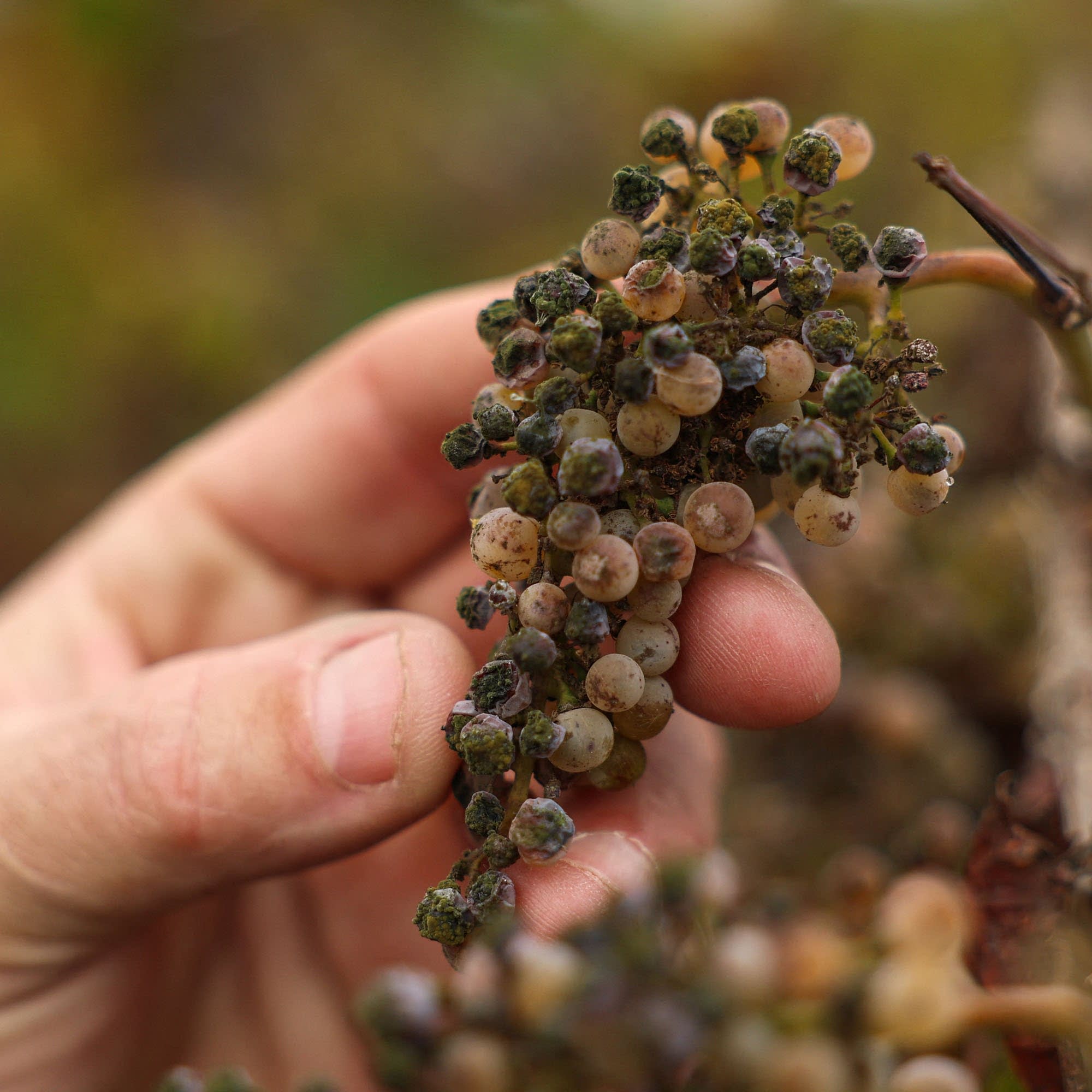
It's a mixture of raisins and mold. Little sad, yes. About half of this acreage was left unpicked this year, she says. That's a real shame. We could not have asked for a better vintage, which also makes it kind of a little bit more unbearable that, you know, they're left on the vine. Rose family is also planning to rip out a whole section of vines, something they never do unless the plants are diseased. This kind of thing is happening across California, says Kyle Collins. He's an operations manager at Allied Grape Growers in Fresno. Collins says growers in the state ripped out almost 40,000 acres of vineyards in the last year.
- [08:03]
Marketplace Host
Without question, this was the most challenging thing that I've seen in an agricultural industry, be it grapes or anything else since I've been here. It is a crisis.
- [08:12]
Tina Caputo
He compares the crisis to a wildfire. Declining demand for wine is the main cause. There's competition from other alcoholic beverages in the market and younger consumers tend to drink less wine. Adding fuel to the fire, Collins says, are federal government policies that put domestic grape growers at a disadvantage. He doesn't mean tariffs, which could actually help US Growers by driving up the cost of imported wines. Collins is talking about regulations that allow big California brands to blend up to 25% cheap foreign bulk wines into their American Appalachian products. The practice is legal, Collins says, but it cuts into demand for local grapes.
- [08:50]
Marketplace Host
The reality is we've kind of hit the wall here.
- [08:52]
Tina Caputo
Aaron Lang is definitely feeling that wall this year. He farms vineyards near Lodi, California, and says 2025 is the hardest year his family has experienced in almost two generations.
- [09:04]
Marketplace Host
Over the past 30 years, the cost to farm vineyards has tripled, while the price that we've been paid for our crop, for our fruit has fallen to just one third of what it used to be.
- [09:14]
Tina Caputo
To keep their farms going, he says, many of the region's grape growers are replacing some of their vines with more profitable crops. Lang is planting olive trees.
- [09:23]
Marketplace Host
Frankly, it's the first time in multiple generations that we haven't been just grape growers, he says.
- [09:28]
Tina Caputo
It's a necessary but bittersweet transition. In Sonoma Wine Country, I'm Tina Caputo.
- [09:34]
David Brancaccio
For Marketplace, and in Los Angeles, I'm David Brancaccio. You're listening to the Marketplace Morning Report.
- [09:46]
From APM American Public Media.
- [09:50]
A moment now to say thank you, Marketplace listeners. Your giving Tuesday support made a real impact in a moment when public media funding has been cut nationwide. Your support keeps Marketplace's independent reporting on the economy accessible for everyone. And if you didn't get a chance to donate, it's always a great time to become a Marketplace investor. Give now@marketplace.org or click the link in the show notes.