Loading summary
Transcript30 lines
- [00:00]
US Cellular Representative
With a variety of options, US Cellular Prepaid makes finding the right wireless plan for you easy. That means you can get what you need at a price you can afford, all while staying connected like two lines of unlimited data for just $60 a month and a free device like the Samsung Galaxy A16.5G. US cellular prepaid terms apply. See uscellular.com for details on WhatsApp.
- [00:23]
WhatsApp Representative
No one can see or hear your personal messages. Whether it's a voice call message or sending a password to WhatsApp, it's all just this. So whether you're sharing the streaming password in the family chat or trading those late night voice messages that could basically become a podcast, your personal messages stay between you, your friends and your family. No one else, not even us. WhatsApp message privately.
- [00:53]
Sabree Benishore
Crypto Week Draws to a Close From Marketplace, I'm Sabree Benishore in for David Brancaccio. We are at the end of so called Crypto Week on Capitol Hill and there is quite a lot to show for it. The House approved basically the first major cryptocurrency legislation ever in the US this is part of President Trump's push to make America the crypto capital of the world, and it's largely a win for the crypto industry. One of the bills would lay down rules for a type of cryptocurrency called stakeholders stablecoins. Another would affect how crypto markets in general are regulated. The BBC's Michelle Fleury in New York has more.
- [01:28]
Michelle Fleury
This is a major shakeup in how Washington treats digital assets. The House just passed two key bills that could finally bring structure and credibility to the crypto industry. First up there was the Genius act, which had already cleared the Senate. It passed the House with big bipartisan support and is now headed to the President's desk to be signed into law. This measure will help recognize digital assets like cryptocurrency as mainstream financial products, putting them closer to the same category as stocks or bonds. Then a few hours later, the House passed a second bill, the so called Clarity Act. This is aimed at setting broader rules for how crypto markets and companies are regulated. Now that one passed 294 to 134 votes, with dozens of Democrats joining Republicans. The House also passed a third, more partisan measure that would ban a central bank digital currency. For the cryptocurrency industry, this is all a major win. Companies have been pushing for federal legislation for years, spending millions backing pro crypto candidates, and now they're finally getting results.
- [02:39]
Sabree Benishore
That was Michelle Fleury with the BBC. Bitcoin, by the way, is down about a half a percent off its all time high to just shy of $119,000. Still pretty high. This week, the Taiwan Semiconductor Manufacturing Company, or TSMC, posted a record 61% increase in profits compared to the same quarter last year. That sounds wild until you remember TSMC manufactures nearly all of the world's most advanced computer chips for artificial intelligence. Daniel Ackerman has this report.
- [03:12]
Mike Schmidt
All those other tech titans wouldn't be what they are without TSMC, says Mike Schmidt of Princeton, who administered the CHiPs act in the Biden administration.
- [03:21]
Daniel Ackerman
Every Apple, iPhone, every Nvidia AI chip runs on TSMC's technology.
- [03:27]
Mike Schmidt
Schmidt says making the chips rather than designing them was a decision the firm made decades ago, and it was a good one.
- [03:34]
Daniel Ackerman
What that meant was they developed a.
- [03:36]
Sabree Benishore
Huge amount of expertise and ultimately scale.
- [03:40]
Mike Schmidt
In manufacturing that let their customers, like Nvidia, focus on chip design without needing their own factories. Lawmakers have approved billions in funding to bring more of TSMC's factories here to the US but achieving the scale it has back in Taiwan won't be easy.
- [03:57]
Sabree Benishore
It's not just about one company moving.
- [04:00]
Mike Schmidt
To the US Dan Ives, analyst with Wedbush securities, says a lot of the firm's suppliers are still across the Pacific.
- [04:07]
Sabree Benishore
You have, when it comes to the inner workings of the supply chain, 6070 partners, when you actually go downstream involved in the process.
- [04:17]
Mike Schmidt
Ives also says the US Just doesn't have enough of the skilled workers to staff these advanced chip factories. I'm Daniel Ackerman for Marketplace.
- [04:41]
Palo Alto Networks Representative
This Marketplace podcast is supported by Palo Alto Networks. Listen to threatvector, the Palo Alto Networks podcast, for in depth discussions with industry leaders and experts providing crucial insights for security decision makers. Whether you're looking to stay ahead of the curve with innovative solutions or understand the evolving cybersecurity landscape, Threat Vector equips you with the knowledge needed to safeguard your organization. Tune in and subscribe to Threatvector wherever you get your podcasts.
- [05:10]
WhatsApp Representative
For 140 years, MultiCare has been in Washington prioritizing long term solutions, partnering with local communities and expanding access to care. Together, we're building a healthier future. Learn more@ multicare.org.
- [05:27]
Sabree Benishore
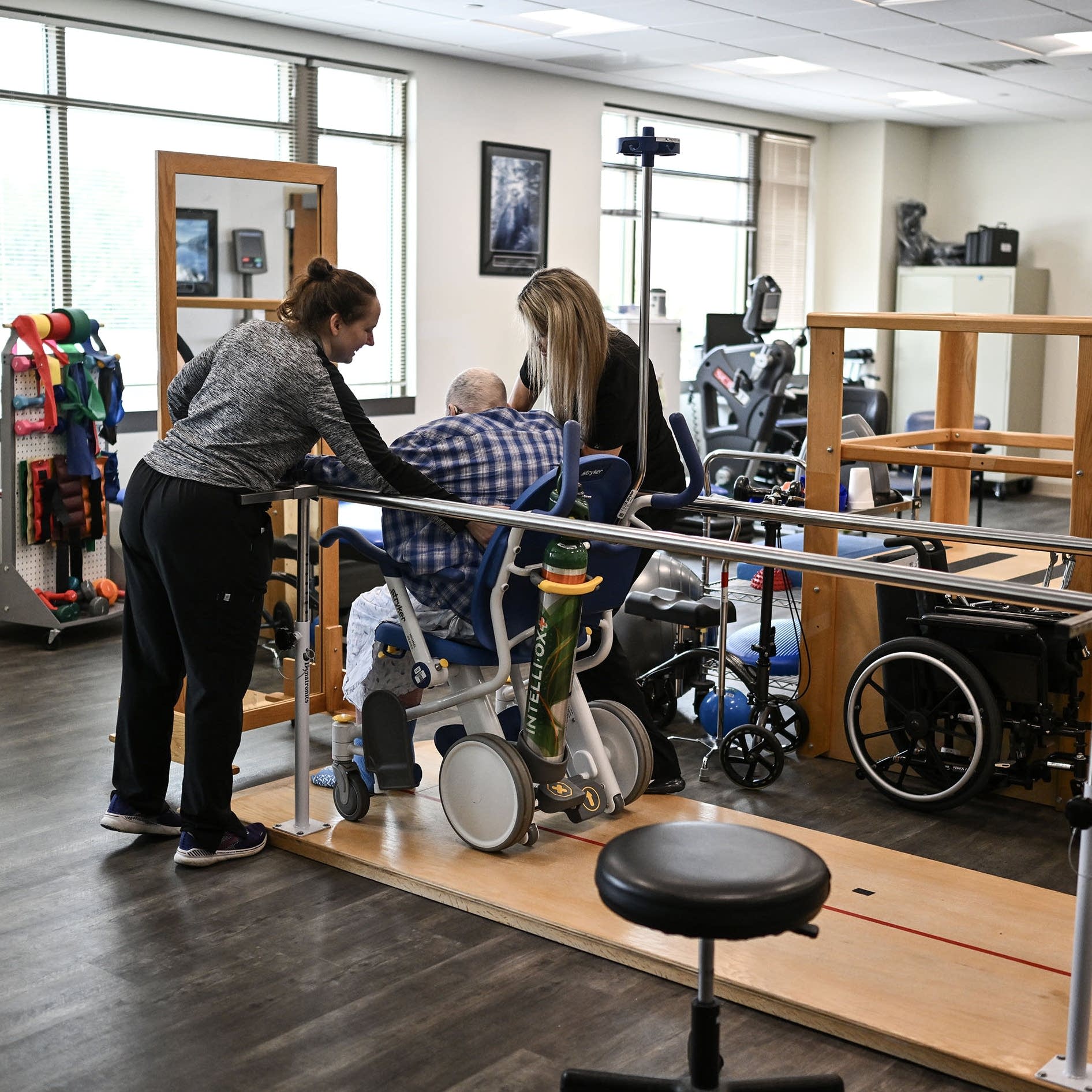
The GOP tax law made huge cuts to Medicaid, but it also included some new funding for health care. At the last minute, some lawmakers were able to get an amendment added to set aside $50 billion for something called the Rural Health Transformation Program. Sarah Jane Tribble with our partner KFF.
- [05:46]
Daniel Ackerman
Health News reports Congress and President Trump are spending billions of dollars to make rural America healthier. But will the $50 billion fund work.
- [05:55]
Sarah Homan
Like an investment of this amount and this style into rural. Hopefully it goes to rural.
- [06:04]
Daniel Ackerman
Sarah Homan is at the national association of Rural Health Clinics. And yeah, she's a little worried.
- [06:10]
Sarah Homan
You know, I think there's just some, like, confusion about who actually gets this money at the end of the day, like, what's it, what is it actually going to be used for?
- [06:19]
Daniel Ackerman
Homan's organization represents nearly 6,000 rural health clinics where more than a quarter of patients use Medicaid for their health care. The new bucket of money amounts to $10 billion annually for the next five years under the federal umbrella of the Rural Health Transformation Program. The funding goes to the states, but the way it's going to be distributed is a big unknown. As long as it's a government slush fund. That's Michael Cannon at the Cato Institute, where politics decides where the money goes.
- [06:47]
Mike Schmidt
Then it's there's going to be a mismatch between where those funds go and.
- [06:51]
Sabree Benishore
What it is that consumers need.
- [06:52]
Daniel Ackerman
When Cannon says consumers, what he means is patients in rural America. The program is designed to invest in things like workforce recruitment and boosting health outcomes. Rural people die younger on average and live with more chronic diseases. It's more common in rural areas for labor and delivery units to close or entire hospitals to close. Some policy watchers say that the silver lining from this new program isn't enough. The big law that it's part of slashes federal spending on health programs. Fred Blavin, a senior fellow at the Urban Institute, dove into the numbers.
- [07:24]
Sabree Benishore
These huge cuts in the program are going to translate into millions of people losing their health insurance coverage. These dollar amounts translate to actual people.
- [07:33]
Daniel Ackerman
The nonpartisan Congressional Budget Office reviews how much laws will cost over roughly the next decade. The law will cut about $1 trillion from federal Medicaid spending. And rural America has more people on Medicaid than than any other part of the country. In Washington, D.C. i'm Sarah Jane Tribble.
- [07:52]
Sabree Benishore
Our executive producer is Nancy Fargali. Our digital team includes Antoinette Brock, Emily McCune and Dylan Nyetanen. Our engineers are Brian Allison and Rachel Breese. In New York, I'm Sabri Benishore with the Marketplace morning report from APM American Public Media.
- [08:17]
Elizabeth and Ethan Finkelstein
From Emmy award winning series this Old House comes a new podcast, this Old House Radio Hour. We tell stories of the artisans, builders and visionaries that keep the spirit of craftsmanship alive. We also uncover America's forgotten homes with cheap old houses. Hosts Elizabeth and Ethan Finkelstein, places with history, soul and price tags that seem too good to be true. Listen and follow this Old House Radio hour from LAS Studios and American Public Media. Wherever you get your podcasts.