Loading summary
Transcript37 lines
- [00:00]
McDonald's Advertiser
New Year Same extra value meals at McDonald's now get a savory sausage McMuffin with egg plus hash browns and a small coffee for just $5 for a limited time only. Purses and participation may vary. Prices may be higher in Hawaii, Alaska and California. And for delivery, get that Amex Gold Card ready.
- [00:17]
Kyle Rysdal
I'm too tired to cook.
- [00:17]
American Express Advertiser
We feeling Five Guys or the Cheesecake Factory? Both earn up to $120 a year in statement credits of participating partners, up to $10 each month when you pay with the Amex Gold Card. Learn more@americanexpress.com Explore Gold Enrollment Requ.
- [00:32]
Guy Kilty
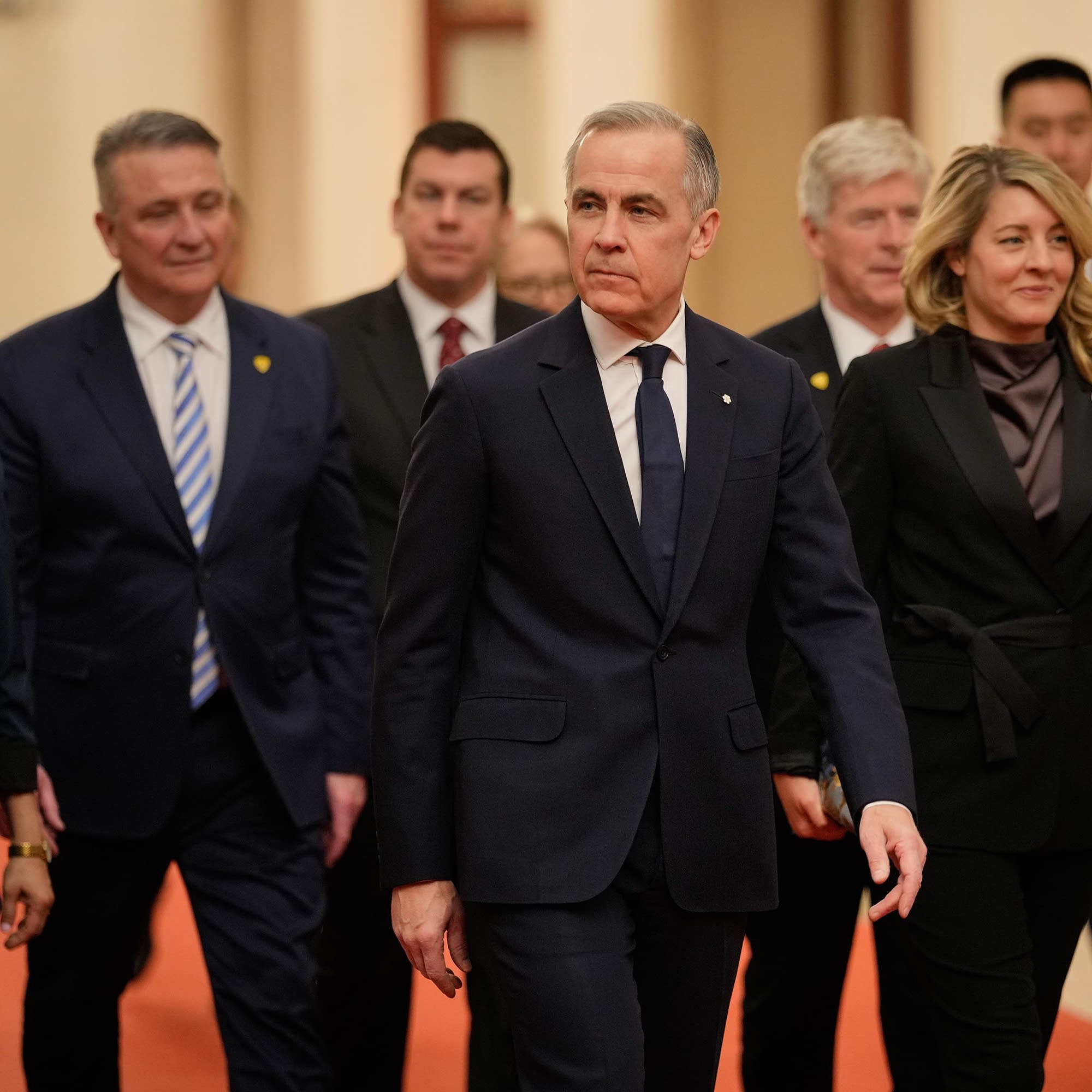
Canada and China repair their relationship with a new trade deal Live from the UK this is the Marketplace Morning Report from the BBC World Service. I'm Guy Kilty. Good morning. Canadian Prime Minister Mark Carney and Chinese leader Xi Jinping have announced a new strategic partnership between the two countries in Beijing. The two sides have signed an agreement to cooperate on clean energy and fossil fuels and lower import tariffs on a range of products. James Griffith is Asia correspondent for the Canadian newspaper the Globe and Mail and has been following this story closely. James, thanks very much for joining us on Marketplace.
- [01:07]
James Griffith
Thanks for having me.
- [01:09]
Guy Kilty
So we now know that Canada and China have agreed a new strategic partnership. Just run us through some of the details.
- [01:16]
James Griffith
Yes, so we just heard from Prime Minister Mark Carney at a press conference in Beijing where he outlined parts of the parts of this partnership which includes allowing 49,000 Chinese electric vehicles into Canada on the Chinese side, dropping a large number a large amount of tariffs on Canadian canola seed and some other agricultural products, and then also smaller deals on Chinese investment, which hasn't been completely outlined yet, but probably investment targeting the energy sector deals on tourism, including visa free access to Canadians to travel to China.
- [01:48]
Guy Kilty
And how significant a deal is it for both sides?
- [01:51]
James Griffith
It seems fairly significant, especially from the Canadian perspective. Mr. Carney's made a relatively small concession, which is Canada previously had a 100% tariff on Chinese EVs, which was copying a similar measure in the US that was adopted by the Trudeau government. And Mr. Carney has reached an agreement where Canada will accept 49,000 Chinese EVs, which was the same as they were accepting in 2023 before those tariffs came into force. And in return, China is dropping a lot of its tariffs on Canadian canality, which is a far more significant aspect or segment of Canada's economy. So Canada is accepting a relatively small amount of Chinese cars in return for China accepting a huge amount of Canadian canola seed. And Mr. Carney estimated probably $7 billion worth of Canadian canola seed. So as far as we can tell, in the very early digestion of this deal, Mr. Carney seems to have got a pretty good deal for Canada.
- [02:51]
Guy Kilty
And it's a fairly big change for both sides, isn't it too? Because I think I'm right in saying that relations between the two countries haven't exactly been brilliant for the last few years.
- [03:01]
Jonny Forsyth
No.
- [03:01]
James Griffith
Speaking this afternoon, Mr. Carney said that the relationship has been distant and uncertain for nearly a decade. And it really reached incredible low point during the Trudeau administration where obviously there was the saga of the two Michaels when China imprisoned two Canadians in apparent retaliation for Canada arresting the Huawei executive Meng Wanzhou. And that dragged on for several years and really strained ties between the two countries. Then there was this trade war that broke out just towards the end of the Trudeau administration and long running tensions over alleged foreign interference by China in Canada. So this has been a really, really tense relationship which has really hurt the economic relationship between the two countries. And Mr. Carney said new strategic partnership is the language he's used. He's talking about not even a reset, but a completely kind of new pathway for Canada, China ties. It does seem to be a, it is a dramatic shift compared to only a year ago.
- [03:58]
Guy Kilty
James, thanks very much for joining us on Marketplace.
- [04:01]
James Griffith
Thanks for me.
- [04:02]
Guy Kilty
Let's do the numbers. Oil prices fell more than 4% on Thursday as the threat of a U.S. attack on Iran appeared less likely. Iran produces about 3% of the world's oil and exports 2 million barrels of crude a day, almost all to China. The United States and Taiwan have reached a trade agreement that reduces import taxes on goods from the island while increasing Taiwan's technology investment in the U.S. washington's Commerce Department said tariffs on most Taiwanese goods will be lowered from 20 to 15%. In return, it says Taiwanese firms will invest $250 billion in the US festive celebrations at Christmas and New Year often involve increased alcohol consumption in many parts of the world. For some, that's followed by a decision to take a break from drinking, often known as dry January. However, data shows that more people are choosing to cut their alcohol intake all year round. Our reporter Imran Rahman Jones explores the growth in non alcoholic drinks.
- [05:07]
Sonja Mitchell
It starts off there in the Mash Tun.
- [05:10]
Imran Rahman Jones
We're at a brewery just outside Scotland's capital, Edinburgh, and founder Sonja Mitchell is explaining how her beer is made. But there's something different about the product here. It's brewed with almost no alcohol.
- [05:24]
Sonja Mitchell
The Flavours are developing in the beer so we'll be tasting it as it goes along till it gets to the point where it's ready then to get packaged.
- [05:32]
Imran Rahman Jones
Sonja's company Jumpship and many other brewers around the world have been gearing up for a big few weeks as the Dry January movement that's going a month without alcohol has grown in recent years while but increasingly people are choosing to reduce their alcohol all year round. According to global drinks industry research body IWSR, worldwide alcohol sales have been flat since 2019. Martin Lodewijks is their president and managing director.
- [06:01]
Martin Lodewijks
The trend for non alk grew initially more in your developed markets. So in Europe, in the US and that sort of started even sort of 10, 15 years ago. But I think over the last five years what's really changed is that you're now seeing really strong non elk growth coming out of emerging markets as well.
- [06:20]
Imran Rahman Jones
There are a couple of important points here though. The growth in sales varies quite dramatically depending on the country. And the second thing to note is.
- [06:29]
Martin Lodewijks
Globally non Elk products are about 1% of the total industry.
- [06:34]
Imran Rahman Jones
So it's a small but growing market. Good news for someone like Sonja Mitchell at Jumpship Brewery.
- [06:40]
Sonja Mitchell
I couldn't see anyone else doing it and so I thought I'd have a go.
- [06:43]
Imran Rahman Jones
How long did it take to get a good beer that tasted nice?
- [06:46]
Sonja Mitchell
I worked with a professional brewer on the first recipe. We brewed a few different versions. One was terrible, one was okay and one was brilliant. So everyone I shared this beer with loved it. Which kind of gave me the confidence to take it the next step to scale commercially.
- [07:02]
Imran Rahman Jones
The non alcoholic drinks market was pioneered by smaller craft producers. But in recent years the huge drinks companies have also got involved.
- [07:12]
Sonja Mitchell
What did you expect from a 00.
- [07:15]
Imran Rahman Jones
New Beefeater 000 alcohol Pernod Ricard launched alcohol free Beefeater. Gin giants AB InBev have released 0% versions of Corona and Budweiser beers. And Diageo says its Guinness 0.0 saw double digit growth in sales last year. Johnny Forsyth of Mintel, the global research agency, says his research shows campaigns such as Dry January are not the main reasons behind the rising growth in alcohol free drink sales.
- [07:43]
Jonny Forsyth
It's really the kind of the bigger macro factors that have driven the growth of non alcoholic drinks. Primarily those are consumers being much more conscious about their health and also governments realizing that drinking alcohol is problematic and puts a lot of pressure on their health systems and investing a lot of money in anti drinks advertising.
- [08:05]
Imran Rahman Jones
Forsyth thinks we have not seen the peak.
- [08:07]
Jonny Forsyth
Yet if we take a market like Germany, our figures show that it accounts for 8.5% of all alcoholic beer sales. So that's quite a significant chunk. In many other markets, that'll be just around 1%. But what it does show is that this has got significantly more Runway to go.
- [08:26]
Guy Kilty
Jonny Forsyth, principal strategist at Mintel Food and Drink, ending that report by Imran Rahman Jones in the UK I'm Guy Kilty with the Marketplace morning report from the BBC World Service.
- [08:48]
Kyle Rysdal
Hey, everybody, it's Kyle Rysdal, the host of Marketplace. It has been a year since the fires here in Los Angeles and businesses that burned are still struggling.
- [08:57]
Hardware Store Owner
You know, I won't lie. I've looked, I've looked at, you know, hey, maybe, maybe we move the storm. It just, it wouldn't be the same.
- [09:03]
Kyle Rysdal
Hardware store on the ground reporting and what the year ahead has in store for business owners still recovering. Listen to Marketplace on your favorite podcast.
- [09:12]
Jonny Forsyth
Apparently.