Loading summary
Transcript36 lines
- [00:00]
Odoo Advertiser
Running a business is hard enough, so why make it harder with a dozen different apps that don't talk to each other? Introducing Odoo, the only business software you'll ever need. It's an all in one fully integrated platform that makes your work easier from CRM, accounting, inventory, e commerce, and more. And the best part? Odoo replaces multiple expensive platforms for a fraction of the cost. This is why over thousands of businesses have made the switch. So why not you try Odoo for free@odoo.com that's o d o o.com this
- [00:31]
David Brancaccio
Marketplace podcast is supported by Viking, committed to exploring the world in comfort. Journey through the heart of Europe on an elegant Viking longship with thoughtful service, destination focused dining and cultural enrichment on board and on shore. And every Viking voyage is all inclusive with no children and no casinos. Discover more@viking.com
- [00:55]
Sabri Benishore
Drama in big tech From Marketplace, I'm Sabri Benishore in for David Brancaccio. Big Tech is fighting There are reports this morning that Microsoft is considering suing Amazon and OpenAI. Microsoft is apparently upset about a new deal between Amazon and OpenAI that does not use Microsoft's cloud platform. Marketplace's Nancy Marshall Genser has more OpenAI
- [01:18]
Nancy Marshall Genser
and Amazon announced the 50 billion dollar deal last month. OpenAI will use Amazon's cloud for a new called OpenAI Frontier. OpenAI customers can use Frontier to build teams of AI agents, I.e. bots that can operate independently without constant supervision from a human. The Financial Times is reporting that Microsoft is unhappy with this deal and says it violates an agreement it has with OpenAI. That access to OpenAI's models has to be through Microsoft's Azure cloud platform. The FT quotes a source familiar with Microsoft's position as saying, quote, we know our contract. We will sue them if they breach it. After OpenAI and Amazon announced their deal, Microsoft put out its own statement saying nothing about the announcement changed the agreement it has with OpenAI. I'm Nancy Marshall Genser for Marketplace.
- [02:11]
Sabri Benishore
We are now two months into a major supply chain disruption that is sweeping across the nation's yarn stores. There has been a major run on red yarn and the shortage is down to a knitting pattern from 1940s Norway. Marketplace's Kaylee Wells has that Tiffany Perry
- [02:27]
Kaylee Wells
is helping one of her customers knit a red hat. She's the owner of the Artful Yarn outside of Cleveland. It's got a triangle top and then
- [02:35]
Nancy Marshall Genser
at the top there is like 2
- [02:38]
Kaylee Wells
inches worth of a braid and a tassel at the end. It started out as a pattern signaling resistance to Nazis. In January in Minnesota, it was adapted as a symbol of resistance against immigration raids.
- [02:50]
Nancy Marshall Genser
We definitely had a couple three weeks
- [02:53]
Kaylee Wells
where somebody was coming in every day
- [02:55]
Nancy Marshall Genser
to buy red yarn.
- [02:56]
Kaylee Wells
Months later, this shop hundreds of miles away is still selling out. And one supplier says the demand for red yarn is five or 10 times higher than normal.
- [03:05]
Sabri Benishore
We keep always a few months supply for each color, and in one week we were out of reds.
- [03:11]
Kaylee Wells
Tobias Feder Co owns a supplier called Malabrigo Yarn.
- [03:15]
Sabri Benishore
We started dying as fast as we could, and it's still out of supply.
- [03:20]
Kaylee Wells
Feeder's hand dyeing company takes roughly six weeks to respond to a demand surge this big. Companies that dye yarn industrially can take up to three months. In Chagrin Falls, Ohio, I'm Kayleigh Wells for Marketplace.
- [03:33]
Sabri Benishore
The Producer Price index that measures inflation from the perspective of wholesalers shows prices went up 7.10of a percent in February, 3.4% year over year. And this was before the war in the Middle east drove up oil and gas prices. Meanwhile, the Federal Reserve is meeting today to figure out what to do with interest rates. According According to the Atlanta Fed's Market Probability Tracker, markets now believe that the probability of the Fed raising interest rates at some point in the next three months is actually higher than the likelihood of it lowering rates.
- [04:18]
Pippa Small
Foreign.
- [04:22]
David Brancaccio
Are you looking to invest in municipal bonds? For extra protection, buy bonds insured by Assured guaranty. It guarantees 100% of your principal and interest will be paid when due. Assured Guaranty has demonstrated its reliability and financial strength for nearly four decades. That's why the bonds they back are one of the safest investments you can make. Visit assured guarantee.com assured guarantee a STRONGER
- [04:48]
Masterworks Advertiser
BOND Wondering how to Invest?
- [04:50]
Mimi Swabi
These days?
- [04:51]
Masterworks Advertiser
You're not alone. The software sector just lost 300 billion in two days. Bitcoin crashed 50% from its peak. Even gold, still at record highs, just had its biggest crash since 2008. What are sophisticated investors doing? They're adding alternatives that move independently of traditional markets, like multimillion dollar art. And why post war and contemporary art outpaced the S and P overall, with low correlation since 95. Now Masterworks makes it easy to fractionally invest in multimillion dollar art featuring Banksy, Besquiat, Picasso and more, all through shares on their platform. Over a billion dollars invested across over 500 artworks. 26 exits delivered net annualized returns like 14.6, 17.6 and 17.8%. Skip the wait list at masterworks.com marketplace see important Regulation A disclosures@masterworks.com c the
- [05:51]
Sabri Benishore
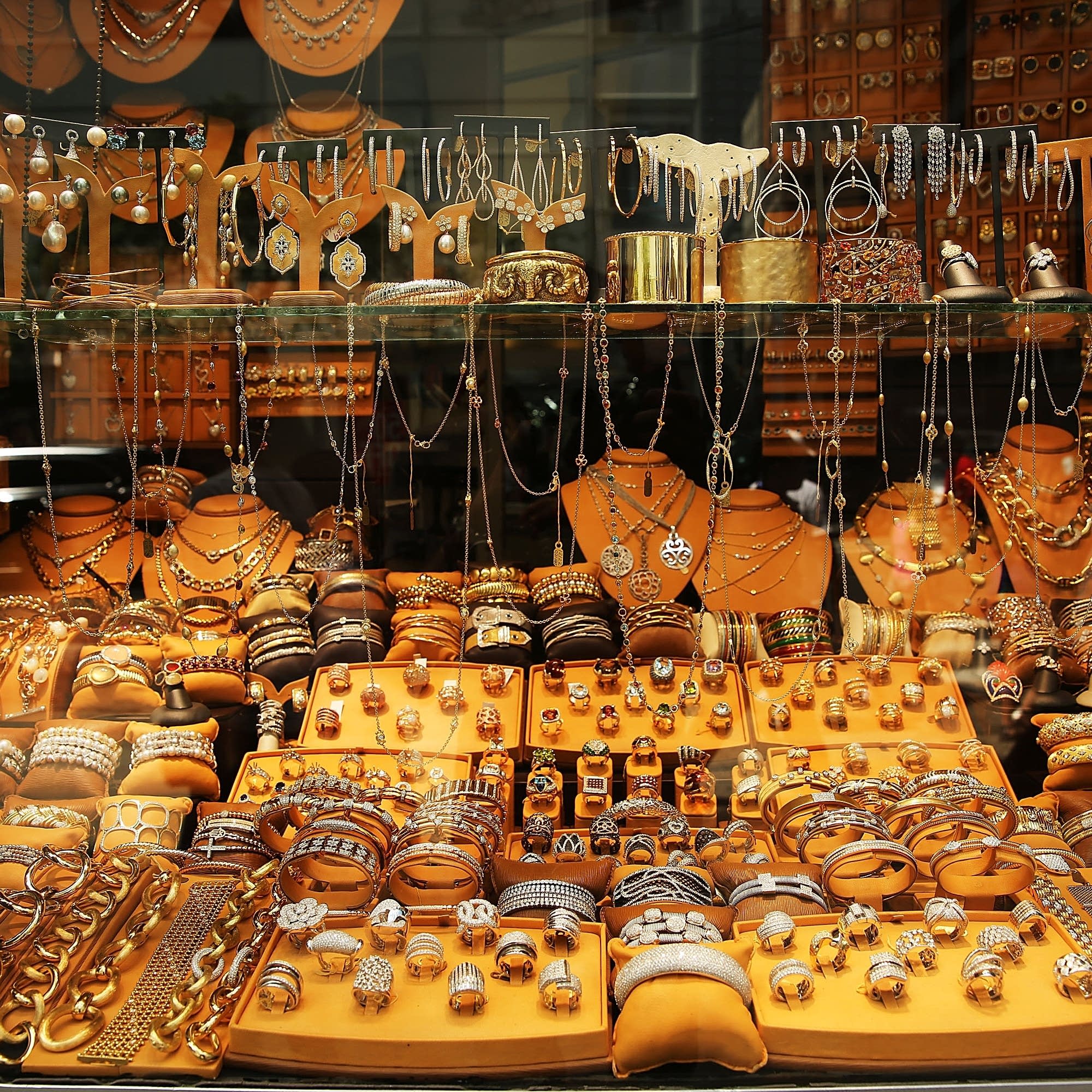
supply chains of gold and precious gems are notoriously difficult to track. They're often murky and involve human rights abuses and environmental devastation. The BBC's Mimi Swabi brings us the story now of one jeweler trying to change this by bringing women together from regions scarred by conflict.
- [06:09]
Mimi Swabi
So which one's this one?
- [06:10]
Pippa Small
That's the lapis lazuli from Afghanistan from this Badaksham region. Pure pigment.
- [06:17]
Mimi Swabi
Can jewelry ever be truly conflict free? Well, associations of women around the world are not only creating pieces with fully transparent provenance, but doing it in areas that have been marked by conflict or occupation.
- [06:31]
Pippa Small
Gems and gold, the disproportionate value for something very, very small makes it a really difficult material to work with because it can be smuggled, it can be moved very easily.
- [06:41]
Mimi Swabi
Pippa Small is a jeweler based in London. She's devised a system that links all these networks creating responsible, traceable supply chains for gold and silver, which in turn help their transformation into jewelry.
- [06:54]
Pippa Small
These kind of beautiful stormy libre with those flashes of blue. Amazing.
- [07:01]
Mimi Swabi
God, they really do catch the light. Jewelry, which reflects the origins of the precious metals and the women who mined them. The whole process from the riverbeds of say Columbia to a shop floor in New York is accounted for.
- [07:14]
Pippa Small
We're really careful to work with small family run mines, certified fair trade mines. We work with the women planners to know and be sure and feel comfortable about how they're sourced.
- [07:25]
Mimi Swabi
The gold next goes to a refinery and from there a local goldsmith where design collaboration starts. Looking around saw there are many collections and I can see a tray with gold from Colombia.
- [07:38]
Pippa Small
They are sourced from a group of women panners. So this means that there's none of the toxic chemicals that are often used with mining. The women who pan this, they are so conscious of not allowing in illegal gold miners because they want their grandchildren and great grandchildren to benefit from this treasure in the rivers.
- [07:55]
Mimi Swabi
These pieces are made from gold from Choco on Colombia's Pacific coast. A place where gold has shaped identity, conflict and survival. The for thousands of years. Much of today's mining is informal or illegal and often linked to armed criminal groups. Carmen is a registered miner and member of the Women's association for Artisanal Miners from Choco. Mining defines our lives in a challenging and complex way. I think that the woman miner is a fighting woman. Illegal mining affects us deeply because we are exposed to gender based violence, labour, exploitation, the dispossession of our lands. Many people will be wearing gold directly linked to this, but would never know of its bloodied past, which often disproportionately affects women.
- [08:46]
Sabri Benishore
That was Mimi Swabi with our partners at the BBC in New York. I'm Sabri Benishore with the Marketplace Morning report. From apm, American Public Media.
- [09:01]
David Brancaccio
Hey, David Brancaccio here. I hope you're well and that your passport is up to date because I am hosting a trip to Italy this fall and you, you are invited stay at a world class Tuscan villa and step into the world of the Medici, the formidable family whose influence and power helped give rise to the Renaissance and the art we still celebrate today day, not to mention the banking system. We're going to visit the world's oldest bank, swim in the thermal spa waters in Montecatini and take in the art of the Uffizi. All of this, and then we'll try to put it all into context with great conversation over even better meals and wine tasting. Please join me and know this. Buying into this trip will provide essential support for public media. Discover more about this fall's tuscany adventure@marketplace.org travel to reserve your spot today, that's marketplace.org travel.