Loading summary
Transcript29 lines
- [00:00]
Marketplace Host
This Marketplace podcast is supported by Dell. Introducing the new Dell AI PC. Powered by Intel Core Ultra processor. It helps do your busy work for you so you can fast forward through editing images, designing presentations, generating code, debugging code, summarizing meeting notes, finding files, managing your schedule, responding to long emails, leaving all the time in the world for the things you actually want to do. Get a new Dell AI PC starting at $699.99 at Dell.com AI PC how those ahead, Stay ahead.
- [00:32]
Wix Advertiser
Running a business can be exhausting. Building your website shouldn't be. With wix, you can express your ideas, give direction, then leave the heavy lifting to AI. From site creation to branded content and images. Have fun with the details, customize what you want the way you want and manage your whole business from a centralized dashboard with expert AI tools. Build, scale and enjoy the incredible results. You can do it all yourself. On Wicks.
- [01:01]
David Brancaccio
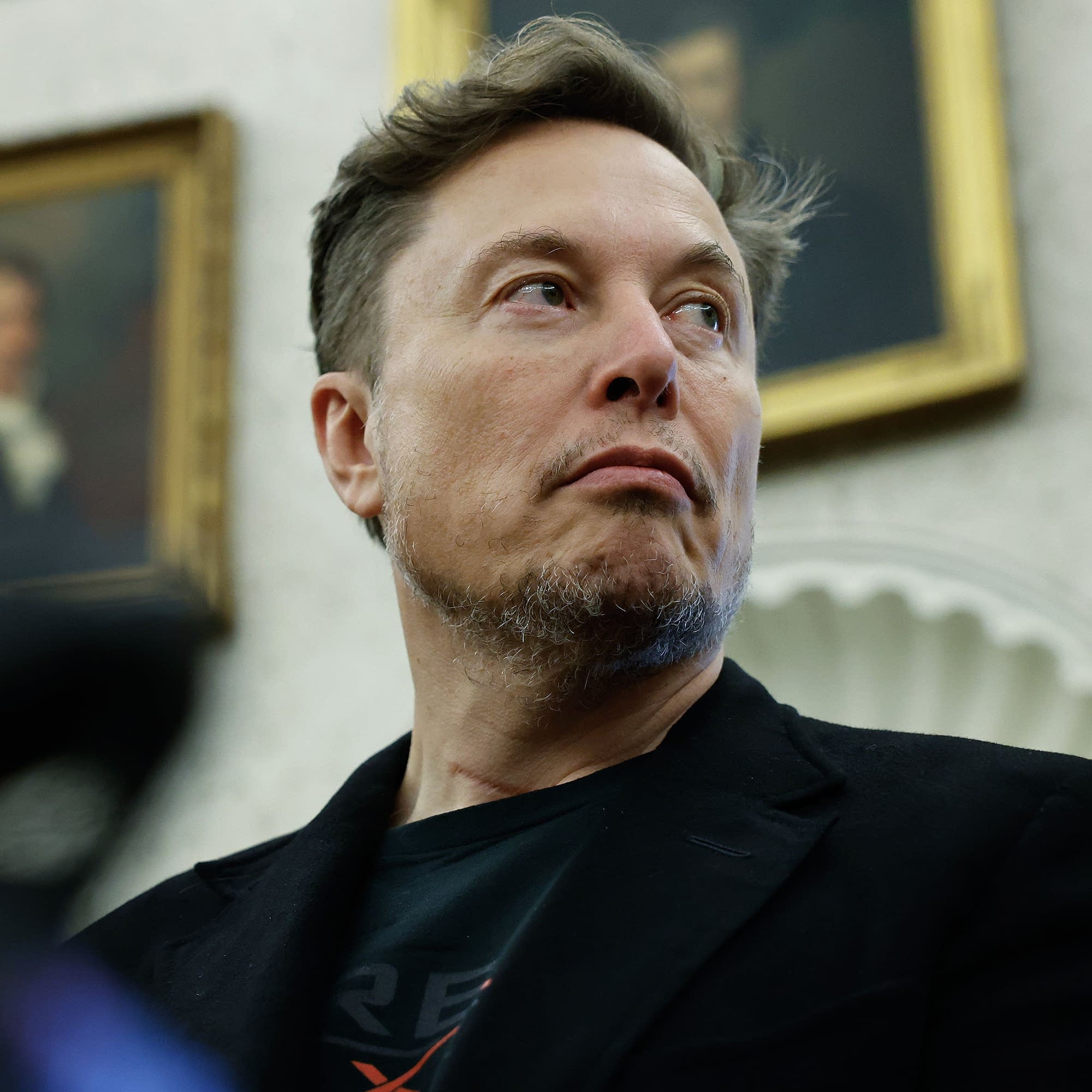
Can someone get Elon Musk's attention? I'm David Brancaccio in Los Angeles. Late today we'll get sales, profits, losses and hints of the road ahead from Tesla. Its Stock is down 17% this year for a company where the boss tries to wear about a dozen hats all at the same time. Eric Gordon is a professor at the University of Michigan's Ross School of Business. Morning, Eric.
- [01:24]
Eric Gordon
Morning. Hello, David.
- [01:25]
David Brancaccio
Let's talk about Tesla. Publicly held company, meaning it trades on the public stock market. It is run by a guy with a lot of interests. Some will say distractions. Eric, help us with the list. There's Elon Musk, Tesla CEO and erstwhile government cost cutter.
- [01:42]
Eric Gordon
There's what he also runs x. He runs SpaceX, the rocket company. And then there's his latest love. His latest fling is with his AI company. He's got a lot of balls to.
- [01:55]
David Brancaccio
Juggle, including he's thinking about forming his own political party. Tesla shareholders have an interest in Musk. How should I say this buckling down. I mean, many of us sign employment contracts that say that our company is supposed to be the key focus of our work day. That would be of concern to the board. At Tesla.
- [02:14]
Eric Gordon
It was such a big concern that they put together this legendary pay package. Could have been worth 56 billion. It's with a B dollars to get Musk focused on Tesla, the board said, well, he's worth it because we need to get him focused on Tesla. And if he does, he can produce more than that value.
- [02:36]
David Brancaccio
So that is the open ended question. I mean, and Tesla has this board of directors. You've looked at the group. Can they, in practice, if they wished, lay down the line on the mindshare that Tesla gets from Elon Musk?
- [02:51]
Eric Gordon
They can and they should. And then they'll probably be fired by Musk because he controls the votes. But that doesn't mean they shouldn't do what they should do, and it hasn't quite worked out for them.
- [03:04]
David Brancaccio
Among the challenges that don't get talked about that much, that perhaps Elon Musk would want to focus on more is Tesla earns a lot of money from its competitors paying it to help the competitors offset their own lack of clean air achievements. Competitors could buy credits, but that incentive has gone away in this tax and spending plan just put into law.
- [03:29]
Eric Gordon
And that will have a big impact. In fact, Tesla might not have turned a profit in the first quarter of this year without those credits. Tesla's in two businesses. It sells cars. Sale of cars is going down. It sells tax credits. Those are going away. The company needs a little attention.
- [03:48]
David Brancaccio
Eric Gordon is a professor at the University of Michigan's Ross School of Business. Thank you very much.
- [03:54]
Eric Gordon
My pleasure, David.
- [04:10]
Wix Advertiser
Running a business is hard work. Building your website shouldn't be. With wix, you can express your ideas, give direction, then leave the heavy lifting to AI. From site creation to branded content and images. Have fun with the details, customize what you want the way you want, and manage your whole business from a centralized dashboard with expert AI tools. Build, scale and enjoy the incredible results. You can do it all yourself on wix.
- [04:38]
David Brancaccio
If you need a car, you don't hire a team to find the parts piecemeal to assemble it in your driveway from blueprints. Right, but that is how we tend to build houses. But what is the role of manufactured housing in this? From prefab houses or mobile homes? This is getting more attention from researchers at a time housing is so expensive. Marketplace's senior economics contributor Chris Farrell joins us now. Hello, Chris.
- [05:02]
Chris Farrell
Good morning, David.
- [05:02]
David Brancaccio
I remember there's a history of you being able to order a prefab house from Sears. The Sears catalog from 1908 for a bunch of decades. Concept's been around. I guess it's still here.
- [05:15]
Chris Farrell
Yes, it is. And what I learned during my research, David, is that factory built homes, they help meet the demand for homes. After the Second World War. By the early 1970s, mobile homes accounted for one third of single family homes produced nationwide. And these figures come from studying by three Federal Reserve economists. And you'd like the title, mass production of houses in factories. The first and only experiment was a tremendous success. And I Looked at this other study and it found in the latter part of the 1990s, remember that housing boom that went on during that period of time? Well, more than a quarter of all lower income home buyers purchased manufactured homes.
- [05:56]
David Brancaccio
All right, folks in California who lost homes in the Palisades and Eaton wildfires want to know. People who've lost homes in tornadoes, other disasters want to know the answer. Three word question, are these cheaper?
- [06:09]
Chris Farrell
Yes, they are cheaper manufactured homes cost buyers up to two thirds less than building comparable sized single family homes with your traditional methods. And this comes from Harvard University's Joint center for Housing Studies. So factory built homes, they can also be produced quickly, all kinds of weather conditions. That said, and of course, this will matter a lot for people in Southern California, manufacturing housing is most competitive in areas where land prices are low. So in many parts of the country, factory built homes look like an attractive option for increasing the supply of affordable housing and turning home ownership into a realistic option for more renters. Yet manufactured homes, they only make up some 9% of annual new home starts.
- [06:55]
David Brancaccio
This was all the rage in, say, the early 1970s. If it's such a good idea, what happened to this trend?
- [07:02]
Chris Farrell
Opposition from traditional builders, negative perceptions about the quality of manufactured homes. Zoning, land use regulations excluded manufactured homes from single family neighborhoods. Mortgage financing is difficult to get while relying on higher interest rate personal property loans. That, David, just swamps the cost advantage of manufactured housing and elite neglect played a role. A study published several years ago, a group of scholars, they learned that planners and housing researchers ignored the industry for decades.
- [07:34]
David Brancaccio
Any sign at a time when affordable housing is so hard to find, that this perception of prefab might be changing?
- [07:42]
Chris Farrell
You know, nothing like the 1950, 1970 experience. But the recognition, it's broadly stirring that in an economy that's hobbled by a severe lack of affordable housing, manufactured homes hold the potential to satisfy the desire among lower income households to become owners.
- [07:59]
David Brancaccio
Marketplace's senior economics contributor, Chris Farrell, thank you.
- [08:02]
Chris Farrell
Thanks a lot.
- [08:04]
David Brancaccio
And there's a company that buys and sells houses online called Open Door. After a boom during the pandemic, its stock languished for years. But crowd buzz online pushed the stock up 43% on Monday, down 10% yesterday. And I see it's down another 19% today so far. Meme stock craze, version 3.0. I guess it's Marketplace Morning Report from APM, American Public Media.
- [08:30]
Marketplace Host
Summer's here and it's time for your kids to have fun in the sun. But it's also a great time to nurture growing minds. Million Bazillion a podcast from Marketplace teaches your kids about something that impacts all of us money. From a fun explainer on tariffs, yes, it's possible to why some athletes make so much money. Million Bazillion tackles big questions with easy to understand answers. Listen A Million Bazillion all summer long. Available wherever you get your podcasts.