Loading summary
Transcript22 lines
- [00:02]
Unknown Speaker
On WhatsApp, no one can see or hear your personal messages. Whether it's a voice call message or sending a password to WhatsApp, it's all just this. So whether you're sharing the streaming password in the family chat or trading those late night voice messages that could basically become a podcast, your personal messages stay between you, your friends and your family. No one else, not even us.
- [00:28]
WhatsApp message privately this Marketplace podcast is supported by Dell Introducing the new Dell AI PC Powered by Intel Core Ultra processor, it helps do your busy work for you so you can fast forward through editing images, designing presentations, generating code, debugging code, summarizing meeting notes, finding files, managing your schedule, responding to long emails, leaving all the time in the world for the things you actually want to do. Get A new Dell AI PC starting at $699.99 at dell.comaiai-PC how those ahead? Stay ahead.
- [01:03]
Liana Byrne
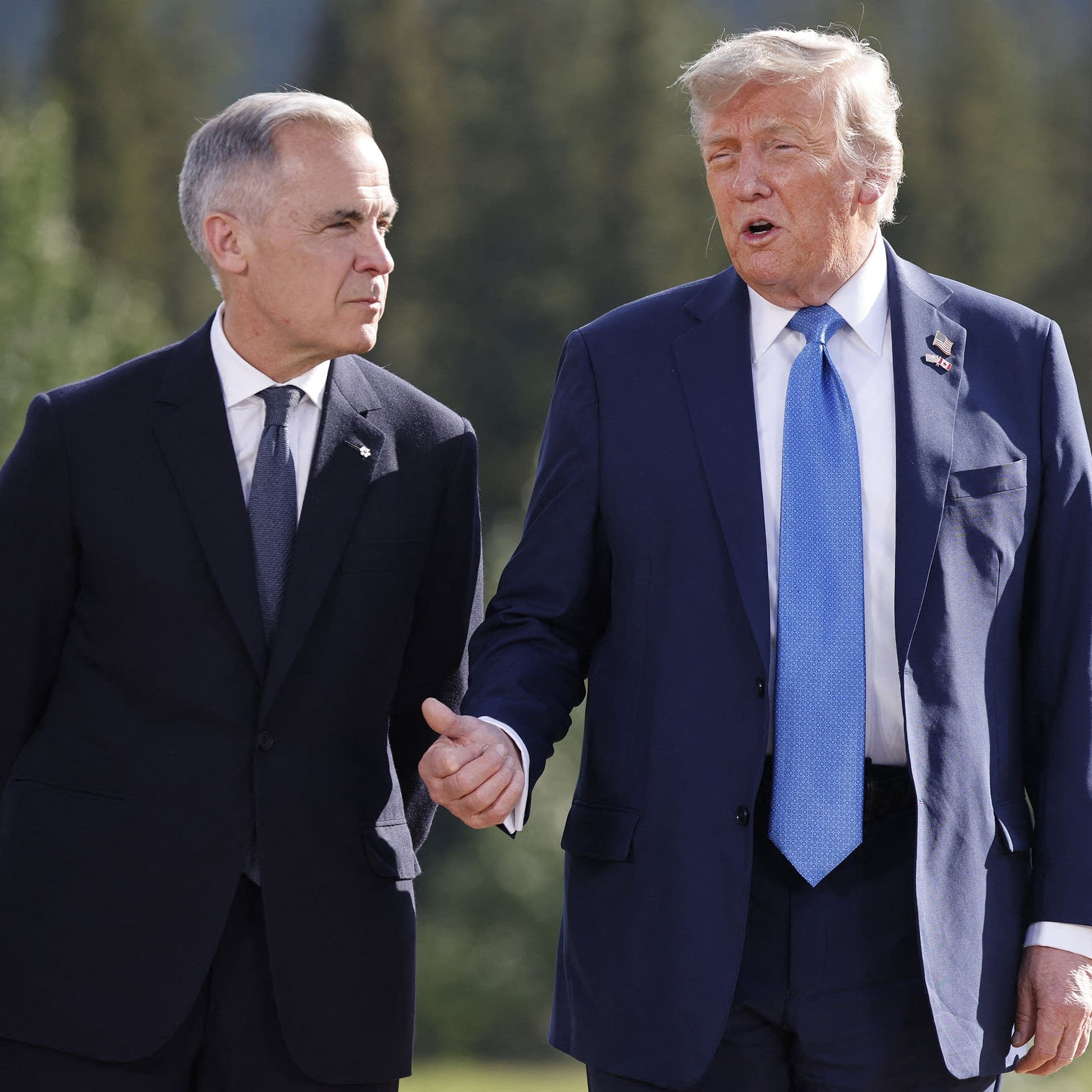
A Canadian tax targeting U.S. big tech is scrapped at the last minute hello, this is the Marketplace Morning Report and we're live from the BBC World Service. I'm Liana Byrne. Good morning. So Canada has scrapped its planned digital services tax, or dst, just hours before it was due to take effect after President Donald Trump threatened to end trade talks over the issue. The BBC's E. McWilliam reports.
- [01:28]
Ian McWilliam
The Canadian Department of Finance said in a statement that the digital services tax would be rescinded in anticipation of a comprehensive trade arrangement with the United States. The planned tax would have hit major US Tech companies, including Amazon, Meta and Apple. Ottawa said it was introduced because large technology companies operating in Canada would otherwise not pay tax on revenues generated there. President Trump's threatened new tariffs, however, would have thrown U.S. canada trade into chaos again after months of relative calm.
- [01:58]
Liana Byrne
That was Ian McWilliam reporting. Earlier, I spoke to Carlene Varian, associate vice president at Summa Strategies and a former chief of staff to then Canadian Prime Minister Justin Trudeau.
- [02:10]
Carlene Varian
This is not just a Donald Trump and Republican grievance under President Biden. His U.S. trade Representative frequently raised the issue of the DST with Canadian counterparts as a point of disagreement and something that was a challenge for the trading relationship. But I think the president likes to create some drama at the 11th hour and this is the moment when the tax would have been implemented.
- [02:31]
Liana Byrne
Is that a dangerous precedent, though, if what Trump wants is going to push what Canadian lawmakers do?
- [02:36]
Carlene Varian
It is a bit complex in that way. I think you see a division among Canadian businesses. On the one hand, Canadians don't want to see themselves punished by the US for attacks that, that has nothing to do with them. But at the same time, you also have businesses who I think directly are impacted by this and that's because many of the tech companies are choosing to pass on the digital services tax directly to their customers.
- [03:00]
Liana Byrne
Carly and Varian, thank you so much for joining us on Marketplace.
- [03:03]
Carlene Varian
Thank you for having me.
- [03:05]
Liana Byrne
Now, while Canada's trading relationship with the US is still up in the air, a UK US trade deal which has lowered some tariffs and imports coming in from Britain is coming in today. Car manufacturers will now be able to export to the US with a reduced 10% tariff. And 10% tariffs have been fully removed from aircraft parts and engines. Nigel Redwood is the managing director of Revolution Revolution Race Cars based in Peterborough in the east of England.
- [03:31]
Nigel Redwood
It does make a substantial difference. So at Revolution Race Cars, we're a low volume race car manufacturer that export probably about 60, 65% of our revenues to the USA. So the increase in tariff had had a big impact on, on our customer base and was very unsettling for, for the last six months.
- [03:51]
Liana Byrne
That was Nigel Redwood, the boss of the UK racing car manufacturer Revolution Race Cars. But there's still no breakthrough on STE aluminium. The US continues to impose a 25% tax on those imports and unless a deal is struck soon, that could soon double to 50% on July 9. It's a major worry for UK steel makers like Tata who say the uncertainty is already hurting their business. Now let's do the numbers. China's main stock markets bounce back today on hopes trade talks with the US will hold. The CSI closed up 3.10of a percent and European shares are mostly in the red as investors keep tabs on signs of progress press on trade talks ahead of the July 9 deadline. Now, there's been a bit of controversy in the fashion industry. The Italian fashion house Prada has acknowledged that its new sandal design is Indian inspired after its Milan Runway sparked backlash. The open toe shoes looked strikingly similar to Kalapuri chapels, a traditional handcrafted slipper sold in Indian markets. The BBC's Archana Shukla has been looking into this. Hi, Archana.
- [04:56]
Archana Shukla
Hi Liana.
- [04:57]
Liana Byrne
How has the story come about?
- [04:59]
Archana Shukla
This happened when Prada showcased a pair of leather sandals in their recent summer collection for 2026 in a show in Milan. And those leather sandals, these are open toed sandals. They had a striking resemblance to the Kolhapuri chappals that are a regular footwear here in India. And there has been a lot of uproar online talking about How Prada has taken design elements from India's very heritage sandal, but without giving any acknowledgement or giving any credit to the local artisans. There are very regular chappal slippers that all of us Indians have worn or wear on a regular basis. They're very cheap, but they are handcrafted and they are leather. That's what brings in the unique beauty, and there is a unique design to it.
- [05:52]
Liana Byrne
What about Prada? What has Prada said about this?
- [05:55]
Archana Shukla
So after a lot of online backlash and in fact, even the industry groups from India, as well as the Minister of commerce from the state of Maharashtra writing to Prada asking about why there was no acknowledgement or credit given to the local craftsmanship for this product, Prada actually sent out a statement acknowledging that these sandals are, you know, inspired by the traditional Indian footwear and that they are committed to responsible design practices. And in fact, they've said that they are speaking with the local artisans and they want to have a more meaningful conversation and collaboration with the local artisans here. Although they have mentioned that the chappals and the slippers are yet not commercial. And there is still some time before those type of conversations. Go ahead. But you know what the most striking feature is? The lowest price at which you can buy these chappals here is about 12 or $13. But Prada has priced the similar looking slippers, which now they say has been inspired by the Indian footwear, for over $1,000. And that also is something where people have found it appalling. They've also found it very striking that a cultural design from a heritage product has been picked up by a big fashion brand without any acknowledgment and credit.
- [07:13]
Liana Byrne
I guess that's just the price of a logo. Okay, the BBC's Archana Shukla, thank you so much for joining us on Marketplace.
- [07:19]
Archana Shukla
Thank you, Liana.
- [07:20]
Liana Byrne
And finally, the tennis tournament Wimbledon is underway in London. And for the first time in 148 years, there are line judges. They've been replaced by cameras and sensors calling the shots. And since it's set to be the hottest opening day on record, I hope the tech can handle the heat. And that's it from the Marketplace morning report from the BBC World Service. Craig Henderson is my producer, James Graham's the editor, and I'm Liana Byrne. Have a great day. Thanks for listening.
- [07:51]
Rima Reyes
Hey, everyone, I'm Rima Reyes, and I'm excited to join Kimberly Adams on Make Me Smart. Together we'll unpack the day's news, whether it's a tariff switch. Up the latest on Trump's immigration policy or the future of clean energy. Join us each weekday so we can make sense of it all together. Because none of us is as smart as all of us. Listen to Make Me Smart. Wherever you get your podcasts.