Loading summary
Transcript28 lines
- [00:01]
VRBoCare Support
Support is available 24. 7 with VRBoCare. We're here day or night, ready whenever you need help because a great trip starts with the right support.
- [00:17]
Guy Kilty
Taiwanese chip giant TSMC invests in a new factory in Japan Live from the UK this is the Marketplace Morning report from the BBC World Service. Guy I'm Guy Kilty. Good morning. Days before Japan's general election on Sunday, the world's largest chip maker, Taiwan's tsmc, has confirmed plans to make AI semiconductors in southern Japan. From Tokyo, Will Leonardo reports.
- [00:41]
Will Leonardo
This announcement makes a welcome set of headlines from his Takaichi days ahead of a snap election. TSMC had already announced a new production facility in Japan's Kumamoto Prefecture, but now it's pledging to produce advanced 3 nanometer AI chips there in an investment reportedly worth $17 billion. Japan has lagged behind its neighbors on chipmaking despite its expansion of production abroad. TSMC has faced domestic pressure in Taiwan to retain its most advanced chips there in part as a deterrent to China, which claims the island as its own.
- [01:13]
Guy Kilty
Will Leonardo reporting. Let's do the numbers. Google says it's going to double its spending on artificial intelligence this year to as much as $185 billion for following strong growth in its advertising and cloud businesses. Chief Executive Sundar Pichai said Google's Gemini AI app now has more than 750 million monthly active users. Gig workers in India, including delivery riders and drivers, are planning a nationwide protest this weekend. They say they're paid too little, work long hours and have no safety protections. India's gig economy employs millions and is central to how the country's cities operate. Harshita Bansal from the Gig and Platform Service Workers Union is leading the protests.
- [01:58]
Harshita Bansal
So it is very important to go on a strike right now because the condition of the gig workers in India is almost like forced labor. There's a lot of misbehavior and misconduct by the companies on the workers. It has gone really bad right now. Like they are facing problems like exploitation and they have been denied of their labor rights and the companies are practicing unconstitutional practices on them. They don't even get their basic labor rights because they're not shown as employees of the company and they face exploitation like misbehaviors by the clients and all which the companies don't take responsibility of. And they're paid also very less. Like for a particular ride they only get 4 rupees or 5 rupees per ride. When this gig economy started in India, they had a good working art system and all but now how it has become, it has become very intense. Like they do, they have to work for 12 hours, 15 hours back to back slots are booked for them. At this time. We are protesting for the government. We want the government to listen to us. And we have filed multiple complaints and multiple memorandums to the ministers, chief ministers, prime ministers, so that they can hear us.
- [03:16]
Guy Kilty
Harshita Bansal when was the last time you bought yourself a small treat? For a lot of us, little luxuries have become a part of daily life, particularly in tougher economic times. It's been called treatonomics by economists or little treat culture if you're on TikTok, where videos using that hashtag have grown by 75% globally over the past 12 months. The BBC's Sam Grouet has been finding out more.
- [03:41]
Sam Grouet
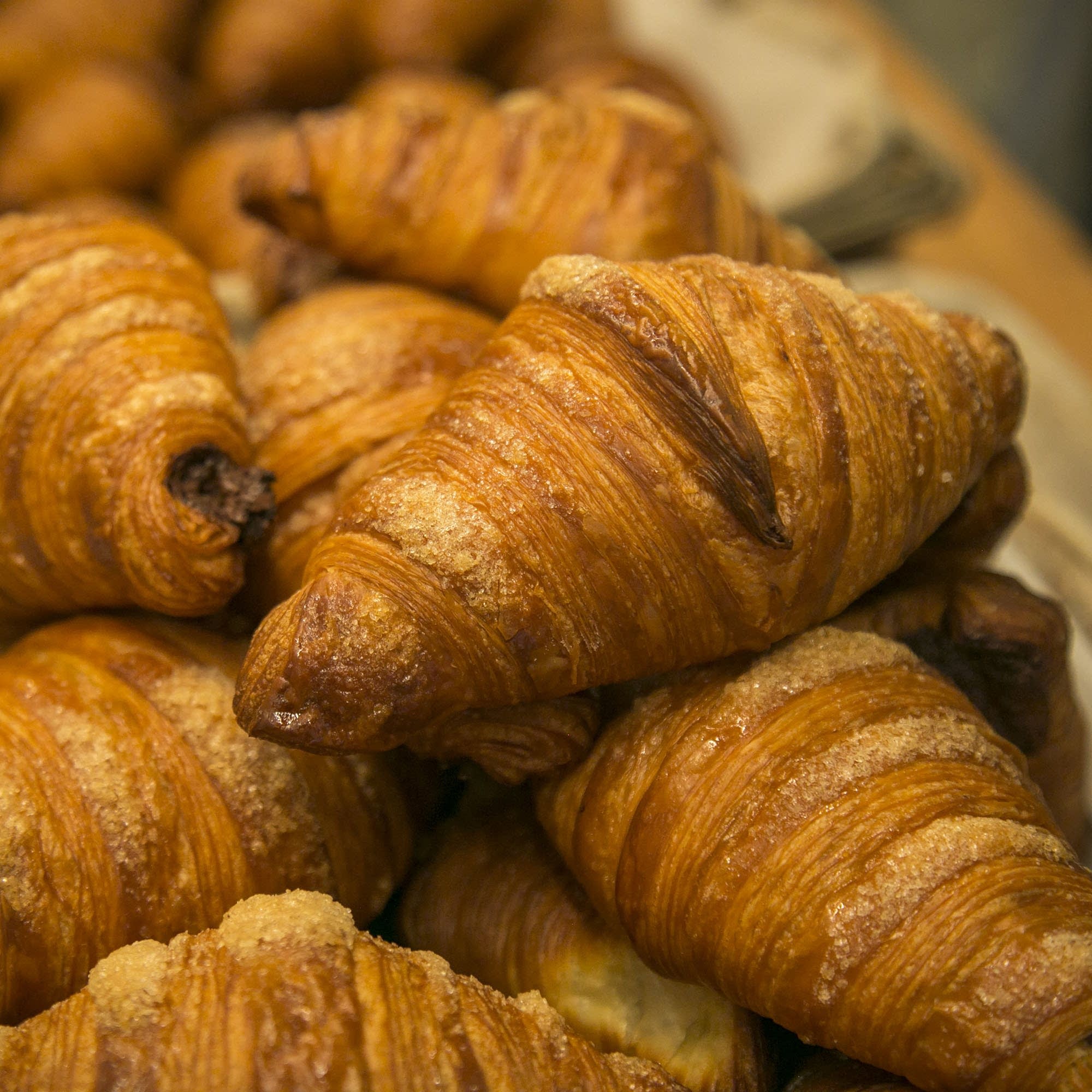
At Nonna's Bakery in London, law students Madeline Rastead and Wesa Maglehouse are tucking in to a little treat.
- [03:48]
Madeline Rastead
I chose the Ragu Arancino. I think I like to treat myself a lot and definitely like at the end of the month when I look at my bank account, it ends up being quite a lot of money. Usually when I think of my sweet treats, I kind of try to go for like maybe one item that is really good and maybe a bit more expensive and then another item that really isn't. So for example, I've done a 99p coffee from Pretty, but then I've gone for like a really nice truffle sandwich.
- [04:15]
Sam Grouet
It's been five months since Nonna's Bakery opened in central London.
- [04:19]
Matteo Cicero
We have three different sections in our counter. One is for sweets where you can have all the Italian pastries.
- [04:25]
Sam Grouet
But for owner Matteo Cicero, business is booming.
- [04:29]
Matteo Cicero
Bread and pastries, even though, you know, sometimes they're considered as a luxury, but they are small, indulgent treats. It's an affordable treatment in a crisis period.
- [04:40]
Sam Grouet
From COVID 19 shocks and wars in Ukraine and the Middle east to renewed trade tensions and inflation spikes, global growth is forecast to be around 2.7% in 2026, well below the pre pandemic average, according to the United Nations.
- [04:56]
Ayesha Tarek
We've been going through quite challenging times, unprecedented challenging times over the last three years.
- [05:02]
Sam Grouet
Dubai based economist Ayesha Tarek says the impact is being seen in people's spending habits.
- [05:08]
Ayesha Tarek
People are trading down at the supermarket, they're cutting costs in their everyday lives, but they still want to treat themselves a little bit to feel good.
- [05:16]
Sam Grouet
It's not a new phenomenon. Mirroring a trend coined the lipstick effect in 2001.
- [05:22]
Harshita Bansal
It's the theory that as the economy goes down, sales of things like lipstick actually go up.
- [05:27]
Sam Grouet
According to Canadian business writer Cassandra Campbell, the trend has been supercharged in the last year by social media.
- [05:35]
Cassandra Campbell
You know, the hashtag little treat culture or little treats is used quite often for people to share their little treats.
- [05:41]
VRBoCare Support
As a little treat, I'll get myself.
- [05:43]
Sam Grouet
A little treat as a physical hooray.
- [05:45]
Cassandra Campbell
And we're seeing content now where people are unboxing their little treats or going on quests to find little treats. So it's really created this performative ritual that other people can see and mirror.
- [05:57]
Sam Grouet
Businesses are tapping into it too, like Snigda Machanda, who runs online tea store Tea Trunk from from Mumbai, India. One of her biggest selling items is white tea.
- [06:07]
Ayesha Tarek
White tea is known to be healthier in terms of more antioxidants than a cup of green tea, but it is also three times more expensive. But we are seeing people move up that ladder. So even during an economic uncertainties, wellness spending keeps growing even when money is tight.
- [06:26]
Sam Grouet
So whether it's premium white tea or a sugary pastry for businesses, these low cost indulgences have turned Tretonomics from a trend into a business model. From London, I'm the BBC Sam Grouet for Marketplace.
- [06:40]
Guy Kilty
And in the UK I'm Guy Kilty with the Marketplace Morning Report.
- [06:47]
Marketplace Host
Ready to make the most of your money? Sign up to receive weekly tips from Marketplace designed to help you make smarter financial decisions. Plus, you'll also be the first to know about exclusive Marketplace merchandise and local events. Text Marketplace to 80568 to sign up.