← Marketplace Morning Report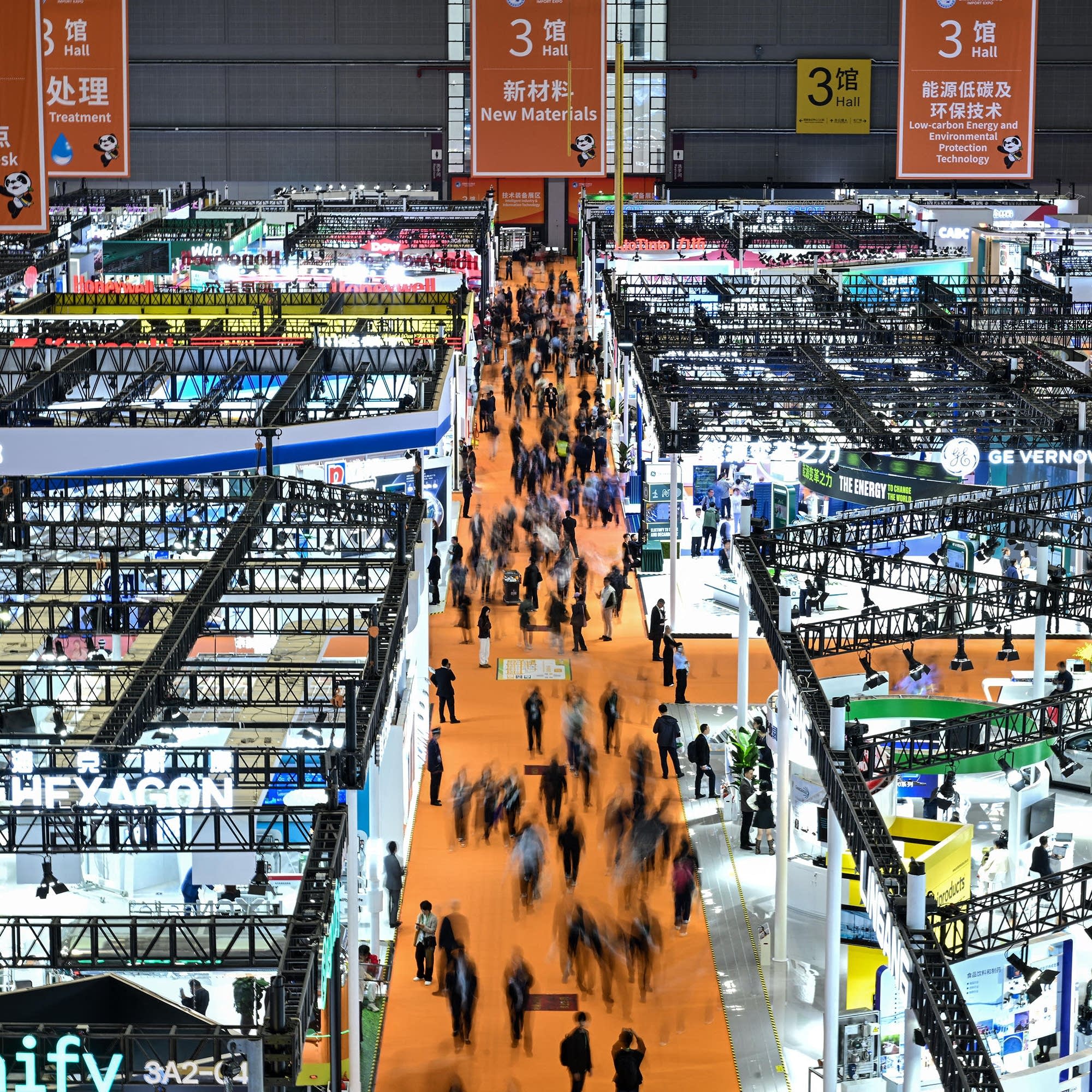
Loading summary
Transcript37 lines
- [00:00]
Marketplace Host
This Marketplace podcast is supported by Wealth Enhancement, who ask do you have a blueprint for your money? Wealth Enhancement can help you build the right blueprint for investing, retirement, tax, and more. With offices nationwide, there's an advisor who's ready to listen and craft a blueprint for your future. Find out more@wealthenhancement.com Build.
- [00:24]
Odoo Sponsor
This Podcast is supported by Odoo. Some say Odoo business management software is like fertilizer for businesses because the simple, efficient software promotes growth. Others say Odoo is like a magic beanstalk because it scales with you and is magically affordable. And some describe Odoo's programs for manufacturing, accounting and more as building blocks for creating a custom software suite. So Odoo is Fertilizer Magic Beanstalk building blocks for business Odoo exactly what businesses need. Sign up@odoo.com that's o d o o.com.
- [00:55]
Sabri Benishore
Government data is Healing from Marketplace. I'm Sabri Benishore in for David Brancaccio. You want to know what the unemployment rate was in October, or inflation or consumer spending. So do economists all over the country. We don't know because we didn't get that data because the government was shut down. Now that things are reopening, some numbers should start flowing soon. Others will flow never. Julia Coronado is founder and president of Macro Policy Perspectives and a professor at the University of Texas, Austin. Hi Julia. So remind us what data we are getting and what data we are not.
- [01:32]
Julia Coronado
We'll get the employment report on Thursday for September. Then we might get retail sales and the rest of the inflation data. Maybe ahead of Thanksgiving. We're still waiting for the schedule. BLS is busy trying to put the pieces back together.
- [01:45]
Sabri Benishore
So the Federal Reserve, when it meets to determine what should it do with the country's interest rates and monetary policy, which that meeting is happening December. It's still going to be working with September data.
- [01:57]
Julia Coronado
That's probably the case. It is going to take time to make decisions about how to handle the October data. A lot of it wasn't collected. And then of course, how do you manage the November data? So it's probably not going to be by the December Fed meeting that we will have even October data, let alone data for November. So they're really going to be working with a limited set of information.
- [02:21]
Sabri Benishore
I mean, of all times for there to be not enough data. This moment where the economy is under ongoing grand transition seems to be like the worst possible moment.
- [02:33]
Julia Coronado
It is a very bad time to be. I wouldn't say flying blind. There is a lot of private sector data that is available and it does sort of give us conflicting signals. The labor market still looks very weak. Inflation is uncomfortably high. That leaves the Fed actually more Fed officials have been sounding like they might want to wait and kick it to January when hopefully we'll have caught up and have a better picture.
- [02:59]
Sabri Benishore
Julia Coronado is founder and president of Macro Policy Perspectives. Thank you so much.
- [03:03]
Julia Coronado
My pleasure.
- [03:05]
Sabri Benishore
The U.S. office of Government Ethics released a report over the weekend that says a former top Fed official violated the central bank's rules on stock trading. The official, Fed Governor Adriana Kugler, resigned abruptly in August. Marketplace's Nancy Marshall Genser has the details.
- [03:22]
Nancy Marshall Genser
The U.S. office of Government Ethics reports says Adriana Kugler traded stocks during the roughly 10 day blackout periods around Fed meetings on interest. The report shows that Kugler bought stock in Cava and Southwest Airlines during blackout periods. A note in the report says Kugler's husband made those trades without her knowledge and he didn't mean to violate any rules. The Federal Reserve strengthened its prohibitions on stock trading in 2022. Fed officials aren't supposed to own individual stocks at all, and any financial transactions are prohibited during the blackout period. Earlier in 2022, Atlanta Fed President Rafael Bostic acknowledged that some investments had inadvertently violated the central bank's ethics rules. Bostic said he wasn't aware of the trades and they were made by his investment managers. Bostic announced last week that he'll retire at the end of his current term in February of next year. I'm Nancy Marshall Genser for Marketplace.
- [04:20]
Sabri Benishore
More people in the US Are falling behind on their utility bills. According to analysis from the left leaning Century foundation, the number of past due balances jumped 9.7% in the second quarter compared to the same time last year.
- [04:51]
Marketplace Host
This Marketplace podcast is supported by Wealth Enhancement, who ask, do you have a blueprint for your money? Wealth Enhancement can help you build the right blueprint for investing, retirement, tax and more. With offices nationwide, there's an advisor who's ready to listen and craft a blueprint for your future. Find out more@wealthenhancement.com Build this Marketplace podcast.
- [05:16]
Superhuman Sponsor
Is supported by Superhuman. The world is buzzing with AI tools, but instead of making things easier, they've made your workflow overwhelming. You're stuck copying and pasting, context switching and juggling too many apps. There's now a better way that outsmarts the work chaos. Meet Superhuman, the AI productivity suite that gives you superpowers everywhere you work with Grammarly, mail and coda working together, you get proactive help across your workflow, from writing to preparing for meetings, presentations, and so much more. Think of Superhuman as your AI Dream team, proactively helping you go from to do to done faster. Superhuman knows what you might need and offers suggestions. Whether you're drafting emails, creating documents or more. It guides you in the moment so you can sound like your best self and stay focused on what matters. The There are even specialized agents designed to collaborate seamlessly and amplify your impact. Unleash your Superhuman potential today. Learn more@superhuman.com podcast that's superhuman.com podcast China.
- [06:15]
Sabri Benishore
Has said it would once again buy US soybeans and agricultural products as part of the two countries thawing trade war. Our China correspondent Jennifer Pack checked in with some American exporters and Chinese buyers at a recent trade show in Shanghai.
- [06:30]
Jennifer Pack
American producers are somewhat upbeat at the annual China Import Expo. China agreed after the leaders meeting last month to drop some retaliatory tariffs on U.S. agricultural products, though not all, says Robert Kaldansky with the Ginseng Board of Wisconsin.
- [06:46]
Sabri Benishore
The tariff as it stands today is 32 1/2% on Wisconsin ginseng.
- [06:51]
Jennifer Pack
Business for ginseng is still good, he says, despite the Chinese counter tariffs.
- [06:56]
Sabri Benishore
The market's there, the consumer wants it. So what it's done is lower the price in our end a little bit because of the tariffs. That would catch the brunt of that.
- [07:04]
Jennifer Pack
You'll find almond producers here at the Import expo, too. US Almonds are much harder to sell to China now. Australia is the biggest competitor, says the Almond Board of California's Keith Schneller. China has a free trade deal with.
- [07:17]
Sabri Benishore
Australia, so their tariff is zero. And then in the past few years with the retaliatory tariffs, we've been at 25% percent until this past year.
- [07:28]
Jennifer Pack
Then President Donald Trump imposed more tariffs. China countered.
- [07:32]
Sabri Benishore
So our exports to China started to.
- [07:34]
Jennifer Pack
Kind of come off same for exports of U.S. soybeans. Even with the recent tariff cut, American soybeans still cost more than, say, Brazil's Carlos Salinas is here at the trade show. He's with the US Soybean Export Council.
- [07:48]
Sabri Benishore
So US soybeans today at a 13% versus other origins at 3%, though he.
- [07:53]
Jennifer Pack
Says he's confident that China will find a way so that it makes economic sense for Chinese buyers to purchase the agreed upon amount of U.S. soybeans.
- [08:02]
Sabri Benishore
I think that we can trust the presidents have come to an agreement to meet those obligations. So it will happen. We just have to be patient to give it a little bit of time for the bureaucratic processes to take place.
- [08:12]
Jennifer Pack
Tariffs did not stop Chinese buyer Chen Lin from checking out a US Ginseng skin care line.
- [08:21]
Sabri Benishore
I haven't seen such a product before in China. It could have big potential here. Many Chinese are still willing to spend.
- [08:32]
Jennifer Pack
Now there's a U S China trade truce that suspends the highest tariffs for a year. And at the end, ginseng seller Shannon Su expects a deal.
- [08:40]
Sabri Benishore
Don't reach a deal either better than now, or at least keep the level.
- [08:47]
Jennifer Pack
At this point, if US China relations get worse, she says, it'll hurt both sides. In Shanghai, I'm Jennifer Paak for Marketplace.
- [08:56]
Sabri Benishore
And in New York, I'm Saree Benishore with the Marketplace Morning Report from APM American Public Media.
- [09:06]
Amy Scott
Imagine a future where chocolate and coffee are rare and expensive, where cheap nutritional stuff, staples like corn and wheat are threatened. Sounds unpleasant, doesn't it? Well, we could be heading there if we don't recognize that the climate crisis is also a food crisis.
- [09:25]
Sabri Benishore
I've seen yields drop because of drought, and believe me, boy, have I seen them drop. We have had dry spells that have lasted years.
- [09:36]
Amy Scott
I'm Amy Scott. This season on How We Survive. We investigate how the climate crisis is threatening our most vital food systems and how scientists are racing to develop alternatives that will shape the future of food. Listen to this season of How We Survive on your favorite podcast. Applause.