Loading summary
Transcript25 lines
- [00:00]
A
The adage says it isn't what you say, it's how you say it. And when you lead with power, poise and performance, you're making an impact from the start. Introducing the Range Rover Sport Designed to set an example with its assertive stance and refined drive, it blends dynamic elegance with agile precision, whether you're navigating city streets or conquering rugged terrain. Its cutting edge innovations including a cabin air purification system and active noise cancellation, offer unrivaled comfort control and peace of mind. Seven terrain modes Check A choice of powerful engines including a plug in hybrid with a 48 mile range. Absolutely take on anything with the Range Rover Sport. Build Yours today at Range Rover.com USSport Explore the Range Rover Sport at Range Rover.com US Sport Introducing your new Dell.
- [00:57]
B
PC with the Intel Core Ultra processor. It helps you handle a lot, even when your holiday to do list gets to be a lot like organizing your holiday shopping and searching for great holiday deals and customer questions and customers requesting custom things. Plus planning the perfect holiday dinner for vegans, vegetarians, pescatarians and Uncle Mike's carnivore diet. Luckily you can get a PC with all day battery life to help you get it all done. That's the power of a Dell PC with Intel inside, backed by Dell's price match guarantee. Get yours today@dell.com holiday terms and conditions apply. See dell.com for details.
- [01:27]
C
A feared chip shortage in the auto industry looks to have been averted, at least for now. Live from the uk, this is the Marketplace Morning report from the BBC World Service. I'm William Lee Adams.
- [01:38]
B
Good morning.
- [01:39]
C
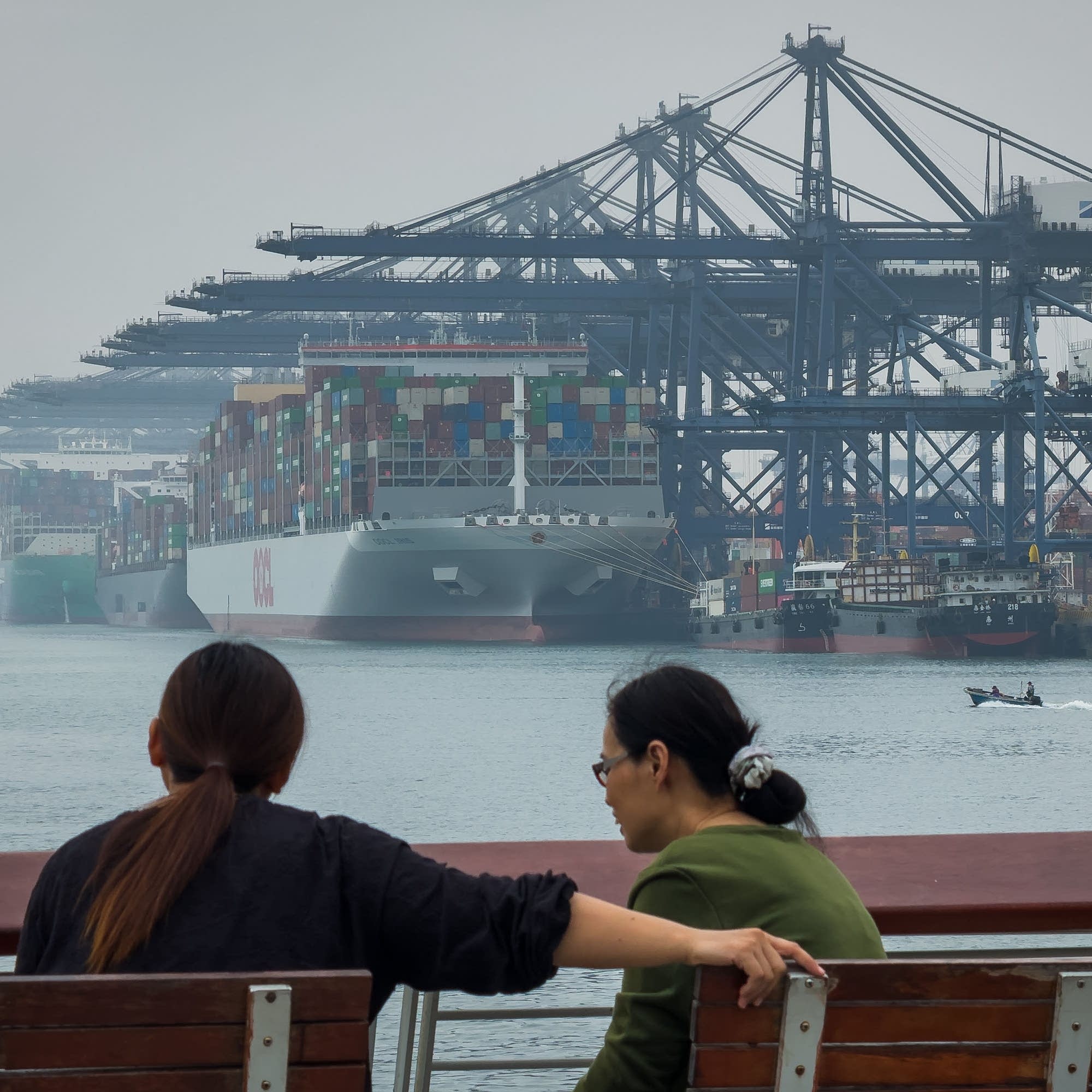
China has lifted export controls on computer chips that are vital to car production. Carmakers Volvo, vw, Ford and Honda had all warned they could face severe supply chain disruption if the ban wasn't overturned. China has also paused an export ban to the US of some materials that are crucial in the semiconductor industry and suspended port fees for American ships. The moves mark an easing of trade tensions between Beijing in Washington after Presidents Xi Jinping and Donald Trump agreed in October to reduce tariffs on each other and pause other measures. For a year. The Chinese government had been blocking the export of finished chips in a row with the Dutch government after they took control of Nexperia, citing concerns over its Chinese owner. David Bailey is a professor at Birmingham University's business school in the UK and a motor industry specialist.
- [02:27]
D
China clearly has control over the supply of finished chips from China. And Remember, this company, Nextperia, makes huge numbers of these 100 billion each year. They are not the most advanced chips, but they go into everything. It's literally chips with everything when it comes to the auto industry these days. And the firm represents something like 50% of the supply used by the European auto industry. So China's in a position where it can turn this on and turn this off. I think Honda already shut down a plant in Mexico. Given the lack of chips. VW said it was literally a few days away from running out. So whether this is fast enough to get the chips to Europe to keep Ford production going is not clear at this point. It may be that there is some slowdown or companies focus on the most profitable models, for example, which is what we saw last time. So hopefully it will minimize the disruption. But there may still be some disruption for the EU auto industry, given that China turned this off and now has turned it back on again.
- [03:24]
C
David Bailey. All right, let's do the numbers. Shares in Diageo jumped 7% after appointing a new chief executive. The Guinness maker is coping with lower consumer spending and ongoing fall out from US tariffs. It's appointed former UK supermarket boss Sir Dave Lewis as CEO. Elsewhere, profits at profits at South Africa's vatic Vodacom surged 32% in the first half of the year, its biggest gain in more than a decade. A cybercriminal who spent almost 10 years on the FBI's most wanted list has been speaking to the BBC. In an exclusive interview from prison in Colorado, Vasyslav Pinchakov was the leader of two separate hacking gangs accused of stealing hundreds of millions of dollars from people around the world. Jo Tidy is the BBC World Service cyber correspondent. Joe Hai.
- [04:11]
E
Hi.
- [04:12]
C
So we often think about cybercrime in relationship to big businesses, but Henshikov targeted some smaller ones, didn't he?
- [04:19]
E
Yeah, he really was one of the pioneers of the early days of banking Trojans, which are these. This piece of malicious software that was developed around the kind of late 2000s to steal money directly from people's bank accounts. And he went after small and medium sized businesses in the us, UK and around the world. And his gang, the Jabaz Crew, they managed to attack companies by getting inside their browser and tricking the browser into handing them over the details for the bank accounts used by these companies so they could directly transfer money out in small amounts, just enough to keep under the radar for as long as they could. And they made off with a huge amount of money.
- [04:59]
C
And could you walk us through an example of him scamming a company out of money?
- [05:03]
E
Yeah, well, we spoke to one which was kind of a mom and pop shop in Albuquerque, Lieber's Luggage. And they, they had no idea that what had happened. They looked at their bank account one day and they had a float of money that they were using to pay staff and pay rent and, you know, like the sort of thing that a small business would have. It was $12,000 and it was completely swiped and gone. They spent days trying to work out what happened. Spoke to the bank, the bank had no idea either. And then they saw these transfers and they worked out that actually these transfers weren't us. This was another group somewhere else.
- [05:36]
C
Did he express any remorse in your interview?
- [05:39]
E
Absolutely none. And I spoke to him for six hours in prison. He said that everything came out of insurance. These were rich western companies, so, you know, they could handle it. And of course, a lot of that is covered by insurance. And banks take the hit, but that's all passed on to customers. And actually, when you look at the victims of his crimes. So, for example, in those early days of the Jabazus crew, Leber's Luggage, it was absolutely devastating for them. They didn't get back on their feet for months, and it took a lot of stress and time and effort to get that money clawed back. And what was really tragic about that particular incident is that it was a family run operation, and the woman in charge of the company, her mother had been brought in to do the accounts just to sort of help out. And she was quite an elderly woman, and she was convinced that she'd made the mistake and that's what lost the money. And she really blamed herself until finally they found out, no, no, this was theft.
- [06:28]
C
And Joe, how many countries were involved and what's the total sum of money lost?
- [06:33]
E
Well, across Petrikov's entire cybercrime career, these two very distinct periods of the early banking trojans and moving into the much more serious ransomware. We're looking at a lot of victims. We don't know the exact number, but about $100 million has been taken by Penshikov across his period of cybercrime. And he got a nine year sentence twice. So they'll run concurrently and it'll be out in the next couple of years, I think. But what gives you an idea of the kind of scale of his crimes is that there's also a restitution payment to the victims of $54 million.
- [07:03]
C
Joe, thanks for joining us on Marketplace.
- [07:06]
E
Thank you.
- [07:07]
C
And you can listen to Joe's podcast, Cyber Hack Evil Corps, wherever you get your podcasts. And finally, a Swedish agency has been hosting visitors in a forest cabin free of charge if they agreed to remain silent. The initiative by Visit Squanna was to encourage calmness. Anyone breaching the silent code would get a text informing them they had to leave the very next day. But that didn't put off these holiday makers.
- [07:33]
E
A big challenge will be not to sing. We have a very musician family. Quiet.
- [07:42]
C
And in the uk I'm William Lee Adams with the Marketplace Morning report from the BBC World Service.
- [07:59]
F
Imagine a future where chocolate and coffee are rare and expensive, where cheap nutritional staples like corn and wheat are threatened. Sounds unpleasant, doesn't it? Well, we could be heading there if we don't recognize that the climate crisis is also a food crisis.
- [08:18]
B
I've seen yields drop because of drought.
- [08:21]
C
And believe me, boy, have I seen them drop.
- [08:25]
F
We have had dry spells that have lasted years. I'm Amy Scott. This season on How We Survive. We investigate how the climate crisis is threatening our most vital food systems and how scientists are racing to develop alternatives that will shape the future of food. Listen to this season of How We Survive on your favorite podcast. Apparently.