Loading summary
Transcript26 lines
- [00:01]
Grainger Announcer
If you're an H VAC technician and a call comes in, Grainger knows that you need a partner that helps you find the right product fast and hassle free. And you know that when the first problem of the day is a clanking blower motor, there's no need to break a sweat. With Grainger's easy to use website and product details, you're confident you'll soon have everything humming right along. Call 1-800-GRAINGER Click grainger.com or just stop by Granger. For the ones who get it done.
- [00:30]
Lifelock Announcer
The holidays mean more travel, more shopping, more time online and more personal info in more places that could expose you more to identity theft. But Lifelock monitors millions of data points per second. If your identity is stolen, our US based restoration specialists will fix it, guaranteed your money back. Don't face drained accounts, fraudulent loans or financial losses alone. Get more holiday fun and less holiday worry with Lifelock. Save up to 40% your first year. Visit lifelock.com Special offer terms apply.
- [01:01]
Stuart Clarkson
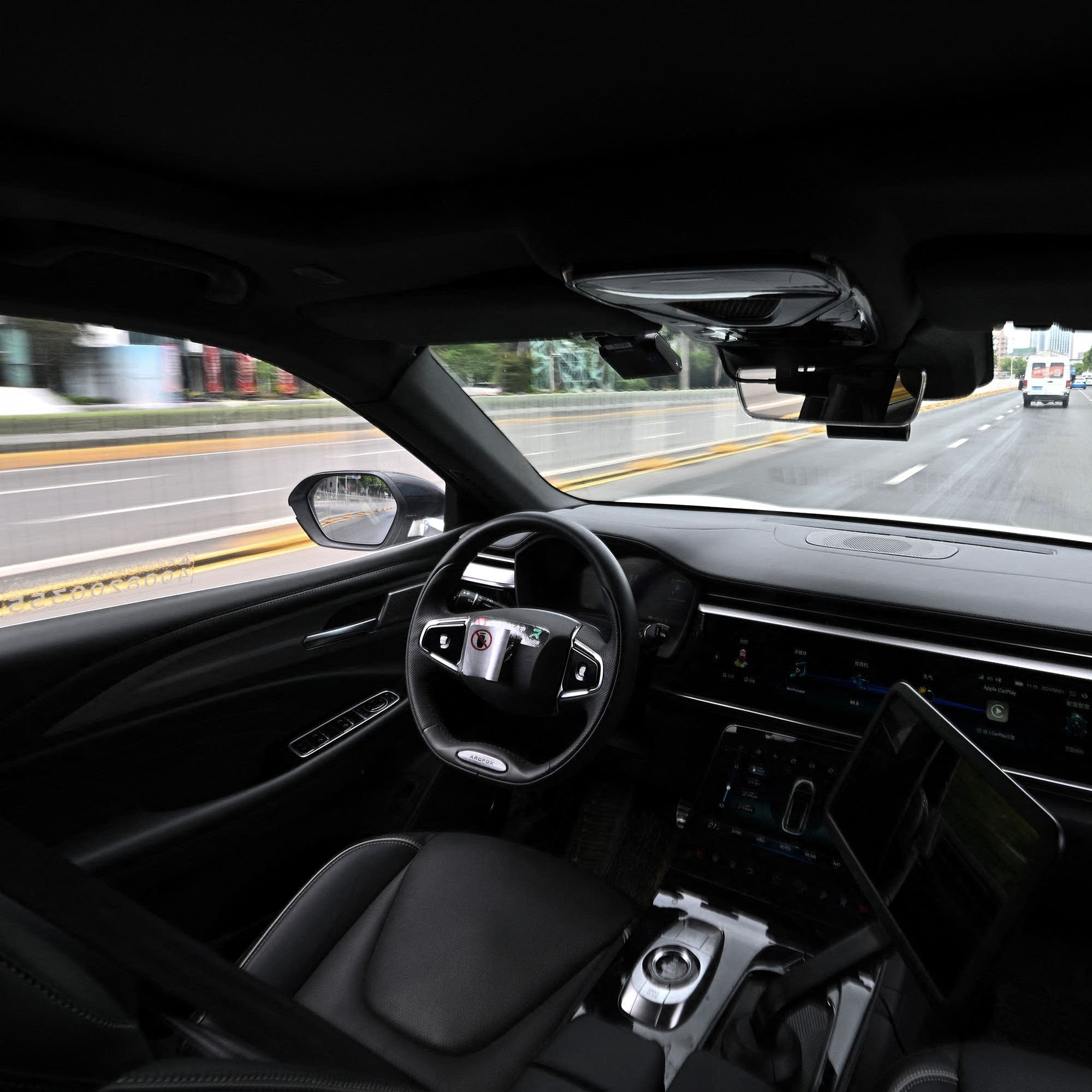
China puts the brakes on driverless taxis Live from the uk, this is the Marketplace Morning report from the BBC World Service. I'm Stuart Clarkson. Good morning. Plans to mass produce and sell self driving vehicles in China have been delayed. It's after news spread of a crash involving one earlier this year. Suranjana Tiwari is with us on Marketplace this morning. Hi, Suranjana.
- [01:23]
Ella Hochse
Hi there.
- [01:23]
Stuart Clarkson
So this is a big turnaround in the plans for China, isn't it?
- [01:26]
Suranjana Tiwari
That's right. And the reason we know about it is because China's regulatory last week gave the go ahead to just two out of nine automakers that had submitted plans to sell self driving cars. And even then the approvals by the Ministry of Industry and Information Technology in China were very narrow. They only allowed further testing really, rather than mass production. So these two companies, Beijing Automotive Group and Changan Automobile in Chongqing, will be allowed to operate self driving taxis on particular stretches of highway in each company's hometown. And the taxis will not be allowed to change lanes while under computer control. On any other roads, the taxis will need to be under the control of a driver. And that's largely because of the crash that you mentioned, because the issue apparently was that the self driving car did change lanes.
- [02:20]
Stuart Clarkson
And what's the feeling in China about driverless cars after news of this crash as it was quite a serious thing, wasn't it?
- [02:26]
Suranjana Tiwari
That's right. In March, this news spread very quickly and widely. It was a crash on a highway and it actually, actually killed three women. Now news of previous Accidents involving assisted driving had been suppressed by China's censors. But it was really interesting that this one in China's Anhui province did spread so quickly. We're putting two and two together a little bit because it is China and information is very tightly controlled. But because just these two companies have been given the approval, experts are saying that this is a rolling back of what China is planning. And remember, China is really pushing these new technologies. We're hearing about robotaxis every other week. And so it's really interesting that only these two companies have been given the approval to only test this driverless technology.
- [03:16]
Stuart Clarkson
Yeah. And lots of US Cities obviously have driverless taxis. Many other places around the world testing the water on this as well. How is the picture in Asia? Are other countries going to start doing more of this?
- [03:25]
Suranjana Tiwari
Yeah, that's the big question. We're hearing a lot about it from China, again because of the investment, because of the government backing of, you know, new technologies which include robotaxis and self driving cars. We've heard Elon Musk wants to take Tesla's self driving cars whenever they appear to China as well. But having these self driving cars in California is very different from the streets of Jakarta or the streets of New Delhi or Mumbai. And there are a lot of other considerations. Another big issue in this part of the world is just the population numbers and the regulation around these types of technology. It requires a lot of government involvement in order to make sure that they are safe. We've heard so many incidents around the world. And the only place to make sure that it's really safe for the people, not only in the cars, but on the roads as well, is through very stringent standards and tight regulation. And that's something that even though lots of emerging economies in this part of the world want these new technologies, they also have to have the government regulation and those safety standards hand in hand.
- [04:31]
Stuart Clarkson
Okay, Saranjana, thank you as always for being with us on Marketplace and have a lovely Christmas break.
- [04:36]
Suranjana Tiwari
You too. Merry Christmas.
- [04:37]
Stuart Clarkson
Okay, let's do the numbers now. And British oil giant BP has agreed to sell a majority stake in its Castrol lubricants business. US investment firm Stone Peak is buying the 65% share for around $10.1 billion. The EU has spent 7% less on oil and gas from the US in the past four years, despite making a pledge to President Trump to buy more American energy. Volumes of gas purchased are up, but oil and gas prices are down. So the overall value has fallen year on year. Now 20, 25 was a mixed picture for commodities with precious metals like gold and silver hitting record values while oil is closing the year at a five year low. To help us assess the performance of commodities during the past year, we're joined by Ella Hochse from Newton Investment Management. Hi there, Ella.
- [05:26]
Ella Hochse
Hi.
- [05:27]
Stuart Clarkson
So apart from gold, what other metals have done well in 2025?
- [05:31]
Ella Hochse
Well, 2025 will probably go down as one of those very strong years for precious metals in general. Star performer being silver, followed closely by platinum. So those have been. And then palladium as well. But silver has really been the superstar. More than 109% returns year to date.
- [05:54]
Stuart Clarkson
And what's been driving that?
- [05:55]
Ella Hochse
Silver actually goes into a lot of the industrial production cycles. So there is actually an industrial use for it. With gold as we know, it's more as a store of value and you know, to preserve your wealth if you like. And also for jewelry, but for silver, of course there is a jewelry use, but predominantly the supply element is quite constrained and it comes from a couple of countries really, so, you know, harder to source if you like. So when you have a combination of demand for industrial use going up together with some of the elements, we're seeing gold as well, which is supporting precious metals. You have a winning combination, if you like, for a big upward move.
- [06:40]
Stuart Clarkson
Of course, oil is a big part of the commodities picture. How's that performed over the year?
- [06:44]
Ella Hochse
So oil has been one of the key underperformers, in fact, when you look at the broad commodity basket. And so energy has been particularly hit, both Brent and crude, so down between 18 to 20%. And that was driven by a couple of factors. One, supply. So there was plenty of supply this year, including from non OPEC members. So there was a supply growth element and somewhat of a slower demand coming there as well. And so that's certainly been the case for this year and potentially for the first quarter of the next coming year. So in 2026 beyond there, things might change a little bit in my view.
- [07:29]
Stuart Clarkson
And how about commodities that we consume like coffee and cocoa?
- [07:33]
Ella Hochse
So coffee, we had a big squeeze, particularly driven by supply issues and some of the tariff concerns around Brazil. But Brazil and Vietnam, some improvements in supply helped to the pressure that was coming through coffee mid year. So we've seen a bit of a release there, but certainly another strong year, particularly for, for, for coffee I think it was up 24% cocoa. Some of the supply constraints there coming from West Africa actually stabilized this year because, I mean, last year I remember we were talking a lot about how expensive chocolate was becoming. So now that's been easing off. And so cocoa futures have actually seen a big over the course of the year, something like 50% downward correction.
- [08:20]
Stuart Clarkson
Perfect. Ella Hodgescher, thanks for that whistle stop tour through commodities in 2025.
- [08:26]
Ella Hochse
My pleasure. Thank you so much.
- [08:27]
Stuart Clarkson
And finally for today, the homemaking and lifestyle expert Martha Stewart has become a minority owner of Welsh soccer club Swansea City. The 84 year old TV host and author joins rapper Snoop Dogg as a high profile investor in the team. Swansea sit 19th in the English football second tier. Thank you for listening today in the UK. I'm SN Stuart Clarkson with the Marketplace Morning Report from the BBC World Service. Have a lovely day and Merry Christmas.
- [09:04]
Maria Grace
Hey everyone. You already listened to Marketplace Podcasts, so you know that it's important to understand how economic forces shape our lives. And that feels especially important now as we're all trying to make sense of the latest headlines. I'm Maria Grace, host of Marketplaces. This is Ankara, a show that explores how money bumps up against our relationships, our choices, and the parts of life we don't always say aloud. And starting January 15th, we are back every single week. New stories, new questions, and the kind of conversations that make you feel less alone in this quickly changing economy. We're tackling questions like should I turn my hobby into a money making side hustle? How do I deal with layoff anxiety? Or what do we owe our parents financially? Don't miss an episode. Subscribe to this is Uncomfortable from Marketplace. Wherever you get your podcasts.