← Marketplace Morning Report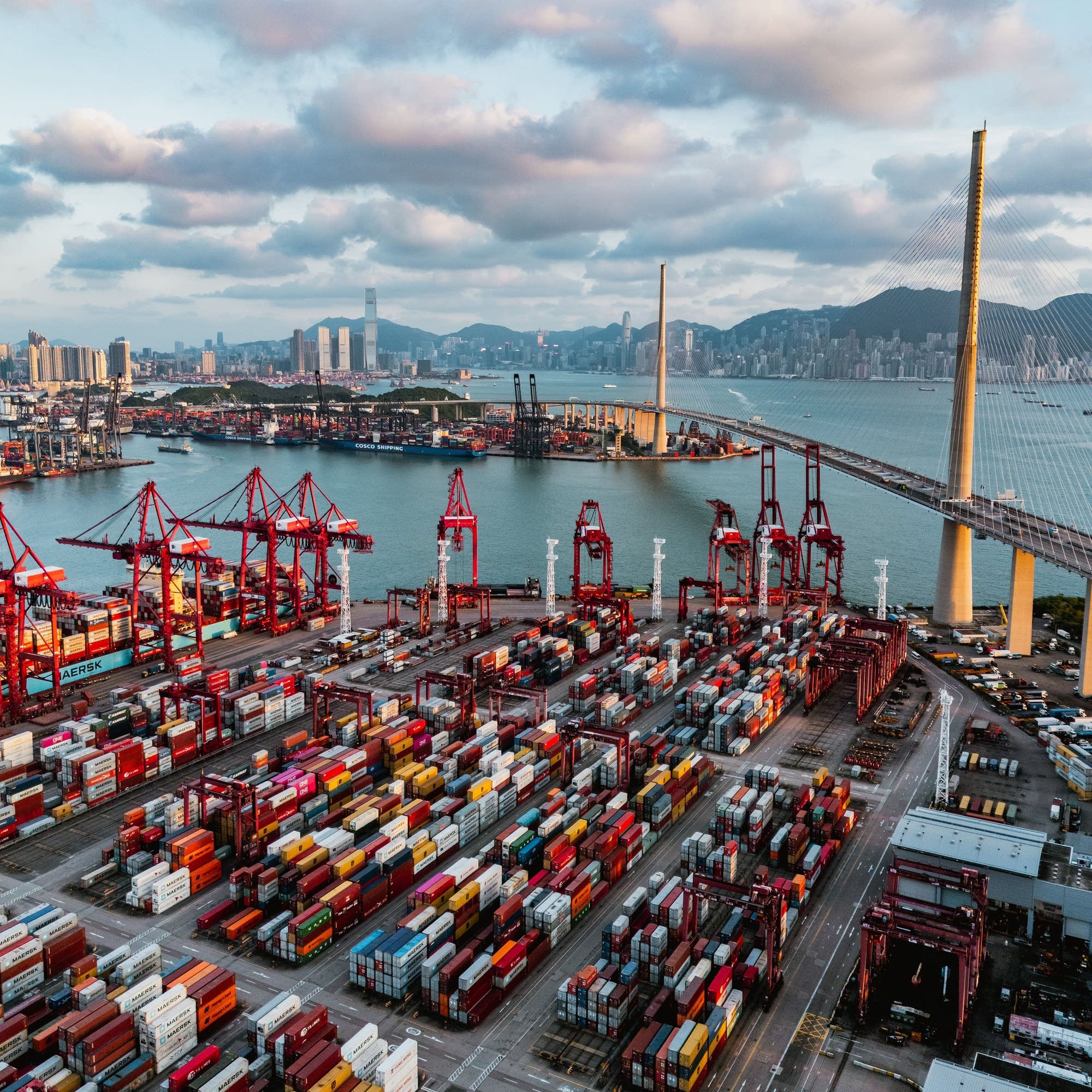
Loading summary
Transcript27 lines
- [00:01]
Wix AI Promoter
What does it mean to move at the speed of AI? It means thinking big and moving fast. It means running like a 10 person team, even if it's just you. With Wix, it's possible. Create a website that's as unique as your business, launch a new campaign, or test new ways to make more money without slowing down. Think it, build it, scale it all with AI on wix.
- [00:26]
Odoo Sponsor
This podcast is supported by Odoo. Some say Odoo business management software is like fertilizer for businesses because the simple, efficient software promotes growth. Others say Odoo is like a magic beanstalk because it scales with you and is magically affordable. And some describe Odoo's programs for manufacturing, accounting and more as building blocks for creating a custom software suite. So Odoo is fertilizer magic beanstalk building blocks for business. Odoo exactly what businesses need. Sign up@odoo.com that's o d o o.com.
- [00:57]
William Lee Adams
China's export surge despite a drop in US shipments. Live from the UK this is the Marketplace Warning Report from the BBC World Service. I'm William Lee Adams. Good morning. We start in China where a war of words over trade continues with the US following President Trump's latest threat to impose an additional 100% tariff on Chinese goods. Beijing urged the US to correct what it called wrong practices or face corresponding measures. But new data suggests China's exports are booming despite tariffs. Andy Xie, an independent economist, joins us from Shanghai. Andy, hello.
- [01:33]
Andy Xie
Hello.
- [01:34]
William Lee Adams
So figures out today show that Chinese exports rose more than 8% in September from a year earlier. That's despite the fact Exports to the U.S. are down 27%. Does China need the U.S. well, the.
- [01:49]
Andy Xie
U.S. is still significant for the time being it's about 13 to 14% of the total export. But it's becoming smaller. China is finding other markets.
- [01:59]
William Lee Adams
So where are those markets?
- [02:01]
Andy Xie
Well, the renewable energy and E mobility are really booming. Both are cheaper and more reliable, their current alternatives. And China is dominant in both areas. You look at last year renewable energy investment, investment topped over $2 trillion, still rising at double digit rate. So I think that it looks like Chinese export future is quite bright.
- [02:27]
William Lee Adams
Do you think that China is better prepared for a trade war now having already lived through a previous Trump administration?
- [02:34]
Andy Xie
Oh yeah. I think that when it began seven years ago, a lot of pessimism in China. People felt very uncertain. Chinese economy was always export dependent. Also relied quite a bit on US technology. So I have seen is struggling. But China has lots of engineers. So that's China's advantage.
- [02:55]
William Lee Adams
President Trump has hinted at reconciliation with Beijing on social media. He said, don't worry about China. It will all be fine. What's the mood in China ahead of Trump's planned meeting with China's President Xi Jinping later this month?
- [03:10]
Andy Xie
People have been used to so many shocks before. They don't think that it's going to bring calamity to China anymore. So I think that China psychologically also is in a much, much better place now. So I think that China is going to toughen this one out.
- [03:27]
William Lee Adams
What has China's government been saying about all this?
- [03:29]
Andy Xie
Oh, China is. The government has already formally responded. It's a usual thing. Instead of threats, we need to negotiate, we need to communicate and so forth. China is willing to go through that. What China wants is predictable behavior. This is why China is going to push it really hard. Trump cannot be behaved like Trump in the past. You have to stick to your words.
- [03:52]
William Lee Adams
Andy, thanks for joining Marketplace.
- [03:54]
Andy Xie
Thank you.
- [03:55]
William Lee Adams
Let's do the numbers. It looks like tensions with China aren't limited to the US in the Netherlands, the government has taken control of Chinese owned chipmaker Nexperia due to security worries. Shanghai listed shares in its parent company wingtech fell by 10% on Monday morning. The firm said it was consulting with lawyers elsewhere. The combined market value of all cryptocurrencies rose more than 6% to top $4 trillion. Now to Nigeria, which produces nearly 40% of the world's sheanuts. But new trade restrictions are hitting the women who rely on them most. The nuts processed into shea butter are a prized ingredient that sustains a multi billion dollar trade in cosmetics, food and medicine. In Niger State, at the heart of the West African shea Belt, families are already feeling the impact as the BBC's Toda Upeyemi.
- [04:46]
BBC Reporter Toda Upeyemi
In open air yards across 90 states, a rhythmic percussive sound fills the air. It is the dull toad of wood against shell as women sit low to the ground cracking open sheer knots. This sound has powered Nigeria's sheer industry for generations. But a sudden six month ban on runout exports has left these women feeling hopeless. 55 year old Fatima Ndako relies on the share trade to feed her large family.
- [05:17]
Fatima Ndako
When I heard about the exports ban I could not sleep. The money we make from this work is what we use to feed our families. I have over 10 people depending on what I earn, including my children, grandchildren and daughter in laws.
- [05:30]
BBC Reporter Toda Upeyemi
The ripple effect is hitting the entire supply chain. Traders who buy from farmers are now stock with mountains of unsold stock each bag weighing up to 135 kilos. One trader told us the ban is costing him millions. With exports rout on pause. The women are earning less than half of what they used to and even that isn't guaranteed. Imokwa a new processing plant, Salid Agriculture, has opened its doors. It is Africa's largest shear butter only refinery. Its managing director, Ali Sayyidou says the ban has already boosted business. It is seeing a surge in supply of Russia notes.
- [06:13]
Ali Sayyidou
Immediately after the ban, we began to have calls. Are you collecting share notes? Want to supply share notes before the ban? We are not getting those information.
- [06:21]
BBC Reporter Toda Upeyemi
The government insists the ban is temporary and aims to strengthen Nigeria's position in the global share market. Kingsley Uzoma, agribusiness advisor to the presidency, explains their reasoning.
- [06:33]
Kingsley Uzoma
We cannot be producing and other people are taking it. Our own companies are not taking it, are not making money. Nothing is accounted $6.5 billion annual market. We are getting less than 1%. We want from now to 2030 to get at least 20% of that market share, which is $1.3 billion.
- [06:49]
BBC Reporter Toda Upeyemi
Officials promise long term gains, but for women already squeezed by falling prices and household demands, that promise feels distant.
- [07:00]
William Lee Adams
Toda Opoyemi reporting. That's all for today. On behalf of the entire team, thank you for listening. In the UK I'm William Lee Adams with the Marketplace Morning Report from the BBC World Service.
- [07:19]
Kimberly Adams
I'm Kimberly Adams, host of Make Me Smart, a podcast from Marketplace that makes today make sense. Join me throughout the week as I dig into the biggest stories in tech culture and the economy. Whether it's a vibe check on the job market or the latest on China US Relations, Make Me Smart helps you understand how the headlines actually impact your daily life. Listen to Make Me Smart on your favorite podcast.
- [07:45]
Unidentified Speaker
Apparently.