Loading summary
Transcript39 lines
- [00:01]
Host
Storms, floods and fires are ever more extreme. And yet the Federal Emergency Management Agency is fighting for its life.
- [00:08]
Caller/Commentator
I've never been a big fan of FEMA.
- [00:10]
Sabri Benishour
FEMA's a disaster.
- [00:11]
Narrator/Advertiser
FEMA's a dirty word.
- [00:12]
Caller/Commentator
People are waking up in droves to the FEMA camps.
- [00:15]
Host
Can the agency survive the stories that have been told about it? And can we survive without fema? The Movement to Kill FEMA is a brand new series from WNYC's on the Media. Listen wherever you get your podcasts.
- [00:30]
Capella University Advertiser
You've never been one to settle, stand down or stand still. You're a lifelong learner, energized by excellence. There's a fire inside you you can't ignore. You've got competition to outrun, momentum to build on, and your own high standards to meet. Stop now. Not a chance. At Capella University, we help you catch what you're chasing because you've always had the drive. Now go earn the degree. Capella University. What can't you do? Visit capella.edu to learn more.
- [01:02]
Sabri Benishour
Small Businesses are Hanging in There From Marketplace, I'm Sabri Ben ashore in New York. Small business owners confidence was a bit higher last month, but so were their prices. That's the read from the National Federation of Independent Business Monthly survey out this morning. Marketplace's Nancy Marshall Genser has the details.
- [01:22]
Nancy Marshall Genser
The National Federation of Independent Business, or nfib, says its small business optimism index for April edged up from March, but it's still below the index's long term average. Almost a third of the small business owners surveyed have increased prices. That's well above the NFIB's average. 16% of owners said inflation was their biggest problem, up from March. More than half reported supply chain disruptions, also higher than March. And small business owners told the NFIB they're having trouble finding qualified workers. Workers about a third said they had job openings they couldn't fill in April, up two points from March. And more business owners say this is not a good time to expand. Spending on things like new equipment, vehicles, buildings or land is below the NFIB's historical average. The NFIB says small businesses aren't just sitting on the sidelines. It appears many of them have left the playing field altogether. Nancy I'm Nancy Marshall Genser for Marketplace.
- [02:22]
Sabri Benishour
Remember how video game seller GameStop wanted to buy eBay for $56 billion that it didn't have? EBay has responded. It's a no for them, ebay's board wrote in a letter to GameStop. Quote, we have concluded that Your proposal is neither credible nor attractive. Prices in the USA were up 3.8% year over year in April. That is a faster rate of annual inflation than we saw in March when prices were up 3 point from the year before. Big driver here was of course energy prices due to the war with Iran. Jeffrey Cleveland is chief economist at Peyton and Regal is here to talk about it. Hi Jeffrey.
- [03:01]
Jeffrey Cleveland
Good morning.
- [03:02]
Sabri Benishour
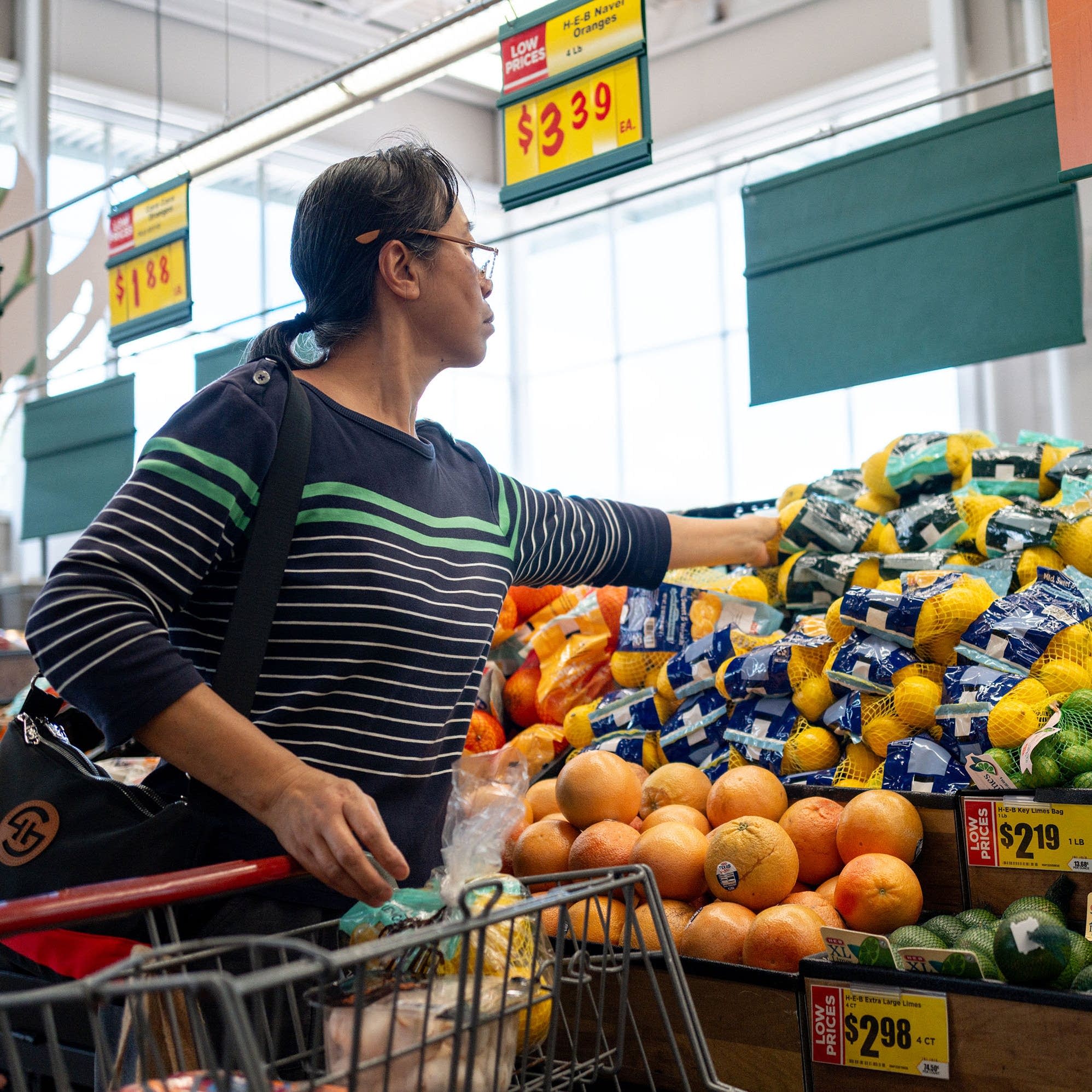
Okay, I'm looking at the graph of 12 month percent change in prices and it is crazy like February was 2.4% inflation and then April 3.8 looks terrible. How bad is it?
- [03:17]
Jeffrey Cleveland
For the typical person, the way to think about that is you want your income to go up faster than prices are rising. And we know from Friday's jobs report that average hourly earnings went up around 3.6% in the last 12 months while prices from today's data went up 3.8%. So it's eating into income, it's eating into real earnings we would say so I think that's the most problematic part of the report. I think the good news is a lot of that is driven by energy. So to the extent that energy prices stabilize or even decline a bit, that should help the consumer in the months ahead.
- [03:58]
Sabri Benishour
If you look at gas prices specifically and the monthly changes in prices, it does look like the fastest month of price increases was March and then April was, was not good, but it was less bad. Does that suggest that this wave of energy driven war inflation is, is going to, is going to be temporary, he's going to pass over us.
- [04:22]
Jeffrey Cleveland
That's one I would say positive way to look at things. The worst might be behind us in terms of the inflation impact.
- [04:30]
Sabri Benishour
Jeffrey Cleveland, chief economist at Payton and Regal. Great to talk to you as always.
- [04:34]
Jeffrey Cleveland
Have a good day.
- [04:36]
Sabri Benishour
And speaking of uncertainty, President Trump says the ceasefire with Iran is quote on life support. As proposals from both countries to end the war have gone nowhere.
- [05:04]
Narrator/Advertiser
Dell PCs with Intel inside are built for the moments that matter. For the moments you plan and the ones you don't. Built for the busy days that turn into all night study sessions. The moment you're working from a cafe and realize every outlet's taken the times. You're deep in your flow and the absolute last thing you need is an auto update throwing off your momentum. That's why Dell builds tech that adapts to the way you actually work. Built with long lasting battery so you're not scrambling for the closest outlet. And built in intelligence that makes updates around your schedule, not in the middle of it. They don't build tech for tech's sake, they build it for you. Find technology built for the way you work@dell.com DellPCS built for you.
- [05:57]
Caller/Commentator
The Marketplace Morning Report podcast is supported by three Day Blinds. We shop for everything at home. Now we why can't we shop for blinds at home too? We can now with three Day Blinds. Instead of wandering around a store, three Day Blinds sends a professional design consultant straight to you. They bring all the samples, help you see what actually works in your space, take expert measurements, and even handle the installation. We've all bought something that looked great in store and terrible once we got it home. With three Day Blinds, you see everything in your actual light with your actual furniture before you commit. Plus, whether you're at home or away, you can control your window treatments with the three Day Blinds app. So for a free no charge and no obligation consultation, head to 3dayblinds.com morning for our buy one get one 50% off deal. That's the number 3D a Y blinds.com morning.
- [06:51]
Sabri Benishour
President Trump is heading to Beijing today. He's expected to arrive tomorrow. On Thursday and Friday, Mr. Trump is set to meet with Chinese President Xi Jinping. Sixteen CEOs will join the American President, including Elon Musk of Tesla and SpaceX and Tim Cook of Apple. The summit was originally planned for April, but then it was postponed. The reason given was war in the Middle East. So what might come of this summit? We called up Scott Kennedy with the center for Strategic and International Studies to talk about it. Hi Scott.
- [07:20]
Scott Kennedy
Good morning.
- [07:21]
Sabri Benishour
Okay, so last time we talked you were kind of dubious that, you know, much more than like a photo op and some very limited agreements would come out of a Trump Xi meeting. Has your view changed at all?
- [07:35]
Scott Kennedy
From a narrow perspective, the six week delay between when the meeting was originally going to occur at the end of March, early April, and when it is occurring this week has actually given both sides some time to actually talk about some details with regard to trade and investment and some other issues. And so I think actually once they do meet, there will be a list of deliverables that will be longer than what would have been the case had the meeting occurred six weeks ago. That said, I still think the likely result will be the same is that this meeting consolidates China's turning of the tables on the US over the past year and now sort of be in control of the dial of how calm or uncom this relationship is.
- [08:24]
Sabri Benishour
Yeah, China is being described as having become much more powerful. What does that mean for the leverage these two countries have on each other.
- [08:33]
Scott Kennedy
Well, when President Trump visited China In November of 2017, China was still basically focused on investing in infrastructure, real estate as its source of growth. It had already, of course, started to put down a lot of cash and investment on tech, but it really hadn't changed gears yet. And so China didn't have a lot of leverage. Right. And they had a lot of problems with their economy. And so when the president threatened high tariffs, which in today's light look pretty small at 5 to 10%, the Chinese yelled uncle very quickly and they ended up with a one sided deal in which they made all the concessions. Now they've got a lot more tech cards and bargaining chips, things that the US and the rest of the world need. And so that gives them a foundation for pushing back when they meet this week.
- [09:23]
Sabri Benishour
So what are some of the economic deliverables that might come out of this and which ones might not?
- [09:29]
Narrator/Advertiser
Also?
- [09:30]
Scott Kennedy
Sure. So I think they will be able to announce sales of American commercial aircraft and agricultural goods. And I think it's also possible that the two sides will agree to extend the ceasefire that was originally agreed to last October in Busan when the two leaders met. The board of investment idea about potentially having a vehicle for China to invest at manufacturing in the United States or portfolio investment that may not get done this year or may not ever get done.
- [10:04]
Sabri Benishour
Why is that so contentious?
- [10:05]
Scott Kennedy
Well, investment from China in tech may create some jobs, it may create some spillover effects to the rest of the industry, but it may also displace American companies. You know, Detroit is very anxious about having Chinese companies produce and sell in this market right alongside them, potentially at much lower prices. And so we may not see that get over the finish line when they meet this week.
- [10:31]
Sabri Benishour
Scott Kennedy at the center for Strategic and International Studies, thanks very much.
- [10:36]
Scott Kennedy
Thank you.
- [10:37]
Sabri Benishour
In New York, I'm Sabri Benishour with the Marketplace morning report. From 8:00pm American Public Media.
- [10:53]
Parent/Listener
There's so much happening in the world and if you have particularly, shall we say, inquisitive kids, it can be hard to answer their questions.
- [11:02]
Narrator/Advertiser
Hi, I'm Ryan.
- [11:03]
Bridget
And I'm Bridget. And we host Million Bazillion, a podcast from Marketplace about money for kids and their families. We help your little ones think big about important but tricky topics like taxes, gas prices, and even what a cashless society might be like.
- [11:19]
Parent/Listener
There's a bunch of new episodes out now, so go listen to Million Bazillion on your favorite podcast.
- [11:24]
Narrator/Advertiser
Apparently.