← Marketplace Morning Report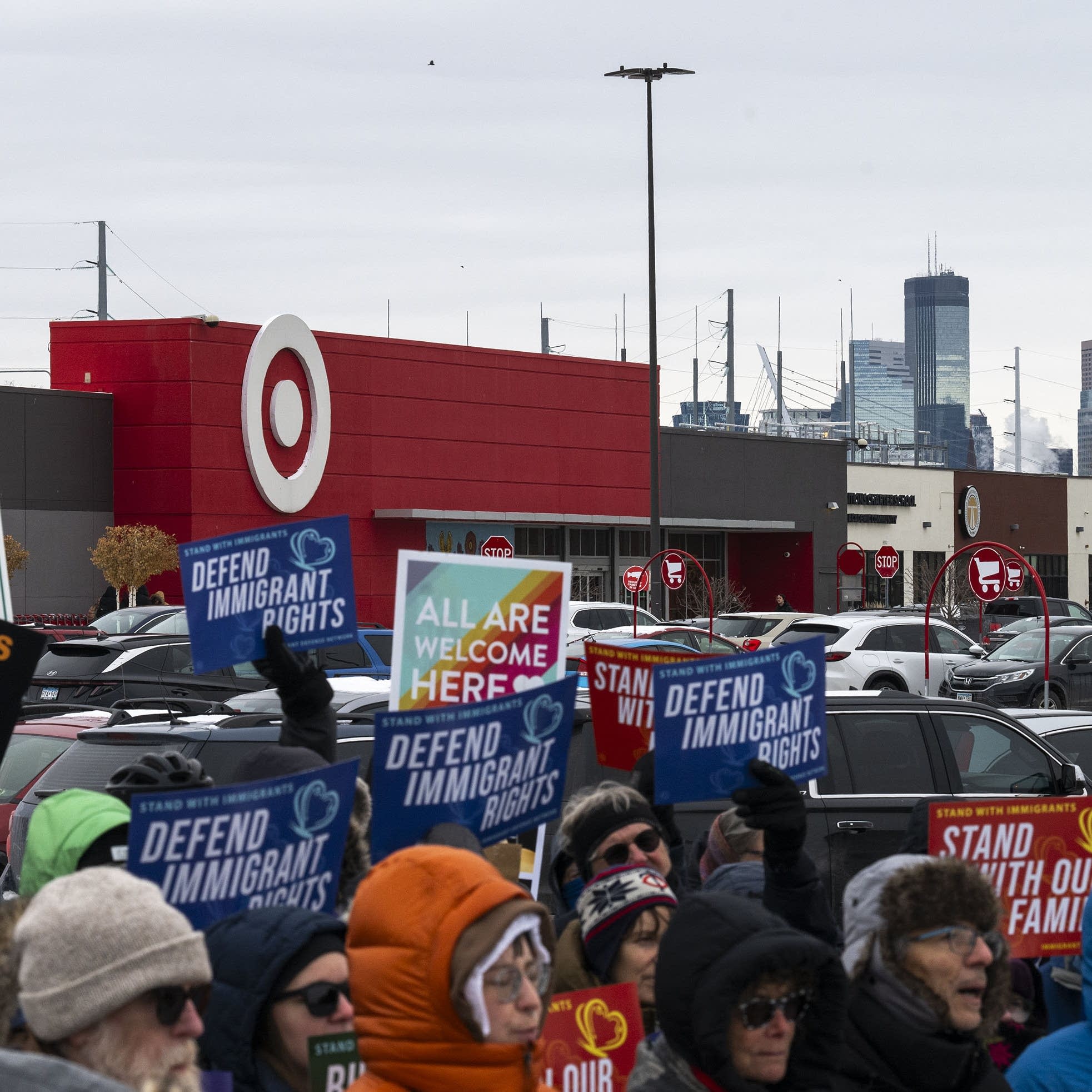
Loading summary
Transcript36 lines
- [00:02]
David Brancaccio
The popular kid on campus Community colleges. I'm David Brancaccio in Los Angeles. For the fourth fall in a row. Enrollment in community colleges was up this time, up 3% from a year earlier. Now that's according to a new report from the National Student Clearinghouse Research center. Why is interesting Marketplace's Stephanie Hughes has.
- [00:22]
Stephanie Hughes
That 41 year old Titus Dominic has always loved to cook. So this fall he enrolled in a culinary program at Columbus State Community College in Ohio.
- [00:32]
Titus Dominic
The ultimate goal would be at some point to be able to own my own restaurant.
- [00:36]
Stephanie Hughes
Dominic worked as a cook on an aircraft carrier when he was in the Navy years ago. For the last decade he's worked as a commercial truck driver. He hopes this program will launch his new career.
- [00:47]
Titus Dominic
At some point I have to pull that thread and say it's time to go for it.
- [00:51]
Stephanie Hughes
More people are doing the same as Dominic going to community college with the aim of getting a particular job. There's been an increase in people seeking associate's degrees and Matthew Holtapple, who leads the research team at the National Student Clearinghouse, says there's been an even bigger rise in short job focused certificate programs.
- [01:09]
Titus Dominic
It speaks to students of all ages seeing the value of these short term credentials. There's a wage payoff that students are seeing and they see it as clear steps toward the career or the job that they want.
- [01:19]
Stephanie Hughes
Another driver of growth. More high school students are now taking community college classes.
- [01:24]
Titus Dominic
I think this kind of program helps students get into college sooner, so it helps students learn they can do college work and they can succeed in college.
- [01:32]
Stephanie Hughes
Holtz Apple points out that community colleges aren't necessarily gaining at the expense of other schools. There has also been an uptick in the number of students going to four year colleges. I'm Stephanie Hughes for Marketplace.
- [01:44]
David Brancaccio
The U.S. food and Drug Administration has quietly removed web pages that used to say mobile phones are not a health risk. The Wall Street Journal noticed the change. Robert Kennedy Jr. S Department of Health and Services has ramped up a new study of the health effects, if any, of the radio waves emitted by phones. The FDA pages used to say in part, the weight of scientific evidence has not linked exposure to radio frequency energy from cell phone use with any health problem.
- [02:26]
Jimmy Allen
Get that AMEX Gold Card ready.
- [02:27]
Kyle Rysdal
I'm too tired to cook.
- [02:28]
American Express Announcer
We feeling Five Guys or the Cheesecake Factory? Both earn up to $120 a year in statement credits of participating partners, up to $10 each month when you pay with the AMEX Gold Card. Learn more@americanexpress.com Explore Gold enrollment required terms apply.
- [02:41]
Jimmy Allen
Every company wants to grow, but anyone who's scaled knows the truth. Growth creates complexity and complexity kills growth. Bureaucracy creeps in. Culture frays, and suddenly the energy that built your business starts working against it. If you want unfiltered insight on fighting that drift, check out Founders the CEO Sessions with executive advisor Jimmy Allen. Each episode, leaders from companies like Audible, Walmart, China and AWS reveal how they stayed fast, focused and human, even at massive scale. Founders mentality the CEO Sessions business should be simple. Listen wherever you get your podcasts.
- [03:23]
David Brancaccio
The country, and especially people in Minnesota remain on edge and upset after the killing of Renee Good, a 37 year old US citizen, by an ICE agent in Minnesota. This with more ICE agents and other federal officers deployed to the area. Amid all this, a key set of regional voices has been noticeably quiet executives for many of Minnesota's leading corporations. There are many. For more, I'm joined by Marketplace's senior economics contributor Chris Farrell in St. Paul. Hey Chris.
- [03:51]
Chris Farrell
Good morning, David.
- [03:52]
David Brancaccio
Minnesota has headquarters for some very high profile businesses. I'm thinking 3M Target, Best Buy, General Mills, many more. Some of them have been right at the center of the immigration enforcement immigration raids in their stores, employees detained. In some cases, there have been calls for firms to protect employees and customers. What have been the public statements from big companies, given everything we've seen in the past week or so?
- [04:20]
Chris Farrell
Well, David, there have been very few public statements so far. Generally, companies have said, look, they can't stop immigration officials from entering public spaces. And that's right. But here's the thing. Prominent executives served on nonprofit boards. They weigh in on workforce issues, and they tap their corporate foundations and personal pockets to support community initiatives. So with that history, with that background, corporate Minnesota's silence about increased federal immigration enforcement is striking.
- [04:51]
David Brancaccio
Now, the administration's promise is that strict immigration policy will lead to more and better jobs for citizens. But I mean, we've seen calculations, right, that this immigration enforcement has had negative effects, a negative impact on Minnesota's economy.
- [05:07]
Chris Farrell
Well, local businesses, they're saying, we have fewer customers. Employers say some workers are too afraid to come for their shifts. Farmers, restaurateurs, construction firms, just to name a few of the vulnerable industries warn repeatedly about labor shortages and production bottlenecks from the crackdown.
- [05:25]
David Brancaccio
What explains the retreat from the public square by large companies in Minnesota on these issues?
- [05:31]
Chris Farrell
Minnesota's leading companies, they're national, they're global corporations, and the local economy is less important, says Louis Johnston, professor of economics at the College of St. Benedict and St. John's University.
- [05:45]
Louis Johnston / RT Rybeck
When you're looking at those kinds of things, it's better to keep quite quiet or to be as uncontroversial as possible and not take a side.
- [05:54]
David Brancaccio
And Chris, the general political environment is volatile and the rhetoric can be intense. Some will say vicious.
- [06:03]
Chris Farrell
Executives seem concerned that if they raise objections, their company might find itself dealing with political retaliation, regulatory scrutiny, perhaps a consumer boycott or some combination.
- [06:14]
David Brancaccio
Once upon a time, CEOs, I think, were more prone to taking stands on public issues. The term was CEO activism.
- [06:22]
Chris Farrell
Political scientist Samuel Huntington famously dubbed this mindset Davos Man, a multinational corporate elite confident in his problem solving insights involving the world's most pressing issues. These days, CEOs are focused on navigating multiple uncertainties like tariffs and geopolitical upheavals. But here's the thing, David. You know, in Minnesota and elsewhere, there are concerns that silence will exact a long term price. Here's RT Rybeck, a former mayor of Minneapolis.
- [06:54]
Louis Johnston / RT Rybeck
The bigger threat is if we lose our competitive advantage of having a culturally flowing workforce that continues to grow.
- [07:02]
Chris Farrell
Rybeck is now the head of the Minneapolis Foundation.
- [07:05]
David Brancaccio
Chris Farrell is Marketplace's senior economics contributor, speaking from St. Paul. Chris, thank you.
- [07:10]
Chris Farrell
Thanks a lot, David.
- [07:12]
David Brancaccio
Our executive producer is Nancy Fargali. Our digital team includes Antoinette Brock, Emily McCune and Dylan Mietanen. Our engineers are Tessa Block, Brian Allison and David Schreck. In Los Angeles, I'm another David, David Brancaccio. It's the Marketplace Morning report. From APM American Public Media.
- [07:39]
Kyle Rysdal
Hey, everybody, it's Kyle Rysdal, the host of Marketplace. It has been a year since the fires here in Los Angeles, and businesses that burned are still struggling.
- [07:47]
Titus Dominic
You know, I won't lie. I've looked, I've looked at, you know, hey, maybe we moved the store. It just, it wouldn't be the same.
- [07:54]
Kyle Rysdal
Hardware store on the ground Reporting and what the year ahead has in store for business owners still recovering. Listen to Marketplace on your favorite podcast app.