Loading summary
Transcript21 lines
- [00:00]
Odoo Advertiser
This podcast is supported by Odoo. Some say Odoo business management software is like fertilizer for businesses because the simple, efficient software promotes growth. Others say Odoo is like a magic Beanstalk because it scales with you and is magically affordable. And some describe Odoo's programs for manufacturing, accounting and more as building blocks for creating a custom software suite. So Odoo is Fertilizer Magic Beanstalk building blocks for business Odoo exactly what businesses need. Sign up@odoo.com that's O D O O.com.
- [00:30]
Dell Advertiser
Introducing your new Dell PC with the Intel Core Ultra processor. It helps you handle a lot, even when your holiday to do list gets to be a lot like organizing your holiday shopping and searching for great holiday deals and customer questions and customers requesting custom things. Plus planning the perfect holiday dinner for vegans, vegetarians, pescatarians and Uncle Mike's carnivore diet. Luckily you can get a PC with all day battery life to help you get it all done. That's the power of a Dell PC with Intel inside and backed by Dell's price match guarantee. Get yours at the best price of the year by visiting Dell.com Holiday terms and conditions apply. See Dell.com for details.
- [01:15]
David Brancaccio
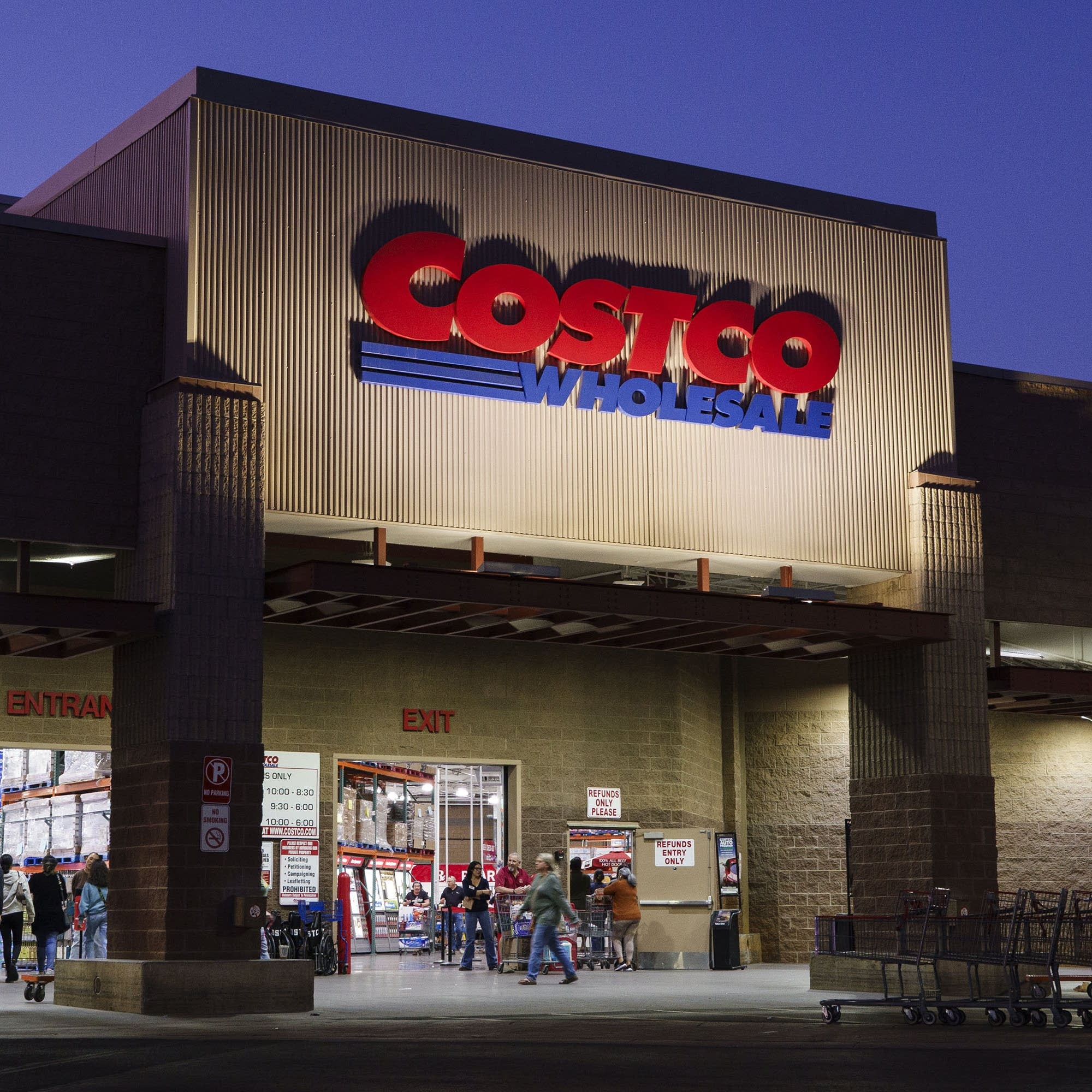
If a large class of Trump tariffs are ruled illegal, is their money back? I'm David Brancaccio in Los Angeles. If the Supreme Court rules President Trump's tariffs are illegal, it could go either way. Costco or wants a refund the retail chain is suing the Trump administration to get money back if the tariff strategy doesn't hold up tariffs or taxes that have been pouring into the US treasury to pay for other spending marketplaces, Henry Epp reports.
- [01:43]
Henry Epp
The lawsuits that brought President Trump's tariffs before the Supreme Court last month were led by small businesses and Democratic state attorneys general. But now it's bigger companies, including Costco, that are suing to make sure they're in line for a refund. So also suing are cosmetics company Revlon and motorcycle manufacturer Kawasaki Motors. Costco says its suit is necessary because there's no guarantee they'll be repaid if the court strikes down the tariffs. And several justices in the court's conservative majority appeared skeptical of the administration's arguments last month. If the justices determine the tariffs were imposed illegally and companies need to be refunded, it's not clear how that process would work. US firms have paid over $100 billion in tariffs this year, according to Bloomberg. Costco said in suit that it's been paying the duties quote on a continuous basis, but did not specify exactly how much it's suing to be refunded for all of the tariffs it's paid, plus interest. The Supreme Court has fast tracked the tariff case. The court could rule as soon as the end of the year. I'm Henry App for Marketplace Markets S&P.
- [02:47]
David Brancaccio
Futures are up 3/10 of 1% Nasdaq futures are up 4/10 of a percent now, according to Adobe Analytics Online, spending on what's dubbed Cyber Monday yesterday up 4.5% from a year earlier. That's less than than predicted. When we last got retail inflation data September because of the government shutdown, prices had risen 3% in a year. Just a modest jump then in spending for yesterday in real terms. If these preliminary numbers stick.
- [03:35]
Odoo Advertiser
This podcast is supported by Odoo. Some say Odoo business management software is like fertilizer for businesses because the simple, efficient software promotes growth. Others say Odoo is like a magic Beanstalk because it scales with you and is magically affordable. And some describe Odoo's programs for manufacturing, accounting and more as building blocks for creating a custom software suite. So Odoo is fertilizer Magic Beanstalk building blocks for business Odoo exactly what businesses need. Sign up@odoo.com that's o d o o.com.
- [04:05]
Dell Advertiser
It'S time for Cyber Monday. Dell Technologies Biggest Sale of the Year that's right, you'll find the lowest prices of the year on select Dell PCs like the Dell 16 plus with Intel Core Ultra processors and with built in advanced AI features. It's the PC that helps you do more faster. From smarter multitasking to extended battery life. These PCs get the busy work done so you can focus on what matters most to you, plus earn Dell rewards and enjoy many other benefits like free shipping, expert support, price match guarantee and flexible financing options. They also have the biggest deals on accessories that pair perfectly with your Dell PC, improving the way you work, play and connect. Whether you just started holiday shopping or you're finishing up, these PCs and accessories make perfect gifts for everyone on your list. Shop now@dell.com deals and don't miss out on the best prices of the year. That's Dell.com deals.
- [05:02]
David Brancaccio
We left footprints, flags and flotsam and jetsam on the moon. But something we did not leave is an economy. Private companies and governments are now hard at work to change that. This week on the Marketplace Morning Report here multiple views on an emerging Moon economy, how it might work, and if it's even A good idea. We'll launch today with Matt Weinziel. He's an economist who's also senior Associate Dean for Faculty Development and Research at the Harvard Business School. He's co author of Space to Unlocking the final economic frontier. Dr. Weinziel, welcome.
- [05:35]
Matt Weinzierl
Well, hello, David. It's great to be with you. Thanks for having me on.
- [05:38]
David Brancaccio
So there's a space economy that's taking off, as it were, burgeoning, but there's no moon economy yet. Look like the moon's going to get one, you think?
- [05:47]
Matt Weinzierl
There are certainly reasons to go to the moon that go back to national prestige, national security, some of the reasons we've always gone to space. There are some particular areas of the moon that are particularly valuable for. For doing more things in space, which is part of what we're trying to do. Those areas have water ice or continuous exposure to the sun for solar energy. But the new thing, and maybe part of what you're getting at, is that some companies are raising money to go actually do things on the moon for profit, whether it's mining the lunar soil or providing services to other customers on the lunar surface. And that's really what's the big change in space over the last couple decades, is this rising commercialization.
- [06:27]
David Brancaccio
Yeah, it's. Oh, there's a company called Interlune that has a contract to deliver three precious liters of Helium 3. So, I mean, that starts to sound like mining, but we're already talking private sector here. This won't be like the people who got to the moon in the first place with humans. The US Government ran that program.
- [06:47]
Matt Weinzierl
Yes, that's right. And it's actually a pretty nuanced story. And so I think it's important maybe for your listeners, too, to note that this is not really about the privatization, about the space economy. It's really what we. We like to talk about as the commercialization. So it's not that the government's getting out of space. Government is still likely to be the main customer, especially for risky and difficult things like creating a permanent presence on the moon. But what is interesting is that they've brought in a whole set of market forces to those relationships. And as part of that, the government's been encouraging companies that help provide the public services in space to also develop commercial customers on the side.
- [07:25]
David Brancaccio
What they found up there was a lot of moon dust, it's called regolith, that's not in short supply on the Moon. And there are companies looking at if you could turn it into something valuable, what might be done with it.
- [07:38]
Matt Weinzierl
That's right. And I think the general lesson there, too is that as we open up these possibilities, ideas come from sort of everywhere. That's part of the beauty of the market. You get startups and their backers willing to take long shot bets on ideas that might seem sort of impractical. But, you know, mining the moon, mining asteroids, this is an idea humans have had for as long as we've been going to space. It is now legally acceptable as well, based on some relatively recent US Law. So it might be in our future sooner than we would expect.
- [08:11]
David Brancaccio
US Law. I mean, there would be critics who would say, do we get to decide as Americans?
- [08:16]
Matt Weinzierl
The Governing Space Treaty the governing international law for space is called the Outer Space Treaty, passed in 1967 and is very clear that countries cannot claim sovereignty over any territory in space or any celestial object. But it's not as clear on whether companies or countries can claim a property right over resources in space. And the United States unilaterally passed legislation in 2015 giving US companies the right to claim just such property rights. And that, of course, was controversial and probably remains controversial among many. But other countries have adopted similar legislation. And we'll see, of course, once people actually do start mining these resources, how that all plays out.
- [08:57]
David Brancaccio
Matt Weinzerl is an economist and senior associate dean for faculty development and Research at the Harvard Business School and co author of the book Space to Unlocking the Final Economic Frontier. Professor, thank you.
- [09:08]
Matt Weinzierl
Well, thank you so much, David. What a pleasure to be with you.
- [09:11]
David Brancaccio
Tomorrow we'll meet a company working on power and recycling for the moon economy. And tangentially related, while some people do fishing or crochet, I'm a high power rocketeer, certified level 2 by the national association of Rocketry. Now, in a new video, I explain my little theory of rockets and the stock market. You can go to Marketplace APM on either Facebook or Instagram to see, among other things, one of the most ignominious rocket failures in Los Angeles. I'm David Brancaccio, Marketplace Morning report from apm, American Public Media.
- [09:46]
Million Bazillion Narrator
Sometimes kids ask questions that reveal just how much adults still need to learn, like can you explain what causes an economic bubble? And why are things so expensive at the airport? Or how much national debt might be too much? Fear not. Million Bazillion is back with a new season to help you and your kids become pros at understanding how money shapes the answers to all those questions and more. Listen to the latest season of Million Bazillion on your favorite podcast, apparently.