Loading summary
Transcript23 lines
- [00:02]
Unknown Speaker
On WhatsApp, no one can see or hear your personal messages. Whether it's a voice call message or sending a password to WhatsApp, it's all just this. So whether you're sharing the streaming password in the family chat or trading those late night voice messages that could basically become a podcast, your personal messages stay between you, your friends and your family. No one else, not even us.
- [00:28]
WhatsApp message privately this Marketplace podcast is supported by Dell Introducing the new Dell AI PC. Powered by the Intel Core Ultra processor, it helps you do your busy work for you so you can fast forward through editing images, designing presentations, generating code, debugging code, summarizing meeting notes, finding files, managing your schedule, responding to long emails, leaving all the time in the world for the things you actually want to do. Get a new Dell AI PC starting at $749.99 at Dell.com AI PC how those ahead, Stay ahead.
- [01:05]
Nick Qureshi
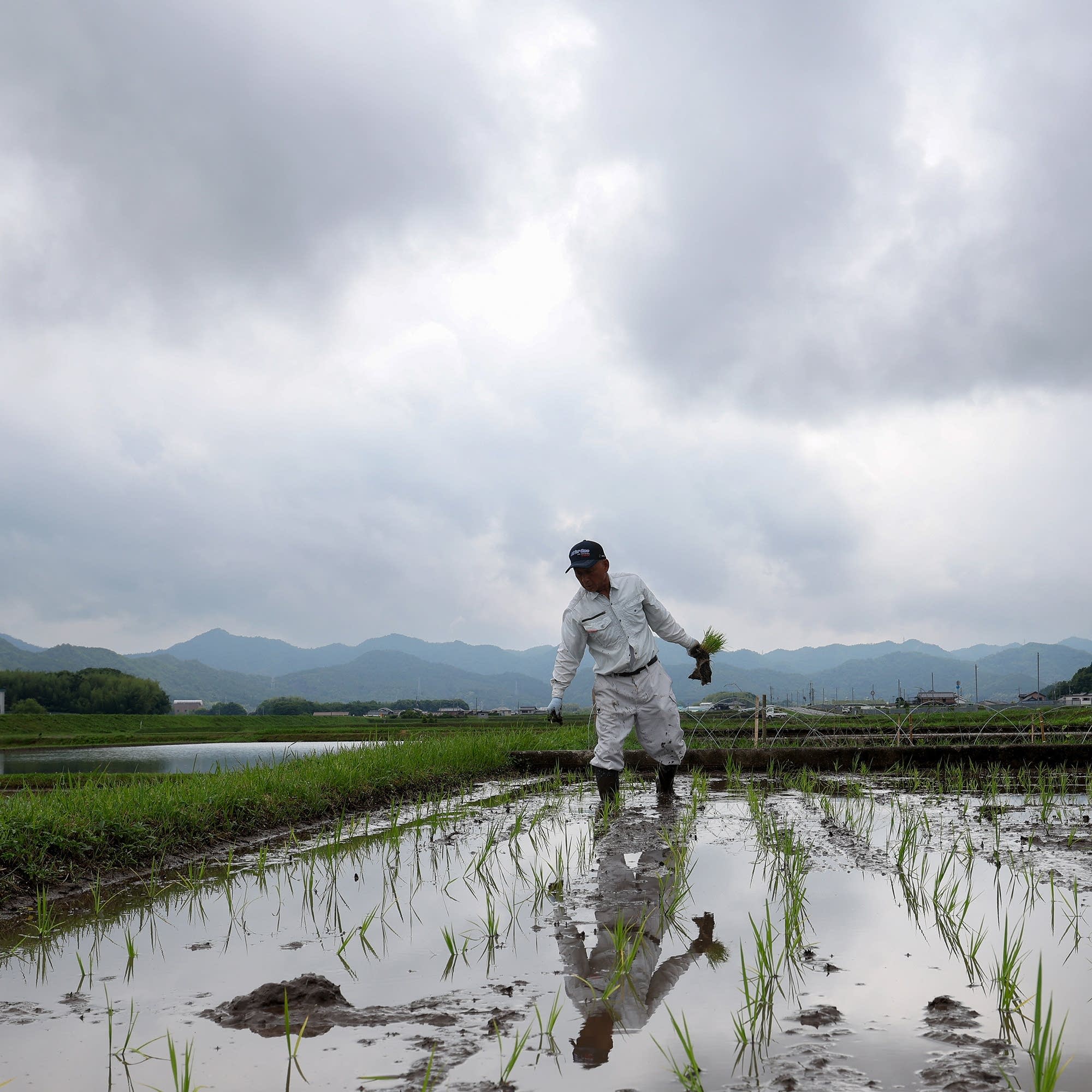
Could Japan's Rice Crisis Be Easing? Live from the UK this is the Marketplace Morning report from the BBC World Service. Hello, I'm Nick Qureshi, in for Liana Byrne. First, some good news for consumers of rice in Japan. The price of a 5 kilogram bag has dipped to its lowest level in two months. The country's national supermarket says the shortage seems to be easing. The BBC's business correspondent Katie Silver says that for a country that eats as much rice as Japan, the high price has been tough for consumers.
- [01:38]
Katie Silver
It was so contentious, saw one minister having to step down after he mentioned getting free rice from constituents. So to give you an idea, prices of the five kilo bag, they've dipped below 4,000 yen to 3,900 yen. That's about 27 USD. It's the first time we've seen it below the 4,000 yen mark since early March. Much prices still elevated, in fact about double what they were two years ago. Now it's come about in part because of a target set by the Prime Minister, Shigeru Shiba. He is reported to have said that he wants to see prices around the 3,000 yen mark and that 4,000 quote unquote can't be right. He also said that he was going to take personal responsibility for the matter. And to give you an idea, we saw them rising sharply in the back half of last year. There was poor harvests in 2023. There was outsized demand from tourists. The yen was very low, which made Japan a very popular destination, normally a very expensive place to visit. And as a result of that, a lot of people in this region going on holidays in Japan buying up more of the rice. And we saw the price rise acceleration even further for the first half of this year. And it also, because of that low yen, it made it more expensive to buy rice from abroad. Now we have seen the prices significantly increase, more than doubling, for example, in May, the largest increase in over half a century.
- [02:56]
Nick Qureshi
Katie Silver there. Let's go to China where business leaders are gathered for the country's annual economic forum known as the Summer Davos. Looming large, the expiry of a 90 day pause on reciprocal tariffs from the United States on goods from most of the world. They're due to come in in just under two weeks time on July 9. The BBC's Asia business correspondent Suranjana Tiwari is there and reflects on just how much uncertainty President Trump's tariffs have created.
- [03:26]
Aditi Raskina
He promised when he announced them back in April, 90 deals in 90 days and a complete reshaping of the global economic order. Instead, we've had just one trade deal and a whole lot of uncertainty. For more on this, I have been speaking to the head of Retro China for DHL Global Forwarding and I asked her how businesses have been dealing with this uncertainty so far.
- [03:52]
Katie Silver
You see different customers adopting different strategies. Most organizations have lived through the tariffs the first time around and have already created scenarios where they have alternative sourcing and manufacturing options. And everyone's worked out scenarios and solutions. Now people are fairly optimistic.
- [04:10]
Aditi Raskina
Aditi Raskina from DHL Global Forwarding there. There's been a lot of discussions at this forum but of course the tariff deadline does loom large and businesses are waiting to see what happens going forward.
- [04:25]
Nick Qureshi
Suranjana Tiwari Right, let's do some numbers. Defence contractors have seen their share prices climb after NATO members pledged to spend 5% on defense by 2035. European shares have edged higher, aided by signs that the Israel Iran ceasefire appeared to be holding. And the chip manufacturer Nvidia has once again become the most valuable company in the world. It's now worth $3.76 trillion more than Apple or Microsoft. Now Zimbabwe has moved forward with compensation payments to white farmers whose land was seized during the controversial land reform program that started more than 20 years ago. The deal has revived hopes of a final settlement. The BBC Shinghe Nyoka reports from the Zimbabwean capital Harare.
- [05:20]
Shingai Nyoka
Former farmers arrive for a meeting in the capital. They are elderly. Some are using walking sticks and crutches. They are among the 300 people who have agreed to accept the government's recent offer of compensation for white owned farms seized as far back as the year 2000.
- [05:35]
Aaron Ganye
Although the offer could have been better, I decided that it was reasonably fair.
- [05:41]
Shingai Nyoka
Mounting medical bills and a sense of pragmatism prompted 71 year old Arthur Baiseley to accept the compromise deal.
- [05:48]
Aaron Ganye
We now have to accept what's going to happen in the future. I know it's difficult for us. I believe this is the only opportunity. We can't wait another 10 years for another deal.
- [05:58]
Shingai Nyoka
But not all former farmers are on board. Dion Taron is rummaging through boxes stacked on his veranda since 2008 when he was ejected from his dairy farm. He leads over a thousand farmers who have rejected the government offer of 10 year bonds and yearly interest payments.
- [06:20]
Nick Qureshi
There's no guarantee that those government bonds will be honoured in any way either. There's no recourse if government doesn't honour that agreement. It's a terrible deal.
- [06:31]
Shingai Nyoka
But what of the black farmers, the beneficiaries of the land reform program? South of the capital, 25 year old Aaron Ganye is grading his tobacco crop. The first years of farming were a struggle for his family. But from ploughing in every spare cent and profit, they've grown into a successful enterprise.
- [06:51]
Aaron Ganye
Yeah, I'm very happy. I think we have taken farming to another level. Now we are living a good life through farming. We are doing more than what the white guys were doing.
- [07:04]
Shingai Nyoka
He believes new farmers should contribute to compensation payments. But based on the value of the infrastructure they inherited. 25 years on, calm has returned to Zimbabwe's rolling farmlands. And while there's some progress, compromise will be needed on all sides in order for the country to overcome this long standing wrangle over its land.
- [07:26]
Nick Qureshi
Shingai Nyoka in Harare. Finally, North Korea is opening a beach resort that its leader Kim Jong Un hopes will boost tourism in the country. Wonsan Khalma on the east coast boasts a 4 kilometer sandy beach and hotel for around 20,000 guests. The resort will open to domestic tourists the 1st of July. Thanks for listening to the Marketplace morning Report. I'm Nick Qureshi.
- [07:52]
Aditi Raskina
This old house has been America's most trusted source for all things DIY and home improvement for decades. And now on the radio and on demand. I think you're breaking into this wall.
- [08:04]
Aaron Ganye
Regardless, I was hoping you wouldn't say that. I need to go and get some whiskey.
- [08:08]
Nick Qureshi
I think I would get the whiskey for sure.
- [08:10]
Aditi Raskina
Subscribe to this Old House Radio hour from LAS Studios. Wherever you get your podcasts.