Loading summary
Transcript36 lines
- [00:00]
Wix Representative
What's the difference between DIY and doing it yourself? It's the difference between a part time passion and a full time business. Wix gives you the power to turn your passion into a moneymaker with a website that fits your unique vision. Let your ideas flow with AI that guides you but keeps you in the driver's seat. Manage your business from one dashboard and keep it growing with built in marketing features. It's time to turn your daydream into your dream job. Go to wix.com did you know over.
- [00:31]
Relay Representative
75% of small businesses don't have enough cash on hand to cover unexpected business disasters? You need Relay, an all in one banking and money management platform that will change the way you think about money. With Relay you can open up to 20 accounts to separate your cash for things like income, payroll or operating expenses. All you need is a few minutes to sign up@relayfi.com podcast that's R E L A Y-F I.com podcast Relay is a financial technology company and is not a bank. Bank services provide by Threadbank member FDIC.
- [01:01]
Sabrina Shore
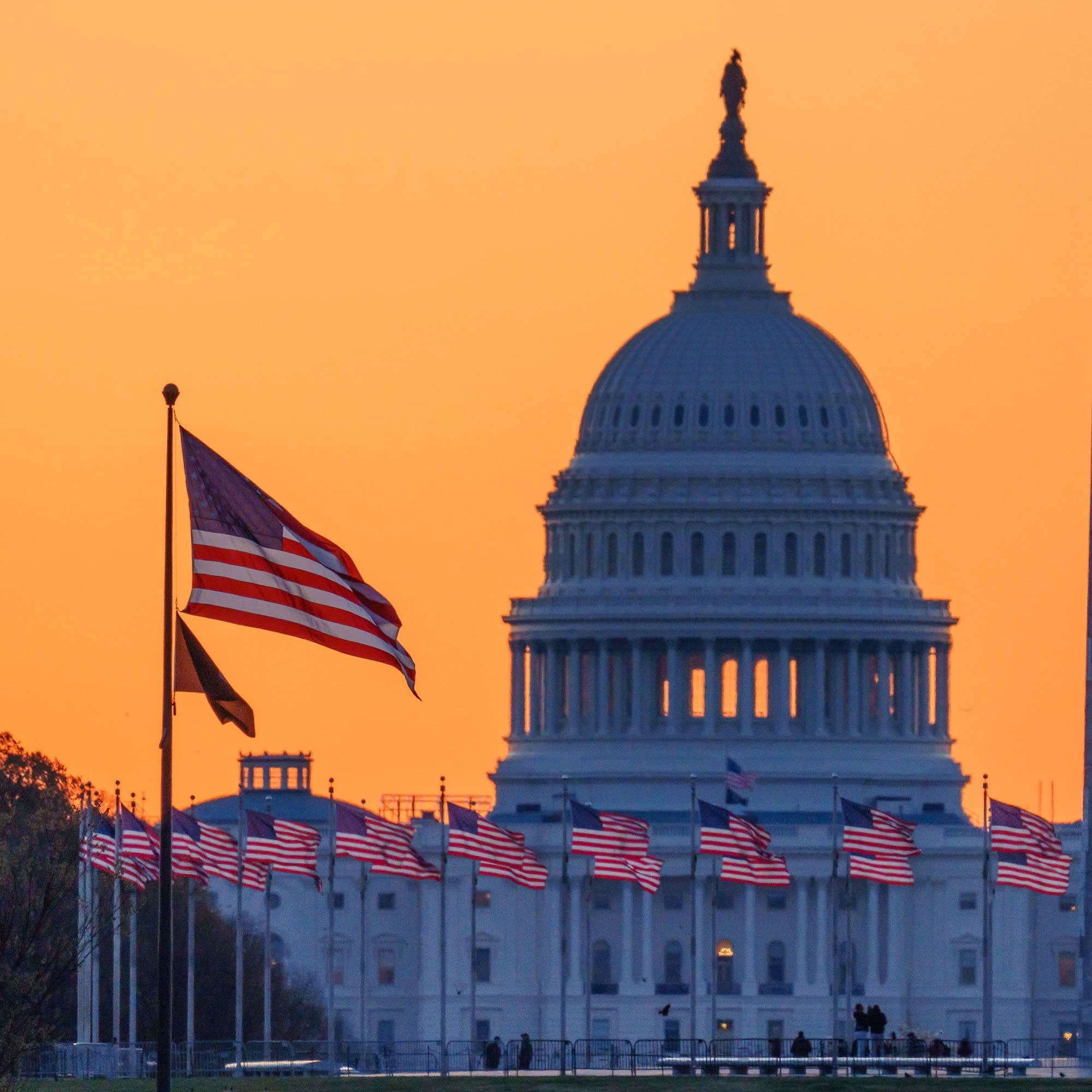
It's Crypto Week on Capitol Hill what exactly is that? From Marketplace, I'm Sabrina Shore in for David Brancaccio. Bitcoin hit a record $122,000 this morning. That's as the House of Representatives prepares for what's being called crypto week on Capitol Hill. They're taking up legislation that could lay the foundation for how digital assets are regulated in this country. Marketplaces senior Washington correspondent Kimberly Adams has more.
- [01:27]
Peter Van Valkenburgh
One bill expected to make it to the president's desk this week is the Genius act, which has already passed in the Senate. Summer Mersinger is CEO of the Blockchain association and industry group.
- [01:37]
Wix Representative
It brings some regulatory clarity for the stablecoin issuers and offers a number of consumer protections.
- [01:46]
Peter Van Valkenburgh
Another bill up for consideration is the Clarity act, which would create a federal.
- [01:51]
Sabrina Shore
Regime where we're not just going to regulate these people as custodians of people's money.
- [01:56]
Peter Van Valkenburgh
Instead, says Peter Van Valkenburgh, executive director of the nonprofit Coin Center. When it comes to crypto companies, we're.
- [02:03]
Sabrina Shore
Also going to regulate them as the retail, highly volatile exchanges that they are.
- [02:08]
Peter Van Valkenburgh
The House will also work on legislation that would block the government from issuing a digital currency. With all these bills, it's something of a moment, says Chris Brummer, a law professor at Georgetown.
- [02:19]
Sabrina Shore
For the first time, you're going to have some rules that are very specifically geared towards crypto, but there's going to be a lot of necessary work done by the regulatory agencies to flesh those rules out.
- [02:31]
Peter Van Valkenburgh
But he predicts the rollout will be a lot faster than many expect. In Washington, I'm Kimberly Adams for Marketplace.
- [02:38]
Sabrina Shore
President Trump over the weekend told Europe and Mexico that he was slapping a 30% import tax on goods from those regions starting August 1st. That is, despite ongoing months long trade negotiations, Europe is holding off on retaliating for now. Mexico's president Claudia Sheinbaum says she still thinks the deal can be worked out. Markets so far unfazed. Julia Coronado is head of Macro Policy Perspectives and a professor at the University of Texas, Austin. Hey, Julia.
- [03:06]
Julia Coronado
Good morning.
- [03:07]
Sabrina Shore
So, you know, we've gotten more threats of tariff escalation, this time against the EU and Mexico. How serious are these?
- [03:16]
Julia Coronado
The threats are very serious. If implemented, these would be huge, significant and very disruptive to the global economy.
- [03:26]
Sabrina Shore
And yet markets, they're not reacting to the sort of, you know, daily hourly swings in tariff policy the way that they used to when this was all kind of new. Why? Why do you suppose that is?
- [03:39]
Julia Coronado
Markets have seen Trump back down from these maximalist threats and so they start to ignore them. And the problem with that is the more the markets ignore these threats, the more it encourages Trump to pursue these maximalist threats and approach to negotiation because there doesn't seem to be any apparent cost. So it's a dangerous game we're playing right now.
- [04:09]
Sabrina Shore
Julia Coronado, founder of Macro Policy Perspectives. Thank you so much.
- [04:14]
Julia Coronado
My pleasure.
- [04:37]
Wix Representative
Running a business can be exhausting. Building your website shouldn't be. With wix, you can express your ideas, give direction, then leave the heavy lifting to AI, from site creation to branded content and images. Have fun with the details, customize what you want the way you want, and manage your whole business from a centralized dashboard with expert AI tools. Build, scale and enjoy the incredible results. You can do it all yourself on wix.
- [05:07]
Anil Scarborough
Greetings, Marketplace listeners. It's Anil Scarborough, vice president and general manager of your favorite business shows. I'm coming to you today with an opportunity to help shape the future of economic journalism and philanthropy. Marketplace's parent company, American Public Media, is looking for board members and we'd like to invite listeners like you to join either the APM Board of Trustees or the Marketplace Philanthropic Council. If you believe in our mission to raise the economic intelligence of the nation, and if you love building community through public media, we're looking for strategic, innovative leaders to help ensure that Marketplace continues to evolve and expand its reach and impact across the country. Applications are open now through an extended deadline of Monday, July 14th. Visit marketplace.orgboard for more information. Thanks for your consideration and thanks for listening.
- [06:04]
Sabrina Shore
One piece of leverage that China has in its trade negotiation with the US is its tight grip on the supply of rare earth metals. These are basically essential for modern life. They're in everything from smartphones to electric cars. But the BBC reports China's dominance has come at a significant environmental cost. The BBC's Laura Bicker has that.
- [06:25]
Laura Bicker
Farmer Huang is guiding us uphill to his forestry land which is surrounded by rare earth mines.
- [06:35]
Farmer Huang
We are filing complaints to force them to operate illegally. Right now, the land use is illegal.
- [06:42]
Laura Bicker
The mountains of Ganzhou in southern China's Jiangxi Province are dotted with bright turquoise chemical ponds, which helps separate the valuable minerals from the soil. We arrive to the site of a landslide. The mining company has planted small trees, but the damage is still clear.
- [07:04]
Farmer Huang
The authorities inaction is the main reason these landslides keep happening. Farmers like us, we are the vulnerable ones. To put it simply, we were born at a disadvantage. It's pretty tragic.
- [07:24]
Laura Bicker
There were once more than a thousand mines in this one county, an indication of the chokehold China has on the world's supply of a group of metals needed for nearly everything that we switch on every day, from smartphones to Bluetooth speakers, computers to TV screens. But the country was in such a rush for rare earths that it developed first and hoped to to clean up later. We drove around the man made lake full of grey radioactive sludge. The villagers who once lived here have been moved after investigations into cancer clusters and birth defects.
- [08:06]
Sabrina Shore
Hello.
- [08:07]
Laura Bicker
Further north at the mine site, where clouds of dust rise from deep gray craters, we found farmers planting green onions.
- [08:20]
Farmer Huang
There used to be Mongolian families living back there. The elders passed away and the younger ones moved to the city to work. The rare earth companies bought our pastures and we got paid.
- [08:35]
Laura Bicker
The Chinese government seems sensitive to criticism of its environmental record. The ministries in charge refused to answer our questions, but our own research suggests there have been huge improvements to try to rein in the harm. Scientists hope China has learned from its toxic past, especially as the country now looks to expand its operations abroad.
- [09:01]
Sabrina Shore
Laura Bicker there with our news partners the BBC in New York. I'm Sabri Benishour with the Marketplace Morning.
- [09:08]
Julia Coronado
Report.
- [09:15]
Sabrina Shore
From APM American Public Media.
- [09:19]
Elizabeth and Ethan Finkelstein
From Emmy award winning series this Old House comes a new podcast, this Old House Radio Hour. We tell stories of the artisans, builders and visionaries that keep the spirit of craftsmanship alive. We also uncover America's forgotten homes with cheap old houses. Hosts Elizabeth and Ethan Finkelstein places with history, soul and price tags that seem too good to be true. Listen and follow this Old House Radio hour from LAS Studios and American Public Media. Wherever you get your podcasts.