Loading summary
Transcript30 lines
- [00:00]
Podcast Sponsor Announcer
This podcast is supported by Odoo. Some say Odoo business management software is like fertilizer for businesses because the simple, efficient software promotes growth. Others say Odoo is like a magic beanstalk because it scales with you and is magically affordable. And some describe Odoo's programs for manufacturing, accounting and more as building blocks for creating a custom software suite. So Odoo is Fertilizer Magic Beanstalk building blocks for business Odoo exactly what businesses need. Sign up@odoo.com that's o d o o.com.
- [00:30]
Range Rover Commercial Voice
The adage says it isn't what you say, it's how you say it. And when you lead with power, poise and performance, you're making an impact from the start. Introducing the Range Rover Sport Designed to set an example with its assertive stance and refined drive, it blends dynamic elegance with agile precision. Whether you're navigating city streets or conquering rugged terrain. Its cutting edge innovations including a cabin air purification system and active noise cancellation, offer unrivaled comfort, construction, control and peace of mind. Seven terrain modes Check A choice of powerful engines, including a plug in hybrid with a 48 mile range. Absolutely take on anything with the Range Rover Sport. Build yours today@range rover.com US Sport Explore the Range Rover Sport@range rover.com US Sport.
- [01:27]
Sabri Benishore
The world's biggest official creditor is China. From Marketplace, I'm Sabri Benishore in for David Brancaccio. No country borrows more from Chinese state owned lenders than the U.S. this is according to a new report from AID data. It's a research lab at the College of William and Mary. Marketplace's Nancy Marshall Ganzert has more.
- [01:49]
Nancy Marshall Ganzert
A lot of attention has been given to China's Belt and Road Initiative loans Beijing makes to developing nations for infrastructure projects. But aid data says in 2023 only about a quarter of China's loan portfolio went to lower income countries, with the rest going to richer nation like the U.S. in fact, aid data says Chinese owned lenders helped bankroll terminals at airports in New York and Los Angeles and data centers in Northern Virginia. They've also financed the acquisition of high tech companies and lent to US corporations like Disney, Halliburton, Amazon and AT&T. The report also says some of these loans enabled Chinese companies to get hold of critical U.S. technologies, but many were guided by the pursuit of of profit. I'm Nancy Marshall Genser for Marketplace.
- [02:39]
Sabri Benishore
Whether it is the cost of food, housing, health care, anxiety over affordability has been riling up consumers and voters. New data from a couple of progressive groups is now showing that high prices are also closing in on Americans when it comes to the basic necessities like utilities. The number of households that are late on utility bills rose almost 10% in a year. Senior Washington correspondent Kimberly Adams has more.
- [03:06]
Narrator/Reporter
A new analysis out from the Century foundation and the nonprofit Protect Borrowers finds that almost 14 million Americans, about 1 in 20 households, are so far behind on their utility bills that their debt has either been sent to collections or is about to be.
- [03:22]
Interviewee/Expert
Families need electricity. That's why utilities often rank right behind home and auto loans when it comes to which bills families must pay first.
- [03:31]
Narrator/Reporter
Julie Marghetta Morgan is the president of the Century Foundation.
- [03:34]
Interviewee/Expert
Since 2022, the average overdue balance on utility bills climbed 32% to nearly $800. Today.
- [03:42]
Narrator/Reporter
The National Energy Assistance Directors association says the average cost to heat a home this winter will go up 7.6% to almost $1,000 for the season. Diana Hernandez teaches at Columbia University and studies energy insecurity.
- [03:58]
Interviewee/Expert
You know you have a rising cost burden. You also have less kind of certainty around the typical sources of support, like.
- [04:09]
Narrator/Reporter
Funding for energy assistance programs delayed due to the shutdown. Elaine Bigelow runs the Georgetown center on Poverty and Inequality.
- [04:17]
Interviewee/Expert
Families must choose between paying their utility.
- [04:20]
Narrator/Reporter
Bill higher costs for food, childcare and, you know, unaffordable housing, meaning the issue of affordability will be a personal and political issue for some time to come. In Washington, I'm Kimberly Adams for Marketplace.
- [04:51]
Podcast Sponsor Announcer
This podcast is supported by Odoo. Some say Odoo business management software is like fertilizer for businesses because the simple, simple, efficient software promotes growth. Others say Odoo is like a magic Beanstalk because it scales with you and is magically affordable. And some describe Odoo's programs for manufacturing, accounting and more as building blocks for creating a custom software suite. So Odoo is fertilizer Magic Beanstalk building blocks for business Odoo exactly what businesses need. Sign up@odoo.com that's o d o o.com.
- [05:21]
Dell Technologies Commercial Voice
It'S time for black Friday. Dell Technologies biggest sale of the year. That's right. You'll find huge savings on select Dell PCs like the Delve 16 plus with Intel Core Ultra processors and with built in advanced AI features. It's the PC that helps you do more faster. From smarter multitasking to extended battery life. These PCs get the busy work done so you can focus on what matters most to you, plus earn Dell rewards and enjoy many other benefits like free shipping, expert support, price match, guarantee and flexible financing options. They also have the biggest deals on accessories that pair perfectly with your Dell PC, improving the way you work, play and connect. Whether you just started holiday shopping or you're finishing up, these PCs and accessories make perfect gifts for everyone on your list. Shop now@dell.com deals and don't miss out. That's Dell.com deals.
- [06:11]
Sabri Benishore
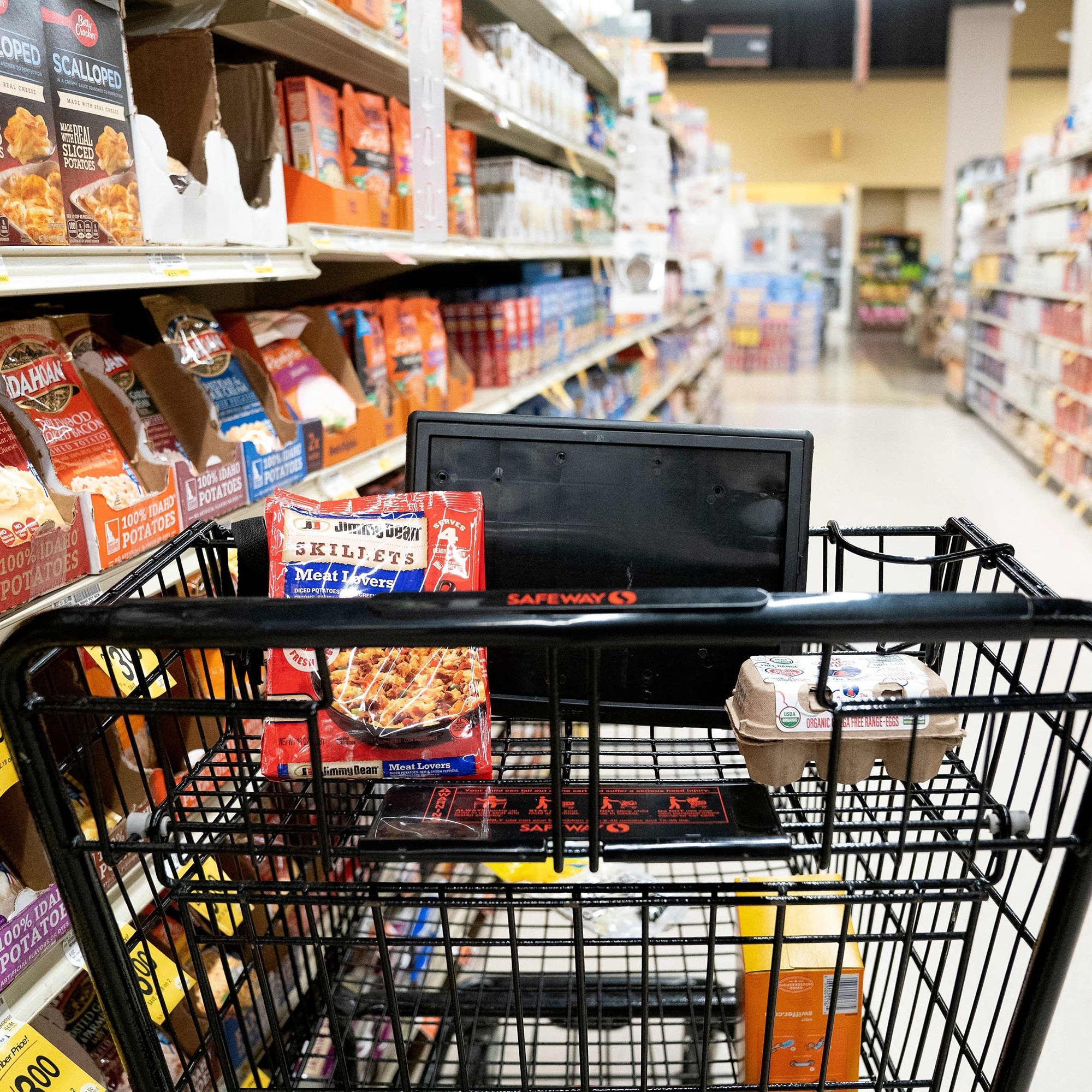
New York City Mayor Elect Zoran Mamdani swept the election on a campaign that was all about affordability in one of the most expensive places to live in the country. One pillar of that platform was the idea of city owned grocery stores in food deserts. Prices at these city owned stores would be lower, the thinking goes, because they'd operate in city owned spaces and so wouldn't have to pay rent or property taxes. Other cities have tried this. Marketplace's Carla Javier reports.
- [06:38]
Interviewee/Expert
If you take rent, property taxes and the need to earn profits out of the equation, Nevin Cohen of the CUNY Urban Food Policy Institute says supermarkets can cut costs for consumers.
- [06:50]
Additional Expert/Commentator
Some estimates are that a public supermarket could shave 5 to 10% off the retail price.
- [06:57]
Interviewee/Expert
Cohen says the commissaries the Department of Defense runs operate along similar lines and offer groceries for 15 to 25% less than commercial supermarkets. But Steven Zagor at Columbia Business School says there could be a long term cost to the city.
- [07:13]
Additional Expert/Commentator
A government owned supermarket is a mission driven business at best. Maybe they'll break even, but it's probably not likely. So there would be an ongoing subsidy. Just like the mail system is subsidized, just like Amtrak is subsidized.
- [07:30]
Interviewee/Expert
The idea has a mixed record. A city backed grocery store in Kansas City, Missouri closed its doors earlier this year after almost 10 years of municipal investment. Customer traffic at the store had reportedly collapsed due to crime in the neighborhood. But in Southwest Baltimore, a publicly supported store has been open for about a year. City Council member Felicia Porter says the city and state offered more than $1.5 million in incentives. We wanted to make sure that not only that they had that incentive, but that they had a streamlined approach to permitting any type of city process needed. The result has impressed Biff Browning, a neighbor and a community consultant to the store.
- [08:11]
Podcast Sponsor Announcer
I would not have imagined it until I saw it. How much prices can come down when you're able not only to have a volume buy, but to have a system that allows you at the beginning of the year to say, we forecast we're going to buy this much for the year so we can lock in a price.
- [08:25]
Interviewee/Expert
In Atlanta, the Economic development authority offered $6 million in grants and loans to attract a grocery store downtown. The authority's Eloisa Clementich says the public private partnership opened about two months ago and has been bringing in higher than expected sales, especially for fresh produce. She says the strategy has been to work with the local independent Grocers Alliance.
- [08:49]
Narrator/Reporter
So it was this third party that.
- [08:52]
Interviewee/Expert
Would help to serve as the translator.
- [08:54]
Narrator/Reporter
Between government and our requirements and what we and then what the grocer could actually deliver.
- [09:00]
Interviewee/Expert
Klementich says the partners are hoping to open another grocery store using a similar model next year. I'm Carla Javier from Marketplace.
- [09:09]
Sabri Benishore
Our producers are Tamar Fagan, Ashley Rodriguez, Ariana Rosas and Erica Soderstrom. Our senior producer is Alex Schroeder. Our supervising senior producer is Meredith Garrettson Morby. And in New York, I'm Sabri Benishore with the Marketplace Place morning reports. From APM American Public Media.
- [09:33]
Additional Expert/Commentator
Sometimes kids ask questions that reveal just how much adults still need to learn. Like can you explain what causes an economic bubble? And why are things so expensive at the airport? Or how much national debt might be too much? Fear not. Million Bazillion is back with a new season to help you and your kids become part of pros at understanding how money shapes the answers to all those questions and more. Listen to the latest season of Million Bazillion on your favorite podcast. Apparently.