Loading summary
Transcript30 lines
- [00:00]
Pharmaceutical Advertiser
If you've been diagnosed with moderate to severe plaque psoriasis, this is what it sounds like to be a million miles away. Imagine being a million miles away. Trimfya Kucelcomab, taken by injection, is a prescription medicine for adults with moderate to severe plaque psoriasis who may benefit from taking injections or pills or phototherapy. With Tremphya, clearer skin is possible and in clinical trials at least 70% of patients saw at least 90% clearer skin at 16 weeks. Results may vary. Tremphya is also indicated for adults with active psoriatic arthritis. Serious allergic reactions and increased risk of infections and liver problems may occur. Before treatment, your doctor should check you for infections and tuberculosis. Tell your doctor if you have an infection, flu like symptoms or if you need a vaccine. Tap this ad to learn more about Tremphya, including important safety information.
- [01:00]
LifeLock Advertiser
The new year brings new health goals and wealth goals. Protecting your identity is an important step. Your info is in endless places that could expose you to identity theft leading to lost funds. LifeLock monitors millions of data points per second. If your identity is stolen, our restoration specialists will fix it, guaranteed or your money back. Resolve to make identity, health and wealth part of your New year's goals. With LifeLock, save up to 40% your first year. Visit LifeLock.com Special offer terms apply the.
- [01:32]
Sabri Benishour
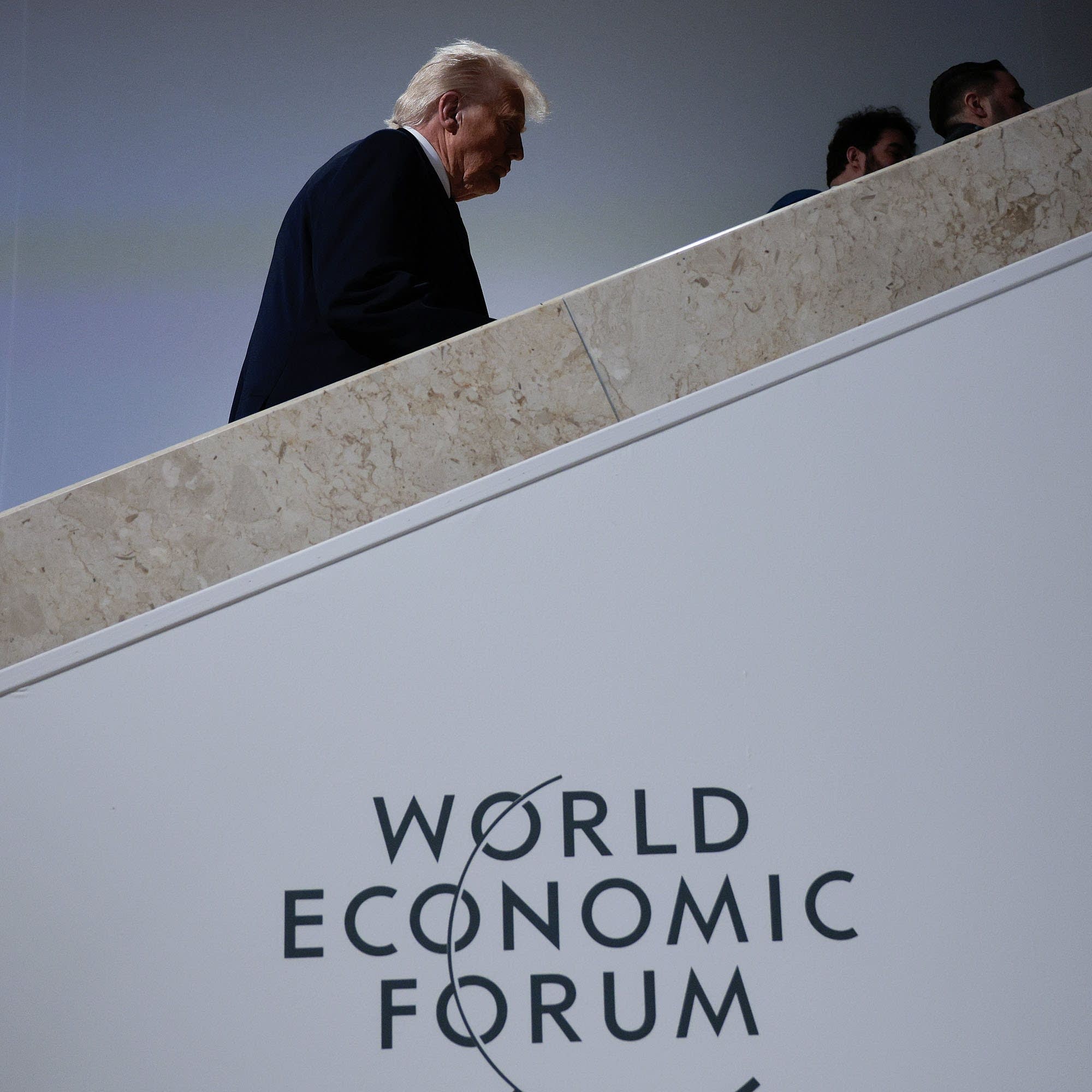
Dispute over Greenland might be smoothed over Transatlantic relations are not From Marketplace I'm Sabri Benishour in for David Brancaccio. The World Economic Forum in Davos, Switzerland, wraps up today. What is usually a pretty quiet event started under a cloud President Trump's increasingly threatening language over wanting to acquire Greenland. The summit has ended with what the president said is a framework deal that would avoid a new trade war with European allies. But for some of those allies, Davos settled something else that they can no longer see the US As a reliable partner and that they need to look elsewhere. Marketplaces NovaSafo one of the defining moments.
- [02:19]
Mark Carney / Cal Raustiala / Liliana Rojas Suarez (various experts)
Of the World Economic Forum this year was a speech by Canada's Prime Minister Mark Carney.
- [02:24]
Sabri Benishour
Great powers have begun using economic integration as weapons, tariffs as leverage, financial infrastructure as coercion, supply chains as vulnerabilities to be exploited.
- [02:35]
Mark Carney / Cal Raustiala / Liliana Rojas Suarez (various experts)
Carney went on to say, the world is in the midst of a rupture of old alliances and middle powers like Canada need to band together.
- [02:43]
Sabri Benishour
He received a standing ovation, which really doesn't happen. Davos is a very buttoned down place.
- [02:48]
Mark Carney / Cal Raustiala / Liliana Rojas Suarez (various experts)
Cal Raustiala is director of the UCLA Burkel center for International Relations. He says Carney's comments echoed frustrations over a year of erratic policies from the Trump administration.
- [03:00]
Sabri Benishour
I think Greenland was sort of the straw that broke the camel's back because it was more than just tariffs.
- [03:06]
Mark Carney / Cal Raustiala / Liliana Rojas Suarez (various experts)
It was, he says, using economic power as a cudgel to demand territory from an ally. Liliana Rojas Suarez of the center for Global Development says American economic power is waning, as witnessed by the US Dollar, still the world's reserved currency but showing signs of weakness.
- [03:23]
Liliana Rojas Suarez / Shige Oishi
Holdings of gold by central banks around the world is now larger than holdings of US Dollar. That is something that has not happened in many, many years, a sign, she.
- [03:35]
Mark Carney / Cal Raustiala / Liliana Rojas Suarez (various experts)
Says, of the degradation of US Credibility that's already had ripple effects. Ahead of Davos, Canada inked a trade deal with China, in part easing tariffs on Chinese electric vehicles, tariffs that had been imposed in partnership with the US I'm NovaSafu for Marketplace after years of.
- [03:53]
Sabri Benishour
Fighting for its life in the U.S. tikTok looks to be here to stay. The social media platform's Chinese owner, ByteDance, said Thursday it has worked out a deal to create a joint venture to run its US Operations that is majority American owned by Dance, said the joint venture would secure U.S. data and protect U.S. national security and and would have final say over content moderation. In 2024, Congress passed a law banning TikTok unless it was sold to US entity. President Trump gave it some extensions to figure things out, 200 million people in the US use the app.
- [04:42]
Fundrise Advertiser / Podcast Host
This Marketplace podcast is supported by Fundrise. Billion dollar investors don't typically park their cash in high yield savings accounts. Instead, they often use one of the premier strategies for institutional investors, private credit. Now, the same passive income strategy is available to investors of all sizes thanks to the Fundrise Income Fund, which has more than $600 million invested and and a 7.97% distribution rate. With traditional savings yields falling, it's no wonder private credit has grown to be a trillion dollar asset class. Learn more@fundrise.com marketplace. The fund's total return in 2025 was 8%, and the average annual total return since inception is 7.8%. Past performance does not guarantee future results. Current distribution rate as of 123-120-25 carefully consider the investment material before investing, including objectives, risks, charges and expenses. This and other information can be found in the Income Funds prospectus@fundrise.com fund this is a paid advertisement.
- [05:42]
Sabri Benishour
Yesterday we got an inflation snapshot of the US Economy from the Bureau of Economic Analysis. It found that prices were up 2.8% in November compared to the year before. The data Also show that consumers saved less and less as 2025 went on, as they spent more and more overall. This spending is propping up the US Economy. Yes, but a lot of it is from higher income households. Middle and lower income households are actually cutting back. That is the Data Marketplaces podcast. This is uncomfortable. Talked to people to get a sense of how financially secure Americans actually feel right now, here's host Rima Grace.
- [06:27]
Rima Reis
We asked New Yorkers on the street a deceptively simple question. How much money would you need to feel secure right now? What would feel like enough?
- [06:36]
Fundrise Advertiser / Podcast Host
I could make somewhere over 100 grand. That'd be good.
- [06:38]
Rima Reis
Half a million dollars enough would be 400,000 a year. Shoot enough. It's like my wife not to be working as much. I base it off of my anxiety. Am I able to feel like there's a safe number in my bank account? That was Nico, Richard, Claude Itzi and Darrell. Researchers who've looked at this question of how much is enough say that we tend to treat it as a moving target. Shige Oishi is a psychology professor at the University of Chicago.
- [07:06]
Liliana Rojas Suarez / Shige Oishi
If you ask that kind of question to ordinary people, right, they always say, well, if I had maybe 10% more, 15% more, 20% more, I would be really, really happy. But the thing is that the research shows that when they actually start making that 10% more or 15% more, then their happiness, you know, hasn't changed.
- [07:30]
Rima Reis
Researchers call this the hedonic treadmill.
- [07:33]
Liliana Rojas Suarez / Shige Oishi
As we achieve more, our desire expands and, you know, increase as well. Therefore, in terms of ratio, it doesn't change.
- [07:43]
Rima Reis
That's assuming you have basic needs covered. But a lot of people told me, even if financially they're doing okay on paper, day to day, life still feels tight. And as it turns out, it's pretty important how things feel over and above.
- [07:56]
Wendy De la Rosa
Your objective financial situation. How you feel is more indicative and predictive of your financial behaviors than where you are.
- [08:05]
Rima Reis
Wendy De la Rosa is an assistant professor at Wharton who studies financial decision making. She says when people feel like they don't have enough, even if technically they do, they tend to pull back.
- [08:16]
Wendy De la Rosa
When I feel like I don't have enough resources, I not only spend less, but I save less. Because how can I afford to save if I feel like I don't have any money right now? I just want to hoard.
- [08:29]
Rima Reis
For a lot of people, the constraints are real, but just feeling stretched can lead people to delay things like saving for retirement or putting money away in a savings account. De la Rosa says how we think about our financial security is also deeply tied to how we compare our lives to the people around us and how we measure our own success.
- [08:48]
Wendy De la Rosa
We have made so much of our self worth be our financial worth. If I'm financially prosperous, then I am a good person and all of my work and my individual work is leading to my financial well being, which we know is not true, but we internalize that, she says.
- [09:07]
Rima Reis
Our perceptions of ourselves, of our money, don't just reflect the economy, they also help drive it. I'm Rima Reis for Marketplace.
- [09:18]
Sabri Benishour
Rima hosts Marketplace's podcast this Is Uncomfortable. Our executive producer is Nancy Fargali. Our digital team includes Antoinette Brock, Emily McCune and Dylan Nietinen. Our engineers are Brian Allison, Tessa Block, and David Schreck. In New York, I'm Sabri Benishore with the Marketplace Morning Report from APM American Public Media.
- [09:45]
Rima Reis
I'm Rima Reis. And this week on this Is Uncomfortable, fellow podcaster and host of Scamfluencers, Sarah Haggie joins me to sort out your work drama. We answer your questions about scammy bosses, managing workplace friendships and co workers who push the boundaries a little too far. I'm going to stay at your place for a bit while I'm breaking up and obviously I'll need a key and that is how you get a squatter. Listen to this Is Uncomfortable on your favorite podcast, Applied.