Loading summary
Transcript18 lines
- [00:00]
Marketplace Host
This Marketplace podcast is supported by Wealth Enhancement, who understand that dreams don't happen by chance. It takes a plan. They're ready to build your wealth. Blueprint for retirement, investing, taxes and everything else your financial life brings. It reveals gaps and highlights opportunities you may have missed at no cost to you. Find out more@wealthenhancement.com Blueprint.
- [00:28]
Odoo Sponsor Announcer
This podcast is supported by Odoo. Some say Odoo business management software is like fertilizer for businesses because the simple, efficient software promotes growth. Others say Odoo is like a magic beanstalk because it scales with you and is magically affordable. And some describe Odoo's programs for manufacturing, accounting and more as building blocks for creating a custom software suite. So Odoo is fertilizer Magic Beanstalk building blocks for business Odoo exactly what businesses need. Sign up@odoo.com that's o d o o.com.
- [01:00]
William Lee Adams
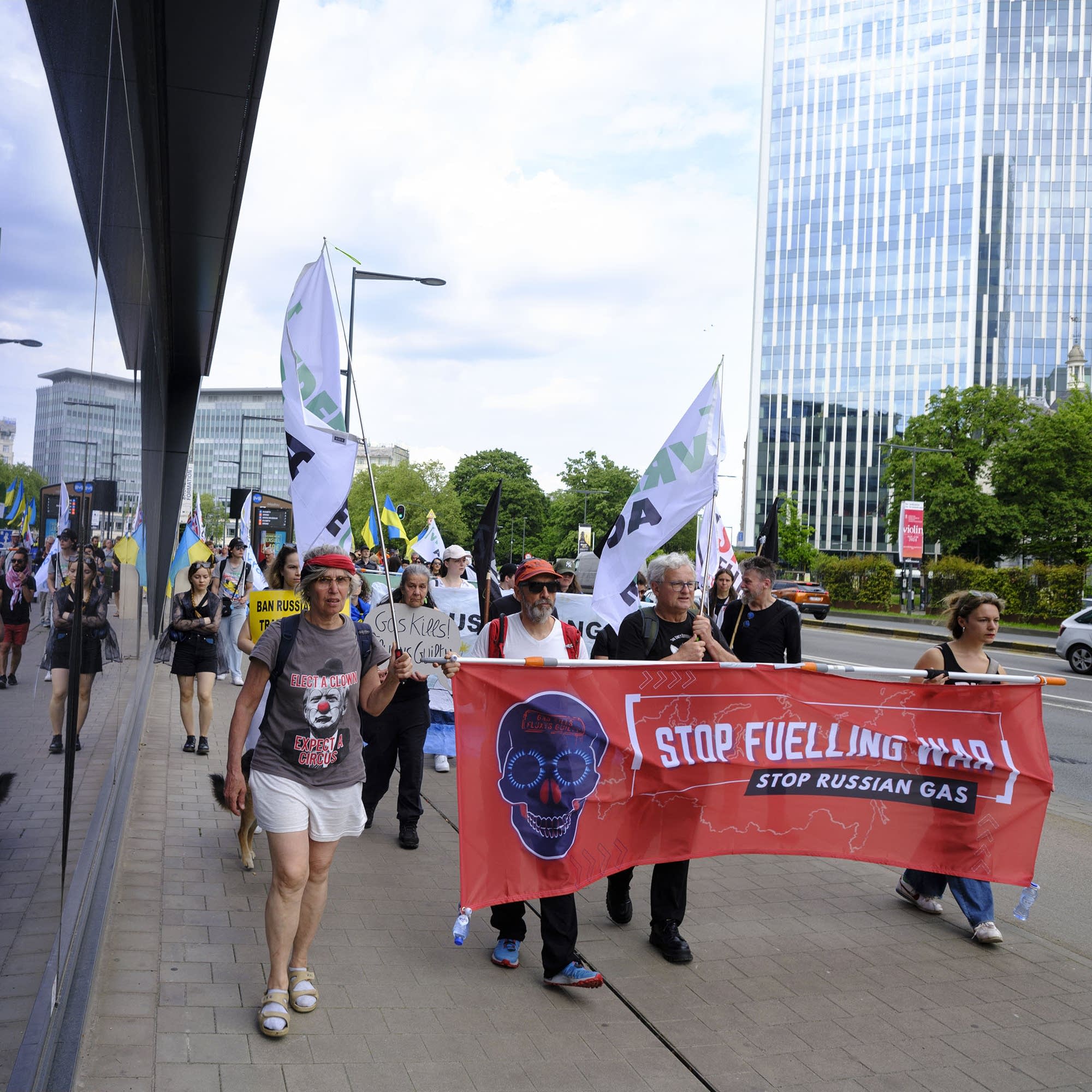
Europe will end all imports of Russian gas by 2027 live from the UK this is the Marketplace Morning Report from the BBC World Service. I'm William Lee Adams. Good morning. The Kremlin has condemned a decision by the European Union to phase out imports of Russian gas by 2027. The European Council and the European Parliament have reached a provisional agreement to end the imports within the next two years. Russia says Europe will be less competitive and will have to pay higher prices. Let's get more now from the BBC's Nick Marsh.
- [01:30]
Nick High
Nick High hello William.
- [01:32]
William Lee Adams
So what can you tell us about this agreement?
- [01:34]
Nick High
Basically, European officials have come together to agree to completely ban Russian gas imports by 2027. It still needs some ratification with the EU Council, but it looks like it's going to be a pretty momentous change in energy policy for the European Union. You know, it's been four years nearly since Russia launch launched its full scale invasion of Ukraine and still every year, William, EU countries are paying around $10 billion for Russian gas. I mean, the sanctions have been in there, but the change to energy policy hasn't necessarily matched it completely. Now that this agreement has come in, the plan is to phase out liquefied natural gas imports by January 2027. And the pipeline gas imports so often in the headlines when it comes to Germany. Think of NordStream and NordStream 2 and all of that. Those need to be phased out by November 2027.
- [02:35]
William Lee Adams
Just how dependent are European countries on Russian oil and gas?
- [02:40]
Nick High
It depends on the country. Germany was using a huge amount of Russian gas. In particular, having to find new sources of energy is quite difficult. From the Russian point of view, it's going to be a blow. You know, we're talking about 10 billion euros every year of stable revenue that is not going to be there anymore. We saw with the oil exports which have been cut drastically, Russia basically had to look for new buyers. And India was one of the very willing buyers that it found getting lots of cut price oil since the invasion. But even India has been under pressure from the United States to stop doing that as well. So it's going to be hard from the Russian point of view as well.
- [03:23]
William Lee Adams
Nick, thanks for joining us on Marketplace.
- [03:26]
Nick High
My pleasure. Nice to talk.
- [03:27]
William Lee Adams
Okay, let's do the numbers. European shares edged higher on Wednesday with technology and industrial stocks performing particularly strongly. And revenue at the Spanish firm Inditex, which owns zara, rose almost 11% last month compared to last year. The fashion retailer's strong growth comes despite weakening consumer sentiment in the retail sector. To Malaysia now, where authorities have announced that the search for the missing Malaysia Airlines flight MH370 will finally resume on 30 December. It disappeared 11 years ago en route to Beijing with nearly 240 people on board. Its loss sparked the largest ever search operation, but it was never found. Work, work, work, work and work. Japan's new prime Minister, Sanae Takaichi has pledged to abandon her own work life balance for the duration of the job. She famously only sleeps around 2 to 4. But she's also said, quote, I will have everyone work like a horse. The BBC's Rebecca Kesby has been talking to one young mother in Japan. She's an office worker and only wants us to use her first name, Hiro. So what does she make of it all?
- [04:32]
Hiro
Our generation was surprised and a little bit shocked. Working hours has become considerably shorter. In case of me. Nearly 10 years ago it was quite common to work from 7am until 11pm7am till 11pm for me, for me and my colleague, working like that, and so hectic. But I now get home before 6pm Especially since I have a child. My company is considerate toward me. That said, many of my colleagues still work overtime and politically, do you think.
- [05:10]
Margo Oganisian
This is a message that will get support?
- [05:13]
Hiro
I understand this is only her message for house health, young people, young generation and women who need to care. Young children wanted to work shorter than before. So just one comment won't change the society quickly.
- [05:30]
William Lee Adams
That was hero, a young mother in Japan. Now, how much would you fork out for a diamond studded crystal egg? Well, someone just paid $30 million at an auction in London. The winter egg is one of the rarest creations by the jeweler Carl Faberge and once belonged to Russia's imperial family. Margo Onision is from Christie's auction house.
- [05:51]
Margo Oganisian
The Winter Egg is one of 50 Imperial Easter eggs that Faberge created for the Romanovs. But out of those 50, only 43 still exist and most of them are in museums. So in fact, the Winter Rack was one of only seven imperialist racks left in private collections. Incredibly rare piece and a rare chance to acquire such a rare work. The Winter Egg is carved from rock crystal. Quite a fragile stone, but the craftsmanship is amazing. If you look at the egg, it opens. Inside there is a basket of spring flowers which symbolizes the revival, the spring that comes after winter. And the egg sits on a beautiful base which looks like melting ice, also carved from rock crystal. I think it's the best imperial Easter egg that was created. So it's a true masterpiece. There was a huge amount of excitement on the market. And in fact, over the six days that we were open for public viewing, we had nearly 4,000 people came to see it and lots of excitement on. On the market, but also among the general public who wanted to see this masterpiece because things like that do not come up very often. Most of them are in museums. It was great, absolute joy.
- [07:09]
William Lee Adams
Margo Oganisian there in the uk, I'm William Lee Adams with the Marketplace morning Report from the BBC World Service. On behalf of the entire team, thanks for listening.
- [07:26]
Marketplace Host
A moment now to say thank you, Marketplace listeners. Your giving Tuesday support made a real impact in a moment when public media funding has been cut nationwide. Your support keeps Marketplace's independent reporting on the economy accessible for everyone. And if you didn't get a chance to donate, it's always a great time to become a Marketplace investor. Give now@marketplace.org or click the link in the show notes.