Loading summary
Transcript38 lines
- [00:00]
A
The new year brings new health goals and wealth goals. Protecting your identity is an important step. Your info is in endless places that could expose you to identity theft leading to lost funds. LifeLock monitors millions of data points per second. If your identity is stolen, our restoration specialists will fix it, guaranteed or your money back. Resolve to make identity, health and wealth part of your new year's goals. With LifeLock, save up to 40% your first year. Visit LifeLock.com SpecialOffer terms apply.
- [00:32]
B
Big banks are doing pretty well. From Marketplace, I'm Sabri Benishore in for David Brancaccio. Earnings season kicked off with the major banks this week. Three today, one yesterday. Banks see and feel a lot of economic data because that's where everyone keeps their money. So let's get into it with Susan Schmidt. She's portfolio manager at Exchange Capital Resources. Good morning.
- [00:53]
C
Good morning.
- [00:54]
B
So you know, we are in an uncertain economic moment. So many factors at play and banks are here. The first to report in the fourth quarter. How are they doing?
- [01:05]
C
We had three big banks report today. Bank of America, Citigroup and Wells Fargo. Bank of America and Citigroup both exceeded analyst estimates. Wells Fargo came in slightly below analyst estimates, but overall, not bad.
- [01:19]
B
Were banks worried about President Trump's demand to bring down credit card interest rates to 10%, about half of what they are now?
- [01:27]
C
Financial services companies are keyed in on this issue because that's a big part of how they manage their business and how they manage to extend credit, trying to balance out loans that possibly go bad and consumers who default versus loans in an ongoing business that they're able to make and keep loaning to consumers who can borrow but still stay healthy.
- [01:49]
B
We got retail sales numbers this morning for November. Retail sales increased 6/10 of a percentage in that month, more than analysts expected. What do you think's behind that?
- [02:01]
C
We're seeing some uptick in consumer confidence. There seems to be a settling out. There's no more doom and gloom overlay, apparently. And that is good for Main street, that consumers are out shopping. It's also good for just general underlying sentiment that keeps the economy functioning.
- [02:17]
B
Susan Schmidt, portfolio manager at Exchange Capital Resources. Thank you so much.
- [02:23]
C
Thank you.
- [02:24]
B
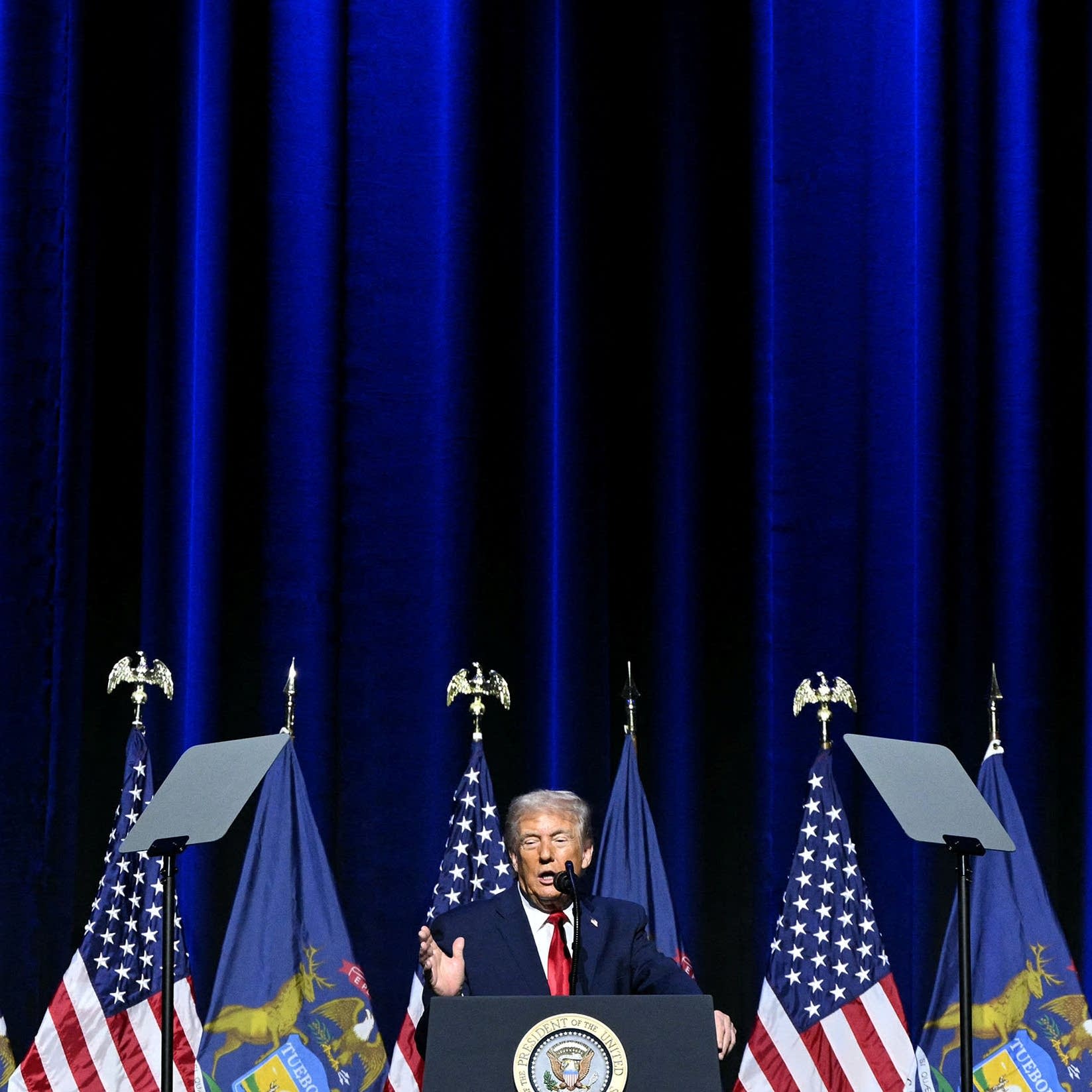
President Trump went to Michigan yesterday to tout his economic record. He spoke at the Detroit Economic Club for about an hour. But the speech could use a little fact checking. Marketplace's Nancy Marshall Genzer is on that.
- [02:36]
D
President Trump mentioned the word inflation 15 times in his speech. He said inflation is way, way down. He said it was defeated. And he added this toward the end of the speech.
- [02:47]
E
Inflation has stopped. Wages are up. Prices are down. Our economy is booming, like I think you'll see soon, like never before.
- [02:55]
D
Wages are up, but so is inflation. Just hours before President Trump's speech, the Bureau of Labor Statistics released the Consumer Price Index for December. It showed that prices were up 2.7% over the same time last year. Trump also talked about prescription drug prices. The President has negotiated deals with pharmaceutical companies tying drug prices in the US to what consumers in other developed countries pay.
- [03:21]
E
We're standing up to special interests and slashing prescription drug prices by 300, 400, 500, and even 600% and more.
- [03:30]
D
Simple math refutes those numbers. A 100% price cut would reduce the cost to zero. Anything over 100% would mean consumers would be paid to get their medications. That, of course, is not the case. Lastly, Trump talked about his tax cuts.
- [03:46]
E
I said over and over again, no tax on overtime, no tax on Social Security for our seniors. And any senior should be voting for us because the Democrats won't do this.
- [03:56]
D
But actually, President Trump's big tax and spending bill doesn't eliminate taxes on Social Security. Instead, it gives taxpayers who are 65 and older a temporary $6,000 tax deduction. Some high income seniors receive a lower tax break. I'm Nancy Marshall Genser for Marketplace.
- [04:15]
B
China has announced its largest annual trade surplus ever, despite President Trump's tariff war. The BBC's Asia business reporter Nick Marsh has the details.
- [04:25]
F
Even when accounting for inflation, this is the largest trade surplus posted by any country in history. China's customs authority says that last year the country sold $1.2 trillion, worth more goods and services than it imported. That's a 20% increase compared to 2024, when Joe Biden was still in the White House. Trade with the US did drop by 20%, but this was more than made up by a huge increase in exports to other parts of the world, namely Africa, Southeast Asia and Latin America.
- [04:59]
B
That's the BBC's Nick Marsh there. Netflix is taking another swing in the fight with Paramount Skydance to take over Warner Brothers discovery. According to Reuters, it's getting ready to ditch its plan to pay using stock and cash and instead Pay all cash, $83 billion of it. At the beginning of January. Cost of living adjustments for Social Security kicked in for the new year, basically a little boost to compete with inflation. And as benefits increase, Social Security's finances get stretched a little thinner. Estimates are it won't be able to cover expenses by as early as 2032. According to a recent survey by the Cato Institute, 66% of Americans either don't believe or are unsure if Social Security will even exist by the time they retire. So we are checking in on the status of Social Security funding this morning with Monique Morrissey, senior economist at the Economic Policy Institute. Good morning.
- [06:14]
G
Good morning.
- [06:15]
B
Right now, how does Social Security pay for itself? Remind us.
- [06:21]
G
Well, about 91% of Social Security outlays. So what they're spending on benefits comes directly from taxes on work, on workers. And employers pay the same amount, and that money goes into Social Security and gets spent immediately out for benefits.
- [06:37]
B
There is also the Social Security trust fund. That's different. How?
- [06:44]
G
Yeah, so the trust fund has always been there. I mean, you do need to have an account so that you can bring in money and pay it out just like a checking account. But what happened is we had a big bulge of births, the famous baby boomer bulge after World War II. So we had an unusual number of people that were working for a while and that built up the trust fund and then an unusual number of people that are now retiring. So now we are drawing down that sort of surplus. But the problem is that our long term costs now slightly exceed our income.
- [07:17]
B
Okay. So I think one area where people get confused is when we talk about Social Security running out of money. It sounds like it'll just have zero and nobody will get anything. But that's not quite how it works, right?
- [07:31]
G
Yeah, no, absolutely not. Social Security is, in fact, not running out of money. People think it is. What is going to happen is that the trust fund around 2032 is going to be drawn down. At that point, we'll still have enough money to pay for maybe 4/5 of promised benefits. So people will see like an immediate cut to their benefits, but it'll be a haircut. It won't be zero.
- [07:55]
B
Right. So our buffer, our savings from back when all the baby boomers were booming, that's going to run down and we're going to have a hole in the budget. But it's not that the whole thing goes away. So what will happen or what would need to happen to fix this?
- [08:13]
G
Well, we would need to raise the payroll tax rate by about 2 percentage points on both sides. So employers and employees would each go from paying 6.2% of earnings to 8.2% of earnings. Another way to do it would be to lift the cap on taxable earnings. So right now, earnings above 184,500 are not taxed. And so the most popular way to close that gap would be millionaires and billionaires pay the same amount into Social Security as ordinary workers are. That's still not enough to completely close the gap. So it would have to be some combination of raising taxes on ordinary workers and raising taxes on the wealthy.
- [08:52]
B
Monique Morrissey, senior economist at the Economic Policy Institute, thank you so much.
- [08:57]
G
Thank you very much.
- [08:59]
B
In New York, I'm Sabret Benishore with the Marketplace morning report from APM American Public Media.
- [09:10]
H
Hey, everybody, it's Kai Rysdal, the host of Marketplace. It has been a year since the fires here in Los Angeles and businesses that burned are still struggling.
- [09:18]
A
You know, I won't lie. I've looked, I've looked at, you know, hey, maybe, maybe we moved the store. Maybe just it wouldn't be the same.
- [09:25]
H
Hardware store on the ground reporting and what the year ahead has in store for business owners still recovering. Listen to Marketplace on your favorite podcast.
- [09:33]
B
Apparently.