Loading summary
Transcript20 lines
- [00:00]
Morgan Stanley Narrator
This episode is sponsored by Morgan Stanley's Thoughts on the Market. Today's financial markets move fast. Morgan Stanley moves faster with their daily podcast, Thoughts on the Market. Thoughts on the Market covers daily trends across the global investment landscape with actionable insights from Morgan Stanley's leading economists and strategists. And with most episodes under five minutes long, staying informed has never been easier. Listen and subscribe to thoughts on the Market wherever you get your podcasts.
- [00:30]
Dell PC Narrator
Introducing your new Dell PC with the Intel Core Ultra processor. It helps you handle a lot, even when your holiday to do list gets to be a lot like organizing your holiday shopping and searching for great holiday deals and customer questions and customers requesting custom things. Plus planning the perfect holiday dinner for vegans, vegetarians, pescatarians and Uncle Mike's carnivore diet. Luckily, you can get a PC with all day battery life to help you get it all done. That's the power of a Dell PC with Intel inside, backed by Dell's price match guarantee. Get yours at the best price of the year by visiting Dell.com Holiday terms and conditions apply. See Dell.com for details.
- [01:14]
William Lee Adams
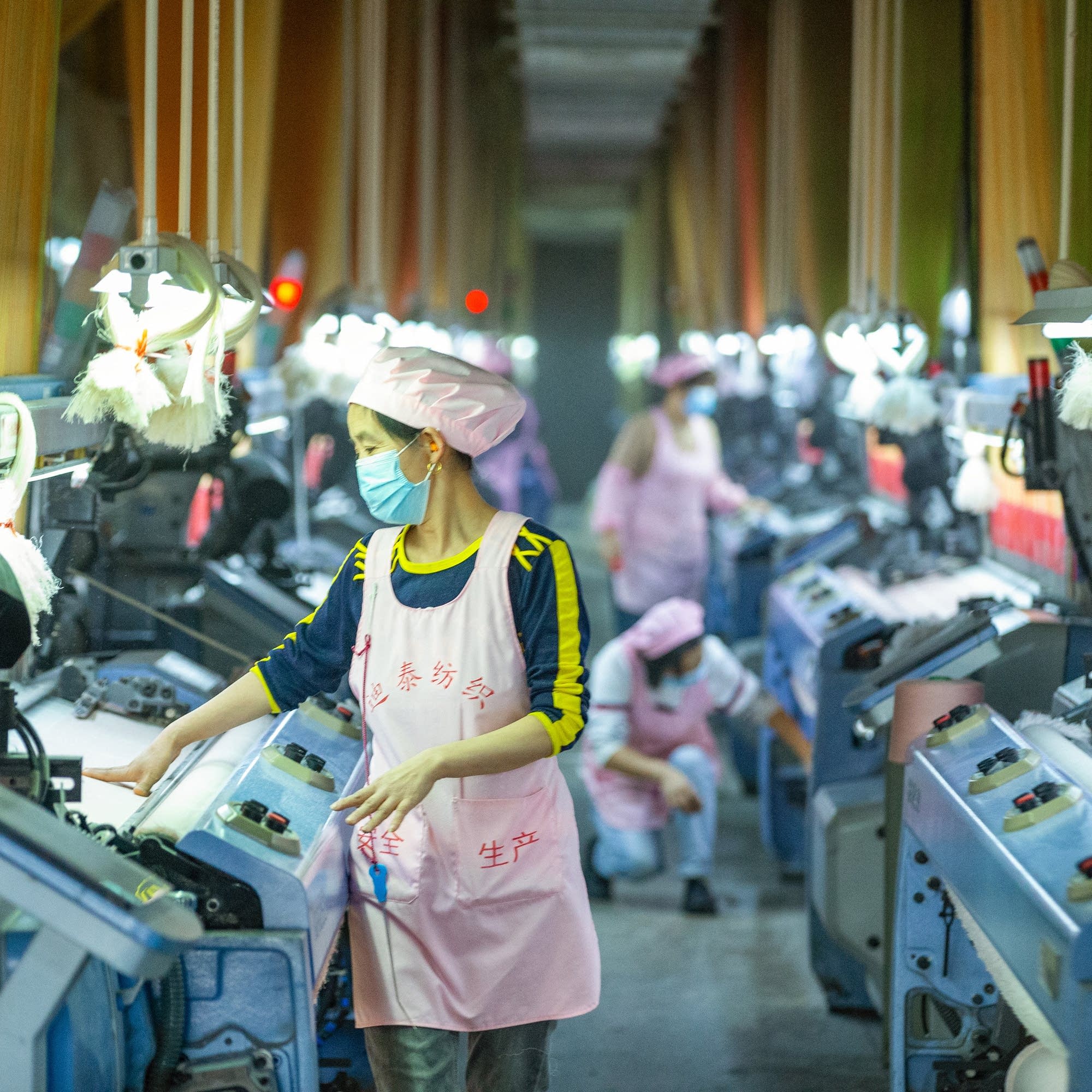
Factory output in China falls for an eighth straight month Live from the uk, this is the Marketplace Morning Report from the BBC World Service. I'm William Lee Adams. Good morning. Factories in China have long been an engine of economic growth, so it's rather worrying for leaders in Beijing that a new survey shows activity unexpectedly contracted in November. It's the eighth straight month production has shrunk. The BBC's Nick Marsh can tell us more. Hello, Nick.
- [01:39]
Nick Marsh
William hello.
- [01:41]
William Lee Adams
So you've been looking at this new data. What's it telling us about the world's second biggest economy?
- [01:47]
Nick Marsh
Okay, so this is the data that we get every month out of China on its manufacturing activity, its factory output. It's called the Purchasing Managers Index, and it's a good way of seeing how much China is producing and selling, therefore what the state of China's economy is like overall. Because as we know, manufacturing is such an important part of the Chinese economy. Now yesterday we got the official figures from the government that showed a decline for the eighth month in a row. And then this morning we got figures from a private survey, very reputable. These figures are actually even worse than the official ones yesterday. And what's going to be even more worrying for the policymakers in Beijing is that this survey tends to look at smaller firms, it looks at export more, and it kind of looks at the sort of on the ground situation a bit more closely. By both metrics, William, things are looking quite sluggish in the Chinese economy.
- [02:49]
William Lee Adams
To what extent does this have to do with the trade war with the us?
- [02:53]
Nick Marsh
Some of it is, not all of it is. So exports to the US have declined because of trade tension, trade war, whatever you want to call it. There has been a pivot to exporting to other markets like Europe, like Southeast Asia, that hasn't quite made up for the shortfall. The truth is overall, China's pretty resilient when it comes to exports because it's got the best supply chains, it can make things the quickest and at the lowest cost. I think the real concern is going to be the domestic. The data shows this because even if you look at the non manufacturing stats, things like services and construction, you see a slump. The problem that this whole picture is suggesting is that demand is too low, people aren't spending enough. Partly that's down to a big housing crisis. For the last few years, lots of people's money's tied up in housing stock. So people are materially poorer. And in some cases you've just got a cheap glut of goods. There's price wars that government policy sometimes encourages. So you've got the domestic demand problem and then you've got this annoying external circumstances of the trade war, which at the moment is looking like it's relatively calm. But we just don't know how that's going to change and how that's going to affect next month's figures.
- [04:06]
William Lee Adams
Nick, thanks for joining us on Marketplace.
- [04:08]
Nick Marsh
My pleasure.
- [04:09]
William Lee Adams
Okay, let's do the numbers. Coupang. South Korea's largest online retailer has apologized for a massive data breach potentially involving nearly 34 million local customer accounts. And Bitcoin slid as much as 6%, falling below 80%. The original cryptocurrency shed 16.7% of its value in November amid a wide ranging crypto sell off. Thousands of planes made by the European aviation giant Airbus are returning to normal service after being briefly grounded following a warning that solar radiation could interfere with onboard computers. About 6,000 planes were potentially affected. In an update this morning, Airbus said fewer than 100 still needed to be modified with a software or computer update. And in Greece, hundreds of thousands of sheep and goats. Goats are being culled due to the outbreak of an infectious disease. It may affect production and exports of the country's famous feta cheese. Iran, especially its capital Tehran, is facing an unprecedented drought. With rainfall at record lows and reservoirs nearly empty. Officials are pleading with citizens to conserve water. Bearing Tajdan from the BBC's Persian Service has more high bering.
- [05:23]
Baring Tajdan
Hi.
- [05:24]
William Lee Adams
So what are the economic consequences of this water shortage on Tehran?
- [05:29]
Baring Tajdan
So if you look at businesses in Iran, they have been facing a perfect storm before getting to water. We have had daily blackouts in many cities for something like a year now because of the shortages in electricity generation, especially at peak times. We also have had natural gas shortages. And because of that, you know, like large businesses, manufacturing sector, they have had their gas and their electricity cut off in order to balance the supply and demand. So on top of all of these, we have had this five years of consecutive drought in Iran. The annual rainfall is something like 40% below the normal long term average. And and because of that, basically many dams that supply Tehran or other major cities have run out of water. And again, in order to reduce demand, the government has taken measures such as shutting down the government offices, the banks and even private sector in order to reduce the consumption of water, electricity and gas.
- [06:42]
William Lee Adams
And one solution that's been floated is to move Tehran. Now moving a city of 10 million people sounds pretty expensive, doesn't it?
- [06:50]
Baring Tajdan
Yes, it does. It's moving the capital because Tehran is the political capital, the business capital of Iran and it cannot sustain the number of people that live in Tehran and cities and towns close to it and commute every day. So one solution that has been taught it frankly for many decades is to take capital out of Tehran, move it to another city. But one problem is which city, because there is no major candidate that doesn't have the same problems, pollution and lack of water resources and has good transport links, etc. Etc. So it's been a pipe dream for many government. It has never materialized, not just because of the cost, but because there isn't a perfect candidate.
- [07:46]
William Lee Adams
Baring, thanks for joining us on Marketplace.
- [07:49]
Baring Tajdan
Thank you.
- [07:50]
William Lee Adams
In the UK I'm William Lee Adams with the Marketplace Morning Report from the BBC World Service.
- [08:02]
Million Bazillion Narrator
Sometimes kids ask questions that reveal just how much adults still need to learn. Like can you explain what causes an economic bubble? And why are things so expensive at the airport? Or how much national debt might be too much? Fear not, Million Bazillion is back with a new season to help you and your kids become pros at understanding how money shapes the answers to all those questions and more. Listen to the latest season of Million Bazillion on your favorite podcast. Apparently.