← Marketplace Morning Report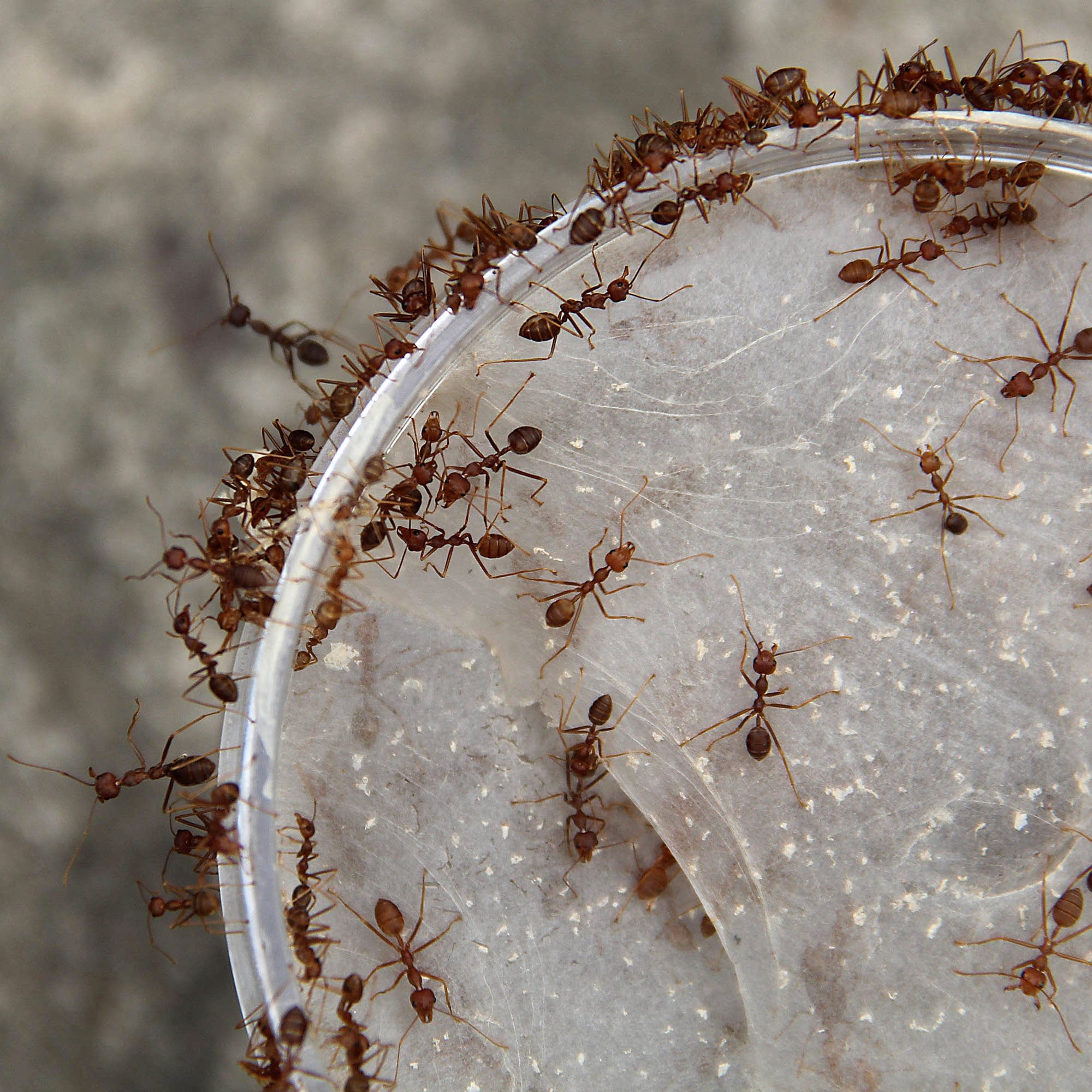
Loading summary
Transcript28 lines
- [00:01]
Sherwin Williams Announcer
Shop the Sherwin Williams Labor Day sale and get 35% off paints and stains August 22 through September 4, with prices starting at $31.84. It's the perfect time to transform your space with color. Whether you're looking to revamp your interior or exterior, we have you covered with bold hues, soothing neutrals and everything in between. Visit your neighborhood Sherwin Williams store or shop the sale online. Delivery available on qualifying orders. Click the banner to learn more. Retail sales only some exclusions apply.
- [00:27]
Odoo Sponsor Announcer
C Store for details this podcast is supported by Odoo. Some say Odoo business management software is like fertilizer for businesses because the simple, efficient software promotes growth. Others say Odoo is like a magic beanstalk because it scales with you and is magically affordable. And some describe Odoo's programs for manufacturing, accounting and more as building blocks for creating a custom software suite. So Odoo is fertilizer Magic beanstalk building blocks for business Odoo exactly what businesses need sign up@odoo.com that's o d o.
- [00:59]
Sabri Benishore
O.Com how President Trump Might Reshape the Federal Reserve From Marketplace, I'm Sabri Benishore in for David Brancaccio. President Trump has been relentless in attacking the country's central bank, and he now has his first chance at shaping it. He's nominated Stephen Myron, one of his advisors, to serve on the Fed's Board of Governors, where Myron could vote on such things as interest rate policy. The Senate Banking Committee is holding a hearing on this later this morning. Marketplace's Nancy Marshall Genzer has the details. Morning, Nancy.
- [01:32]
Nancy Marshall Genzer
Good morning.
- [01:33]
Sabri Benishore
So tell us about Myron. Who is he? Where did he come from?
- [01:37]
Nancy Marshall Genzer
Yeah, he's currently chairman of the Council of Economic Advisers at the White House. He was also a senior strategist at the investment firm Hudson Bay Capital, and he was a senior fellow at the Manhattan Institute.
- [01:50]
Sabri Benishore
What does Myron say about his qualifications for the job of Fed governor?
- [01:56]
Nancy Marshall Genzer
Well, in Myron's opening statement today, he says part of his current job is to advise President Trump on achieving full employment and stable prices, which is the Fed's mandate. He says the Council of Economic Advisors and the Fed share common goals. He also says his time in the markets gave him firsthand experience in the substantial sway the Fed holds over the ability to borrow money.
- [02:21]
Sabri Benishore
What does Mr. Myron have to say about Fed independence? I mean, considering the fact that President Trump is putting all this pressure on the central bank to lower interest rates?
- [02:30]
Nancy Marshall Genzer
Aaron Myron says he intends to preserve the Fed's independence. But in an essay for the Manhattan Institute last year, Myron wrote the president should be able to remove Fed officials, quote, at will. That opinion is expected to get some attention today, especially considering that President Trump is now trying to fire Fed Governor Lisa Cook.
- [02:53]
Sabri Benishore
All right, thank you, Nancy.
- [02:55]
Nancy Marshall Genzer
You're welcome.
- [02:56]
Sabri Benishore
The Trump administration has asked the Supreme Court to uphold the legality of the president's tariffs. Two lower courts so far have found the president does not have the authority to impose many of them. If these tariffs were to be struck down, the government may have to refund billions to businesses that paid them. This appeal would affect country specific tariffs, but would not affect tariffs on certain products like state steel, aluminum, or pharmaceuticals, which are based on more clear legal authority. The administration is asking the Supreme Court to take the case on a fast track basis. Arguments would be in early November. There are black markets for a lot of things, from drugs to data. Also for ants. Yeah, ants and businesses booming. Kate Nibs is a senior writer at Wired, where she recently wrote about the connection between federal staffing cuts and the rise in the illicit ant trade. Hi, Kate.
- [04:07]
Kate Nibs
Thanks so much for having me.
- [04:08]
Sabri Benishore
So, federal staffing cuts and ant smuggling. Please explain.
- [04:12]
Kate Nibs
Yeah, not the two things that you think of off the top of your head, but they go together in a big way because a lot of people who were cut from the USDA were really prestigious entomologists, and some of them worked on pest control. Some of them have been hired back. But there's just a sense within the ant black market that no one is really paying attention. And so the results might unfortunately be, for all of us, rise in invasive species unleashed upon the United States.
- [04:42]
Sabri Benishore
What does the illicit ant trade look like?
- [04:47]
Kate Nibs
So I think there are two distinct wings of the illicit ant trade. There's a smaller group of people who are trading exotic ants that are really not supposed to be in the United States that if they were let loose in certain states, they could really wreak havoc in the larger ecosystem. Then there's a much larger group of people who are trading ants sort of accidentally. People actually need permits to sell ants between states. So a large percentage of the amount of the ants that you see for sale on platforms like ebay or Amazon are being sold by people who probably haven't gotten the correct permits and are thus participating in the black market.
- [05:27]
Sabri Benishore
And of course, I mean, the risk of playing fast and loose with, you know, a potential invasive species is there's economic damage there, potentially.
- [05:35]
Kate Nibs
Oh, yes. In states where invasive ant species have shown up, there have been situations where like the ants will chew through electrical, electrical wires and cause a lot of damage in like construction and just people's residences. And then of course there's like a huge public health implication if the ants are venomous or bite or otherwise harm people if they come in contact with them. It's like obviously a niche concern, but the potential threat is actually pretty serious.
- [06:05]
Sabri Benishore
Yeah. Now, based on your reporting, it seems like the black market and trade like, was not particularly strictly regulated before the Trump administration. So what's happening that would allow it to sort of explode, as you're observing?
- [06:22]
Kate Nibs
Yeah, so this is definitely a situation where we didn't really have it under control to begin with. And because people in the community are aware of the cuts, they're not really trying to get permits anymore. And they're also apparently going out and collecting queens and selling them more aggressively. And a lot of my sources told me that there's some people from outside of the United States who are actually now coming into the United States and collecting ants and then selling them internationally because they perceive it to just be sort of a wild, wild west.
- [06:53]
Sabri Benishore
I mean, ultimately this is really about more than ants. Do you think that the US's ability to control poached animals, invasive animals, invasive plants, the pests they bring, all the biological threats to the US agriculture system and environment, has that been eroded, do you think?
- [07:14]
Kate Nibs
Based on my conversations with people who were in positions where they were trying to do this work and now aren't, yes. And it's scary. It genuinely is scary. Even though ants seem like such a niche thing, they are sort of a signal for this wider collapse and enforcement in protecting our environment from invasion, invasive species.
- [07:34]
Sabri Benishore
Kate Nibs is a senior writer at Wired. Thank you so much.
- [07:38]
Kate Nibs
Thank you.
- [07:40]
Sabri Benishore
In New York, I'm Sabri Benishore with the Marketplace Morning Report from apm American Public Media.
- [07:49]
Maggie Smith
Poetry has the power to connect our inner universe and the outer world. I'm Maggie Smith, poet and host of the Slowdown, a podcast for From American Public Media. Each weekday, find time to take a breather from your to do list or doom scrolling for that matter, and take in a moment of reflection with a hand picked poem. Listen to the Slowdown wherever you get podcasts.