Loading summary
Transcript28 lines
- [00:01]
Maggie Smith
This is the story of the One As a custodial supervisor at a high school, he knows that during cold and flu season, germs spread fast. It's why he partners with Grainger to stay fully stocked on the products and supplies he needs, from tissues to disinfectants to floor scrubbers, all so that he can help students, staff and teachers stay healthy and focused. Call 1-800-GRAINGER, click grainger.com or just stop by Granger for the ones who get it done.
- [00:30]
Odoo Sponsor
This podcast is supported by Odoo. Some say Odoo business management software is like fertilizer for businesses because the simple, efficient software promotes growth. Others say Odoo is like a magic beanstalk because it scales with you and is magically affordable. And some describe Odoo's programs for manufacturing, accounting and more as building blocks for creating a custom software suite. So Odoo is fertilizer magic beanstalk building blocks for business Odoo exactly what businesses need. Sign up@odoo.com that's o d o o.com.
- [01:01]
Sabri Benishore
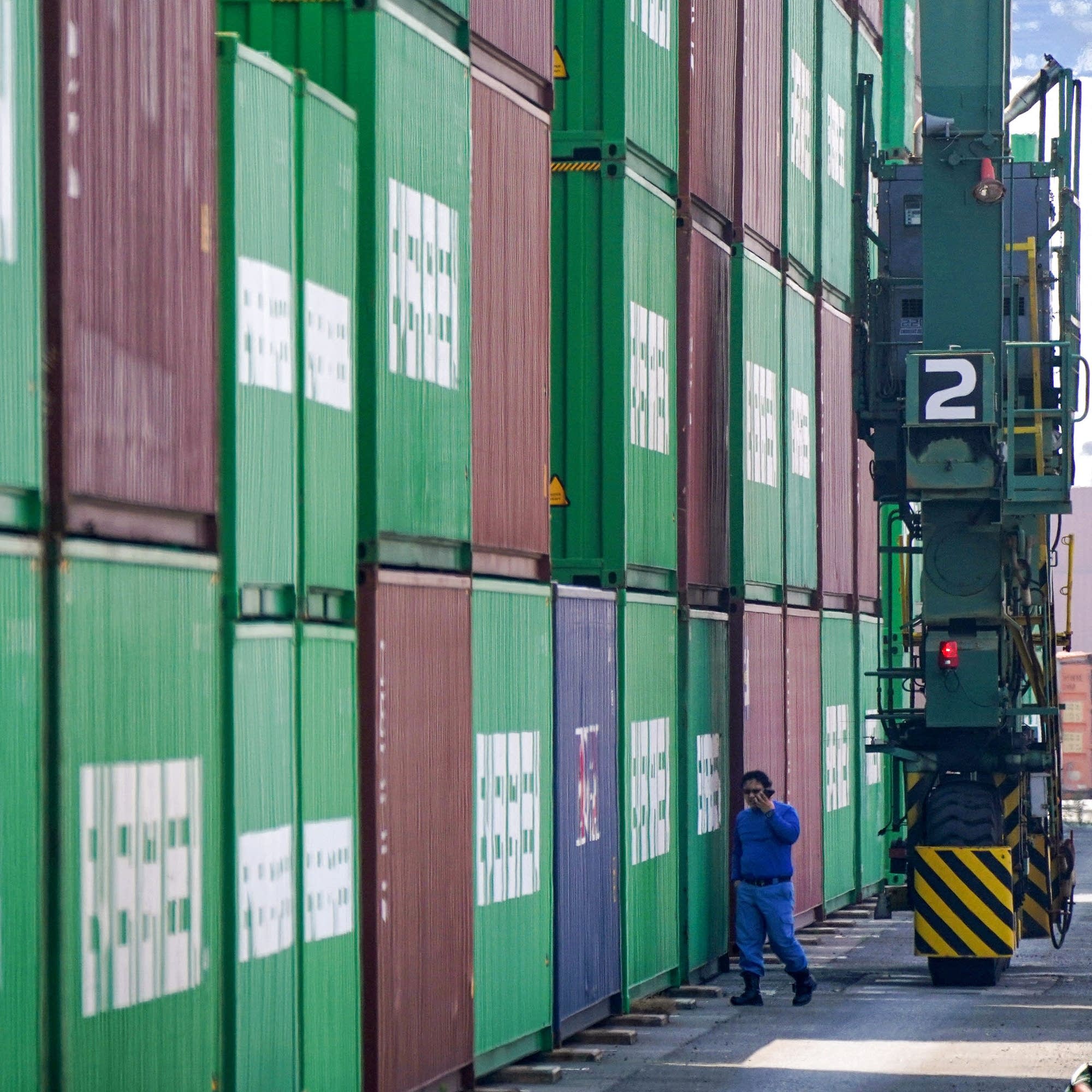
The US and Japan have a trade deal for real this time From Marketplace, I'm Sabri Benishore in for David Brancaccio. The US And Japan have finalized their trade deal a month and a half after it was announced. President Trump signed an executive order putting it into force and ending a tariff roller coaster. Tariffs on some Japanese cars, for example, went from 2 1/2% up to 27 1/2% in in April. Now they're back down to 15%. Marketplace's Nancy Marshall Genser has more.
- [01:29]
Nancy Marshall Genser
The White House says there will now be a 15% baseline tariff on almost all Japanese imports. The agreement cuts tariffs on Japanese cars almost in half. The flat import tax will not be stacked on top of existing levies, so the tariff on Japanese products like cars and beef will be adjusted down to 15%. Japanese imports that were subject to a lower import tax will be adjusted up to 15%. The executive executive order says Tokyo is working toward a 75% increase in purchases of U.S. rice and promises to buy $8 billion worth of U.S. soybeans, corn and other agricultural products per year. Japan also says it'll buy American planes and weapons. And Tokyo agreed to invest $550 billion in projects chosen by the Trump administration. I'm Nancy Marshall Genser for Marketplace.
- [02:22]
Sabri Benishore
Remember, no taxes on tips. It was a campaign promise and then made it into the GOP's tax and spending law. Well, we now know mostly which jobs this would apply to. The Treasury Department released a list of them. The deduction is only supposed to go to people in jobs that traditionally got tips before the law passed. So a lot of jobs you would expect are on there. But as Marketplace's Kimberly Adams reports, so are a few surprises.
- [02:46]
Kimberly Adams
Waiters, taxi drivers and hairstylists are among the 68 occupations on the list. Many of them already track their tips as part of their wages. But what about for plumbers and electricians? Alex Morishanu is with the Tax Foundation.
- [03:00]
Odoo Sponsor
The IRS has criteria for what counts as a tip generally, but for some of these occupations, there will need to be more guidance on how eligibility will work.
- [03:13]
Kimberly Adams
Digital content creators Also on the list is getting a reward or a gift during a live stream a tip even if folks are eligible? According to Joseph Rosenberg at the Urban Brookings Tax Policy center, our estimates are.
- [03:27]
Sabri Benishore
That, you know, roughly about 3% of taxpayers are likely to benefit from that deduction.
- [03:34]
Kimberly Adams
Most workers take the standard deduction anyway. So no, tax on tips won't exactly translate into a big difference come tax time. In Washington, I'm Kimberly Adams for Marketplace.
- [03:45]
Sabri Benishore
The August jobs report came out just a few minutes ago. We learned the unemployment rate crept up to 4.3%, highest since 2021 20. Julia Coronado is here to walk us through it all. She's founder and president of Macro Policy Perspective. So glad to have you with us, Julia. First off, the economy basically hasn't added many jobs at all since April. And the the engines of job creation, like healthcare jobs, for example, that's coming in below average. What does this say about the economy right now?
- [04:14]
Julia Coronado
Well, I think we are seeing an economy that's in a very delicate state, very vulnerable state. We're seeing the impacts of the policies that have been keeping businesses on the sidelines. So immigration policy is contributing to job losses in construction, the trade war is contributing to job losses in manufacturing. And the budget cuts are hurting hiring by health care and state and local government. So really there is not a single area that I can point to of strength.
- [04:47]
Sabri Benishore
In this report, there were 385,000 more people who are long term unemployed now than a year ago. Is that normal?
- [04:58]
Julia Coronado
Well, it's another sign of a softening labor market. So we aren't seeing really broad based job losses yet. But those people who do lose their jobs are having a harder time finding another one. So that's exactly what we're seeing in that number, that people who lose their jobs, it will take several more months than before to find another one.
- [05:21]
Sabri Benishore
Julia Coronado, founder of Macro Policy Perspectives. Thank you so much My pleasure. A study published in the journal Nature last year estimated disruptions caused by warming temperatures could cost $38 trillion a year across the globe by the middle of this century. Marketplace's Amy Scott with our How We Survive team, has been reporting on the ways climate change is already showing up in the economy. Hi, Amy.
- [06:02]
Amy Scott
Good morning.
- [06:03]
Sabri Benishore
How is climate change showing up in our economy?
- [06:05]
Amy Scott
Well, of course, you know, there's the direct cost of disaster, as anyone who has experienced the flooding in Texas or New Jersey or, you know, the devastating wildfires in Southern California knows recovery is very expensive. The Trump administration has actually stopped tracking extreme weather events that cause more than a billion dollars in damage. But last year, there were 27 such events, including drought, wildfires, winter storms, tropical cyclones. And the administration has also cut federal funding for climate mitigation, which is shown to actually save money. In long run, it is cheaper to prevent damage than to repair it later.
- [06:48]
Sabri Benishore
So there's the cost of, you know, fixing all the stuff that climate change related storms break. But then there are. They've got to be indirect costs. And I'm thinking of insurance, which has been rising. Has that stabilized at all?
- [07:01]
Amy Scott
Yeah. So unfortunately, premiums are expected to keep rising, on average, 8% this year for homeowner insurance policies. That's according to Insurify, and that's after a 20% increase the past two years. And of course, some places will see much higher increases. Like California is projected to see more than 20% increases. And as I'm sure you know, Sabri, this isn't just from climate disasters, but also the higher building costs we've been seeing because of inflation and now tariffs and just more people living in harm's way. And experts say that that is going to increasingly show up in the housing market as whole neighborhoods just get harder and more exp. To insure.
- [07:44]
Sabri Benishore
Yeah, Speaking of inflation, I mean, does climate change play a role in other kinds of inflation? I'm thinking food.
- [07:53]
Amy Scott
Yep. You've probably noticed higher coffee prices or chocolate prices. Oranges have gone up in price. And some of that is attributed to climate change because of the effects of warming temperatures or drought or flooding or storms on these crops. The Potsdam Institute for Climate Impact Studies and the European Central bank recently found that climate change could increase food inflation overall by more than 3 percentage points per year. And that would lead to higher inflation as well of, you know, more than 1% per year by 2035. And all this is making some staples in people's diets seem more like luxuries. The upcoming season of our podcast How We Survive is actually all about the future of food and we'll be looking at some solutions. That lunch is in October.
- [08:42]
Sabri Benishore
I will be looking forward to hearing it. All right, Marketplaces. Amy Scott, thank you so much.
- [08:47]
Amy Scott
Thanks Sabri.
- [08:48]
Sabri Benishore
Amy and Marketplace host Kai Ryssdal are hosting a live webinar on September 9 with science writer Elizabeth Colbert. You can sign up to attend@marketplace.org Climate in New York. I'm Sabri Benishore with the Marketplace Morning.
- [09:05]
Nancy Marshall Genser
With.
- [09:12]
Sabri Benishore
From APM American Public Media.
- [09:15]
Maggie Smith
Poetry has the power to connect our inner universe and the outer world. I'm Maggie Smith, poet and host of the Slowdown, a podcast from American Public Media. Each weekday, find time to take a breather from your to do list or doom scrolling for that matter, and take in a moment of reflection with a hand picked poem. Listen to the Slowdown wherever you get podcasts.