← Marketplace Morning Report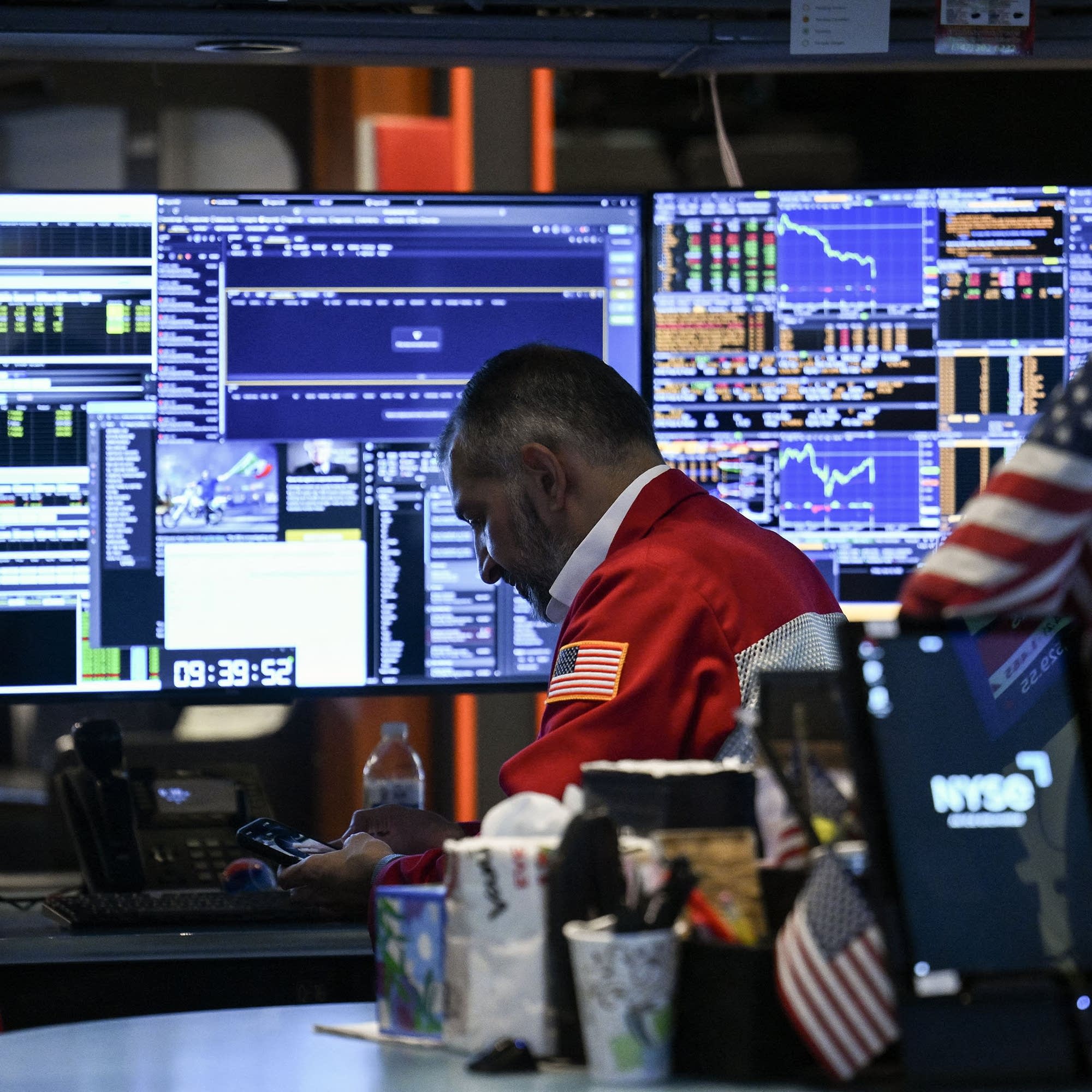
Marketplace Morning Report
Financial markets are steady at the moment, despite geopolitical tensions
00:06:55
Loading summary
Transcript32 lines
- [00:00]
Richard Karn
Hi, I'm Richard Karn and you may have seen me on TV talking about the world's number one expandable garden hose. Well, the brand new Pocket hose Copperhead with Pocket Pivot is here and it's a total game changer. Old fashioned hoses get kinks and creases at the spigot, but the Copperhead's pocket pivot swivels 360 degrees for full water flow and freedom to water with ease all around your home. When you're all done, this rust proof anti burst hose shrinks back down to pocket size for effortless handling and tidy storage. Plus your super light and ultra durable pocket hose Copperhead is backed with a 10 year warranty. What could be better than that? I'll tell you what an exciting exclusive offer just for you for a limited time. You can get a free pocket pivot and their 10 pattern sprayer with the purchase of any size Copperhead hose. Just text water to 64,000. That's water to 64,000 for your two free gifts with purchase W A T E R to 64,000. By texting 64,000, you agree to receive recurring automated marketing messages from Pocket Hose. Message and data rates may apply. No purchase required. Terms apply.
- [00:59]
WhatsApp
Available@pocket hose.com terms on WhatsApp, your personal messages stay private between you and whoever you send them to. So things like the passport numbers for your honeymoon stay between you and your fiance. And that video call for your gran's 80th stays in the family. Even your streaming password stays between you and your college roommates who still ask for it every week in your group chat. Because on WhatsApp, your personal messages are yours. No one else can see or hear them, not even us. WhatsApp message privately.
- [01:33]
David Brancaccio
Financial markets are steady at the moment, despite geopolitical tensions. I'm David Brancaccio in Los Angeles. Let's start with financial markets strangely calm so far this morning given, among other things, continued military action between Israel and Iran. In early trading, The Dow is up 66 points, a tenth of a percent. The S and P also up a 10th percent. The NASDAQ is up 2, 2, 10%. So not a lot, but up for the indicators as the trading day opens. There's been no sign from the White House whether the US Would take the watershed step of military action against nuclear facilities in Iran. Let's turn to London, where we find Ben Kumar, head of Equity strategy at Seven Investment Management. Hey Ben.
- [02:15]
Ben Kumar
Hello. How you doing?
- [02:16]
David Brancaccio
You know how they say when it comes to this investment thing, you should Stay calm and not react to every headline. I guess people are doing what we're taught.
- [02:24]
Ben Kumar
It does feel like that. And you know, I absolutely think most of the time, most news does not need you to go and mess around with your portfolio. But of all the things not to react to, this feels like actually one that I would have expected people to be more concerned about. When it comes to Iran and Israel, I am very surprised to see that markets have been taking it so calmly.
- [02:51]
David Brancaccio
We also have the US Central bank considering some of the same factors. They're expected to brief the media later this afternoon, U.S. time. You're not expecting interest rates to actually move here?
- [03:06]
Ben Kumar
No, I don't think so. I suspect what we'll probably see is the return to the phrase data dependent and acting cautiously. Yes, the oil price has risen a lot in the last couple of days. But what back to a level that we've been at really for the past two or three years, it's not going to be impacting inflation in the way that we've seen big oil prices move in the past. And I don't think it is the Federal Reserve's job to really play much of a part in geopolitics.
- [03:39]
David Brancaccio
It will be interesting to see how they assess the economy because we're at this possible inflection point yet there's still resilience in the U.S. economy. And you know, they supposedly have state of the art information on how we're doing.
- [03:54]
Ben Kumar
The number of times the resilience of the U.S. economy has surprised economists. Right. The U.S. is far more resilient than I think people give it credit for. Lots of people are constantly waiting for things to fall apart. But you know what? The US is an entrepreneurial system in which lots of people go out each day, go to work, make money, spend the money, and it doesn't matter who's the president, it doesn't matter what's going on in Iran or Israel. It doesn't mean the US equity market is always going to be a good investment. But that engine of growth the US delivers is just so, so solid. It's very difficult to knock off course.
- [04:32]
David Brancaccio
All right, getting a sense of the market Zeitgeist from Ben Kumar, head of equity strategy at Seven Investment Management. He's based in London. Ben, always good to catch up.
- [04:40]
Ben Kumar
Thank you.
- [04:42]
David Brancaccio
And the ChatGPT CEO Sam Altman of OpenAI, says one of his rivals, meta Facebook, is trying to poach his elite AI experts big time. Altman says $100 million bonuses are on offer, but that none of his People have gone for it Foreign.
- [05:15]
Ben Kumar
We all.
- [05:15]
Upwork
Know that owning a small business means you wear many hats, but sometimes you really need an extra pair of hands. Upwork is how good companies find great and trusted freelance talent. With more than two decades of experience with a simple and ambitious goal of pioneering a better way of working, companies at every stage turn to upwork to get things done and find more flexibility in staffing key projects and initiatives. They access a global marketplace filled with top talent in it, web, dev marketing, and more. Posting a job on Upwork is easy with no cost to join, you can register, browse freelance profiles, get help drafting a job post, or even book a consultation. From there, you connect with freelancers that get you and can easily hire them to take your business to the next level. Visit Upwork.com today and post your job for free. That's Upwork.com to post your job for free and connect with top talent ready to help your business grow. That's Upwork.com up upwork.com a marketplace we.
- [06:17]
David Brancaccio
Cast the net of our beat widely. What subject does money not touch? Someone once suggested to me religion. Well, au contraire. The Marketplace podcast called this is Uncomfortable has been talking to nuns about personal finance. This includes Monica Clare, who is Sister Superior at the community of St. John the Baptist, an Episcopal convent in New Jersey. Sister Claire was required to pay off over $100,000 in debt before she could enter that vocation. Our host, Rima Krase, joins us. Hey.
- [06:45]
Rima Krais
Hey, David.
- [06:45]
David Brancaccio
Owing money debt can get in the way of a person following a religious calling.
- [06:50]
Rima Krais
Yeah, many Catholic and Episcopal convents have strict policies. If you have debt, you can't join. And it comes down to the fact that it is hard to make timely debt payments when you've taken a vow of poverty. Sister Monica Claire, she told me that she spent more than a decade paying off her debt before she could take the first steps towards becoming a nun. And this is holding back a lot of people. There is this. There was a study from a few years back that found that the number of nuns in America has declined 76% over the last 50 years. And student debt is one of the biggest barriers.
- [07:23]
David Brancaccio
Student debt. Now, Catholic Church has tens of billions of dollars. The Episcopal Church has at least a couple billion. The wider hierarchies can't help out with this debt.
- [07:34]
Rima Krais
That brings me to another interesting fact about convents. They are actually financially independent from the larger church. Sister Monica Clare explained it to me this way.
- [07:43]
Sister Monica Clare
There's this misconception that we're supported by the church but we're not. We're totally self supporting. And that becomes very difficult sometimes because nonprofits are always struggling to break even. It's really, as you know, it's very difficult.
- [08:00]
David Brancaccio
All right, now, at a personal level, vow of poverty, how does Sister Monica process that?
- [08:07]
Rima Krais
When I talked with her about it, she explained it to me like, poverty doesn't mean deprivation.
- [08:12]
Sister Monica Clare
I thought it did, but it just means you take really good care of what you have and you only buy what you absolutely need.
- [08:19]
Rima Krais
So in practice, that means giving up personal ownership. They give away material belongings, any savings go to the church, they give over their car, donate their clothes, and everything becomes shared. But that doesn't mean they live with nothing. The sisters do get a small monthly allowance, about $50.
- [08:35]
David Brancaccio
Now, my wife has two aunts who are Catholic nuns, Franciscans, who really. Yeah. Who've taken vows of poverty, and their order is caring for them now that they're elderly. What about the golden years for Sister Monica?
- [08:47]
Rima Krais
You know, I asked her, and it turns out nuns don't really retire. Their work might change based on their physical ability. But most of them entered religious life with the intention of spending all of their days in this community. And most convents will care for them with the help of donations and the support of the broader religious community.
- [09:03]
David Brancaccio
All right, Fascinating. Rima Krais is host of the Marketplace podcast. This is uncomfortable. The episode we've been talking about, new Nun Syndrome, is out now and available wherever you get your podcasts. Rima, always good to catch up.
- [09:16]
Rima Krais
So great. Thanks, David.
- [09:18]
David Brancaccio
And in Los Angeles, I'm David Brancaccio. It's the Marketplace Morning report from APM American Public Media.
- [09:29]
TED Talks Daily
Add a little curiosity into your routine with TED Talks Daily, the podcast that brings you a new TED Talk every weekday. In less than 15 minutes a day, you'll go beyond the headlines and learn about the big ideas shaping your future. Coming up, how AI will change the way we communicate, how to be a better leader and more. Listen to TED Talks Daily wherever you get your podcasts.