Loading summary
Transcript22 lines
- [00:01]
Grainger Representative
If you're the purchasing manager at a manufacturing plant, you know having a trusted partner makes all the difference. That's why hands down, you count on Grainger for auto reordering. With on time restocks, your team will have the cut resistant gloves they need at the start of their shift and you can end your day knowing they've got safety well in hand. Call 1-800-GRAINGER Click grainger.com or just stop by grainger for the ones who get it done.
- [00:30]
Odoo Sponsor Announcer
This podcast is supported by Odoo. Some say Odoo business management software is like fertilizer for businesses because the simple, efficient software promotes growth. Others say Odoo is like a magic beanstalk because it scales with you and is magically affordable. And some describe Odoo's programs for manufacturing, accounting and more as building blocks for creating a custom software suite. So Odoo is fertilizer magic beanstalk building blocks for business Odoo exactly what businesses need. Sign up@odoo.com that's o d o o.com.
- [01:02]
Gideon Long
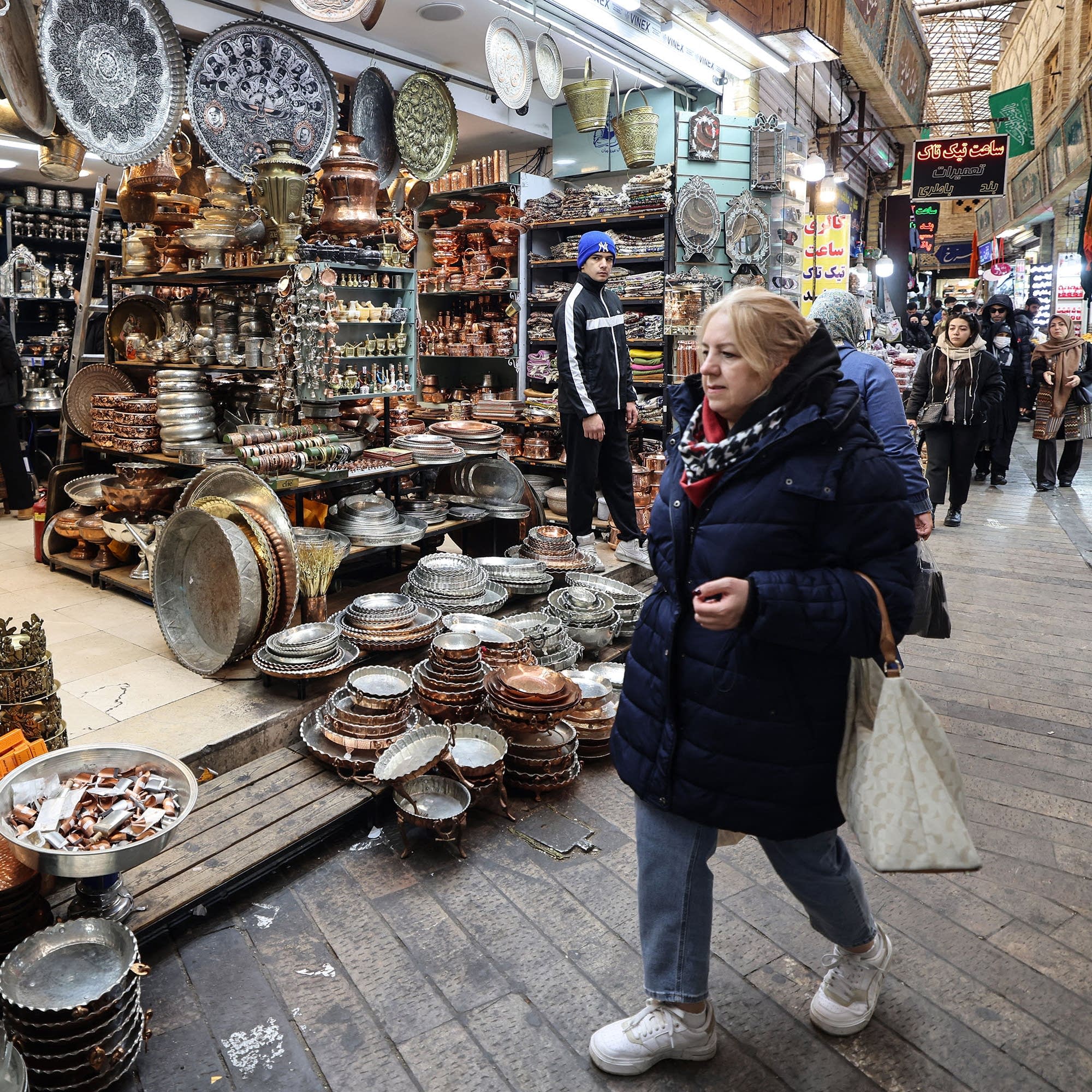
Iran's store owners Take to the Streets in anger Live from the uk, this is the Marketplace Morning Report from the BBC World Service. I'm Gideon Long. Good morning. We're starting the program in the Iranian capital, Tehran. That's the sound of shopkeepers demonstrating for a second successive day shouting bicharaf, which means dishonourable in Persian, a slogan they were directing at the government. Annual inflation is running at over 40% and business owners are angry at the rapid devaluation of the currency. The real in part due to the pressure of Western sanctions. Arash Azizi is an Iranian journalist based in the us it has lost half.
- [01:46]
Arash Azizi
Of its value in the last year, but even if you go a little more, it's third of what it was just like 18 months ago. So people lose their savings, they're really affected because more much of the things you have to buy are linked to the international market in one way or the other and many people deal with foreign currency more directly. Their job is linked to it in.
- [02:04]
Jake Kwon
One way or the other or they.
- [02:05]
Arash Azizi
Have to buy commodities in the global market. So the fact that Iran is doing really bad and the economy is in a terrible condition and people have really become widespread is somewhat a point of consensus now.
- [02:17]
Gideon Long
So how has the government responded?
- [02:19]
Arash Azizi
The central bank governor of Iran is going to change now. There is hope that that would do something to the currency. The dissent in Iran is very deep seated. Iranians for so long have not been able to imagine a better future in the last year. They've had terrible situation in water, in electricity. There's been serious cuts, there's been fallout in the standard of living. So it's been a tremendously bad time for the regime and it's not surprising that it has lost even its core constituencies, like the traders and like merchants.
- [02:49]
Gideon Long
Journalists are Rash Azizi let's do the numbers. The government in India has approved $9.5 billion worth of defence spending. It says the money will be focused on domestic companies rather than big foreign defence firms. And Spain's just released its latest inflation data. Prices rose by 3% this month, slightly lower than in November, but still well above the Eurozone average. And Japan's Nikkei stock market index edged lower on the final trading day of 2025, but it still ended up 26% for the year. South Korea has announced a crackdown on companies that engage in unfair market practices. The move is designed to help small businesses, as the BBC's Jake Kwon reports from Seoul.
- [03:34]
Jake Kwon
South Korea's small businesses had long grappled with large companies exerting undue influence. Although the law prescribed imprisonment for such crimes, actual jail time has been rare. The new scheme seeks to impose heavy fines as a real threat. The penalty for price fixing will be raised from 20% of revenue to 30%. It also increases fines on companies that fail to protect customer data from incidents of hacking. The new South Korean president, Lee Ji Myung, has said the fines must make the companies believe that breaking the law will ruin them.
- [04:07]
Gideon Long
Jake Kwon there now. When One of the UK's most famous brands, the automaker Jaguar Land Rover, was targeted by hackers in late August, it was forced to shut down its computer networks, leaving it unable to build or sell any cars. The BBC's Theo Leggett takes look at what that's meant for the sector.
- [04:25]
Theo Leggett
Jaguar Land Rover normally makes more than a thousand cars a day at its factories around the world, but production was crippled for more than five weeks. And while the impact on JLR itself was severe, a swathe of other businesses, the carmaker suppliers were also hit. As David Leggett of Global Data Automotive.
- [04:43]
David Leggett
Explains, if you think of a typical vehicle, it could have up to 20,000 component parts. With thousands of suppliers around the world. When manufacturing operations stop at the top, then the whole supply chain underneath that seizes up because there is nowhere for the component parts and output to go and the factory is therefore growing to a halt.
- [05:01]
Theo Leggett
Among JLR's main suppliers is EvTech Group. It makes engine parts at a plant in the English Midlands. More Than a month into the stoppage, I went there to have a look around. The normally bustling factory was eerily quiet and boxes of undelivered parts were stacked up from, from floor to ceiling in every available space. Evtech's chairman David Roberts told me what was going on.
- [05:23]
David Roberts
We stopped sales in early September. So we've had to take stringent cost measures to protect the business, make sure we survive that's involved, unfortunately sending people home because we couldn't do any productive work for them. But clearly that can't last.
- [05:39]
Theo Leggett
Fortunately, it didn't last. In October, JLR resumed production and eventually so did its suppliers. Recently I went back to David Roberts and I asked him how he'd felt when he first realised the severity of the situation.
- [05:52]
David Roberts
It's one of those heart stopping moments in your life where you really say, is this it? And of course immediately we saw a loss of all our sales and all our orders and forward orders and sales. You know, when you lose sight of orders overnight that creates real stress.
- [06:10]
Theo Leggett
According to the Cyber Monitoring Centre, a non profit group which looks at the impact of hacking incidents, the attack on JLR caused financial losses of more than $2.5 billion and affected more than 5,000 organisations in the UK alone. Professor Kieran Martin is chair of the Center's technical committee. He believes the affair has exposed a key vulnerability in the way developed nations protect themselves against cyber threats.
- [06:35]
Professor Kieran Martin
Under no sensible definition of absolutely critical infrastructure does JLR count. It's not the national grid, it's not one of the big banks, it's a carmaker. But it's the next level down where lots of economic activity and lots of prosperity, lots of people's jobs, lots of local well being depend on it. That next level down I think is a really serious systemic vulnerability in all our economies.
- [07:00]
Theo Leggett
JLR is now back up to full production and it seems fears that many of its smaller suppliers might not survive have not been realized. Nevertheless, the affair has shown clearly how vulnerable our economies can be with with an attack on one key company causing havoc for thousands more. In London, I'm the BBC's Theo Leggett for Marketplace.
- [07:21]
Gideon Long
And finally, Denmark's National Postal Service will today deliver letters for the last time and its red post boxes will be removed from the country's streets. Postnord has been offering the service since 1624, but during this century the number of letters being sent has plummeted by 90% in the UK. I'm Gideon Long with the Marketplace morning report from the BBC World Service. Thanks for listening.
- [07:54]
Rima Reyes
Hey everyone, you already listened to Marketplace podcasts, so you know that it's important to understand how economic forces shape our lives. And that feels especially important now as we're all trying to make sense of the latest headlines. I'm Rima Reyes, host of Marketplaces. This is Uncomfortable, a show that explores how money bumps up against our relationships, our choices, and the parts of life we don't always say aloud. And starting January 15th, we are back every single week. New stories, new questions, and the kind of conversations that make you feel less alone in this quickly changing economy. We're tackling questions like should I turn my hobby into a money making side hustle? How do I deal with layoff anxiety? Or what do we owe our parents financially? Don't miss an episode. Subscribe to this is Uncomfortable from Marketplace. Wherever you get your podcasts.