Loading summary
Transcript29 lines
- [00:00]
Dell Advertiser
This Marketplace podcast is supported by Dell Introducing the new Dell AI PC. Powered by the Intel Core Ultra processor, it helps you do your busy work for you so you can fast forward through editing images, designing presentations, generating code, debugging code, summarizing meeting notes, finding files, managing your schedule, responding to long emails, leaving all the time in the world for the things you actually want to do. Get a new Dell AI PC starting at $749.99 at Dell.com AI PC how those ahead Stay ahead.
- [00:32]
LHH Advertiser
This podcast is brought to you by lhh, the global talent solutions and advisory company. What does work really mean? For many it's just transactional functional. But LHH believes it can be more. Work isn't just about tasks and deadlines. It's about passion, people and possibilities. With the right guidance and vision, incredible things can happen at work. Finding the perfect hire, nurturing talent, and making the ordinary extraordinary. LHH doesn't just find beautiful moments at work. LHH creates them. Recruitment, development, career, transition. LH a beautiful working world. Learn more@lhh.com Beautiful let's look at what's.
- [01:18]
Felicity Hannah
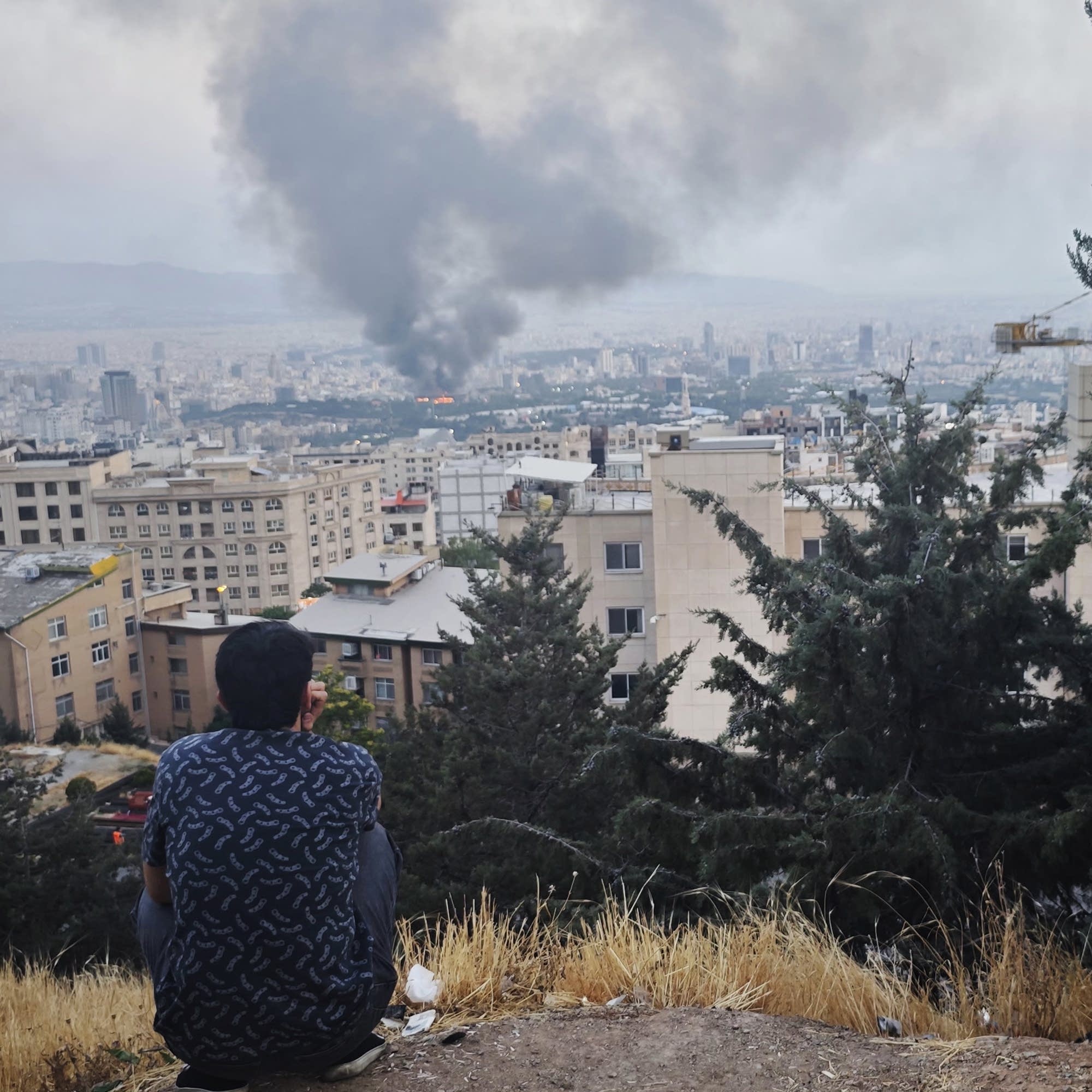
Happening to oil prices after the US Attacks on Iran. Live from the uk this is the Marketplace Morning Report from the BBC World Service. Felicity I'm Felicity Hannah, in for Liana Byrne. Good morning. There's more volatility for global oil prices following the US Attacks on Iran. Over the weekend, the international benchmark Brent crude hit more than $80 for the first time in five months before falling back. Now there's a renewed focus on a key waterway, the Strait of Hormuz. Iran's state run Press TV reported that Parliament had approved a plan to close the strait, but added that the final decision lies with the Supreme National Security Council. Jorge Leon is head of geopolitical analysis at the energy consultancy Rystad.
- [02:01]
Jorge Leon
The importance of the strait is that around 20 million barrels per day of oil pass through the Strait of Hormuz every day. So it is a very, very significant choke point in the world. So if there is a threat of closing the Strait of Hormuz, the first thing that we're likely to see is prices shooting up above $100 per barrel because of the increasing geopolitical risk premium, but also most likely losses of exports around the world, particularly coming from the Middle East.
- [02:31]
Felicity Hannah
Now the US Secretary of State Marco Rubio has called on China to prevent Iran from blocking the Strait. The BBC's Suranjana Tiwari is in Tianjin in China ahead of a World Economic Forum meeting. Hi Suranjana.
- [02:44]
LHH Advertiser
Hello.
- [02:45]
Felicity Hannah
So have China's leaders said anything or responded.
- [02:49]
Suranjana Tiwari
We haven't heard anything yet apart from fairly standard Ministry of Foreign affairs condemnation of of the US Intervention in the Middle east, saying how important the Persian Gulf is for international goods and energy trade and that China calls on the international community to intensify efforts to de escalate tensions and prevent further regional turmoil.
- [03:15]
Felicity Hannah
And what kind of leverage does China actually have to influence Iran?
- [03:19]
Suranjana Tiwari
Well, they are allies and one of the reasons that they are is because China does import oil from Iran is estimated. It's hard to know exact figures, but it's estimated that China actually imports 90% of the oil that Iran exports to international markets. And of course, China is still facing an economic slowdown. The property crisis is still bumping along and demand and consumer spending have not picked up either. So it's really focusing on exports, the manufacture of goods and those the manufacture of goods does require a lot of energy that comes from the kind of oil that China imports from Iran.
- [04:02]
Felicity Hannah
So thanks so much for joining us.
- [04:04]
Suranjana Tiwari
Thank you.
- [04:06]
Felicity Hannah
Let's do the numbers. The latest on those oil prices then. Brent crude is now trading at $77 after passing $80. Earlier market moves have remained fairly modest in the last few hours. Japan's Nikkei closed down slightly and the pan Europe Stoxx 600 has also slipped a little bit. Europe has had its first heat wave of the summer with temperatures well above seasonal average in the U.K. france and Spain. The Spanish city of Seville has carried out a pilot aimed at naming heat waves in order to raise public awareness and better prepare local economies. It uses an algorithm or formula that forecasts heat waves and categorizes them based on the potential impact. The BBC's Ashish Sharma reports.
- [04:53]
Ashish Sharma
In the summer, this city is one of the hottest in Spain and this has an impact on many local businesses, especially in tourism. Daniel gathers his group of 12 international tourists. They're about to go on a three hour bicycle tour of the city.
- [05:12]
Felicity Hannah
We've been on two tours and the guides even say that the place shuts.
- [05:17]
Adriana Llanos
Down in July and August.
- [05:18]
Felicity Hannah
They were telling us that, saying there's nothing open, there's no point coming.
- [05:22]
Ashish Sharma
The pilot scheme, the first of its kind, was called Prometeo. By the time it ended last year, several severe heat waves had been identified and named in Seville.
- [05:32]
Adriana Llanos
My name is Adriana Llanos and I'm the manager of seabaibike. So during wintertime and summertime, we focus on doing office work because we don't have many bookings. And during high season, as spring and fall, we we are usually only focused on tours because we have lots and lots of customers. So during summertime, what we do is changing our tours. So instead of starting the tour at 2:30, we start at 9:00am for us, it would be very useful to name the heat waves. That would mean that we are talking more about the heat waves. That way we could organize easier the changes we have to do. And never cancel. We always stay in the shade. I know every single shade in town.
- [06:17]
Ashish Sharma
Heat waves don't have names, unlike storms or hurricanes, which are also categorized. But of all natural weather phenomena, they can have the greatest impact on people's lives, on overall public health and the local economy. The algorithm was established by the Atlantic Council and worked upon in the city by the University of Seville in cooperation with the local government. Jorge Gastellamundi is the senior director of the Atlantic Council's Climate Resilience center in Seville.
- [06:45]
Jorge Gastellamundi
People usually assume, you know, I'm used to hot. This is nothing new. But the fact that they were named alerted them that this was something probably different to what they were used to. We also found that women were more attuned to the fact that they needed to take action, similar to more wealthy neighborhoods, as well as the elderly.
- [07:03]
Ashish Sharma
Were there any aspects of the project which you looked at afterwards, which you realize really could serve companies or local economies in some way?
- [07:12]
Jorge Gastellamundi
We realized that this same algorithm that connects all these different factors could be used for the insurance sector because they need triggers. They need to understand when. When they're insuring a particular good or service that, you know, they will have the right data to understand when they need to pay or when they don't need to pay.
- [07:32]
Ashish Sharma
Heat waves are silent killers. They cash out, vulnerable and quietly devastate the economy through their impact on health. Finding ways to combat them, be it by naming them or categorising them, could be one answer to deal with the future in which our urban centres become even hotter.
- [07:51]
Felicity Hannah
That was the BBC's Ashish Sharma in the UK. I'm Felicity Hannah with the Marketplace Morning Report from the BBC World.
- [08:08]
LHH Advertiser
This old house has been America's most trusted source for all things DIY and home improvement for decades. And now we're on the radio and on demand.
- [08:18]
Ashish Sharma
I think you're breaking into this wall. Regardless, I was hoping you wouldn't say that. I need to go and get some whiskey.
- [08:24]
Adriana Llanos
I think I would get the whiskey for sure.
- [08:26]
LHH Advertiser
Subscribe to this Old House Radio hour from La Est Studios. Wherever you get your podcasts.