Loading summary
Transcript30 lines
- [00:00]
Dell AI PC Advertiser
Introducing the new Dell PC. Powered by the Intel Core Ultra processor, it helps do your busy work for you so you can fast forward through editing images, designing presentations, generating code, debugging code, summarizing meeting notes, finding files, managing your schedule, responding to long emails, leaving all the time in the world for the things you actually want to do. Get A new Dell PC@dell.com AI PC how those ahead Stay ahead.
- [00:31]
Marketplace Fundraiser Host
You can turn to Marketplace to hear from powerful leaders and everyday people about the economy and their role in it. Now we hope we can turn to you. Marketplace is facing real threats and challenges as we plan for the future. As a public media program, donations from you are an important part of our budget. Here's one action you can take right now that will have a long lasting impact. Start a monthly donation to support our work. Five bucks a month is a great place to start. Head to marketplace.org donate and thank you.
- [01:07]
Sabri Benishore
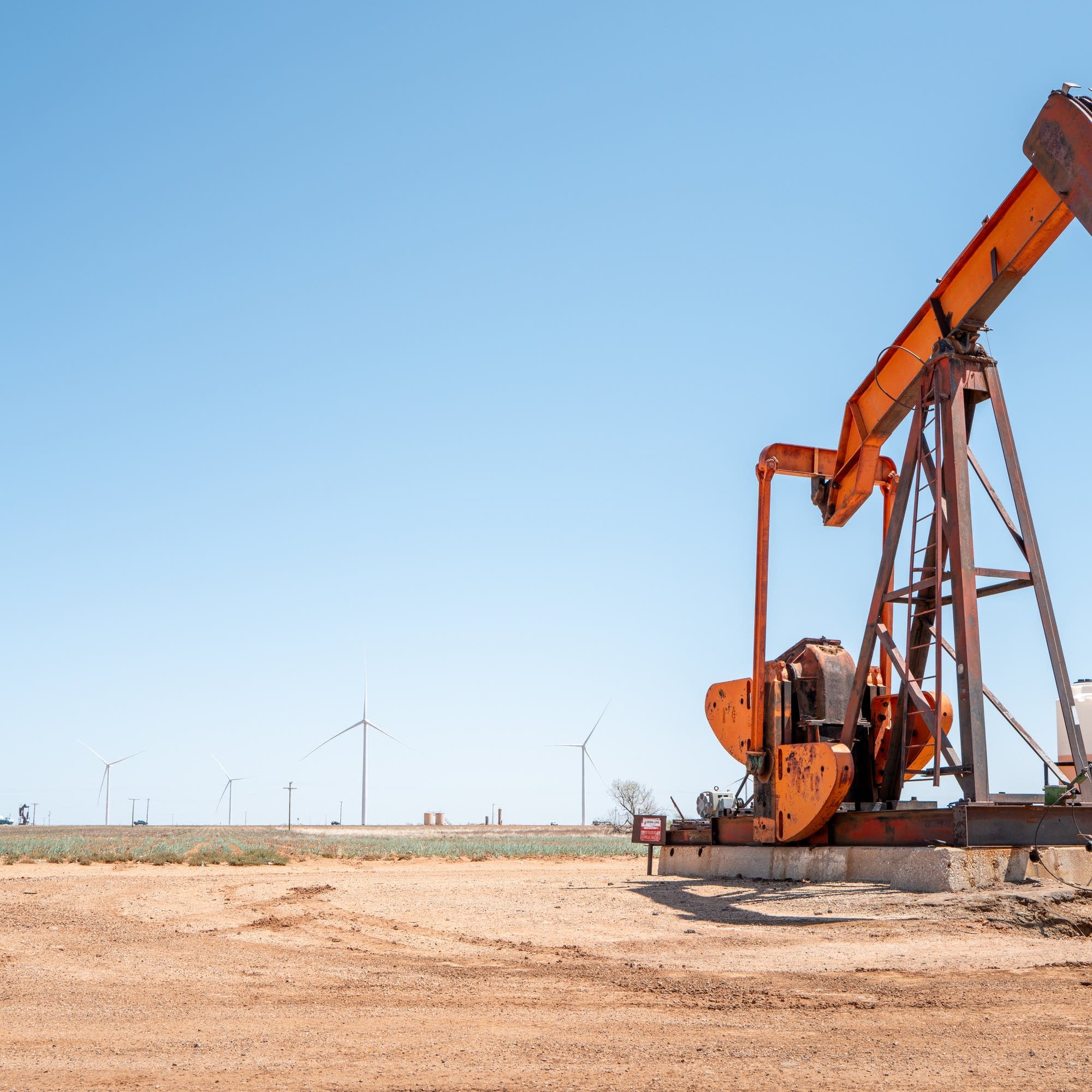
Gloom in Oil Country From Marketplace, I'm Sabri Ben, ashore in for David Brancaccio. Texas oil and gas firms are feeling pessimistic about the upcoming year. In the latest Dallas Fed survey, energy firms reported lower production in increased costs and heightened uncertainty. Oil is, of course, a good chunk of the Texas economy, and the Texas economy is a good chunk of the U.S. economy, around 9%. Marketplace's Elizabeth Troval has more on what it all means.
- [01:35]
Kunal Patel
Typically, Kunal Patel with the Dallas Fed says oil and gas executives tend to.
- [01:40]
Carr Ingham / Dan Pickering (Energy Experts)
Look at the bright side, and right now they're pessimistic.
- [01:44]
Kunal Patel
Some of their top concerns Commodity prices, uncertainty, geopolitics Relatively weak oil prices is the big issue with OPEC raising production in an already amply supplied market. And tariffs aren't helping, says Carr Ingham with the Texas alliance of Energy Producers.
- [02:04]
Carr Ingham / Dan Pickering (Energy Experts)
There's just no denying that tariffs raise costs to the oil and gas industry. And there's no denying that that's happening in a year in which the price of the commodity that they sell is lower than it was last year.
- [02:17]
Kunal Patel
The cost cutting has already begun for oil and gas firms and will likely continue, says Dan Pickering with Pickering Energy Partners.
- [02:27]
Carr Ingham / Dan Pickering (Energy Experts)
We've seen layoffs. We'll probably see some more, I would say lower activity, ongoing consolidation, because the companies are looking for ways to gain efficiency, ways to gain size and scale.
- [02:39]
Kunal Patel
But he's not betting against the state's oil producers either.
- [02:43]
Carr Ingham / Dan Pickering (Energy Experts)
Net, net net. Texas is blessed and will continue to be.
- [02:47]
Kunal Patel
The Permian Basin currently produces more oil than most countries. I'm Elizabeth Trovall for Marketplace.
- [02:55]
Sabri Benishore
Speaking of oil, BP has approved a $5 billion investment in a deepwater oil platform about 300 miles south of New Orleans. BP's CEO has pledged to sell $20 billion in assets, including green energy projects, to finance the company's refocus on oil and gas. BP stock is about flat in premarket trading. The auto parts manufacturer First Brands has filed for Chapter 11 bankruptcy, got itself into this mess by borrowing too much, and the company's rapid fall has raised questions about the riskier side of lending in corporate America. Marketplace's Nancy Marshall Genzer has that First.
- [03:33]
Nancy Marshall Genzer
Brands is a conglomeration of companies acquired through loans. They make brake parts, windshield wipers and water pumps. First Brands borrowed against its future revenues, promising to pay back investors when the money came in. This type of opaque borrowing doesn't show up on a company's balance sheet. First Brands tried to refinance its debt last month. The refinancing was put on pause after investors asked for an independent auditing of the company's accounts. I'm Nancy Marshall Genser for Marketplace.
- [04:19]
Odoo Advertiser
This podcast is supported by Odoo. Some say Odoo business management software is like fertilizer for businesses because the simple, efficient software promotes growth. Others say Odoo is like a magic Beanstalk because it scales with you and is magically affordable. And some describe Odoo's programs for manufacturing, accounting and more as building blocks for creating a custom software suite. So Odoo is Fertilizer Magic Beanstalk building blocks for business Odoo exactly what businesses need sign up@odoo.com that's o d o.
- [04:48]
Dell AI PC Advertiser
O.Com this Marketplace podcast is supported by Dell. Huge Savings on Dell AI PCs are here and it's a big deal. Why? Because Dell AI PCs with Intel Core Ultra processors are newly designed to help you do more faster. It's pretty amazing what they can do in a day's work. They can generate code, edit images, multitask without lag, draft emails, summarize docum, create live translations. They can even extend your battery life so you never have to worry about forgetting your charger. It's like having a personal assistant built right into your PC to cover the menial tasks so you can focus on what matters. That's the power of Dell AI with Intel inside with deals on Dell AI PCs like the Dell 16 plus, starting at $749.99, it's the perfect time to refresh your tech and take back your time. Upgrade your AIPC today by visiting Dell.comdeals that's Dell.com deals.
- [05:50]
Sabri Benishore
Back in March. And without warning, the Department of Agriculture terminated a program that helped schools buy locally grown food for student meals. Now the department is bringing it back with revisions for next year, technically the fiscal year, which starts in October. In the past, schools used this program to get anything from local ground beef for patties to fresh veggies for salad bar. But farmers in school districts could be hesitant to participate this time around. Marketplace's Savannah Peters has more.
- [06:18]
Savannah Peters
On Buffalo Creek Ranch in Moriarty, New Mexico, a couple of Angus cows and their calves are munching on hay.
- [06:29]
Manny Encinias
We're 13th generation New Mexicans. We've been ranching, you know, as a business for the last five to six generations.
- [06:37]
Savannah Peters
Manny Encinias and his family market their beef locally to restaurants and at farmers markets. But a few years ago, Encinias says school districts joined his customer base with funding from the usda.
- [06:50]
Manny Encinias
That was a game changer, right? I think for us, that's given us market access during the fall and the.
- [06:57]
Savannah Peters
Wintertime when Encinillas says direct to consumer sales tend to slow down, he gradually scaled up to supply that new market. But when the funding was canceled, so were a lot of his contracts.
- [07:11]
Manny Encinias
I mean, the rug's been pulled out from underneath us.
- [07:13]
Savannah Peters
Encinias had to break from his usual business model and auction off some of his cow calf pairs. That meant he got a smaller return than he was expecting through contracts with the schools.
- [07:25]
Manny Encinias
It was probably going to cost us anywhere in the neighborhood of 50 to $85,000, and I think that's pretty sizable.
- [07:33]
Savannah Peters
This is how a lot of small scale farmers spent their summer, looking for new buyers for food that was supposed to feed local kids. At the same time, schools scrambled to fill holes in their menus. Two of the hardest jobs you can have in this world are like farmer and school food provider. Sunny Baker with the national Farm to School Network says school districts are getting squeezed by multiple federal cuts plus higher food prices across the board. They're often going back to highly processed foods to just get the kids Simply fed. The USDA's revived Farm to school grant program comes with a higher funding cap and looser guidelines for which local producers schools can buy from. But Jennifer Gaddis, a professor at the University of Wisconsin, says it may be too late to restore some farm to school partnerships. I think it just left a lot of people feeling kind of burned that they had spent a lot of people hours trying to start something new in terms of these new relationships, these new supply chains. In New Mexico, Manny Encinias is willing to give it another go if local school districts are let's just get the.
- [08:47]
Manny Encinias
Food back into the hands that need it.
- [08:50]
Savannah Peters
But Encinias builds his herds and makes business plans a year or more in advance if those markets are coming back. He needed to know yesterday. In Moriarty, New Mexico, I'm Savannah Peters for Marketplace.
- [09:06]
Sabri Benishore
And in New York, I'm Sabri Benishore with the Marketplace morning report from apm, American Public Media.
- [09:20]
David Brancaccio
Hey, it's David Brancaccio. Marketplace's fall fundraiser ends on Friday, and we're making good progress toward our goal to hear from 2,000 marketplace investors. This is a different kind of goal, one that centers on your participation, whether it's your first ever donation, if you're chipping in again, or if you're starting or increasing a monthly gift. I'm telling you, it all matters more than ever now. So stand up and be counted as a Marketplace investor. And if you can't do it by Friday, go to marketplace.org donate.