Loading summary
Transcript23 lines
- [00:00]
A
Our state has changed a lot in the last 140 years. We know because Multicare has been here guided by a single making our communities healthier. That comes from making courageous decisions, partnering with local communities to grow programs and services, and expanding healthcare access to those who need it most. Together, we're building a healthier future. Learn more@mycare.org.
- [00:32]
B
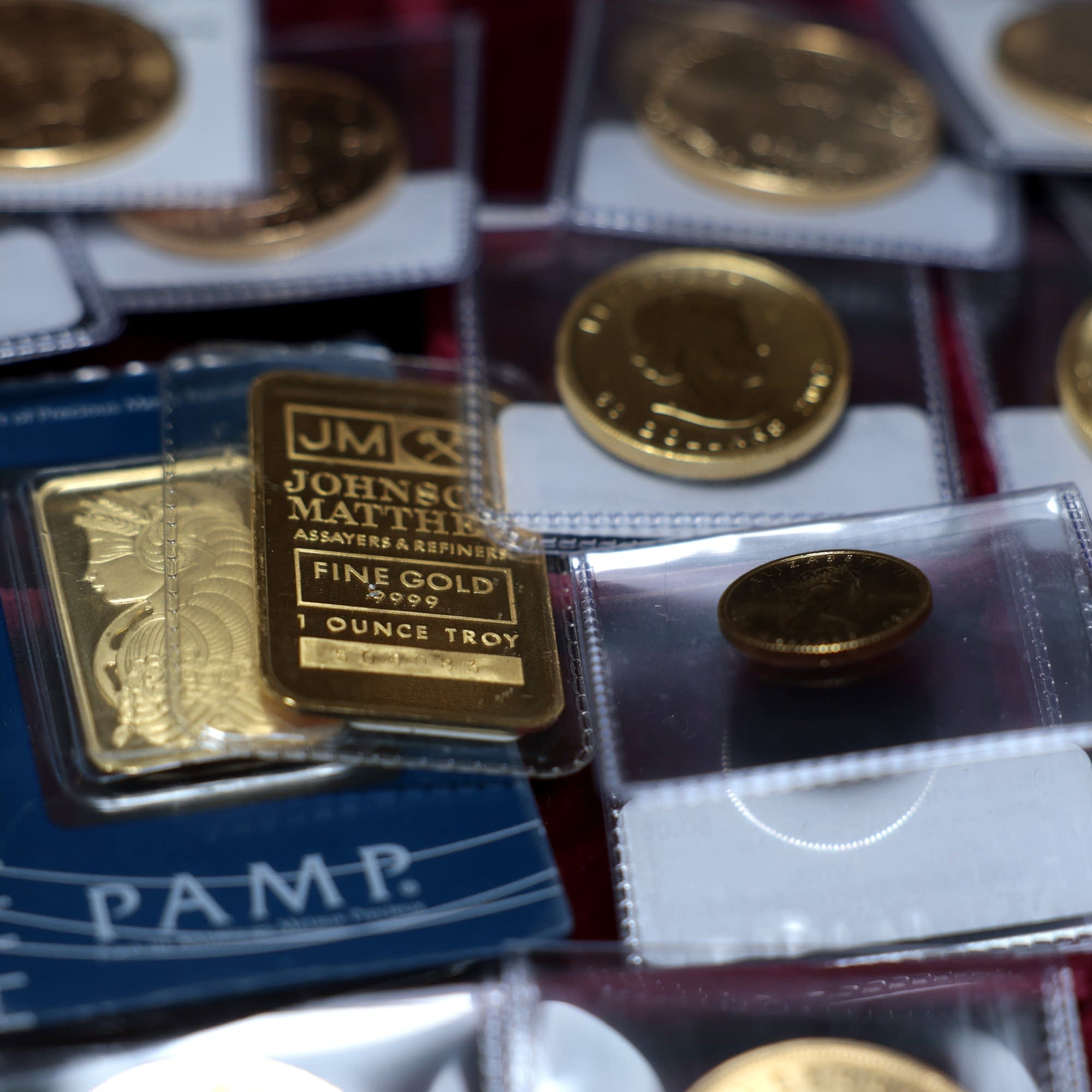
Gold prices surged to a new record, a sign of economic uncertainty. Live from the uk, this is the Marketplace Morning Report from the BBC World Service. I'm William Lee Adams. Good morning. Trading in Asia has seen gold breach $4,000 an ounce for the first time, following one of its strongest monthly performances and its biggest sustained rally since the 1970s. Even allowing for inflation, this is the most valuable gold has ever been. BB Business reporter Nick Marsh is here to break that down. Nick, hi.
- [01:02]
C
Hi, William.
- [01:03]
B
What's driving this rush to gold?
- [01:05]
C
The cliche is that investors buy gold in times of uncertainty, and it's a cliche largely because it's often true. The last time we saw a rally in the price of gold like this was in the 1970s during a massive global energy crisis and economic downturn across the world. People then turned to gold as they are now. This time round, we've got 10 trade tensions, we've got a president in the White House regularly lambasting the head of the American Central Bank. There are obviously conflicts and alliances being reshaped across the world. So investors are saying, well, right now, politically, economically, I'd rather not put my money in stocks, in shares, in bonds. I'd rather buy gold, which is traditionally seen as reliable, even in these uncertain times.
- [01:57]
B
And what about the US Government shutdown? Does that play a role in any of this?
- [02:01]
C
Yeah, it's definitely played a pretty big role in the last week or so. That is because with the government shut down, the important data that it releases on a weekly basis on things like jobs and inflation isn't being released. And if you don't have a clear economic picture, then there's even more of an incentive to just play it safe and buy gold. They then you add into the mix the interest rate cuts that we've been seeing this year that we expect to see more of, then you've got more and more reasons to buy gold, because if interest rates are low, it's not that attractive to put your money into the bank or in bonds which need high interest rates. Better to put it in gold.
- [02:43]
B
How long can these high prices hold? Will the scorching rally continue?
- [02:47]
C
Right now, the rally which took gold past $4,000 in Asia trade is continuing. Looking at the short term, at least it doesn't look there's going to be any big reduction in the value of gold anytime soon.
- [03:01]
B
Nick, thanks for joining us on Marketplace.
- [03:03]
C
My pleasure.
- [03:04]
B
Over to India now, where British Prime Minister Keir Starmer is attending a two day summit focused on trade. Mr. Starmer has said he wants a recently agreed trade deal to be implemented as soon as possible, but he's insisting that Britain won't issue more visas to Indian workers. The BBC's South Asia correspondent Yogita Lamai explains how it's going down in India.
- [03:25]
D
That's not going to be music to the Indian government's ears. That was one of actually the main sticking points, the main demands that India had. It's one of the reasons why this trade deal took so long. And there's been questions in India about why India finally relented on a deal which doesn't kind of make there's no relaxation in the visa regime and whether that was because of the pressure that it's facing from the US Yegita Lamai.
- [03:49]
B
There, let's do the numbers. The European Union has announced plans to slap a 50% tariff on steel imports. Its proposal would reduce tariff free quotas for steel imports by 47% from 2024 levels. Elsewhere, new Zealand's central bank cut benchmark interest rates by 50 basis points to 2.5%, its lowest level since July 2022. Earlier this year, US President Donald Trump unveiled plans for selling a gold card visa for $5 million. It would offer permanent residency in the US and a path to citizenship globally. Those sorts of schemes have been controversial. Should people with deep pockets be able to skip? Josh Martin has been finding out.
- [04:30]
E
When Portugal launched its golden visa program in 2012, it hoped that foreign investors would revive its property market after a crash. The program caught the eye of Hong Kong citizen Lily Chan.
- [04:42]
F
We travel to Europe at least once a year for holidays and things. So I have been to Portugal before. It was peaceful, safe, good weather, good food and it was cheap. 2017 I was thinking about retirement and try to diversify my money. It's an EU passport, so I will be free to go to different countries. I don't have to live in Portugal there and even I get a passport and I only need to spend seven days out of a year there. The property is cheap.
- [05:15]
E
And although golden passports might grab the headlines due to alleged criminals exploiting them, golden visas can offer an insurance policy for citizens living in politically dicey circumstances. No wonder then that historically They've been purchased mainly by citizens of mainland China and the Middle East. The golden visa program for Portugal, which was based on residential property investment, helped channel 7.5 billion euros, or $8.7 billion, into the Portuguese economy. But it no longer exists, in part because of the overheating housing market in places like Lisbon. The list of places that'll grant you a golden visa is actually growing, even as the EU pulls up the drawbridge on a back route into the bloc. But one country at the bottom of the world is drawing the type of wealthy people that the Trump administration would like to invest in. The United States. And they're not from China or the Middle East. They're from the US Itself.
- [06:12]
G
Well, I had been traveling to New Zealand for quite an extensive time, more than 30 years, and I made the decision to move my business there and also to move there full time. So it was natural for me to enter the country as part of a program to bring investment into New Zealand.
- [06:31]
E
That's Mark Bergman, the US Tech investor and venture capitalist who moved from Silicon Valley to New Zealand under a previous iteration of the small country's golden visa program.
- [06:41]
G
I view it more as opportunity. I'm investing in New Zealand, and I'm expecting to see significant economic return. It's sort of up to me. If I do a bad job, obviously I won't see those returns, but my hope is that I will make significant return and create great value within New Zealand.
- [06:57]
E
The vast majority of the world's population will live, work, and die in the same country they were born into. Golden visas offer a way around this for the wealthy few. I'm Josh Martin for Marketplace.
- [07:09]
B
And finally, Ronaldo has become the world's first billionaire soccer player. The Bloomberg Billionaires Index puts his net worth at $1.4 billion. That's after he extended his contract with Saudi Arabia's Al Nasser. In the UK I'm William Lee Adams with the Marketplace morning Report. From the BBC World.
- [07:35]
H
I'm Kimberly Adams, host of Make Me Smart, a podcast from Marketplace that makes today make sense. Join me throughout the week as I dig into the biggest stories in tech culture and the economy. Whether it's a vibe check on the job market or the latest on China US Relations, Make Me Smart helps you understand how the headlines actually impact your daily life. Listen to Make Me Smart on your favorite podcast app.