Loading summary
Transcript27 lines
- [00:02]
A
The wrongs we must right, the fights we must win, the future we must secure together for our nation. This is what's in front of us. This determines what's next for all of us. We are Marines. We were made for this. This Marketplace podcast is supported by Wealth Enhancement, who understand that dreams don't happen by chance. It takes a plan. They're ready to build your wealth Blueprint for retirement, investing taxes and everything else your financial life brings. It reveals gaps and highlights opportunities you may have missed at no cost to you. Find out more@wealthenhancement.com Blueprint. The government has ordered 4% fewer flights today at 40 airports due to the government shutdown. I'm David Brancaccio in Los Angeles. Using the data from Flight Aware, cancellations so far this morning are running at 3% from airports from Chicago O' Hare to Los Angeles, Boston to Atlanta and beyond. Now Vegas, Houston and JFK show 2% cancelled so far in a week. If air traffic controllers are still not getting paid, the required cancellation will rise to 10%. Marketplace's Nancy Marshall Genser has an update.
- [01:33]
B
According to the tracking website FlightAware, more than 800 flights within, into or out of the US are canceled, with more than 1,000 delayed. The FAA flight limits will be staggered with a 4% reduction in effect today. That's scheduled to ramp up to 10% a week from now, American Airlines CEO Robert Isom told CNBC this morning. Today's reduction is manageable, but next it.
- [01:57]
A
Becomes a lot harder. You're going to be really digging into, you know, some, some, you know, more heavily traveled areas.
- [02:03]
B
Isom says he's seeing an impact on passenger bookings as we head into the busy Thanksgiving travel season. The FAA says it's mandating the flight reductions because it's seeing signs of stress in the system. Some air traffic controllers are calling in sick as they're forced to work without pay during the government shutdown. I'm Nancy Marshall, genservice for Marketplace.
- [02:25]
A
It's been three months since the U.S. stopped minting pennies. McDonald's is among retailers resorting to little staff tutorials about how rounding works. And don't be surprised when some grocery stores ask for exact change if you want to pay cash. And on the subject of rare cash denominations, when's the last time you came across a $2 bill? The one with Thomas Jefferson Million Bazillion Marketplaces podcast for kids and families got a query from a young listener on this, which they turned into a whole episode. Turns out some are doing their part to use the two dol.
- [02:57]
B
One time I lost my tooth, put it under my pillow and the next morning I had a two dollar bill.
- [03:01]
A
From the tooth fairy.
- [03:05]
B
I have around fifteen two dollar bills that I'm keeping in a safety deposit box until I'm old. We receive a two dollar bill every single lunar New year from my grandparents. My Aunt Debbie has been giving me $2 bills every year on my birthday. The $2 bill is given every Lunar New Year because the two symbolizes luck. It brings good fortune for the new year. I'll see what they're worth in 60 years. I'm gonna collect them until I'm 100 and see how much they're worth.
- [03:35]
A
That was Aidan Asher, Lydia, John and Calder speaking to Marketplace's podcast for kids Million bazillion. A new season is out now. Find it wherever you get your podcast.
- [04:11]
B
Businesses come in all shapes and sizes. Maybe you're a small business expanding into a new space, a mid sized company planning for the future or a large operation investing in the latest equipment. Whatever your needs, Atlantic Union bank is here providing easy access to knowledgeable bankers with local market insights and the right digital tools to keep your business moving forward because you deserve a relationship manager who cares. Call, visit us online or stop by a branch today. Atlantic Union bank any way you bank.
- [04:43]
A
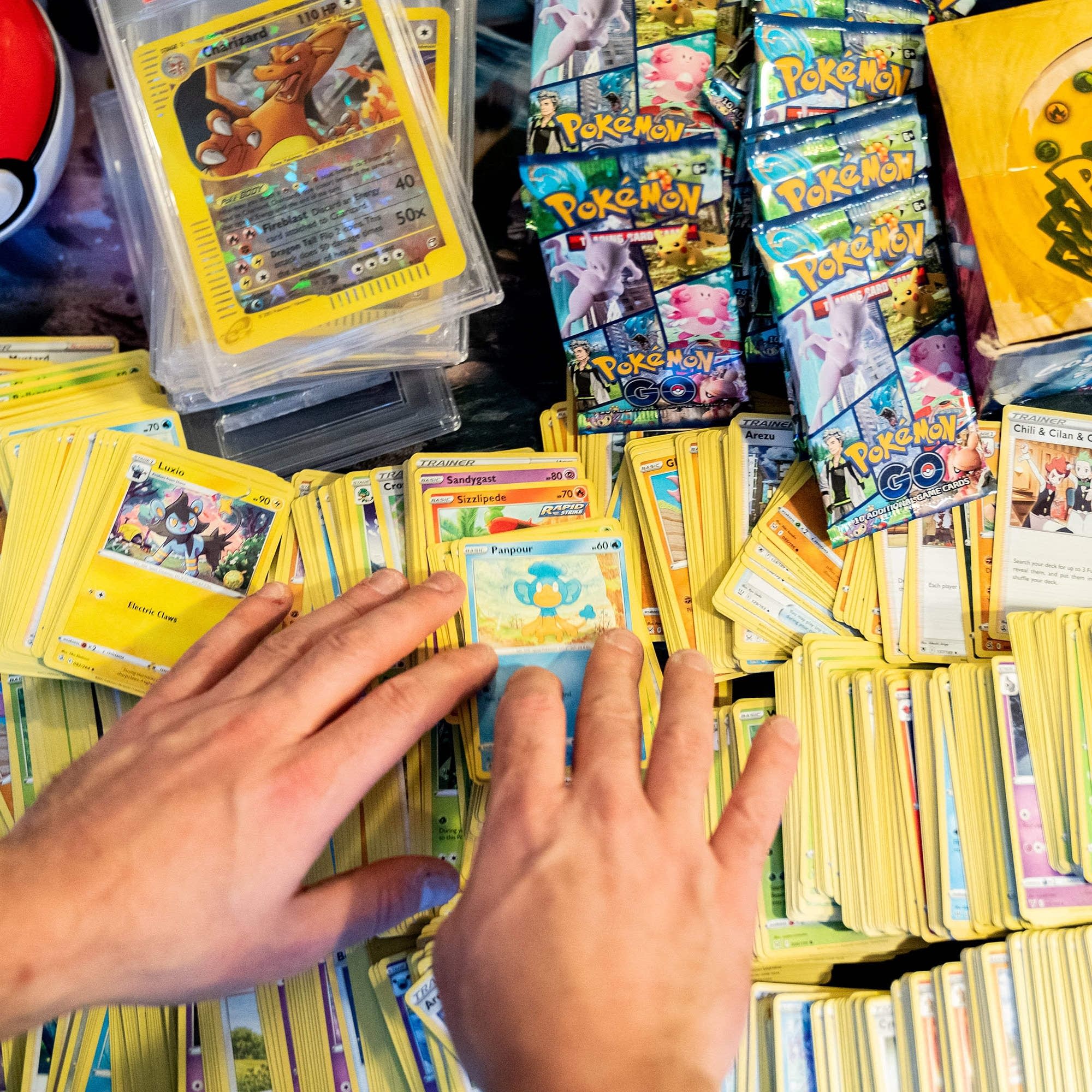
2026 almost upon us will mark 30 years since the dawn of Pokemon video game anime show trading cards. Pokemon is arguably the highest grossing media franchise of all time, and those collecting the trading cards are reaping some financial rewards. Some of the rarest cards have increased in value by as much as 4,000%. The BBC's Monica Miller has this story for us.
- [05:08]
B
In the heart of midtown Manhattan, on Wednesday evenings you can find Jared Allday at Montesee Comics. That's when the store hosts its weekly Pokemon trading card tournament. He says he got hooked last year.
- [05:21]
A
I was just going around a local card shop. It looked nice, like, ooh, Pokemon, this is my childhood. Got a pack, opened it up. From that moment on, here I am. It was just pure fun.
- [05:37]
B
As collectibles go, Pokemon cards have remarkable staying power.
- [05:41]
A
The statistics say that from 2004 until, I guess 2025, Pokemon cards as a group are up, you know, 3,800%.
- [05:51]
B
Pete Earle is the director of Economics and Economic Freedom and has been following Pokeflation. He says their value soared during the pandemic, so a lot of people received.
- [06:01]
A
Stimulus checks and they were home. So a lot of people at the same time reached into closets, pulled out shoeboxes, and said, hey, I remember these things. They're pretty great. Combination of cash and time produced the perfect conditions for a speculative run. And that has continued far longer than anyone, myself included, thought it would, Pete says.
- [06:21]
B
While other players treat cards as a game, others now view them as a serious investment, part of a growing market of alternative assets, along with sneakers, comics, even crypto. But Pete warns that chasing quick profits in Pokemon cards could backfire. The 90s beanie baby boom showed how quickly the craze could fade. With stuffed toys that were once sold for hundreds now worth just a few dollars. Sellers are also seeing prices soar. Oh, absolutely. Jimmy Chen is the owner of Montessee Comics. He says some customers buy cards purely as investments, but for others, it's nostalgia.
- [06:59]
A
And then on top of that, a lot of the millennials now have more disposable income, or that they're able to sell some of their Pokemon cards to invest in something else.
- [07:11]
B
Alex Rafala loved Pokemon as a kid. Two years ago, he rediscovered it. What keeps him coming back isn't the potential payday.
- [07:20]
A
We're not super happy with the scalping situation in Tevin. A lot of those people don't seem particularly interested in the cards or the lore or the franchise at all. They're really just trying to make a.
- [07:30]
B
Quick buck by gassing up prices on cards that we want.
- [07:33]
A
It makes it a little inaccessible.
- [07:35]
B
Whether they're prized investments or just pieces of shiny cardboard, Pokemon cards have become something bigger than a childhood hobby. For some investors, they found new ways to diversify their portfolios. For players and collectors, the real value isn't in dollars, but in the memories, the community, and the game that keeps on evolving.
- [07:57]
A
That's Monica Miller, BBC. It's funny to think I used to speak fluent Pikachu, Charmander, and Bulbasaur when that dad skill was required, right? In Los Angeles. I'm David Brancaccia. We're from apm, American Public Media.
- [08:12]
B
Hey, everyone, it's Bridget, host of Million Bazillion, a podcast from Marketplace. You've probably heard about the government shutdown, but if you're anything like our young caller Esme, whose dad is a federal worker, you might still have questions. I've noticed that my dad hasn't been going to work, and I don't know when the government shutdown will stop and my dad can go back to work. We can help tune into our recent episode where we explain what you and the young ones in your life need to know about government shutdowns. Listen to Million Bazillion on your favorite podcast.
- [08:46]
A
Applause.