Loading summary
Transcript21 lines
- [00:00]
T-Mobile Representative
Breaking NEWS T Mobile Network outperforms expectations in all sectors because T Mobile helps keep you connected from the heart of Portland to right where you are on America's largest 5G network. Switch now keep your phone and T Mobile will pay it off up to $800 per line via prepaid card. Visit your local T Mobile location or learn more@t mobile.com keepandswitch up to 4 lines of your virtual prepaid card. Allow 15 days qualified unlock device, credit service port in 90 plus days device knowledgeable carrier and timely redemption required card is no cash access and expires in six months.
- [00:30]
David Brancaccio
Straight talk here. Federal funding for public media is at risk of being eliminated. That seriously affects our 800 local public radio stations that broadcast Marketplace and that in turn impacts our bottom line. Marketplace needs your help to plan for an uncertain future and to continue bringing you the news, interviews and stories about the economy as it changes. Every donation right now has a profound impact. Please give what you can@marketplace.com don and thank you. You want to be strong, not weak. Unless the topic is the US dollar. I'm David Brancaccio in Los Angeles. First, California regulators are allowing State Farm Insurance to charge 17% more. This in the wake of wildfires that destroyed 16,000 structures earlier this year with some insured by State Farm. And it's not just California with the higher premiums marketplaces NovaSafo is here in.
- [01:29]
Nova Safo
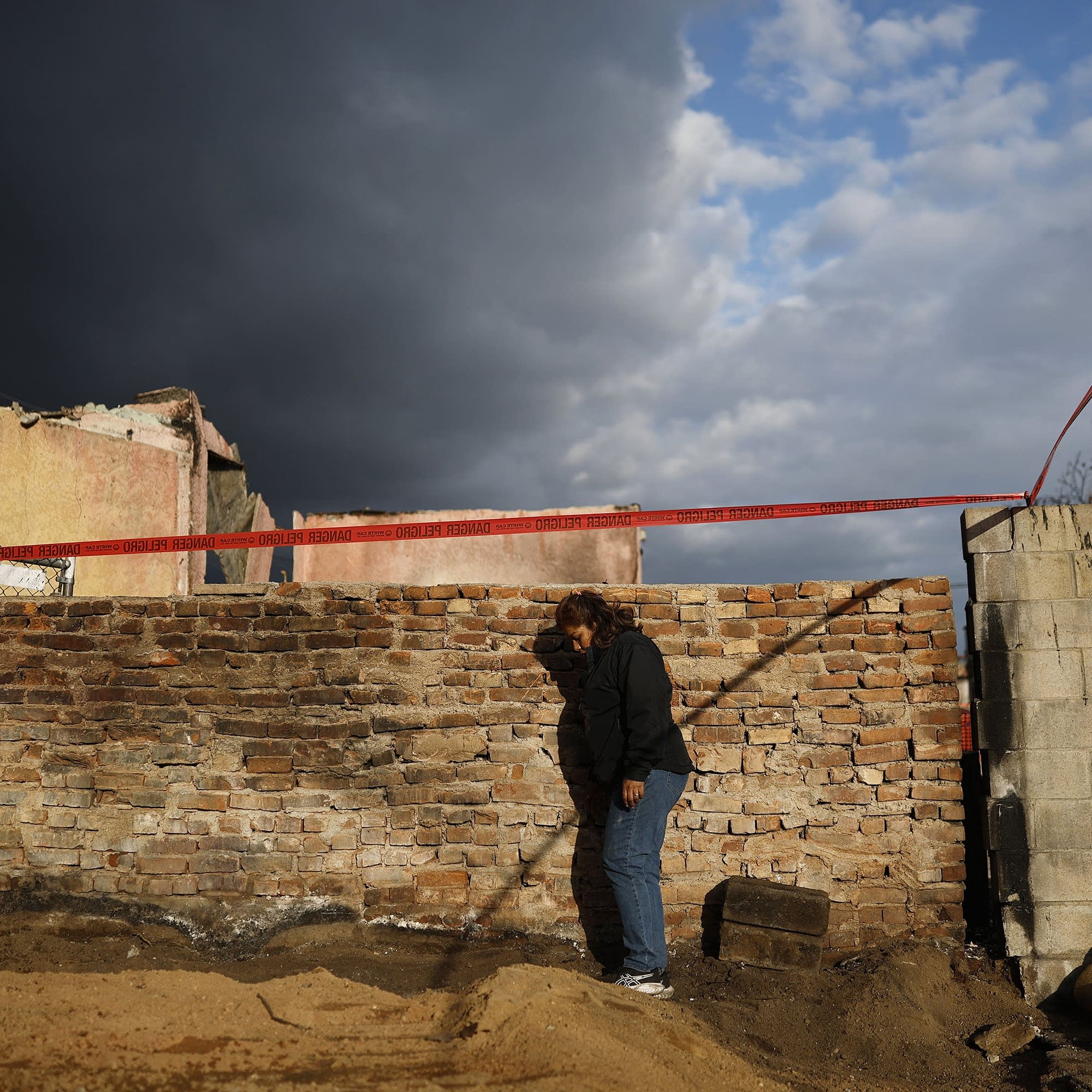
Not just California, but California is quite notable because it's such an obvious example of a growing problem. David the scale of the premium increase here is quite large, 17%. California's insurance commissioner is allowing State Farm to raise rates that much, at least for now. It's a temporary increase until a hearing that still needs to be scheduled for sometime later this year. State Farm says it needs the rate increase on top of the 20% it got last year because it's in financial distress following the wildfires in January which burned entire neighborhoods in Los Angeles. At least State Farms California state subsidiary is in distress. The state's insurance commissioner characterized the situation in the state as a crisis.
- [02:08]
David Brancaccio
David all right, statewide, right? We're talking California, but nationwide as well, like Florida.
- [02:14]
Nova Safo
That's right. Florida is by far the most expensive state for homeowners insurance. Think hurricanes and floods. Insurify, which is an insurance comparison site, crunched the data and projects the average annual homeowner's insurance cost in Florida will rise above 50, $15,000 by the end of this year. And the Midwest isn't spared either. Insurify says rates in Iowa could rise 15% or more because home insurers there are paying out more than they're taking in in premiums. Think storms and hail there. So this is a nationwide problem. David.
- [02:47]
David Brancaccio
All right. I'm still stuck on that 15 grand a year for insurance in Florida. Nova, thank you. And what's left of the Consumer Financial Protection Bureau has canceled a 2023 settlement with Toyota without comment. The agency ended its effort amid evidence Toyota pushed car buyers into unwanted and costly extra bundles. Toyota had been set to pay tens of billions of dollars in refunds to customers. But not anymore. Markets Dow S and P and Nasdaq futures are up in each case by less than a tenth of a percent. And here's a number, $3 trillion. That's the stock market valuation of AI chipmaker Nvidia coming into today after the Trump administration in China lowered tariffs this week and a new deal to sell chips to a saud firm was announced yesterday with the US President visiting Riyadh.
- [03:51]
T-Mobile Representative
Breaking news. T Mobile Network outperforms expectations in all sectors because T Mobile helps keep you connected from the heart of Portland to right where you are on America's largest 5G network. Switch now keep your phone and T Mobile will pay it off up to $800 per line via prepaid card. Visit your local T Mobile location or learn more@t mobile.com KeepAndSwitch up to four lines via virtual prepaid card. Card last 15 days qualifying unlock device credit service port in 90 days device and eligible carrier and timely redemption required. Card is no cash access and expires in six months.
- [04:22]
David Brancaccio
Whether you cherished listener wants a high US Dollar or a low US Dollar depends on where you stand. If you run a company that sells overseas, a weaker dollar helps you because it makes hickey cheaper for foreigners to buy and you might sell more. But if you're taking a trip to the eurozone to see wolves in eastern Poland, you like a strong dollar, so the whole thing gets cheaper. But what most Americans can agree on is we want a related but separate idea, keeping the US Dollar as the world's reserve currency. Some say that status is under threat. And here to help us with why we should care is Gillian Tett, the Financial Times columnist, a member of the FT's editorial board. Great to reconnect.
- [05:02]
Gillian Tett
I'm delighted to be talking with you, particularly about such a crucial topic.
- [05:06]
David Brancaccio
Well, help me. Why would a proud American want our dollar to be the world's reserve currency? What does it get us?
- [05:13]
Gillian Tett
Well, the point about having a reserve currency is that it means that Everyone else around the world has to buy your currency or has to at least invest in it and pay attention to it, because it's really the pillar that holds up the entire global financial system. And in history, there have been six different reserve currencies over time. And the current White House and most Americans like to think that America is dominant on the world stage and therefore should be the reserve currency.
- [05:45]
David Brancaccio
Okay, is there a serious argument that that might be under threat in the fullness of time here given the uncertainty of U.S. policy?
- [05:54]
Gillian Tett
Well, there are two separate but related questions going on at the moment. One of them is whether the American dominance, the empire, has reached the peak of its powers and is going to decline in the coming years relative to other countries. And the fact that China is now becoming increasingly powerful is causing people to ask whether they can assume that America and the American dollar will stay strong or rather have the role of the reserve currency forever. But secondly, the administration is now voicing questions about whether having the world's reserve currency is always a good thing or not. Because when a currency is a reserve currency, everyone goes and buys it and it tends to strengthen. Which sounds brilliant if you're a tourist wanting to have cheap holidays outside America, but actually if you are an industrial company, manufacturing, say, and you're trying to compete on the world stage and having a strong dollar is not necessarily good.
- [06:58]
David Brancaccio
Yeah, a weaker dollar would make, let's say you're exporting something made in Michigan, cheaper to buy, and so maybe you'd sell more of it.
- [07:06]
Gillian Tett
Well, certainly the thinking that is going around Amongst people like J.D. vance or Steve Mehran, the chair of the Council of Economic Advisors and others is that actually having a strong dollar has hurt America as much as it's helped. In particular, it's made it hard for American industry to compete with other countries like China. It's sucked in a lot of imports from other countries, and that's created this massive trade deficit. So there's a school of thought which says actually America should try to weaken its dollar. But the really big question is this. If America wants a weaker dollar, can it still keep its status as a reserve currency or not? Because if you tell people you want to weaken the dollar but still be the reserve currency, some people might say, oh, not really sure I want to keep hanging onto my dollars as reserve currency because we can't assume the value is going to be stable long term. So the really difficult circle that the administration is trying to square is how to find a way to reconcile those two very different goals.
- [08:13]
David Brancaccio
Gillian Tett Financial Times columnist on the FT's editorial board. Thank you very much.
- [08:18]
Gillian Tett
Thank you very much indeed, as well.
- [08:20]
David Brancaccio
And in Los Angeles, I'm David Brancaccio. You're listening to the Marketplace Morning Report. We're from apm, American Public Media.
- [08:35]
Maria Meres
Claudette Powell spent a decade in Hollywood building her career before making a radical change. She quit her job, gave away her belongings and drove across the country to become a nun.
- [08:46]
Nova Safo
I had nothing left. I had turned over my car to the community. I had no more savings, closed my savings account, my checking account, shut down my cards. And that's really scary.
- [08:58]
Maria Meres
I'm Maria Meres. And this week on this is Uncomfortable. Is it possible to find financial security and avow poverty? Listen to this IS Uncomfortable. Wherever you get your podcasts.