Loading summary
Transcript40 lines
- [00:00]
Commercial Announcer
This Marketplace podcast is supported by Wealth Enhancement who ask do you have a blueprint for your money? Wealth Enhancement can help you build the right blueprint for investing, retirement, tax and more. With offices nationwide, there's an advisor who's ready to listen and craft a blueprint for your future. Find out more@wealthenhancement.com build want to make a difference in your community, but not sure how? Go to GoFundMe.com right now and start a GoFundMe. Seriously. Your next fundraiser doesn't have to start in a school parking lot or a church basement. You can start a GoFundMe today in just minutes. Fundraise for yourself, a friend or family member or an organization. All that matters is that you care about them. GoFundMe is the trusted place to fundraise for what you care about. With no pressure to hit your fundraising goal, but tons of tools to help you reach it, you can confidently start fundraising right now. Whether it's creative, local or critical, your cause matters. And there's a reason why GoFundMe is backed by millions and chosen by fundraisers everywhere. It works and it matters. GoFundMe helps you make a real difference. Start your GoFundMe today at GoFundMe.com that's GoFundMe.com G O F U N D M E dot com this is a commercial message brought to you by GoFundMe.
- [01:25]
Sabri Ben-Achour
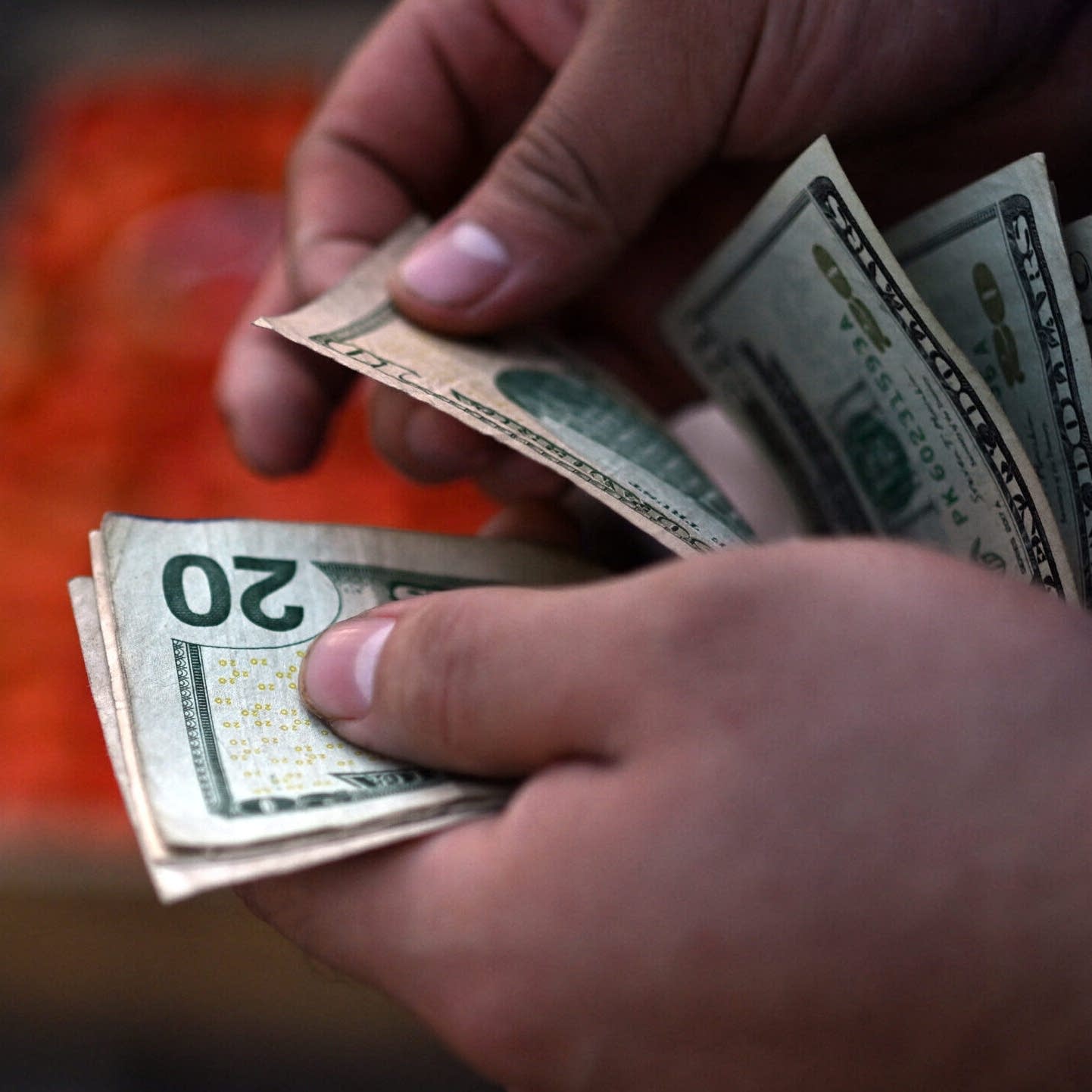
Is your paycheck keeping up with your grocery bill? From Marketplace, I'm Sabri Ben, ashore in for David Brancaccio. We are getting a fire hose of economic data this week. Unemployment is up 4.6%, retail sales flat. We get more on inflation tomorrow. And as these numbers come in, one thing that is becoming clearer is that wage gains are slowing while inflation has been heating up. And right there in between the two is the consumer getting squeezed. Marketplace's Mitchell Hartman reports.
- [01:59]
Mitchell Hartman
In November, average hourly earnings rose 3.5% year over year. That's down from January when wages were growing 4%.
- [02:08]
June Hagan
And that's very consistent with a slowing.
- [02:11]
Mitchell Hartman
In demand for labor nationwide, economist Kathy Busjancik explains. In a sluggish job market, workers have less leverage to demand higher wages. Meanwhile, as wage growth has weakened, inflation has strengthened. Back in April, when President Trump announced his Liberation Day tariffs, prices were rising 2.3% a year. By September, that was up to 3%, meaning consumers purchasing power is deteriorating.
- [02:39]
Susan Schmidt
And that just adds to the affordability.
- [02:42]
June Hagan
Strain that households feel.
- [02:45]
Sabri Ben-Achour
The majority of Americans are indeed going backwards.
- [02:49]
Mitchell Hartman
University of Maryland economist Peter Morici says there are exceptions.
- [02:53]
Sabri Ben-Achour
There are all these folks in artificial intelligence and the supporting industries putting up data centers and so forth that are getting very good wages and wage increases.
- [03:03]
Mitchell Hartman
Because the sector's hot and workers from it to construction are in high demand. I'm Mitchell Hartman for Marketplace.
- [03:11]
Sabri Ben-Achour
The Trump administration has ordered a blockade of oil tankers going into or out of Venezuela and labeled the government of Venezuelan President Nicol Maduro a terrorist regime. Venezuela accuses the Trump administration of violating international law, free trade and the principle of free navigation with a reckless and grave threat. What does this all mean for the price of oil, the price of gas? We asked Susan Schmidt, portfolio manager at Exchange Capital Resources.
- [03:40]
Susan Schmidt
People are very concerned about supply, but in this case for the oil embargo around Venezuela, it won't have a big impact. The amount of oil Venezuela provides into the daily market is less than 1%. So it doesn't have a big impact on the day to day usage of oil or supply. And certainly OPEC is looking at this. OPEC just met shortly after Thanksgiving and they eased restrictions on production of oil, so there should be plenty of supply out there.
- [04:11]
Sabri Ben-Achour
Oil prices are indeed up, Only just a touch, 1.3% this morning, but for the year prices are actually down 19%.
- [04:35]
Susan Schmidt
You know that big bargain detergent jug is 80% water, right? It doesn't clean as well. 80% water. I thought I was getting a better deal because it's so big. If you want a better clean, Tide pods are only 12% water. The rest is pure, concentrated cleaning ingredients. Oh, let me make an announcement. Attention shoppers, if you want a real deal, try Tide pods. Stop paying for watered down detergents. Pay for clean. If it's got to be clean, it's got to be Tide pods. Water content based on the leading bargain liquid detergent.
- [05:05]
Commercial Announcer
Want to make a difference in your community but not sure how? Go to GoFundMe.com right now and start a GoFundMe. Seriously. Your next fundraiser doesn't have to start in a school parking lot or a church basement. You can start a GoFundMe today in just minutes. Fundraise for yourself, a friend or family member or an organization. All that matters is that you care about them. GoFundMe is the trusted place to fundraise for what you care about. With no pressure to hit your fundraising goal, but tons of tools to help you reach it, you can confidently start fundraising right now. Whether it's creative, local or critical, your cause matters. And there's a reason why GoFundMe is backed by millions and chosen by fundraisers everywhere. It works and it matters. GoFundMe helps you make a real difference. Start your GoFundMe today at gofundme.com that's gofundme.com G O F U N D M E dot com this is a commercial message brought to you by GoFundMe.
- [06:05]
Sabri Ben-Achour
Today, a seasonal edition of our what's that Like?
- [06:08]
Commercial Announcer
Series.
- [06:09]
Sabri Ben-Achour
It's about people working jobs you might not know much about. Taking you to a New York City tree stand called Uptown Christmas Trees, where I met June Hagan, who works the night shift there. I showed up a little after midnight on a weekday. It was 28 degrees, and yet a potential customer rolled up on a bike interested in buying a tree.
- [06:27]
June Hagan
Hi, how are you doing? Hey.
- [06:29]
Mitchell Hartman
What is. What is the price range for the.
- [06:31]
June Hagan
For the.
- [06:31]
Mitchell Hartman
For the trees?
- [06:33]
June Hagan
That depends. On.
- [06:35]
Sabri Ben-Achour
In your other life, all the other months of the year, what do you do?
- [06:39]
June Hagan
I'm a line cook. For the most part, though, I've been trying to transition out of it. This seemed like a good way to do that, you know, work for a month straight doing something other than my normal job and get some money and gives me some time off to recalibrate and shift.
- [06:57]
Sabri Ben-Achour
Can I ask how much one makes doing this?
- [07:01]
June Hagan
I'm making five grand for the season. Wow. Yeah. Which is pretty good. Yeah.
- [07:07]
Sabri Ben-Achour
Now, will you go back to the line cook job after this?
- [07:11]
June Hagan
Hopefully not. I had initially quit so I could go to school to become an emt, and that turned out to be a lot more difficult and a lot more expensive than I thought. Still working on that. But, you know, need to save money, need to get a lot of paperwork in order and some time off is going to be helpful to do that.
- [07:33]
Sabri Ben-Achour
You mentioned you kind of want to reset your life a little bit after this. What's your kind of gut feeling about how it's going to go this coming year?
- [07:45]
June Hagan
We'll see. I mean, I'm trying not to focus too much on the economic side of it, if I'm being honest. I just know that I wanted to make a change in my life. I had a moment a couple restaurants ago, and I walked through the dining room in the middle of a busy service and looked around at the clientele and just thought, like, you know, what am I doing serving expensive food to rich people right now?
- [08:19]
Sabri Ben-Achour
How is the restaurant business doing from a line cook's perspective? Like, was it. Was it hard to, you know, find new places when you left one?
- [08:28]
June Hagan
We definitely had a boom right after Covid. There were so few of us left with any real experience. Wages definitely took a pretty huge downturn after that in 2021 and in 2022, you know, we were getting paid really well, and now not so much.
- [08:49]
Sabri Ben-Achour
Back to Christmas Trees. What is something that people might be surprised to learn about the business of selling Christmas trees in New York?
- [09:00]
June Hagan
Yeah, I think people would be probably surprised by, you know, the camaraderie. And it's just a really incredible group of hard working people that just want to, you know, spread a little Christmas cheer, you know.
- [09:17]
Sabri Ben-Achour
June, thanks again. This is great. Yeah, good luck.
- [09:21]
June Hagan
Have fun.
- [09:23]
Sabri Ben-Achour
June Hagen works the night shift at Uptown Christmas Trees in West Harlem. You can hear more of our conversation on the Morning Report podcast or@marketplace.org in New York. I'm Sabre Benishore with the Marketplace Morning Report. From APM American Public Media.
- [09:44]
Mitchell Hartman
As we head toward the end of the year, Marketplace is here to help you make sense of the economy, what's happening, why it matters, and how it affects you. If this reporting has been valuable to you in 2025, consider becoming a Marketplace investor. Your support powers independent journalism that cuts through the noise and delivers clarity when it counts. Donate now@marketplace.org or click the link in the show notes.