← Marketplace Morning Report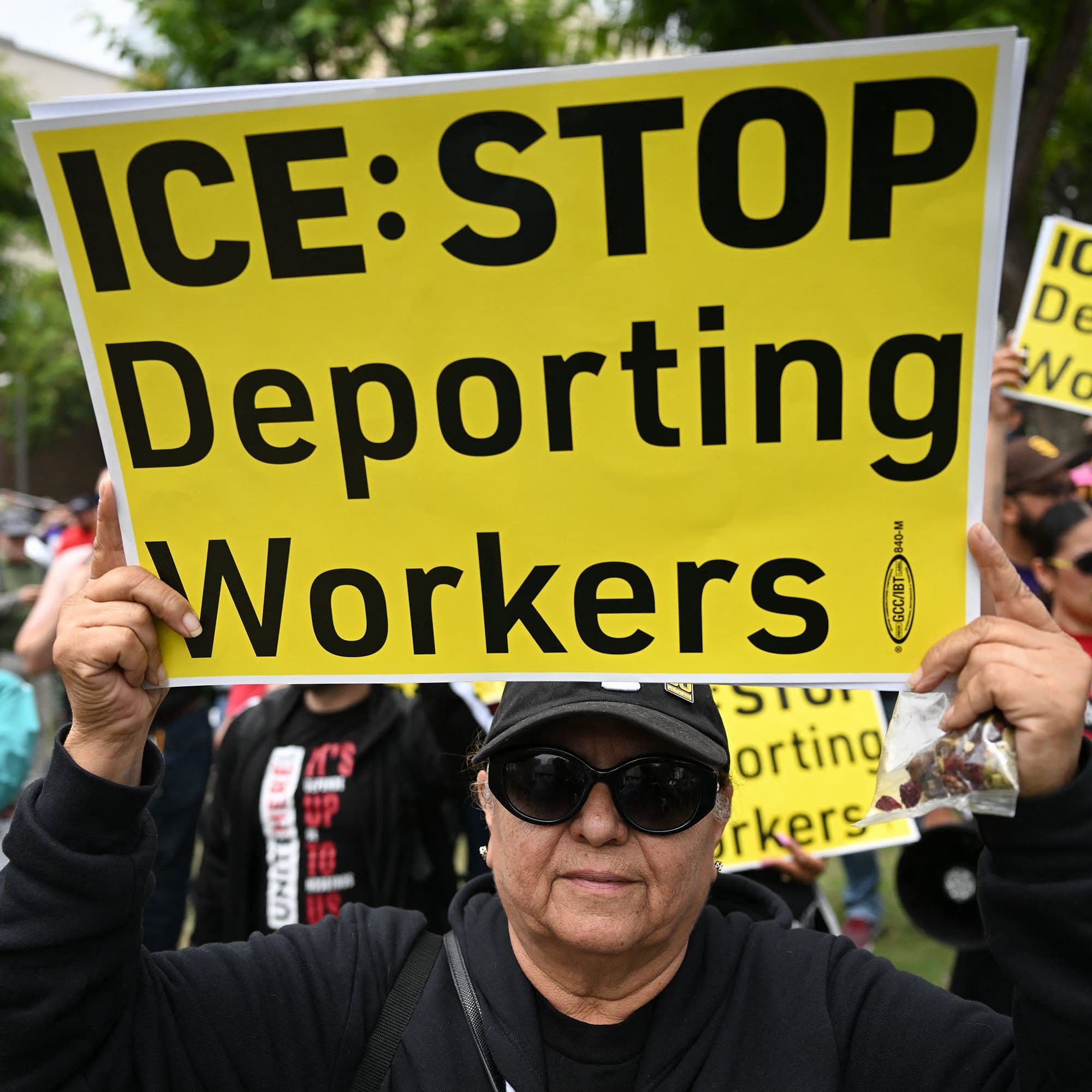
Loading summary
Transcript18 lines
- [00:01]
David Brancaccio
Hey there, and thanks for listening. We want to know more about our audience. Stick around at the end of this episode to hear about how you can help provide feedback and have a chance to walk away with a $75 gift card.
- [00:16]
Zoe Saldana
Hi, Zoe Saldana. Welcome to T Mobile. Here's your new iPhone 16 Pro on us.
- [00:20]
Kristen Schwab
Thanks.
- [00:21]
Zoe Saldana
And here's my old phone to trade in. You don't need to trade in. When you switch to T Mobile, we'll give you a new iPhone 16 Pro plus we're we'll help you pay off your old phone. Up to 800 bucks and you still get to keep it. There's always a trade end. Not right now. @ T Mobile. I feel like I have to give you something in return for karma. That's okay. I don't really have much in my purse. Oh, let's see. Hand sanitizer. It's lavender. I'm good.
- [00:43]
Kristen Schwab
Seriously.
- [00:43]
Zoe Saldana
Let me check this pocket. Oh, mints. Really, I'm fine. Oh, I have raisins. I'm a mom. Wait, wait one sec. I've got cupcakes in the car.
- [00:52]
Kristen Schwab
It's our best iPhone offer ever. Switch to T Mobile. Get a new iPhone 16 Pro with Apple Intelligence on us. No trade in needed. Pay off your phone up to 800 bucks with 24 monthly bill credits.
- [01:04]
Zoe Saldana
New line 100 plus a month on experience beyond Finance Agreement 999.99 and qualifying ported for well qualified plus tax and $10 connection charge. Payout via virtual prepaid card. Allow 15 days credits end and balance.
- [01:14]
Kristen Schwab
Due if you pay off early or.
- [01:15]
David Brancaccio
Cancel CT mobile.com could temporary work visas help fill jobs left empty after deportations? I'm David Brancaccio. By bedtime last evening, authorities had dispersed most of the protesters here in downtown Los Angeles and in of Santa Ana. The protests against federal government raids on workplaces in search of people in the US without permission were quieter and smaller scale yesterday compared to the weekend. The Trump administration has brought in National Guard troops against the California governor's wishes. And now 700 U.S. marines are being deployed in the region, something the police chief of Los Angeles is calling a significant challenge to his staff's ability to protect the city. And what do the federal workplace raids mean for jobs that need to get done marketplaces? Kristen Schwab has more of our coverage.
- [02:06]
Kristen Schwab
About a third of domestic workers in the U.S. those are nannies, house cleaners and caregivers are immigrants, and many are undocumented, says AI Jen Poo, president of the National Domestic Workers Alliance. People are afraid to go to work. Entire sectors of the economy will slow and there will be workforce crises. There already is one in healthcare, where a shortage of home health AIDS has been exacerbated by the pandemic and an aging population. It's kind of an all hands on deck situation where we're going to need a strong immigrant workforce and non immigrant. Undocumented immigrants work across many essential industries like hospitality and construction, jobs that often pay less and offer fewer rights for workers. 45% of agriculture workers are undocumented, according to the center for Migration Studies. Julia Jalatt is at the Migration Policy Institute. We know that immigrants tend to move where there are jobs, and they tend to move where they have social networks. Those essential industry jobs and social networks are especially prominent in California, a large state with a big economy and deep ties to Latin America. New York, Illinois, Texas and Florida also have high concentrations of undocumented immigrants. But Gillette is also worried the Trump administration's immigration policy will discourage legal immigrants who want to come to the US So specifically to work. Immigrants have high labor force participation rates, especially immigrant men. They tend to be higher than the US Born population, and the country will need more of those workers to fill the gap left by the loss of undocumented workers, says Daniel Costa, director of immigration law and policy research at the Economic Policy Institute. We're going to see a really big push by the employer community to replace a lot of these workers with temporary work visas. So programs like H2A and H2B visas, primarily used in agriculture, construction and hospitality. Big picture, costa says. These raids could hurt the labor market. Immigration enforcement does not help U.S. workers. It does not open up jobs. There's no evidence that that happens. A study from the University of Colorado, Denver estimated that for every 1 million workers deported, 88,000 U.S. native workers lost employment. With fewer workers, businesses have a harder time investing in expansion, and there are fewer consumers in the economy. I'm Kristen Schwab for Marketplace.
- [04:34]
David Brancaccio
A trial with big implications for the business of artificial intelligence has just begun in London. Do tech companies violate copyright when they scrape the Internet to train AI systems?
- [04:45]
Kristen Schwab
The trial began yesterday at London's High Court. Getty Images is suing Stability AI. The trial started with opening arguments from Getty. It says Stability trained its stable diffusion system on Getty's images. Stable diffusion creates images based on typed instructions or prompts from users. Getty accuses Stability AI of brazen infringement of its copyrighted material, adding that it didn't pay Getty anything. Court filings from Stability say the lawsuit is, quote, an overt threat to Stability's whole business and the wider generative AI industry. In congressional testimony, Stability has said it's protected by fair use laws and its use of image to train its systems doesn't interfere with the use and enjoyment of the original work. I'm Nancy Marshall Genser for Marketplace and.
- [05:37]
David Brancaccio
The performers union sag. AFTRA has reached a tentative contract with video game companies with the potential to end a strike by voice actors that's been going on for nearly a year now. Limits on cloning voices using AI without permission is thought to be part of this. Now to Japan, where prices for the staple food rice have soared after a weak crop, hoarding and lots of visitors. The BBC's Shama Khalil reports from a supermarket in Tokyo.
- [06:19]
Zoe Saldana
It's been a tough couple of years for Japanese households. They've struggled with inflation, high prices, stagnant wages and a sluggish economy. And yet not many could see the rice crisis coming. Hiromichi Akiba is the owner of the Akidai supermarket chain. He tells me this really hit Japanese families where it hurt.
- [06:40]
Kristen Schwab
Honestly speaking, our customers are in trouble. Many other things like food prices had gone up then the rice, which had been inexpensive, went up so sharply.
- [06:52]
Zoe Saldana
I'm looking at the rice shelves close to the till. Unlike other supermarkets, this one still has some bags left. But like all other supermarkets, the prices have doubled since last year. Images of long lines of people queuing up to get their hands on a bag of rice shock the public here. Momoko Abe is here shopping with her four months old baby. As you know, like it's a staple in our lives and it's like it's something that we haven't really, I mean, maybe sort of like take it for granted. And it was quite shocking that the price could rise within such a short period of time. The government has started releasing rice from its emergency natural disaster reserve, but it's been very slow getting to consumers. So how is it that a country so famous for its high quality rice end up here? Climate is a part of this dim picture. The rice harvest in 2023 was compromised by extreme heat which affected the supply. Overtourism also played a part. Last year, Japan received a record of nearly 40 million visitors, putting increased pressure on rice demands. Also in 2024, Japanese families were jolted when a warning was issued of a possible mega quake which triggered hoarding and panic buying.
- [08:04]
David Brancaccio
Shama Khalil with our editorial partners at the BBC in Los Angeles, I'm David Brancaccio. It's the Marketplace Morning Report from APM American Public Media. Really quick. Before you go, please complete a short anonymous survey by going to marketplace.org survey. It should only take about 10 minutes, and as a token of our appreciation, you can enter your name to win a $75 gift card. When you've completed the survey, you do all of us at Marketplace a huge favor by filling it out.