← Marketplace Morning Report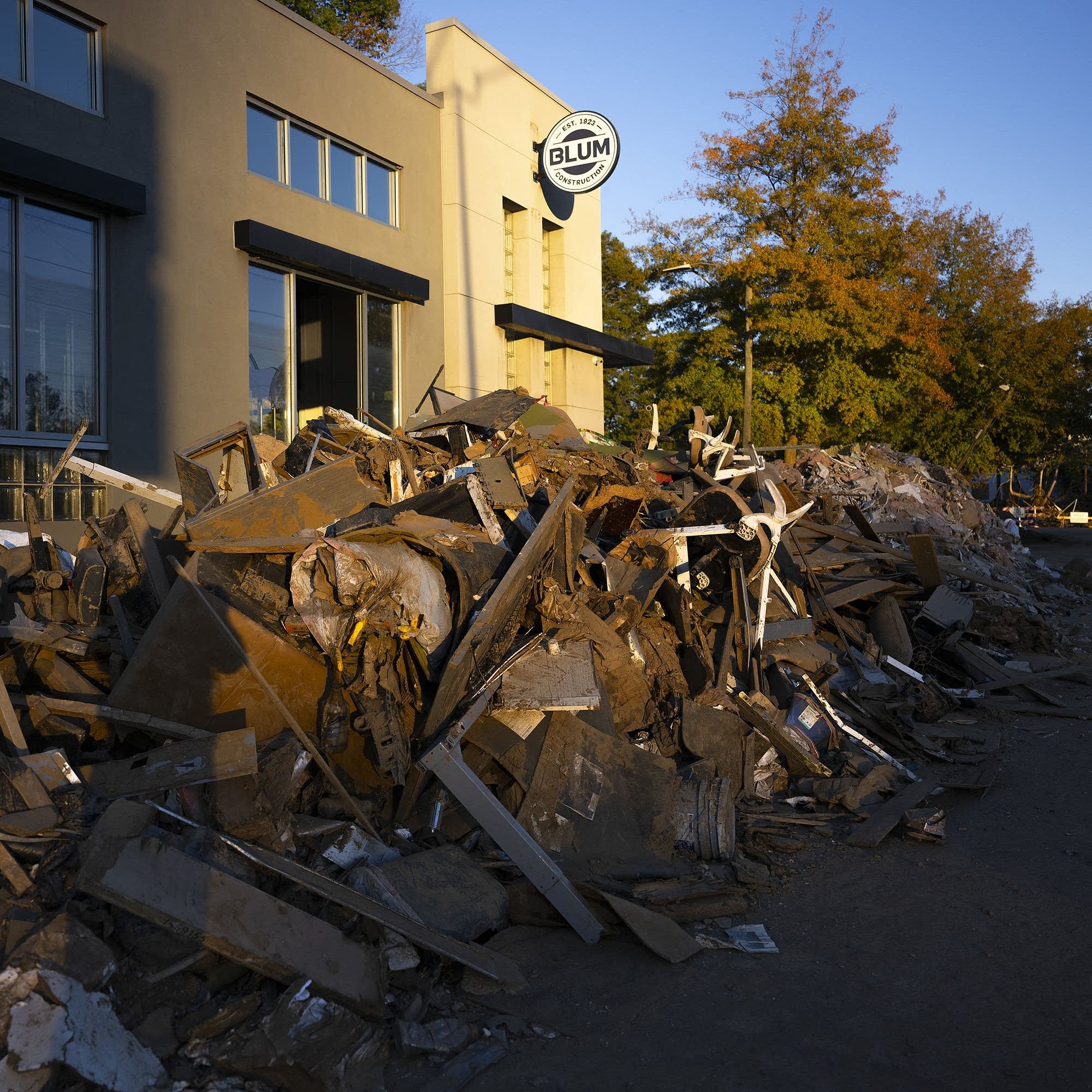
Loading summary
Transcript32 lines
- [00:00]
Joshua McNichols
Next level pet people will do anything for their dogs. That means treating them with next level.
- [00:05]
David Brancaccio
Protection from parasites with nexguard Plus, a.
- [00:08]
Joshua McNichols
Foxalaner, moxidectin and pyrantal chewable tablets. Nexguard Plus Chews provide one and done monthly protection against fleas, ticks, heartworm disease, roundworms and hookworms, all in a tasty beef flavored chew used with caution in dogs with a history of seizures or neurologic disorders.
- [00:24]
David Brancaccio
Dogs should be tested for existing heartworm.
- [00:26]
Joshua McNichols
Infection prior to starting a preventive. Ask your vet about nexguard.
- [00:29]
David Brancaccio
Choose. Here in Seattle, we're building the technologies of the future, from AI to clean energy.
- [00:38]
Monica Nickelsberg
But we're also dealing with some of today's biggest challenges like the housing crisis and the skyrocketing cost of living.
- [00:44]
Joshua McNichols
We're here to break it all down for you. I'm Joshua McNichols.
- [00:48]
Monica Nickelsberg
And I'm Monica Nickelsberg. Join us on Booming, a weekly podcast from KUOW about the economic forces shaping our lives here in the Pacific Northwest.
- [00:57]
David Brancaccio
Listen on the KUOW app or wherever.
- [01:00]
Joshua McNichols
You get your podcasts.
- [01:03]
David Brancaccio
We're tracking trade and market reaction to the giant Moneyball about to pass Congress. I'm David Brancaccio in Los Angeles. President Trump says the US has reached a trade deal with Vietnam. This is one of many agreements the White House is trying to hammer out before higher tariff rates on hundreds of countries snap back into place, possibly the middle of next week. Marketplace's Nancy Marshall Genzer reports.
- [01:28]
Monica Nickelsberg
Details on the Vietnam agreement are scarce. In a social media post, President Trump says there'll be a 20% tariff on imports from Vietnam and a 40% tariff on transshipped goods, that is products that pass through Vietnam on their way to the U.S. that provision appears to be aimed at Chinese manufacturers trying to avoid steep tariffs on products from China. Trump says Vietnam also agreed to drop all tariffs on things it imports from the U.S. in his post, Trump talked about increasing exports of American American made SUVs to Vietnam, but it's not clear that Vietnamese consumers could afford that. Former President Biden also negotiated a trade deal with Vietnam after visiting the country in 2023. I'm Nancy Marshall Genser for Marketplace.
- [02:17]
David Brancaccio
Stocks in Vietnam based companies are trending higher this morning as you might expect more evidence now that the U. S. China trade truce is sticking. American companies that do high tech semiconductor design are resuming business with Chinese customers. Our editor editorial partners at the BBC are following this for us. Here's Katie Silver.
- [02:36]
Katie Silver
Synopsys and Cadence Design Systems of two of the world's most important companies when it comes to chip design, and they're both American. They've told the BBC that they've received notices from the U.S. commerce Department now allowing them to sell their software to China. The Trump administration stopped this in May as part of a number of measures in response to Beijing limiting rare earth exports. Semiconductors, or chips have been a sticking point in relations between Beijing and Washington. Three years ago, President Biden the US Implemented export controls on many advanced chips and chipmaking technology. Citing national security concerns, the companies say they are now working to restore access to the products in China. Rival chip design software giant SIEMENS and the U.S. commerce Department did not immediately respond to a BBC request for comment.
- [03:25]
David Brancaccio
Katie Silver reporting there. As you've been hearing, the big tax cutting and program cutting bill has cleared a procedural obstacle, with a final vote likely this morning. S and P and Nasdaq future futures are essentially unchanged at the moment. Dow futures are up just slightly ahead of the big hiring and unemployment reports due in just over an hour and a half. Forecasters are expecting 100,000 more people on payrolls during the month of June, but a private sector hiring report yesterday showed surprising weakness. We'll see how that resolves. Interest rates are lower this morning with bonds up the 10 year is down at 4.26%.
- [04:21]
Joshua McNichols
This Marketplace podcast is supported by Dell. The Black Friday in July event from Dell Technologies is here. There's never been a better time to upgrade. Now's your chance for great offers on popular trusted technology. You'll also discover huge deals on exciting new AI ready laptops like the Dell 14 plus featuring Intel Core Ultra processors starting at $699.99. Don't forget to explore big savings on top electronics and accessories. Plus enjoy fast free shipping and other exclusive benefits like Dell Rewards Premium Support and Dell care Premium, which provides 24.7support with no hidden fees or deductibles. Upgrade for a limited time only@dell.com deals that's Dell.com deals greetings Marketplace listeners. It's Neil Scarborough, Vice president and General Manager of your favorite business shows. I'm coming to you today with an opportunity to help shape the future of economic journalism and philanthropy. Marketplace's parent company, American Public Media, is looking for board members and we'd like to invite listeners like you to join either the APM Board of Trustees or the Marketplace Philanthropic Council. If you believe in our mission to raise the economic intelligence of the nation, and if you love building community through public media, we're looking for strategic innovative leaders to help ensure that Marketplace continues to evolve and expand its reach and impact across the country. Applications are open now through July 6th. Visit marketplace.orgboard to learn more. Thanks for your consideration and thanks for listening.
- [06:06]
David Brancaccio
Now to the economics of rebuilding after natural disaster. This is something that businesses in Asheville, North Carolina have been facing since the fall after the most destructive storm in state history, Hurricane Helene. Blue Ridge Public Radio's Laura Hackett reports.
- [06:22]
Monica Nickelsberg
On the rebuild Before Hurricane Helene, the waterfront of the French Broad river was a bustling, colorful destination in Asheville's arts district. We got about 16ft of water in the building and so the front of the building fell off. Mark Oliver is talking about his woodworking studio, which was housed in an old leather tannery. It's one of hundreds of structures in the county that were damaged. He did not have flood insurance and he thought his business was done for. I was gonna quit and go work for a friend. But just before filing for bankruptcy, his church stepped in. Volunteers donated labor and money to rebuild and made him a makeshift studio space, a massive industrial tent. It seems crazy, cause it is crazy. Local artists also use the space. Today the tent is abuzz with woodworkers sawing and hammering everything from shelves and bowls to acoustic guitars. The second we got our power hooked up, it's like so nice and freeing and it's just nice to work again. The tent is temporary. Oliver is repairing his original workshop and hopes to reopen this summer with a better drainage system and stronger roof. I've got one major rebuild and me, because the conversation is if we ever.
- [07:32]
Joshua McNichols
Get this much water again, I'm out.
- [07:34]
Monica Nickelsberg
Rebuilding is expensive, but it's crucial to do it thoughtfully, says Lisa Raleigh. She directs a nonprofit that works to protect the French Broad river. Because unless you have people invested in a river, unless you bring an economy to a river, sometimes it's harder to get people to care and protect the asset. And she wants Asheville to remember that another quote thousand year flood could happen at any time. Hurricanes and other tropical storms are getting bigger and wetter and are moving further inland into mountainous areas. So businesses should rebuild with the expectation that they'll flood again. This is a chance for us to.
- [08:11]
Joshua McNichols
Sort of rethink the way that we're doing things.
- [08:13]
Monica Nickelsberg
Devin dehal is resurrecting his rock climbing gym, an airy concrete building that filled with 10ft of water in the storm. It's a shell of its former self.
- [08:22]
Joshua McNichols
I mean, you can see the bones are still okay. The steel structure is fine.
- [08:25]
Monica Nickelsberg
They're getting creative about flood proofing The H Vac system will be near the top of the building and it'll have tall, bright windows.
- [08:33]
Joshua McNichols
Next time, if it were to flood, it'll break the windows and the water will flow through the building and it won't knock the walls down.
- [08:41]
Monica Nickelsberg
So when the next flood comes, the new waterfront will be built for it. The idea is that by owning the risk, business owners may save in the long run. In Asheville, North Carolina, I'm Laura Hackett.
- [08:52]
David Brancaccio
For Marketplace and Next week marks six months since one of this year's Southern California wildfires started. An investigation into the power company's and starting the Eaton fire is ongoing. Southern California Edison's CEO told investors in May it is probable the company will incur material losses. Utilities in California paid into a common fund to handle lawsuits when power companies cause wildfires. The eden firestorm destroyed 9,400 structures, mostly homes. Another 6,800 structures were destroyed in the Palisades fire. To the west, where the power company is not implicated, Southern California Edison Stock is down 34% since just just before the January fire. In Los Angeles, I'm David Brancaccio, Marketplace Morning Report from APM American Public Media.
- [09:45]
Monica Nickelsberg
This Old House Radio hour is your new home improvement podcast. In each episode, we answer your questions. Whether you're fixing a leak, refinishing a floor or restoring a century old house, our roster of experts have the answers to help you get the job done right. I never thought I'd be saying this to a bunch of people I'm just meeting, but I have a stinky house.
- [10:04]
Joshua McNichols
Tell us more.
- [10:05]
David Brancaccio
I want the details.
- [10:08]
Monica Nickelsberg
Find this Old House Radio Hour in your favorite podcast. Applause.