← Marketplace Morning Report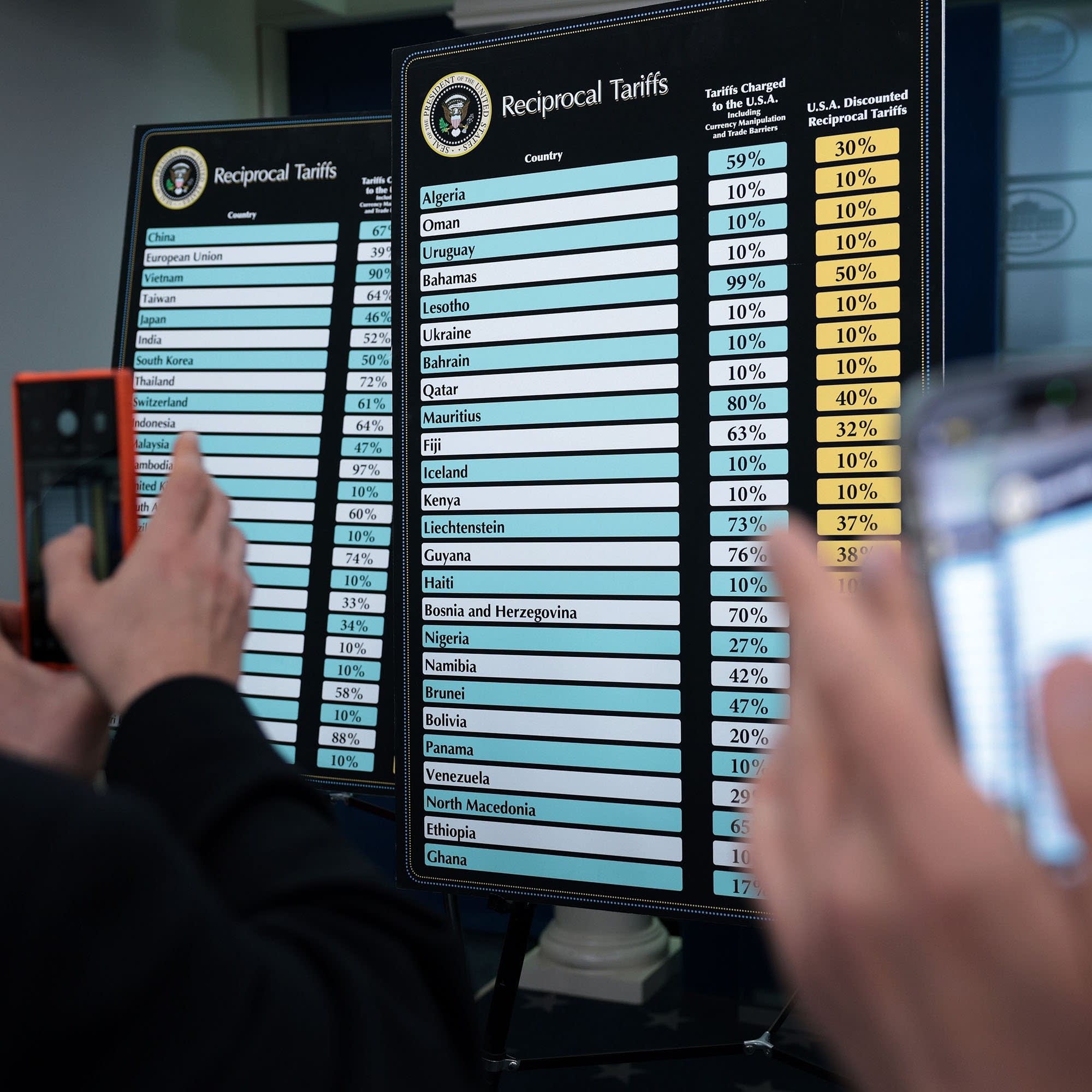
Loading summary
Transcript28 lines
- [00:00]
Bridget
For 140 years, MultiCare has been in Washington prioritizing long term solutions, partnering with local communities and expanding access to care. Together, we're building a healthier future.
- [00:13]
Odoo Sponsor
Learn more@ multicare.org this podcast is supported by Odoo. Some say Odoo business management software is like fertilizer for businesses because the simple, efficient software promotes growth. Others say Odoo is like a magic beanstalk because it scales with you and is magically affordable. And some describe Odoo's programs for manufacturing, accounting and more as building blocks for creating a custom software suite. So Odoo is Fertilizer Magic Beanstalk building blocks for business. Odoo exactly what businesses need sign up@odoo.com that's o d o-o.com the Whitewater Rapids.
- [00:49]
David Brancaccio
Of Changing tariffs for businesses that get parts from overseas I'm David Brancaccio in Los Angeles. In a test over limits to a president's power to act without Congress. Oral arguments are set for tomorrow in the US Supreme Court over a subset of the Trump administration's import taxes, the ones dubbed reciprocal tariffs. Ahead of that, we continue to talk to businesses benefiting or losing out to the highest U.S. tariffs since the 1930s. Today, not your grandfather's folding camp chair, it's a Pennsylvania based business with a global supply chain called True Places. The chairs are pricier than most and I will say nicer than most, like for camping or tailgating, that kind of thing. Ben Kneppler is co founder. Welcome.
- [01:33]
Ben Kneppler
Thanks for having me.
- [01:34]
Interviewer
So look, there was a long stretch some years ago where a US Based company could set up a supply chain somewhere in the world and set it and forget it. Like you could have that relationship for years. You've had to, I think, refine your supply chain, what quite a bit in recent years.
- [01:53]
Ben Kneppler
When we started the company, the entire category of this kind of product is all made in Asia, primarily in China. From the beginning we were trying to figure out alternatives to that. Last year we finally found a viable alternative in Cambodia. So outside of China, took us about a year to move and transition our manufacturing from China to Cambodia. And then yeah, we've been getting hit with a lot more tariffs again this year.
- [02:24]
Interviewer
Yeah, with the shifting tariff landscape Cambodia, there's a tariff that is now a lot higher than it was to start the year right.
- [02:33]
Ben Kneppler
In the last six months, the tariff rate on products like we make in Cambodia coming into the US has gone from 0% to 49% to 10% to 36% to 19% plus all kinds of other threats and other tariffs. So it's really impossible to plan when you've got no idea what that's going to look like tomorrow.
- [02:59]
Interviewer
Ben, would you manufacture in, for instance, Pennsylvania, you know, in the United States if the numbers worked out? Shorter supply chains would minimize the risk.
- [03:10]
Ben Kneppler
Of course, if we could, we, we would. But the manufacturing for our category of products just doesn't even exist in, in the US So we'd have to create all of these interconnected supply chains that don't currently exist. If they did exist, the costs would be orders of magnitude higher.
- [03:30]
Interviewer
And be clear, you have U.S. employees. It's just they're not actually making the chairs.
- [03:35]
Ben Kneppler
That's, that's the, the irony of this situation is that we're a US Company, we do pretty much everything in the US except for just the manufacturing and assembling of, of our chairs. You know, if we go out of business, then all of those other businesses that we do, those other functions within the US Also get hit.
- [03:57]
Interviewer
Are you watching this Supreme Court case at all? Because there's a chance, right, that some of these tariffs are ruled illegal and the numbers change Again, I think the.
- [04:08]
Ben Kneppler
General feeling speaking to other business owners and other founders and others in the industry is that even if it's ruled illegal in this case, this administration will find other ways to get to the similar kind of outcome we've seen over the past few months. The exact rules and the tariff rates change on an almost daily basis. And so this court case feels consequential on the one hand, but also feels just like another change that we don't know where it's ultimately going to end up or just continue changing over time.
- [04:48]
Interviewer
Ben Kneppler, co founder of the Pennsylvania outdoor chair company True Places, thank you so much.
- [04:54]
Ben Kneppler
Thank you for having me.
- [04:56]
David Brancaccio
Again, tariffs are import taxes that raise.
- [04:59]
Interviewer
Money for the Treasury.
- [05:00]
David Brancaccio
The Trump administration has responded to a court order ordering the US Government to use emergency funds to pay partial food stamp benefits for November. In a filing yesterday, the administration said more than $4 billion in emergency funds would cover about half of the monthly payments for the approximately 42 million Americans who rely on food aid. It's unclear when the payments will land for struggling families.
- [05:46]
Lowe's Sponsor
If your vibe is the earlier, the better. Lowes early Black Friday deals are a no brainer. Get up to 35% off select major appliances and rewards. Members get free delivery, haul away basic installation and a two year Lowe's Protection Plan. When you spend $2,500 or more on select LG major appliances valid through 11.4Loyalty program, subject to terms and conditions. Visit lowe's.com terms for details. Subject to change. LG Member Offer excludes Massachusetts, Maryland, Wisconsin, New Jersey and Florida. Selection varies by location. Select locations only while supplies last. See lowe's.com for more details.
- [06:17]
David Brancaccio
Elon Musk got some bad news from a huge investor today. Norway's massive sovereign wealth fund has voted against Musk's pay package, Marketplace's Nancy Marshall Genzer reports.
- [06:27]
Nancy Marshall Genzer
Tesla is scheduled to hold its annual meeting this Thursday, but shareholders can cast their ballots early on things like the nearly trillion dollar pay package Tesla wants to give Elon Musk. Musk would have to increase Tesla's value to $8.5 trillion to get the raise. Tesla says the pay package is, quote, designed to retain Elon for years to come. Norway's sovereign wealth fund says it voted against the proposal, though, because it was concerned about the total size of the award. It also says Tesla didn't do anything to mitigate what it called key person risk. That is a situation where a company depends too much on one person, in this case, Elon Musk. The fund says it will continue to seek constructive dialogue with Tesla. It owns a little more than 1% of the company, a stake worth more than $11 billion. I'm Nancy Marshall Genser for Marketplace.
- [07:22]
David Brancaccio
Our producers are Tamar Fagan, Ashley Rodriguez, Ariana Rosas and Erica Soderstrom. Ariel Our senior producer is Alex Schroeder. Our supervising senior producer is Meredith Garretson Morby In Los Angeles, I'm David Brancaccio. This is the Marketplace Morning Report.
- [07:45]
Ben Kneppler
From.
- [07:45]
David Brancaccio
Apm American Public Media.
- [07:49]
Bridget
Hey everyone, it's Bridget, host of Million Bazillion, a podcast from Marketplace. You've probably heard about the government shutdown, but if you're anything like our young caller Esme, whose dad is a federal worker, you might still have questions.
- [08:03]
Esme
I've noticed that my dad hasn't been going to work and I don't know when the government shutdown will stop and my dad can go back to work.
- [08:12]
Bridget
We can help tune into our recent episode where we explain what you and the young ones in your life need to know about government shutdowns. Listen to Million Bazillion on your favorite podcast app.