← Marketplace Morning Report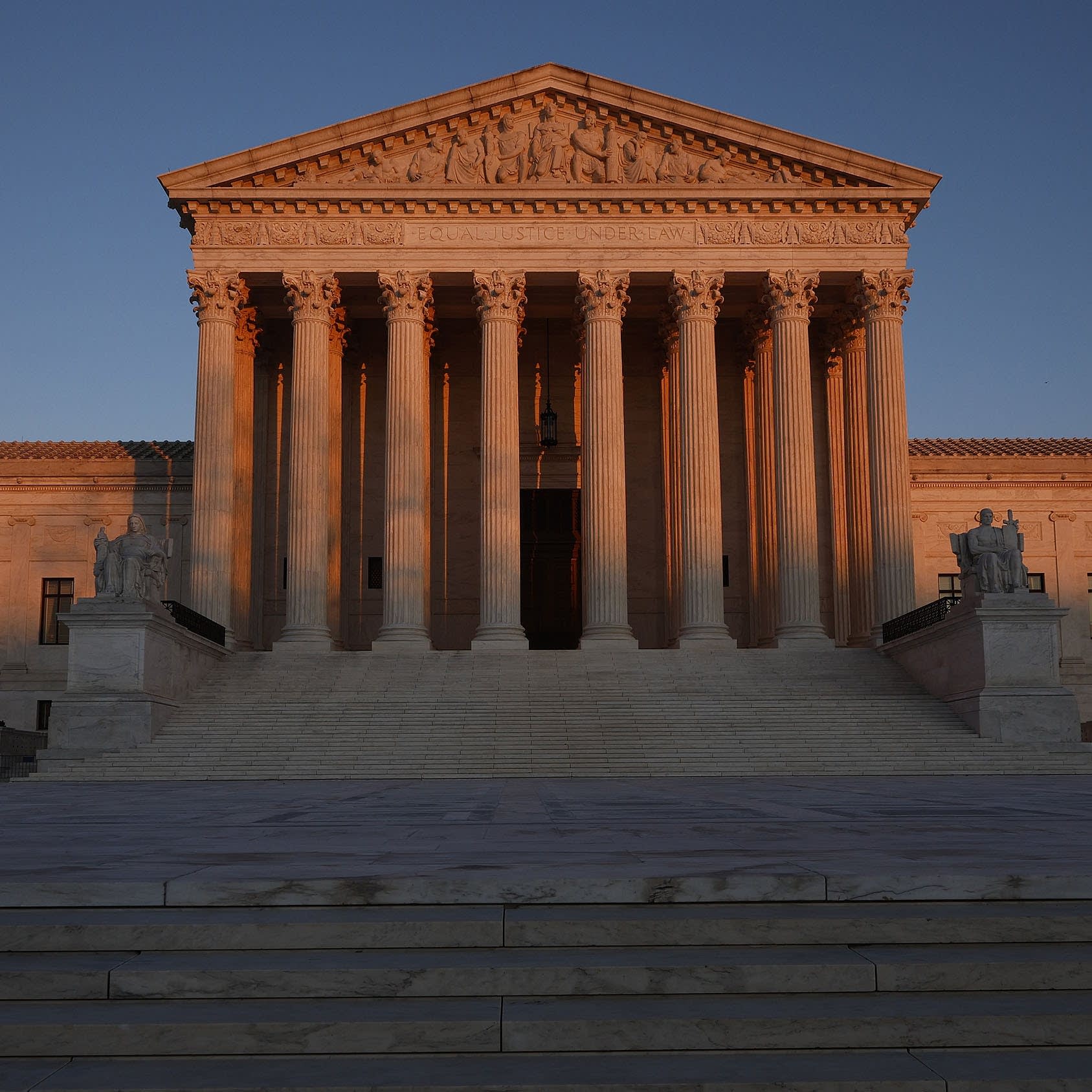
Marketplace Morning Report
How the Supreme Court ruling on nationwide injunctions impacts businesses
00:06:56
Loading summary
Transcript1 lines
- [00:00]
Nancy Marshall Genzer
This Marketplace podcast is supported by Dell introducing the new Dell AI PC. Powered by Intel Core Ultra processor. It helps do your busy work for you so you can fast forward through editing images, designing presentations, generating code, debugging code, summarizing meeting notes, finding files, managing your schedule, responding to long emails, leaving all the time in the world for the things you actually want to do. Get a new Dell AI PC starting at $699.99 at Dell.com AI PC how those ahead Stay ahead. It's called protein degradation and if you're a bad protein in a cancer cell, you'd better get your affairs in order because now, thanks to Dana Farber's foundational work, protein degradation can target cancer causing proteins and destroy them right inside the cell. This take no prisoners approach is making a difference in multiple myeloma and other blood cancers and is how Dana Farber is working to treat previously untreatable cancers. Learn more@danafarber.org Everywhere the Supreme Court weighs in on Obamacare again. From Marketplace, I'm Nancy Marshall Genser in for David Boncaccio. The Supreme Court released an important decision involving the Affordable Care act last week. It involves what types of preventive care can be mandated for coverage as part of health insurance plans and who gets to decide that. Marketplace's Mitchell Hartman joins me now with the details. Hi Nancy. So the Affordable Care act has ended up in front of the Supreme Court three times before this. What was this case about? Well, it was basically a dispute about what kinds of preventive health care so that screenings, medications and treatments have to be covered for free as part of private health insurance plans. It was an argument brought by conservative opponents. They claimed that the federal task force of independent medical experts that was set up to determine that mandatory bundle of preventive health care was itself unconstitutional. And in a 6 to 3 decision, the court upheld the task force's authority, meaning that a bunch of preventive care will continue to be mandated. So what are we talking about here? What types of care? Well, the plaintiff's group of employers and individuals objected in particular to having to pay for coverage of things like prep, which is a pre exposure prophylactic treatment that can be used to prevent HIV transmission. But under this ruling, the task force's inclusion of that treatment is legal because the task itself is constitutional. Huh. So what else is at stake here then? Well, advocates for preventive care are cheering because by extension, a whole range of care is also upheld and free. So that's cancer and diabetes screening, meds for stroke prevention and heart health Even ointments given to newborns to prevent eye infections. Well, thanks, Mitchell. You're welcome. With a big travel period coming up this Fourth of July weekend, some travelers will be swapping pricier, busier destinations. For less are known locations with a similar vibe, like, say, Albania instead of Italy. These are called destination dupes and they're among this year's travel trends. Marketplace's Elizabeth Troval reports. Sometimes a dupe can be better than the original. That was true for Mary Hines Drosch with Bank of America. After she went to the crowded, expensive Greek island of Santorini, she checked out its lesser known counterpart, Poros. I got a really nice hotel at a fraction of the cost. The food was just as great and really immersed myself in the Greek culture at a much lower price. Millennials are leading this trend. According to bank of America survey data, 6 in 10 say they choose a budget friendly destination over a more popular spot. Everyone has felt the impact of inflation and travel has become very, very expensive. And so when you do something that's lesser known, it's less expensive and that helps. And you don't have to go abroad to experience the destination dupe. Melanie Fish with Expedia recommends Charleston, South Carolina. It's Europe without the jet lag. It has that Lisbon charm and elegance, but no passport required, she says. The hunt for a just as cool hidden gem is an enduring trend, one that's been amplified by social media. I'm Elizabeth Trovall for Marketplace. Hi, Zoe Saldana. Welcome to T Mobile. Here's your new iPhone 16 Pro on us. Thanks. And here's my old phone to trade in. You don't need to trade in. When you switch to T Mobile, we'll give you a new iPhone 16 Pro. Plus we'll help you pay off your old Phone up to 800 bucks and you still get to keep it. There's always a trade end. Not right now. At T Mobile. I feel like I have to give you something in return for karma. That's okay. I don't really have much in my purse. Oh, let's see. Hand sanitizer. It's lavender. I'm good. Seriously. Let me check this pocket. Oh, mints. Really, I'm fine. Oh, I have raisins. I'm a mom. Wait, wait one sec. I've got cupcakes in the car. It's our best iPhone offer ever. Switch to T Mobile. Get a new iPhone 16 Pro with Apple Intelligence on us. No trade in needed. Even pay off your phone up to 800 bucks with 24 monthly bill. Credits new line 100 plus a month on experience beyond Finance Agreement 999.99 and qualifying forwarded for well qualified plus tax and $10 connection charge payout via virtual prepaid card allow 15 days credits end and balance due if you pay off early or cancel CT mobile.com lawyers all over the country spent the weekend sorting out what the latest Supreme Court rulings will mean for the US and the economy. One of Friday's decisions limits the circumstances under which lower courts can issue nationwide Injun. The case was about the executive order related to birthright citizenship, but Marketplace's Kimberly Adams reports there are also consequences for businesses and consumers. The Supreme Court didn't outright ban lower courts from putting a nationwide stop on federal policies while the cases play out. But the majority argues class action lawsuits are a better way to make that happen. Andre Harris is general counsel at the Competitive Enterprise Institute. Now if the class is big enough, they can still get a national injunction. But the court's ruling just helps narrowly tailor injunctions for those who should be properly covered before let's say there was a business rule or environmental regulation a bunch of people or businesses didn't like, a group representing them could go to court and seek a nationwide injunction on their behalf. Groups such as the Sierra Club or the ACLU that have members across the entire nation say we as entities aren't being harmed by this legal provision, but our members are. Michael T. Morley is a law professor at Florida State University. And so we're suing to enforce our members rights. We have lots of members. They're spread across the entire country. But now the Supreme Court wants lower courts to limit their rulings to the people actually involved in the case and to be careful about what constitutes a class. So moving forward, we may see multiple injunctions applying only to named plaintiffs. Becca Brett is an associate at the law firm Clifford Chance, which could result in kind of a fragmented judicial environment, causing businesses to have to react in different ways depending on which jurisdiction they're in. Whereas in the past a trade association could get a nationwide injunction by arguing that a bunch of businesses could be harmed by something, now it looks like individual businesses would have to together in a class and really prove they would be harmed to argue for a broader hold on a policy, we're going to see a lot more class actions in the future on behalf of businesses. Which may sound ironic because we always hear about businesses defending against plaintiff class actions. Anthony Sanders is with the Institute for Justice, a nonprofit public interest law firm. That's not always practical, though. Class actions add all kinds of costs to lawsuits. And with all the extra costs and paperwork Sanders expects, what's more likely to happen is that fewer people and companies will even bother challenging policies at all. In Washington, I'm Kimberly Adams for Marketplace. In a FOX News interview on Sunday, President Trump said he's found a buyer for TikTok. He said the unnamed buyer was a group of very wealthy people. He went on to say the deal is still developing and would probably need China's approval. I'm Nancy Marshall Genzer with the Marketplace Morning Report from apm American Public Media. Hey there, it's Ryan, co host of Million Bazillion, a podcast that answers your kids big questions about money. This week, we're kicking it old school and taking questions from million Bazillionaires in this super special show. I was wondering how much people in the government, like the president, makes and how do they decide? How do airlines determine the price of a ticket? Where did the penny get its name? Plus, Bridget and I put some old cassette tapes to good use. Listen to Million Bazillion wherever you get your podcast.