← Marketplace Morning Report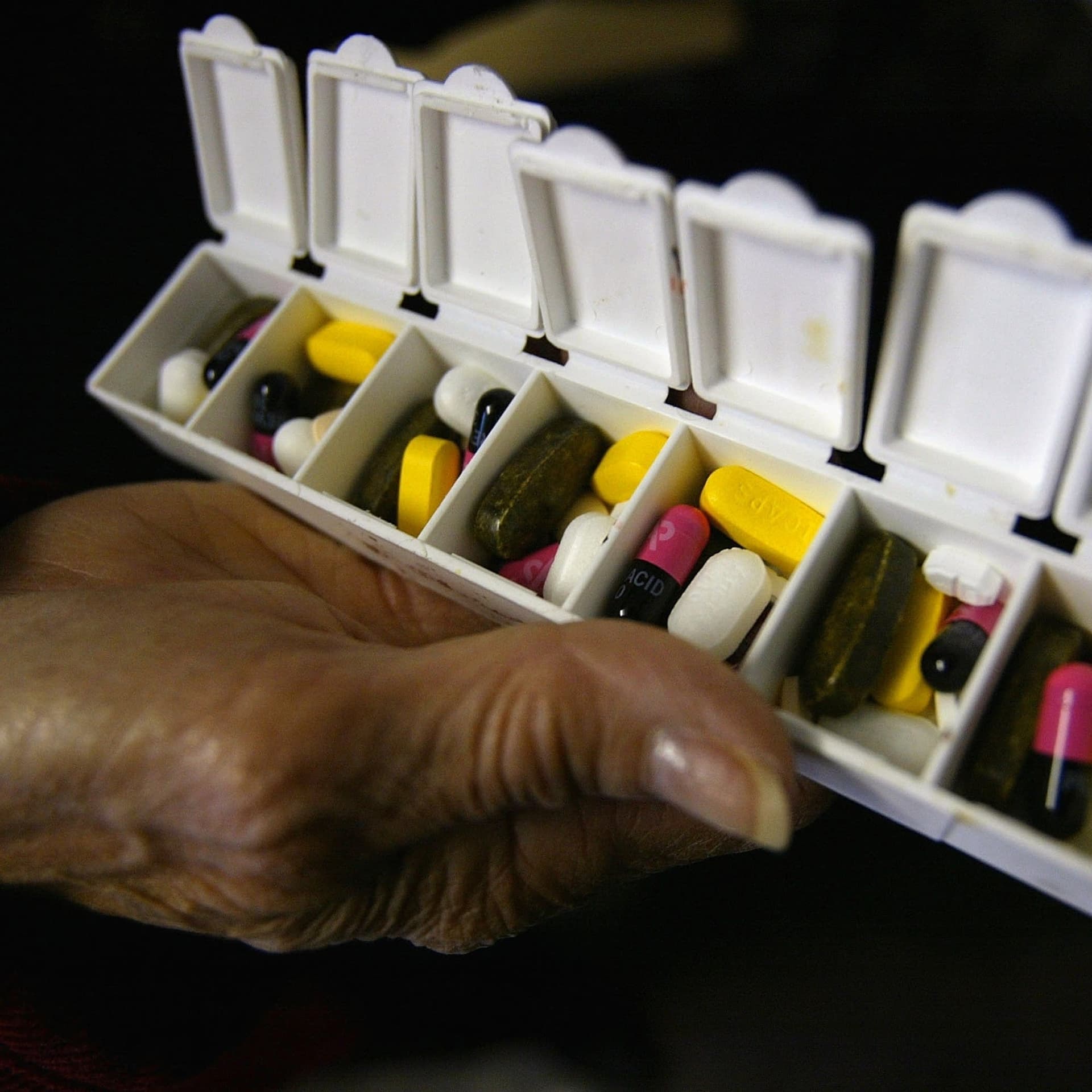
Loading summary
Transcript28 lines
- [00:01]
Samantha Fields
On WhatsApp, your personal messages stay private between you and whoever you send them to. So things like the passport numbers for your honeymoon stay between you and your fiance and that video call for your gran's 80th stays in the family. Even your streaming password stays between you and your college roommates, who still ask for it every week in your group chat. Because on WhatsApp, your personal messages are yours. No one else can see or hear them now, not even us. WhatsApp message privately this Marketplace podcast is supported by Yubico, makers of the Yubikey protecting the personal and business applications and accounts that people and companies rely on every day. The Yubikey stops AI powered cyber attacks, online identity scams, fraud and account takeovers. It provides powerful protection and it's easy to use. Simply tap your Yubikey to log in securely to everything from email to finance to productivity applications across all of your devices. Yubikey still undefeated. The original Passkey more@yubico.com.
- [01:10]
David Brancaccio
New US import taxes now in Pill Form I'm David Brancaccio in Los Angeles. President Trump has been promising tariffs on pharmaceuticals for months. The this week he was on TV saying he's planning what he called a small tariff at first on imported prescription drugs, then raising it to maybe 250% over the next year or so. Marketplace's Samantha Fields reports on what this emerging and possibly evolving plan could mean for patients who take the medicine.
- [01:40]
Samantha Fields
90% of prescriptions filled in the US every year are generics. John Murphy at the association for Accessible Medicines says that includes most pills you'd get at the pharmacy, like blood pressure drugs and statins.
- [01:52]
David Brancaccio
We manufacture about 45% of the pill needs for patients in the United States, and the rest of that is of.
- [01:59]
Samantha Fields
Course imported from India, Europe and China.
- [02:02]
David Brancaccio
So it's a pretty global supply chain.
- [02:05]
Samantha Fields
That's also true for injectable medications you might get at the hospital, like IV fluids and many cancer drugs. Marta Voschinska at Brookings says it's a different story with more expensive brand name drugs.
- [02:16]
David Brancaccio
The manufacturers that make branded products tend to have facilities on both sides of.
- [02:21]
Samantha Fields
The pond, and she says it would be easier for those companies to move more production to the US if necessary than it would be for makers of cheaper generics. Mariana Sokal at the Johns Hopkins School of Public Health says it would also be easier for makers of brand name drugs to absorb tariffs.
- [02:36]
David Brancaccio
But for generic drugs, you know, they are not patented, very cheap drugs. The markup for the drug manufacturer is not that high, and manufacturers are already squeezed in their profits for these drugs.
- [02:49]
Samantha Fields
So with tariffs, Marta Wosinska at Brookings says they could start losing money.
- [02:54]
David Brancaccio
The cost that I worry about is not that prices for generics might increase, it's that manufacturers just might throw their hands up and say, you know, I.
- [03:02]
Samantha Fields
Don'T want to sell in the US Market and that drug shortages could become more common. I'm Samantha Fields for Marketplace.
- [03:10]
David Brancaccio
Assuming there is no way a product near and dear to your heart would ever face a Trump administration tariff as a risky bet. These days, professionals in the gold market fully believe their precious metal would never be tariff since the US Itself doesn't produce much gold anymore. But surprise, there will be a tariff on 100 ounce and 1 kilo gold bars. And that news for a time overnight sent the price of gold above $3,400 an ounce all time high. Economist Christopher Lowe is at FHN Financial. I read it and I chuckled this morning because of course, you know, most of the gold that's traded is mined outside the U.S. i suppose, you know, in a way it's a foreign produced product just like so many other things. I think, though on a more serious note, gold does have industrial uses. And so, you know, it's one more way that costs are going to increase. And unlike other things, cars for instance, which you could just increase manufacturing capacity here in the U.S. you know, the problem with producing more gold domestically is you have to find it first. Economist Christopher Lowe if I do come up with a gold nugget panning in a California stream this weekend, I hereby pledge to donate it to public broadcasting. During these times of special need for the ones who get it done, the most important part is the one you need now and the best partner is the one who can deliver. That's why millions of maintenance and repair pros trust Grainger because we have professional grade supplies for every industry, even hard to find products. And we have same day pickup and next day delivery on most orders. But most importantly, we have an unwavering commitment to help keep you up and running. Call clickranger.com or just stop by Granger for the ones who get it done. Now to a central African country prioritizing sports at a time of other major challenges. The Democratic Republic of Congo has a refugee crisis and at the same time the UN says a peace deal to address a decades long conflict with Rwanda is in jeopardy. Yet the Congo government is opting to spend big on the sponsorship of soccer, what the world calls football. The the BBC's Will Chalk has that story.
- [05:48]
Will Chalk
A Barcelona FC training session with cameras snapping pictures of the players for sports websites and the next day's newspapers. Pictures that will likely be seen by millions around the world. In other words, a great advertising opportunity. And from next season, the team's training tops will have Dr. Heart of Africa written on them. It it's part of a four year sponsorship deal and the Congolese government says it will raise the profile of the country. But it's not come cheap at around $50 million. And the DRC has already splashed out on similar deals with Italian side AC Milan and French team AS Monaco. Money well spent. We asked people in the country's capital, Kinshasa, it's a good idea to bring tourists in drc.
- [06:33]
David Brancaccio
When you talk about tourism, there should be things to say, see, when those.
- [06:37]
Samantha Fields
People come here for tourism, they should.
- [06:39]
David Brancaccio
Use that money to build the country so that when they call those people, they have something to see.
- [06:44]
Samantha Fields
So yes, tourism, but there's nothing to see.
- [06:47]
Will Chalk
So far, it's not just shirt sponsorship. It's claimed the deal will also involve Barcelona's stadium hosting an immersive exhibition to showcase the cultural diversity and sporting tradition of the drc. But for some, it shows the government has the wrong priorities. Maurice Carney runs US based advocacy group Friends of the Congo.
- [07:07]
Samantha Fields
The country has 7 million internally displaced people.
- [07:11]
David Brancaccio
You have an outbreak of cholera and.
- [07:14]
Samantha Fields
You have 70 million people living less.
- [07:16]
David Brancaccio
Than $2.15 a day. And the Congolese government is entering into a marketing promotion agreement, a sponsorship agreement. It just doesn't add up.
- [07:27]
Will Chalk
What makes things murkier is that in signing this deal, the DRC is following in the footsteps of its eastern neighbour, Rwanda, who sponsored Premier League side arsenal shirts. Since 2018, Rwanda has been accused backing the rebel group involved in much of the violence in the east of the drc, something it denies. But the Congolese government has previously written to Arsenal questioning the morality of the arrangement. Timothy Longman is an international relations professor at Boston University. He's been following the conflict for 30 years.
- [07:55]
David Brancaccio
I think Congo feels like, well, if they can do it, we should as well. Congo, the problems are more closely related to corruption. And so I do imagine there will be some concern about where this money is actually going to go. Yeah, Rwanda has a very different set of issues. It's a much stricter government that allows a lot less dissent. With Congo, the problem is more just where does the money go?
- [08:15]
Will Chalk
From a Barcelona perspective, rightly or wrongly, it's $50 million and it's a sport where money talks. I'm the BBC's Will Chalk for Marketplace.
- [08:26]
David Brancaccio
The President has picked his top economic advisor, Stephen Myron, to a short term spot at the Federal Reserve. Marketplace's Henry Epp reports Myron would fill the seat of Fed Governor Adriana Kugler, who unexpectedly announced her resignation last week. Kugler's term last until the end of January, and in a post on social media, Trump said that Myron would only fill the seat until then. Meanwhile, the White House will search for a permanent replacement for a full 14 year term. That replacement could succeed Jerome Powell as Fed chair later next year. Trump has repeatedly criticized Powell, who he nominated as chair in his first presidential term. Myron has been a Powell critic too. He disagreed with the Fed's decision to cut interest rates last fall and to hold them steady this year. He'll need to be confirmed by the Senate and and it's not clear whether that'll happen before the Fed next meets to consider interest rates in mid September. I'm Henry Epp for Marketplace. Our executive producer is Nancy Fargoli. Our digital team includes Antoinette Brock, Emily McCune and Dylan Yetnan. Our engineers are Brian Allison and Rachel Brees. In Los Angeles, I'm David Brancaccio. You're listening to the Marketplace Morning report from APM American Public Media. This is the story of the one he's responsible for keeping a leading health care facility clean and safe and he trusts Granger's high quality H Vac cleaning and safety products combined with their world class supply chain to consistently deliver, ensuring he's covered inside and out so he can focus on keeping his facility clean to help protect the health of everyone inside. Call 1-800-GRAINGER clickranger.com or just stop by Grainger for the ones who get it done.