Loading summary
Transcript26 lines
- [00:00]
Marketplace Host
This Marketplace podcast is supported by Yubico, makers of the Yubikey Protecting the personal and business applications and accounts that people and companies rely on every day. The Yubikey stops AI powered cyber attacks, online identity scams, fraud and account takeovers. It provides powerful protection and it's easy to use. Simply tap your Yubikey to log in securely to everything from from email to finance to productivity applications across all of your devices. Yubikey still undefeated. The original passkey more@ubico.com for the ones.
- [00:38]
Marketplace Advertiser
Who get it done, the most important part is the one you need now and the best partner is the one who can deliver. That's why millions of maintenance and repair pros trust Grainger because we have professional grade supplies for every industry, even hard to find products and and we have same day pickup and next day delivery on most orders. But most importantly, we have an unwavering commitment to help keep you up and running. Call clickgrainger.com or just stop by Grainger for the ones who get it done.
- [01:09]
David Brancaccio
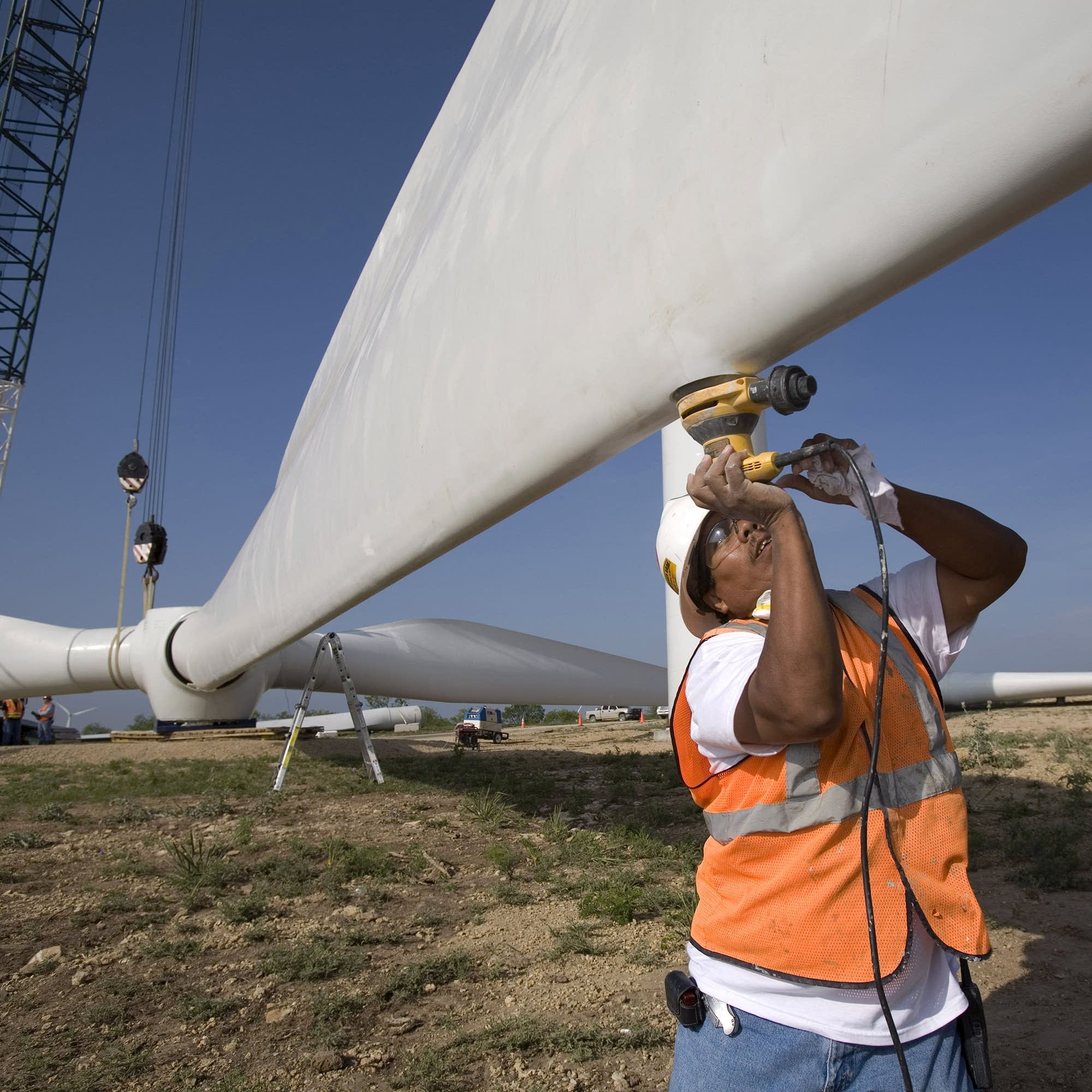
There's still some Wind in the sails when it comes to wind power I'm David Brancaccio in Los Angeles. We've been covering the EU agreeing that the US can apply 15% tariffs on many of its products, including cars and wind. Wind power got some attention at the meeting of leaders with wind turbines visible from President Trump's luxury golf course in Scotland. On that visit, Trump said, we will not allow a windmill to be built in the United States. The new spending bill phases out tax credits for wind power development. Marketplace's Henry Epp has more to qualify.
- [01:43]
Henry Epp
For clean energy tax credits. The recent GOP tax bill requires new wind projects to start construction by July of next year. Stephen Mishagen, a consultant to climate tech companies, says that may mean we see more wind projects get going in the short term while developers rush to sort of meet these safe harbor type activities, beginning some physical work, incurring project costs. In the longer term, things could get tougher, not just because of the Trump administration's policies, but because a lot of windmills have been built already over the last 20 plus years, says Seth Feaster at the Institute for Energy Economics and Financial Analysis.
- [02:23]
Diego Espinosa
Some of the easiest, best places, best.
- [02:25]
Henry Epp
Resources have already been developed.
- [02:27]
Diego Espinosa
It is a little harder to build as quickly with projects at the same.
- [02:32]
Henry Epp
Scale as some of the ones in the past, but wind energy could continue to be an attractive source of power, especially for new data centers for artificial intelligence, which need a lot of electricity. Diego Espinosa is a research analyst at Wood mackenzie All forms of energy are needed. Wind is one of them. It's one of the cheapest ones, one of the fastest to connect to the grid, which could mean more investment in wind energy even without government help. I'm Henry AP for Marketplace Stock in.
- [03:02]
David Brancaccio
Weight loss drug pioneer Novo Nordisk is down sharply to start the day down 20% now after it warned profits seem headed down amid tough competition from copycat drugs. There is confirmation this morning that the Union Pacific Railroad has reached a deal to buy the Norfolk Southern Railroad, an $85 billion merger. We're covering the logic of the deal and questions about what this does to competition. That is also the Marketplace morning podcast feed now.
- [03:45]
Marketplace Advertiser
This Marketplace podcast is supported by Dell Upgrade your learning experience during Dell Technologies Back to school event with AI PCs like the Dell 14 plus, featuring an Intel Core Ultra processor starting at $749.99. Supercharge your studies with features like real time notes, transcription, AI accelerated hardware to run multiple apps without slowing down extended battery life and more. That's the power of new AI PCs with Intel inside. What's more, upgrade your school year setup with limited time deals on select monitors and more. Must have electronics and accessories. Don't wait. Discover a smarter way to learn@dell.com deals that's Dell.com deals.
- [04:35]
David Brancaccio
This Marketplace podcast is supported by Palo Alto Networks. Enterprises are deploying and experimenting with AI apps and agents, often without the right security in place. Leverage the power of a comprehensive AI.
- [04:49]
Marketplace Advertiser
Platform to secure AI at every step from apps, agents, models and data.
- [04:55]
David Brancaccio
Deploy AI bravely with Prisma Airs.
- [04:58]
Marketplace Advertiser
More@paloaltonetworks.com now to an 81 year old.
- [05:04]
David Brancaccio
Agreement involving the Rio Grande and the Colorado rivers. Mexico is supposed to send a measure of water to the US Per treaty. The US is supposed to send even more to Mexico. But there's drought and Mexico is behind on its promises, which is drawing a threat of U.S. sanctions. Will Grant filed this report for us.
- [05:25]
Diego Espinosa
After 30 consecutive months without rain, the townsfolk of San Francisco, the Conchos, gather to plead for divine intervention on the shores of Lake Toronto, the reservoir behind Chihuahua State's most important dam called La Boquilla. Farmers on horseback and their families pray for a very wet rainy season. So far they've had no sign of one from its high watermark, the lake.
- [05:50]
Marketplace Advertiser
Has lost 26.5 meters of depth. It's now at less than 14% of its capacity.
- [05:56]
Diego Espinosa
In the congregation is Rafael Bettanze, who has monitored La Boquilla for the state water authority for 35 years, few know the lake's fluctuations as well as Mr. Betanze. And as we head out on the reservoir for a closer look, he says he's never seen the situation get this dire.
- [06:19]
Marketplace Advertiser
It's impossible. We are not able to water crops. You can see that the dam lies idle, there's no hydroelectric power being generated and we can't use any water for agriculture. There just isn't enough.
- [06:32]
Diego Espinosa
Despite the meager supply in Chihuahua, Mexico must abide by the Terms of a 1944 water sharing treaty with the United States. Under the agreement, Mexico must send water from the Rio Grande to Texas. In return, the US sends its own much larger allocation from the Colorado river to supply the Mexican border cities of Tijuana and Mexicali. Mexico is in arrears and has been for much of the 21st century. In April, on his Truth Social site, President Trump accused Mexico of stealing the water and threatened tariffs and maybe sanctions unless Mexico sends Texas what it owns. The thing is, the complaints from Texas are valid, but people here on the Mexican side say you simply can't take from what isn't there. People in these communities feel trapped by the terms of what they consider to be an outdated agreement which doesn't account for the ravages of climate change.
- [07:28]
David Brancaccio
So this is my corn. It's about a week, 10 days off from being ready to harvest.
- [07:33]
Diego Espinosa
Brian Jones, a fourth generation farmer in the Rio Grande Valley in Texas.
- [07:38]
David Brancaccio
For the last three years, I've only been able to plant half my farm because I don't have enough irrigation water. We feel that Mexico has not been living up to their part of the treaty.
- [07:48]
Diego Espinosa
The cross border arguments go beyond just water scarcity. They're also about agricultural methods and efficiency. Walnut trees need on average 250 litres a day. Traditionally, Mexican farmers simply flood their fields with water from the irrigation channel. As bad as the crippling drought has been for farming, the problems extend even further. The reservoir is critically low level, means the little water in it is overheating, killing the lake's marine life and with it, a once thriving tourism industry. In the face of such a litany of problems, the community around the Rio Conchos can do little besides bow their heads and pray the rain falls sometime soon.
- [08:36]
David Brancaccio
Will Grant is with our editorial partners at the BBC. And there's a published report today, the Trump administration is looking at a new way of charging for patents. Not a flat fee, but a percentage between 1 and 5% of the eventual value of the invention. This is from the Wall Street Journal. A fee based on value could make the owners of the IP free for successful inventions pay much, much more. It's not a done deal here, and the paper says businesses are likely to see a new system as a tax on innovation. In Los Angeles, I'm David Brancaccio. It's Marketplace Morning Report from apm, American Public Media.
- [09:16]
Marketplace Host
Summer's here and it's time for your kids to have fun in the sun. But it's also a great time to nurture growing minds. Million Bazillion, a podcast from Marketplace teaches your kids about something that impacts all of us money. From a fun explainer on tariffs, yes, it's possible to why some athletes make so much money. Million Bazillion tackles big questions with easy to understand answers. Listen to Million Bazillion all summer long. Available wherever you get your podcasts.