← Marketplace Morning Report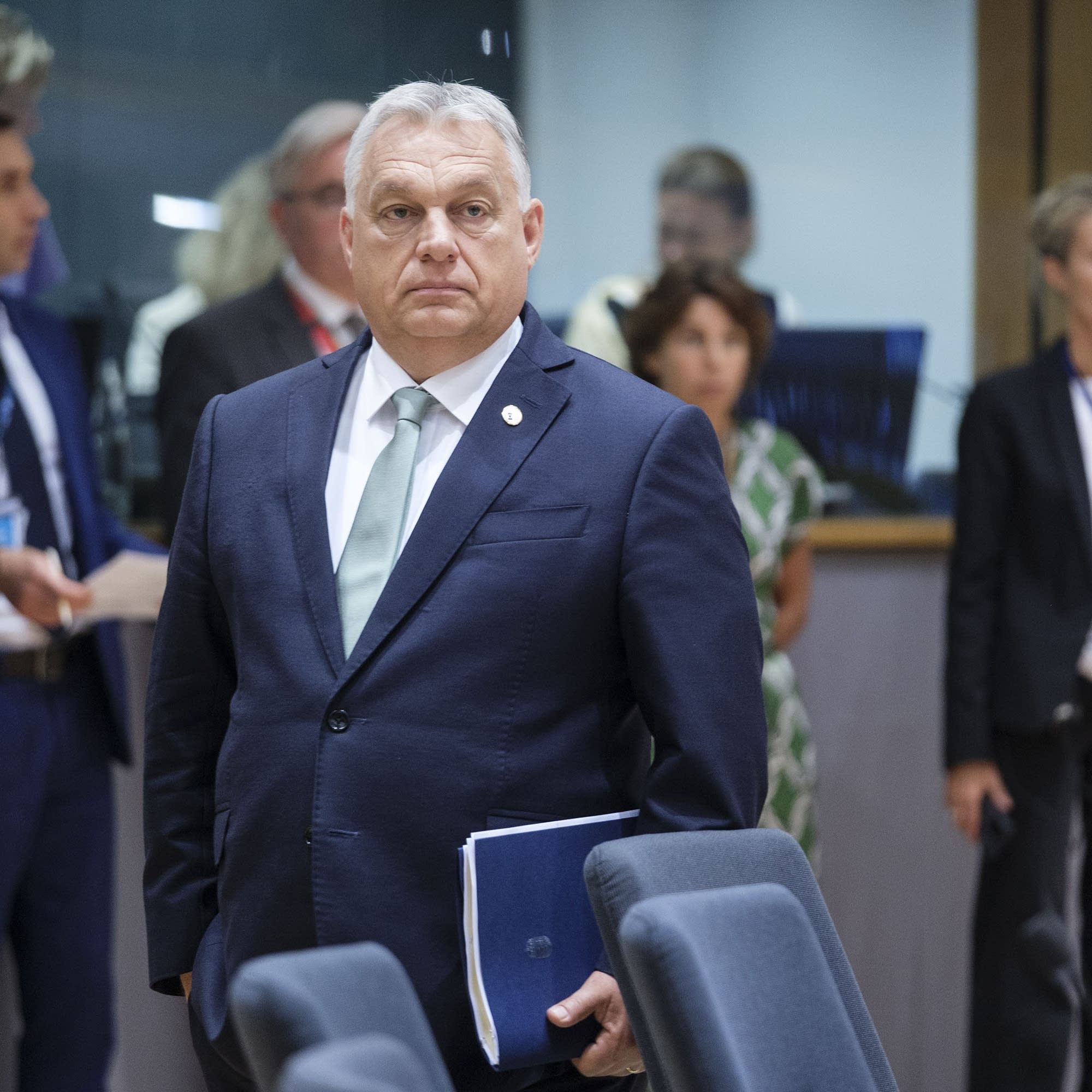
Loading summary
Transcript42 lines
- [00:00]
Wix Advertiser
Your business is one of a kind, so your website should be too. With Wix it's easy, almost too easy, to create a website that's perfectly yours. Just tell AI what kind of site you want to build or choose from thousands of templates, change whatever you want whenever you want, and get everything you need to start running your business your way. No matter what you sell or what you aspire to be, you can do it all yourself on Wix.
- [00:27]
Odoo Advertiser
GoToWicks.com this podcast is supported by Odoo Some say Odoo business management software is like fertilizer for businesses because the simple, efficient software promotes growth. Others say Odoo is like a magic beanstalk because it scales with you and is magically affordable. And some describe Odoo's programs for manufacturing, accounting and more as building blocks for creating a custom software suite. So Odoo is fertilizer magic beanstalk building blocks for business Odoo exactly what Businesses need sign up@odoo.com that's o d o.
- [00:57]
David Brancaccio
O.Com the latest inflation reading and what to expect at the Fed for Marketplace I'm Nova Safo in for David Brancaccio. The July reading of the Federal Reserve's preferred inflation gauge came in this morning. As expected, the PCE price index from the Bureau of Economic Analysis rose 0.2% month over month. Core inflation, which strips out volatile categories and can give a better read of where prices are headed. 10 kicked up slightly to an annual rate of 2.9%. Joining me now is Christopher Lowe, chief economist at FHN Financial in New York. Good morning.
- [01:33]
Christopher Lowe
Morning.
- [01:33]
David Brancaccio
No, so the Fed is going to look at this PCA report and conclude what?
- [01:38]
Christopher Lowe
Well, you know, we heard from another Fed voter last night, Chris Waller, one of the governors. Of course, he's one who also dissented in favor of cutting in July. But Waller said he continues to support a quarter point cut in September. He does not yet favor a jumbo cut, as put it, but he said he might if the data between now and then come in that way. In the meantime, though, the case he made is similar to the one we heard from Jay Powell at Jackson Hole. And that is as long as the data come in as expected, like today's, then the Fed probably should adjust rates.
- [02:17]
David Brancaccio
Soon and markets pretty much expecting that. We're seeing mortgage rates moving lower to a 10 month low. So a done deal September, you know.
- [02:25]
Christopher Lowe
It'S priced in in futures at about an 85% probability. So that's pretty convincing. The move in mortgage rates, I think more important because that reflects longer yields, 10 year bond yields coming down. That's what mortgages price off of. And that means not only that the market expects a cut, but that the market concludes cut is justified. Which of course is really important given the political environment surrounding the Fed right now.
- [02:56]
David Brancaccio
Christopher Lowe, chief economist at FHN Financial in New York thank you, thank you.
- [03:17]
Amazon Advertiser
Amazon presents Yancy vs dorm hall bathroom Some bathrooms offer quaint amenities. The dorm hall bathroom offers a level 7 airborne virus for your feet. But Yancy shopped on Amazon and saved on shower sandals, oversized bath towels and antibacterial body soap. His opponent played dirty, but Yancey kept it clean. Save the everyday with college deals on Amazon.
- [03:47]
David Brancaccio
Best Buy shares are pointing lower this morning in pre market trading and fell nearly 4% yesterday, despite the retailer posting better than expected quarterly financial results. Why the disconnect? Well, the devil's in the details.
- [04:00]
Henry Epp
Marketplace's Henry Epp reports consumers have been weathering high inflation. They're worried prices will keep rising and they're generally not feeling great about the economy, which in theory could lead them to pull back spend on discretionary items, including phones and laptops and video games.
- [04:17]
Christopher Lowe
Technically, yes, it is a discretionary category, and I know very few young adults.
- [04:23]
Nick Thorpe
Who think of it that way.
- [04:25]
Henry Epp
Julie Osk is an independent tech analyst. Electronics are essential to a lot of consumers and they have a shelf life, says Randy Burt at AlexPartners.
- [04:34]
David Brancaccio
For PCs laptops, you're probably on a.
- [04:36]
Odoo Advertiser
Three to five year cycle.
- [04:37]
David Brancaccio
Generally.
- [04:38]
Henry Epp
Lots of people bought new gadgets five years ago during COVID lockdowns. Now they want new ones with more capabilities, burt says. And really one gadget in particular. In the last few months, the Nintendo.
- [04:49]
David Brancaccio
Switch 2 gaming was the biggest source of upside in the quarter.
- [04:53]
Henry Epp
Matt McCartney is at Wedbush Securities. The consoles, he says, got people through the Best Buy doors this summer, and once they were there, they also bought games and accessories.
- [05:03]
David Brancaccio
That improved foot traffic led to a broader increase in the category.
- [05:09]
Henry Epp
The question now is whether that traffic keeps up as tariffs trickle into consumer prices. I'm Henry Epp for MarketPL, where following.
- [05:17]
David Brancaccio
President Trump's campaign against Central bank independence, specifically his move to fire Federal Reserve Governor Lisa Cook over unproven allegations of mortgage fraud. Cook has filed a lawsuit to challenge those efforts. There's a hearing scheduled in the next hour. Fed independence has been a strength of the US Financial system. So what happens if Trump ultimately succeeds? For a lesson on that, we turn to Hungary and the BBC's Central Europe correspondent Nick Thorpe. He spoke with David Brancaccio President Trump's.
- [05:47]
David Brancaccio (interviewer)
We could say, favorite European leader, Prime Minister Viktor Orban of Hungary has been, I think, a laboratory for a kind of Maga style populism. It has its differences, it has its similarities. I want to ask you, though, when does it become clear that Viktor Orban wants to influence, if not control, the central bank in Hungary?
- [06:09]
Nick Thorpe
I think 2010 is a useful date to begin with, David. That's when Viktor Orban returned with a two thirds majority, a massive landslide victory, which gave him really the power to do what he wanted to do. He put in his friend George Matolci there to deal with the economy, to steer it, to use it really as a political mode, to increase his own power until this year.
- [06:36]
David Brancaccio (interviewer)
Now, in terms of how the economy has responded to some of these changes, it's been a, shall we say, uneven record. Lot of inflation there in some of those years, a cap on interest rates, which certainly sidelines the central bank in terms of its biggest policy tool.
- [06:54]
Nick Thorpe
It has been up and down. There have also been no boom years. For example, from 2014 probably to 2019, the central bank, they pushed through measures which seemed risky at the time, but which paid off. Really, one of the biggest ones of those was to weaken the Hungarian foreign, which of course increased the value of Hungary's foreign currency reserves. And so suddenly there was a lot of money and a lot of that money sort of went to the immediate kind of court of Viktor Orban.
- [07:32]
David Brancaccio (interviewer)
Foreign, of course, is the national currency of Hungary. Now, we were drawing parallels between Donald Trump and Viktor Orban of Hungary, but you worry that we shouldn't paint those comparisons with such a broad brush. There are also differences between the type of populism that you see in Hungary and what the United States is seeing with Donald Trump's base.
- [07:54]
Nick Thorpe
Interestingly, you know, laws were passed in 2024, for example, to rein in the independence of the Hungarian national bank because it had been run by, by Mr. Orban's ally as a sort of private fiefdom by his man, George Matolci. But Matalchi himself came to get into more and more conflict with Mr. Orban. So he had to go. So here we have a situation in Hungary where In a way, Mr. Orban was happy to have an independent minded central bank doing policy, so long as those policy interests were chiming with his own.
- [08:31]
David Brancaccio (interviewer)
I see these economic growth forecasts, when you subtract inflation, real growth, it's not rip roaring, as we Americans would say. I mean, I've seen between 8/10 of a percent and 1.8%.
- [08:44]
Nick Thorpe
This is really because the Hungarian economy is very vulnerable. It's a very open economy. And this is a big contrast, I guess, with the United States economy. Hungary's really this government's really thrown all its eggs into the Chinese battery production market. Hungary is really gambling on the electric vehicles. And some of the more kind of cautious economic voices are saying, wait a minute, we don't even know how popular electric vehicles are going to be in a few years time.
- [09:14]
David Brancaccio (interviewer)
That's nick Thorpe, the BBC's Central Europe correspondent. Nick, thank you for this.
- [09:18]
Nick Thorpe
Thank you, David. Good to speak.
- [09:20]
David Brancaccio
And that was Marketplace's David Brancaccio with that interview. I'm novasafo with the Marketplace morning report from APM American Public Media.
- [09:36]
Emily Hanford
The Trump administration is making deep cuts to education research.
- [09:40]
Wix Advertiser
The cancellation notices started coming when the.
- [09:42]
David Brancaccio (interviewer)
Contract is cut, the study just dies.
- [09:44]
Emily Hanford
It's all happening just as schools are trying to make use of research to improve reading instruction.
- [09:50]
Henry Epp
There would not have been a Science of Reading without the federal funding.
- [09:55]
Nick Thorpe
It wouldn't have happened.
- [09:56]
Emily Hanford
I'm Emily Hanford. On our new episode of Sold A Story, what the Trump cuts mean for the science of Reading. Go to your podcast app and follow Sold A Story.