Loading summary
Transcript36 lines
- [00:00]
Narrator/Host
USAA knows dynamic duos can save the day like superheroes and sidekicks or auto and home insurance. With usaa, you can bundle your auto and home and save up to 10%. Tap the banner to learn more and get a'@usaa.com bundle restrictions apply. The new year brings new health goals and wealth goals. Protecting your identity is an important step. Your info is in endless places that could expose you to identity theft leading to lost funds. LifeLock monitors millions of data points per second. If your identity is stolen, our restoration specialists will fix it, guaranteed, or your money back. Resolve to make identity, health and wealth part of your New year's goals. With LifeLock, save up to 40% your first year. Visit LifeLock.com SpecialOffer terms apply.
- [00:47]
David Brancaccio
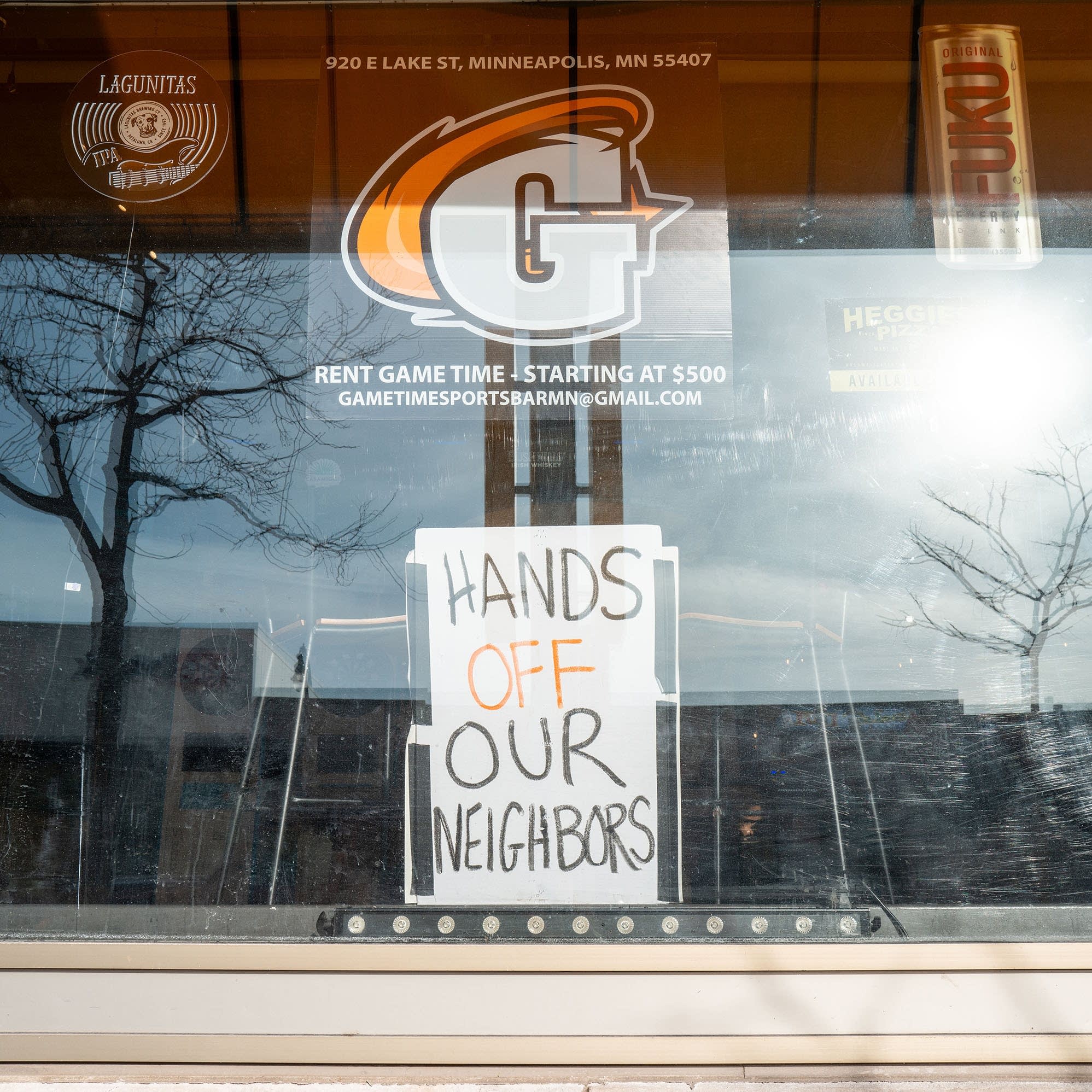
Business is caught in the immigration crackdown I'm David Brancaccio in Los Angeles following deadly shootings by immigration agents in Minnesota. More than 60 CEOs there have now signed and send a letter calling for federal, state and local officials to de escalate. Now this is a turnabout. Last week here we had discussed so many Minnesota business leaders staying quiet amid the situation. Among the CEOs who put their names on this new letter William Brown of 3M, Corey Barry of Best Buy, General Mills, Jeff Harmening and Target's incoming chief executive, Michael Fidelke. Advocates for stricter border enforcement argue the policies over time could mean better jobs for legal workers. But in Minnesota, some business businesses have closed or reduced hours, with employees and customers concerned about getting caught up in raids and protests. Kirstine Marrone is a correspondent with Minnesota Public Radio. Same company as us. She's been reporting from St. Cloud, population 70,000, a city that includes a large Somali American population. Hi, Kirsty.
- [01:50]
Kirstine Marrone
Hi, David. Thanks for having me.
- [01:52]
David Brancaccio
You've been going into businesses facing immigration searches and detentions. What are you hearing?
- [01:58]
Kirstine Marrone
The owners I spoke to say they're struggling with two problems. First, businesses that cater to immigrants are seeing fewer customers. People are scared to leave their homes and venture out for fear of being stopped and detained by ice. I stopped in at New York Gyro, a popular restaurant in St. Cloud. Usually at lunchtime, it's full of hungry customers craving its halal pita sandwiches and kebabs.
- [02:19]
Narrator/Host
But last week, as you can see, very slow. Very, very slow, especially for the last couple weeks.
- [02:27]
Kirstine Marrone
That's co owner Haseeb Azam. He told me that the recent ICE activity in St. Cloud is scaring people away.
- [02:34]
Narrator/Host
We have a lot of, like mixed customers, like Mexican, Somali and white. But right now most of them, the white customer, they come, but now Somali, no, Mexican, nothing.
- [02:44]
Kirstine Marrone
And the other issue for businesses is that some employees are afraid to come to work even if they are in the US Legally. Azzam says he and his co owners are working 12 to 13 hour days just to keep the restaurant going.
- [02:57]
David Brancaccio
13 hour days, is that sustainable? I mean, not every business could pull those hours off longer term.
- [03:05]
Kimberly Adams
That's right.
- [03:06]
Kirstine Marrone
In fact, some have already temporarily closed their doors or reduced hours due to staffing shortages or out of concern for their employees. Restaurants are doing more takeout and delivery orders as fewer customers want to linger for long periods in public places. I visited Star City Mall in St.
- [03:24]
Kimberly Adams
Cloud.
- [03:25]
Kirstine Marrone
It's a strip mall with several Somali owned businesses. There's a clinic, pharmacy, grocery store, several cafes. Dozens of ICE agents clashed with protesters in the mall's parking lot last week. And a few days later, it was noticeably quieter than usual. I met Abdeh Dasani there. He's a Somali American business owner and also a Democratic candidate for the Minnesota Legislature.
- [03:48]
Narrator/Host
I was talking to some of the business people here and they already see the impact. They see less people showing up to just hang out there, maybe more pick up than sitting down and enjoying their meal or even just socializing with people.
- [04:04]
Kirstine Marrone
And we're also seeing some businesses adapting the way they operate. So at one restaurant in Minneapolis, the blinds are now drawn and the front door is locked and a volunteer sits inside to open it for customers.
- [04:16]
David Brancaccio
Minnesota Public Radio reporter Kirsty Marone in Saint Cloud, Minnesota, thank you very much.
- [04:22]
Kirstine Marrone
You're welcome, David.
- [04:24]
David Brancaccio
Gold's hit a record high. Over $5,100 an ounce now up 2% today. This means some investors are nervous. Marketplace's Nova Safo has that prices for.
- [04:34]
Nova Safo
Precious metals, especially gold, are up because demand is up. Last year, gold prices rose 64%, the most since 1979. Central banks are buying gold, as are traders looking to diversify away from the US Dollar, which has weakened against other currencies. Part of this has to do with the Federal Reserve's interest rate cuts. It also has to do with the higher tariffs imposed by the Trump administration and global uncertainty around trade policies. The VIX volatility index, Wall Street's fear gauge, is up 17% just this month. It peaked last week as President Trump was ratcheting up threats over a new trade war with European countries over his desire to acquire Greenland. He backed off those threats and the Vix fell. I'm NovaSafo for Marketplace.
- [05:38]
Fundrise Advertiser
This Marketplace podcast is supported by fundrise billion dollar investors. Don't typically park their cash in high yield savings accounts, and instead they often use one of the premier strategies for institutional investors, private credit. Now the same passive income strategy is available to investors of all sizes thanks to the Fundrise Income Fund, which has more than $600 million invested and a 7.97% distribution rate. With traditional savings yields falling, it's no wonder private credit has grown to be a trillion dollar asset class. Learn more@fundrise.com Marketplace the fund's total return in 2025 was 8%, and the average annual total return since inception is 7.8%. Past performance does not guarantee future results. Current distribution rate as of 12312025 carefully consider the investment material before investing, including objectives, risks, charges and expenses. This and other information can be found in the Income Funds prospectus@fundrise.com Income this is a paid advertisement After a weekend.
- [06:39]
David Brancaccio
Where the weather forced many to skate and to slide, let's turn to the business of the winter oly, which begin February 6th in Northern Italy. Here's Marketplace's Kimberly Adams.
- [06:50]
Kimberly Adams
NBCUniversal, which has the rights to air the Olympic and Paralympic Games in the US Says it sold out all its advertising slots by early January, setting what the company calls a new ad sales record. Beth Mahalik teaches corporate communications at Penn State Lehigh Valley.
- [07:07]
Kirstine Marrone
Audiences are really drawn to the allure, to the pageantry, to the stories of.
- [07:16]
Kimberly Adams
Triumph and traged of the Olympic Games.
- [07:18]
Kirstine Marrone
And brands recognize that.
- [07:20]
Kimberly Adams
But in terms of economic impact, for Olympic host cities, it can be hit or miss. Michael Clark directs the center for Business and Economic Research at the University of Kentucky.
- [07:31]
Narrator/Host
When researchers have looked at this, they generally tend to see that the cost associated with hosting the Olympics tends to be considerably higher than the benefits that the cities receive.
- [07:41]
Kimberly Adams
Early estimates say the Milan Cortina Games will Yield More than $6 billion in economic impact. Kiki Kaplanid runs the Department of Sports Management at the University of Florida.
- [07:52]
Kirstine Marrone
They are expecting to make a little bit more money than they spend, but not much more compared to if you look at all the expenditure and what goes into building facilities and all that stuff.
- [08:05]
Kimberly Adams
The Winter Olympics will run from February 6th to the 22nd, and the Paralympic Winter Games are starting up March 6th. In Washington, I'm Kimberly Adams for Marketplace Curling.
- [08:17]
David Brancaccio
That's what I'm going to be watching. In Los Angeles, I'm David Brancaccio, Marketplace.
- [08:21]
Narrator/Host
Morning Report.
- [08:24]
David Brancaccio
From APM American Public Media.
- [08:29]
Rima Reis
I'm Rima Reis, and this week on this Is Uncomfortable, fellow podcaster and host of Scamfluencers Sarah Haggie joins me to sort out your work drama. We answer your questions about scammy bosses, managing workplace friendships and coworkers who pushed boundaries a little too far. I'm going to stay at your place for a bit while I'm breaking up and obviously I'll need a key. And that is how you get a squatter. Listen to this is Uncomfortable on your favorite podcast.
- [08:58]
Narrator/Host
Applause.