Loading summary
Transcript22 lines
- [00:01]
A
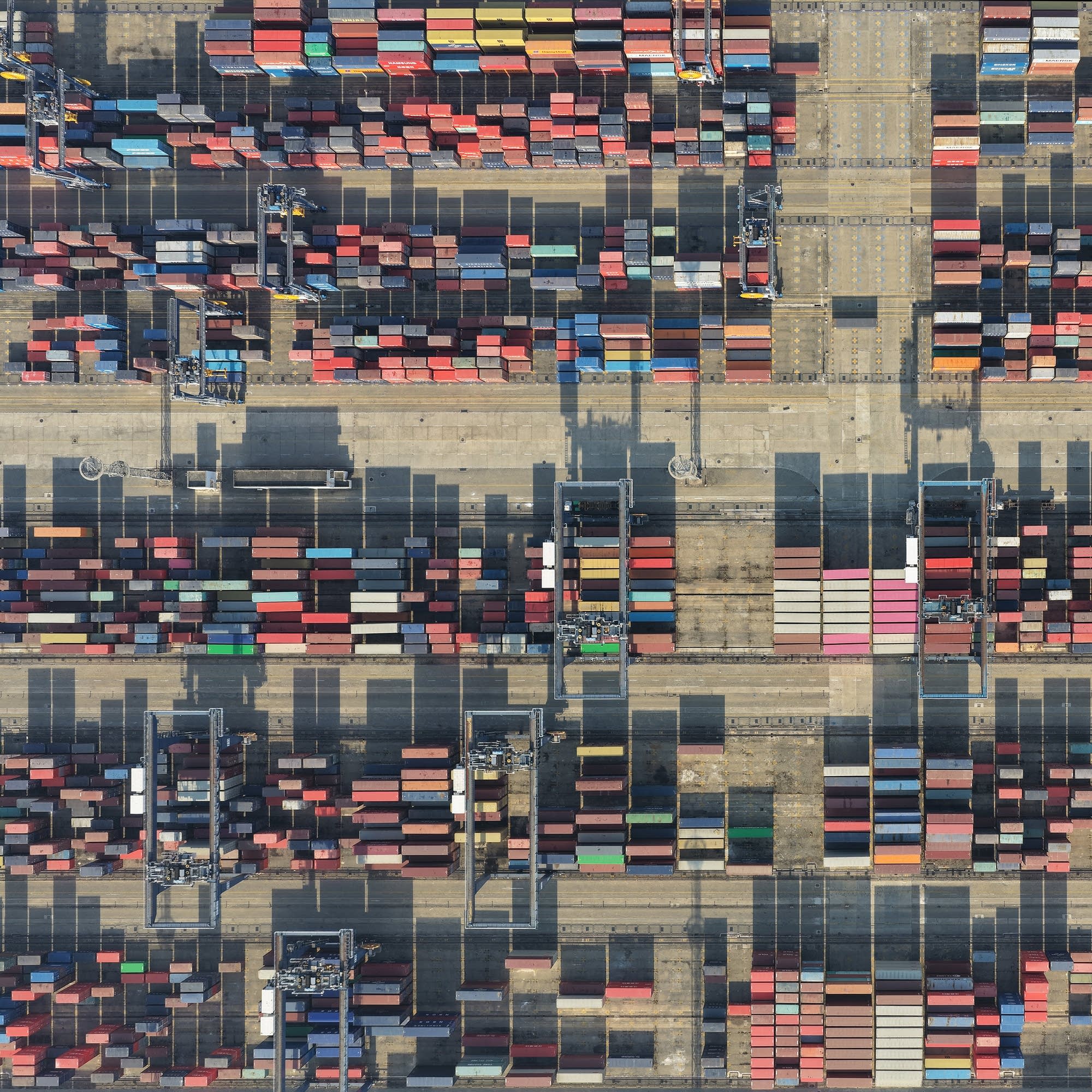
Tariffs and a trade war. But China defies the odds. Live from the UK this is the Marketplace Morning Report from the BBC World Service. I'm Stuart Clarkson. Good morning. China's announced record export numbers and the biggest ever trade surplus in global history, $1.2 trillion. So the impact of tariffs from the US seems to have pushed Beijing to do its business elsewhere with positive results. The BBC's Nick Marsh is with us on Marketplace. To delve into this a bit more now. Hello, Nick.
- [00:30]
B
Hi.
- [00:30]
A
So a record surplus despite President Trump's attempts to stop some trade with China. How have they managed this?
- [00:37]
B
This basically shows that even though trade with the United States did take a bit of a hit, a 20% drop or so, China more than made up for it with a massive increase in exports to the rest of the world, in particular places such as Africa, Southeast Asia, Latin America as well. Clearly, that's not great news for domestic workers and manufacturers in those places, but it is a vindication of China's long held belief that, yes, the American consumer market is very big, very important market, but it's not the only one. And on the evidence of these figures, China has plenty of willing customers around the world. The customs authority in China pointed out a rise in the export of technologies such as solar panels, electric vehicles, you know, green technology, basically artificial intelligence technology, where China is really rapidly making huge strides in that area, and also robotics.
- [01:44]
A
And I guess President Trump will be perhaps a bit upset that China's doing more trade with other places when he perhaps wanted to pick up some of that trade by introducing his tariffs on China.
- [01:55]
B
That's quite right. Yeah. I suppose the 20% drop in trade with the United States means that China is selling less to America, which is one of Donald Trump's goals. You know, he wants the United States to be less reliant on the Chinese economy, and therefore he says, protect American workers and domestic manufacturers. Let's not forget the United States runs an absolutely enormous trade deficit. So he'll take some comfort in these figures in that sense. But you're absolutely right. The fact that China has effectively gone, well, it's a shame we can't sell to you as much as we used to. But look at all these other parts of the world that are very willing to buy from us and are buying from us in record numbers.
- [02:39]
A
Okay, we'll have to leave it there. Nick Marsh, thanks for joining us on Marketplace.
- [02:42]
B
Thanks very much.
- [02:43]
A
Well, one of those other countries China's hoping to increase trade with is Canada. Mark Carney's arrived in Beijing for A three day visit, the first by a Canadian Prime Minister in nine years. He'll hold one on one talks with the Chinese President Xi Jinping on Friday. Let's do the numbers now. The values of gold, silver, copper and tin have all hit record highs. Silver went above $90 an ounce for the first time day. It's now up 27% in the first two weeks of the year. And oil giant BP says it expects to book up to $5 billion in write downs across its gas and low carbon energy division. It's also warned about a weaker performance from oil trading in the final quarter of 2025. Now, global bond markets are where governments go to raise money to pay for services. Some now argue these markets have become too powerful and can limit the policy aspirations of democratically elected governments. The BBC's Ed Butler reports.
- [03:38]
C
I have therefore spoken to His Majesty the King to notify him that I am resigning.
- [03:44]
D
Yes. After just 45 days in office, Liz Truss became Britain's shortest serving prime minister, forced out by her own party colleagues because she'd misjudged not just Britain's creditworthiness, but also the power of the bond markets to effectively determine the country's economic fate.
- [04:01]
E
The critical problem right now stalking much of the Western world has been an explosion in debt relative to gdp.
- [04:09]
D
That's the Financial Times columnist Gillian Tett, who believes the story of bonds is really the story of spiralling national debt. With a recent surge in worldwide interest rates, it's debt that's become hard for many governments to manage.
- [04:24]
E
If the rates are ultra low, as they were in the last 15, 20 years, then actually it's pretty cheap to keep servicing debt. But if interest rates start to rise suddenly, then you can see the interest payments suddenly explode. And when that happens, governments can actually get into a death barrel where they end up with so much debt they just can't repay the interest.
- [04:43]
D
While the world's stock markets are now worth a combined $127 trillion, the bond markets are even bigger, valued at 145 trillion. That's more than the world's annual GDP.
- [04:57]
C
In terms of their importance. Bond markets for the broader economy, I don't think that can be overstated.
- [05:03]
D
Luke Hickmore, the bond trader working with Aberdeen Investments, I put it to him that having such a small number of unelected money men like himself effectively running national government policy wasn't in the interest of democracy.
- [05:18]
C
It's not a situation where you've got an undemocratic bunch of people deciding on the fiscal outcome for a country, I think as a country having to have a very sensible approach to make sure that they can continue to fund at a sensible level, because that's our job is deciding the risk.
- [05:35]
D
But others aren't so sure. Some say that policymakers are giving the bond markets way too much power, but most mainstream economists now accept that debt levels for some of the biggest nations are getting out of control. Here's Gillian Tett again.
- [05:49]
E
The problem is that no politician really has much incentive to stand up and be honest with people and talk about the trade offs that need to happen. So unless there's a shock from outside like a bond market crisis, it tends to be very hard for governments to actually make the difficult decisions. They at the end of the day, bond markets, they show us unpalatable truths.
- [06:08]
A
Gillian Tett from the Financial Times, ending that report by Ed Butler. And finally, happy workers are good for business with increased productivity and maybe higher profits. Now a study of the happiest places to work around the world, published by Staff Experience Platform Workl says flexibility from managers is key to happy teams, as well as things like good information sharing and prioritizing workers well being. Our producer today was James Graham. Our editor is Naomi Rainey in the uk. I'm Stuart Clarkson with the Marketplace Morning Report from the BBC World Service.
- [06:41]
F
Hey everyone. You already listen to Marketplace podcasts, so you know that it's important to understand how economic forces shape our lives. And that feels especially important now as we're all trying to make sense of the latest headlines. I'm Reema Jerez, host of Marketplace's this Is Uncomfortable, a show that explores how money bumps up against our relationships, our choices, and in the parts of life we don't always say aloud. And starting January 15th, we are back every single week. New stories, new questions, and the kind of conversations that make you feel less alone in this quickly changing economy. We're tackling questions like should I turn my hobby into a money making side hustle? How do I deal with layoff anxiety? Or what do we owe our parents financially? Don't miss an episode. Subscribe to this is Uncomfortable from Marketplace. Wherever you get your podcasts.